‘Risky’ Tories, ‘drama queen’ Jenrick and Farage’s Trump problem: voters’ verdict on the battle for the right
Boris Johnson’s election victory in 2019 was so sweeping you could walk from Land’s End to Hadrian’s Wall without ever leaving a Tory constituency.You could also have walked between two constituencies where More in Common ran focus groups with 2019 Conservative voters this week – Warrington South and Godalming and Ash.These are two seats that tell the story of the breadth and collapse of the Conservatives’ 2019 coalition.Warrington South, a north-west marginal that has flipped between Labour and the Conservatives, sits just outside the “red wall”.It voted leave in 2016, backed Johnson in 2019 and swung to Labour in 2024.
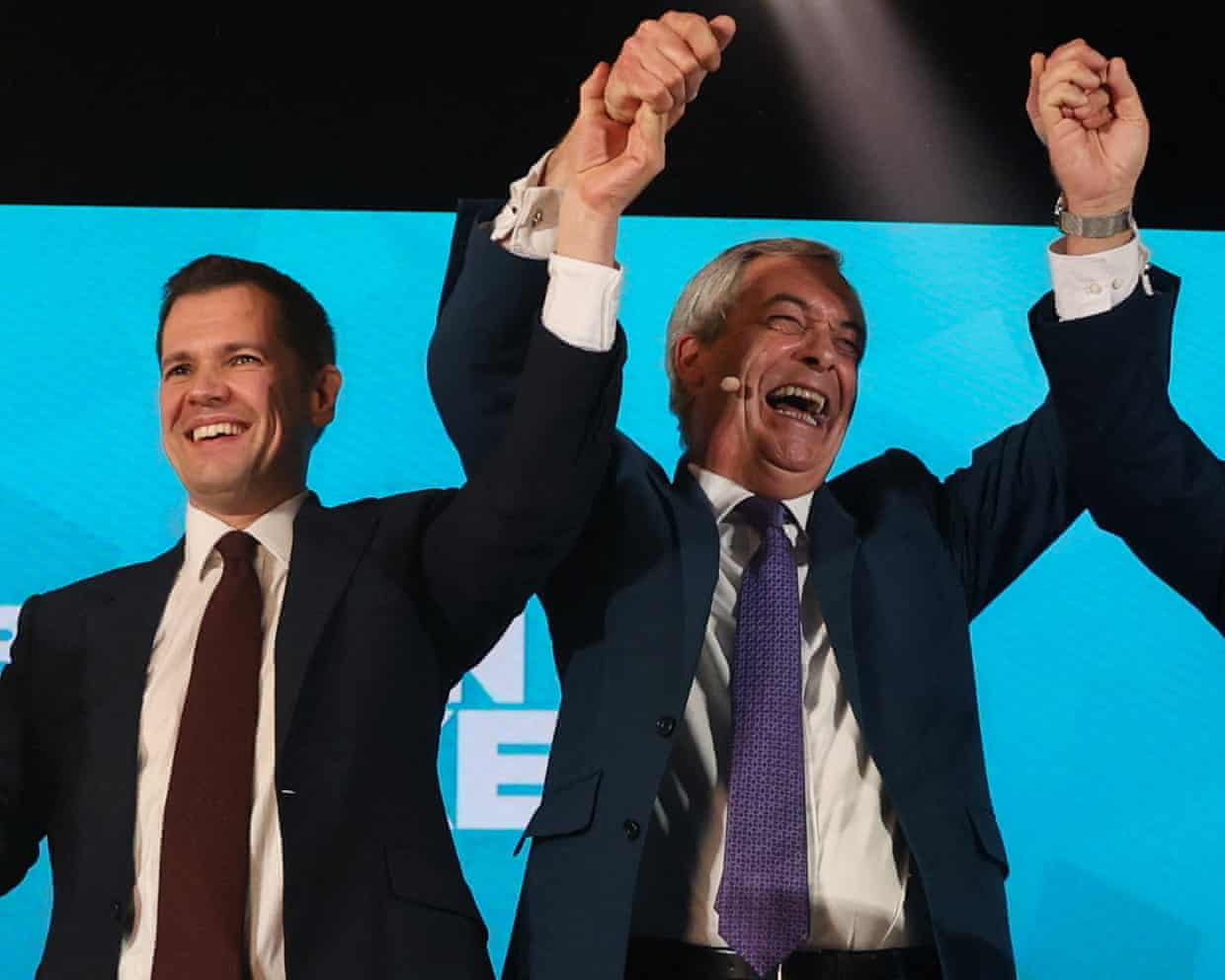
Today, More in Common’s MRP (multi-level regression and post-stratification) modelling suggests it would be won comfortably by Reform UK.Godalming and Ash, by contrast, is deep in the “blue wall”.An affluent commuter seat in Surrey, it voted remain, and in a rare bright spot for the Conservatives in 2024, Jeremy Hunt managed to fend off the Liberal Democrats to hold the seat.These very different seats are now central to the “battle for the right” that exploded back on to the political scene this week with Robert Jenrick’s defection/dismissal.How did voters in these seats react to the latest skirmish?It is fair to say that even 14 months into her leadership, views of Kemi Badenoch remain fuzzy.
But when played a clip of the video Badenoch filmed announcing her dismissal of Jenrick, the groups were unusually approving.Sarah, an admin officer from Godalming, said she was “blown away”, while James, an IT engineer from Warrington, described Badenoch as “decisive”.In both groups, the participants said they wanted to see more like that from Badenoch and wondered why they had not seen it before.But while Badenoch personally impressed, for some it brought back memories of why they had booted the Conservatives out of office in the first place – their tendency to infighting.“I think she’s one to watch,” Allie said, “but it’s all a bit risky, isn’t it?” James said it could feel like a return to the “chaos inside the party” of the last government.
Neither of these groups took to Jenrick.Shown clips of his defection speech.George, a Warrington service engineer, thought Jenrick seemed “primed” or “scripted”, Jenna said he was “not very convincing”, and Helen said: “He said words but there was no substance to them.” This feedback mirrored what we heard during the Conservative leadership election, when voters struggled to warm to Jenrick and questioned his authenticity.What about Jenrick’s “broken Britain” claim, now at the centre of a three-way debate between Labour, the Conservatives and Reform? In Godalming, some felt it a tad hyperbolic.
“He was a bit of a drama queen,” Allie said, “a bit sensationalist.” Did she think Britain was broken? “Breaking, yeah.Not broken yet.” Even so, the group worried about the direction of travel: crime, the cost of living, small boats, government waste.In Warrington, the mood was darker.
Derek reeled off examples: “NHS, definitely broken.Police force, officers leaving in droves.Pensions being affected.” Valerie, a receptionist in her 70s, told us: “I thought now I’d be enjoying life, going out during the day, socialising, but I’m having to work … The price of everything, whether it’s heating, your utilities, plus food – prices have just gone up so high.”For George, the cost of living was eroding solidarity.
“It’s becoming a bit selfish now because it’s got to the point where everybody is struggling.You’re kind of thinking: how is it going to benefit me and my immediate family?” he said.Is Nigel Farage the answer? Valerie earned nods of approval when she said: “I don’t like him but he stands by his convictions.” Rachel agreed: “He’s a bit like Thatcher.He might not be right but he stands by what he does.
”Even in Godalming, hardly Reform’s home turf, some were tempted.Jenna said he “seems more positive and proactive about stuff.And, I don’t know, you sort of seem to have a bit more faith in an individual like that.”Leaving aside their antipathy for Jenrick, the groups tended not to think it mattered that Reform were taking in Tory defectors.Asked whether they felt it undermined Reform’s claim to be something new, Tom from Godalming replied that they could be “becoming like the Globetrotters”, taking the best players from the other teams.
Likewise, Valerie from Warrington was not concerned about Reform’s talent being diluted,“Is he [Farage] trying to cherrypick the best just like a company would? Pick from the opposition so that your company ends up better?” she said,Nor did accusations against Farage of racism at school move the groups,Presented with the accusations and the Reform leader’s response, almost everyone felt it was unfair to judge Farage by what he had said as a schoolboy, and added that most people would have said things they regretted in school,Helen said: “As you grow up, you go: actually, no, that was ridiculous.
That was awful.Why did we do that stuff?”Hanging over both groups was another name.Westminster’s obsession with the US does not normally extend to our focus groups but this past week has been an exception.Whatever they thought of Farage, their attitudes to Donald Trump were sulphurous.“I feel he’s pushing us towards world war three,” Valerie said.
Kerry said: “He’s just going to make things 10 times worse.”For many voters on the right, it is Farage’s Trump problem above all else that puts them off.Matthew, a travel agent in Godalming, said Farage was “very much a mini Trump … he’s going to take the country down the wrong path”.Bill, a retiree from Ash, saw it a bit differently: while not a fan of Trump, he wondered whether Britain needed a shock to “get us kicked in the right places, because we’re just going nowhere at the moment”.Britain may feel broken but the right is far from united on how to fix it, split between traditional conservatism and Reform’s insurgence.
Most recoil from Trump’s style of disruption and upheaval, and ties to him remain a top liability for Farage.But one thing that did unite the two groups was their sense that Keir Starmer was struggling as prime minister.Allie summed it up by saying Starmer was “floating over it all without going very deep into anything”.That sense of a prime minister adrift, after the failures of the last Tory government, was driving these voters to contemplate something more radical.Or as Derek put it: “We’ve tried Conservative, we’ve tried Labour, they didn’t work.
Why not try Reform? We’ve got nothing to lose.If that doesn’t work …” he chuckled, “then it’s definitely broken.”(Participants’ names have been changed)Luke Tryl is the UK director of the research group More in Common

‘Manosphere’ influencers pushing testosterone tests are convincing healthy young men there is something wrong with them, study finds
“If you’re not waking up in the morning with a boner, there’s a large possibility that you have low testosterone levels,” an influencer on TikTok with more than 100,000 followers warns his viewers.Despite screening for low testosterone being medically unwarranted in most young men, this group is being aggressively targeted online by influencers and wellness companies promoting hormone tests and treatments as essential to being a “real man”, a study published in the journal Social Science and Medicine has found.Researchers analysed 46 high-impact posts about low testosterone and testing made by TikTok and Instagram accounts with a combined following of more than 6.8 million, to examine how masculinity and men’s health are being depicted and monetised online.The lead author of the study, Emma Grundtvig Gram, a public health researcher at the University of Copenhagen, said influencers promoting routine testosterone screening often framed normal variations in energy, mood, libido or ageing “as signs of pathology”
John Knight obituary
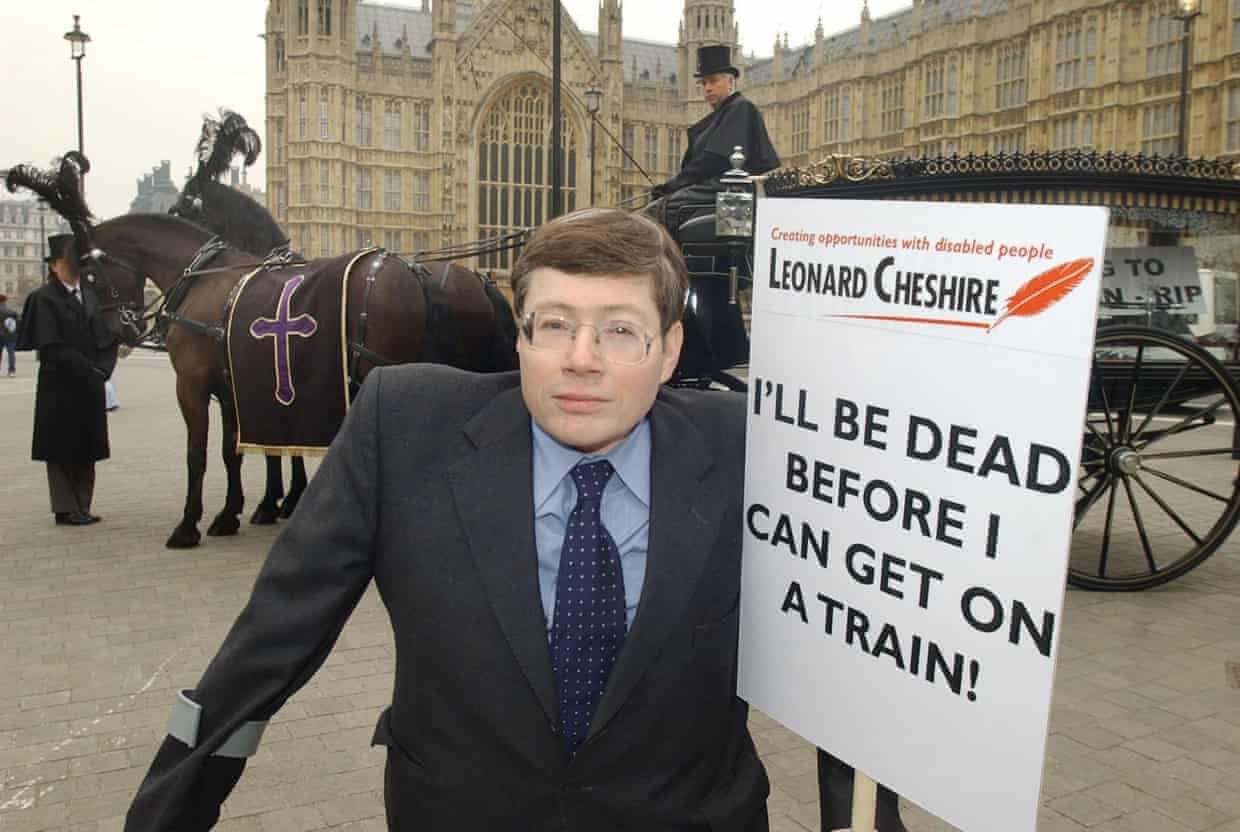
Disabled people might still be waiting for all UK trains to be accessible were it not for the success of a high-profile campaign led by John Knight, who has died of sepsis aged 67, after himself overcoming profound disabilities from birth and becoming a leading figure in the charity and public sectors.Knight was responsible for policy and campaigns at the disability charity Leonard Cheshire during passage of the Disability Discrimination Act 2005, which was to set a deadline for railway carriages to be accessible. Train companies were pressing for a date of 2035, to maximise the life of inaccessible rolling stock, but the campaign persuaded the House of Lords to back an amendment to the legislation with a time limit of 2020. The change was then accepted by the Labour government.At the climax of the All Aboard campaign, Knight arranged for a horse-drawn hearse to deliver to MPs and peers thousands of postcards on which disabled people had written what age they would need to live to in order to benefit from a 2035 deadline
Assisted dying bill backers say it is ‘near impossible’ it will pass House of Lords
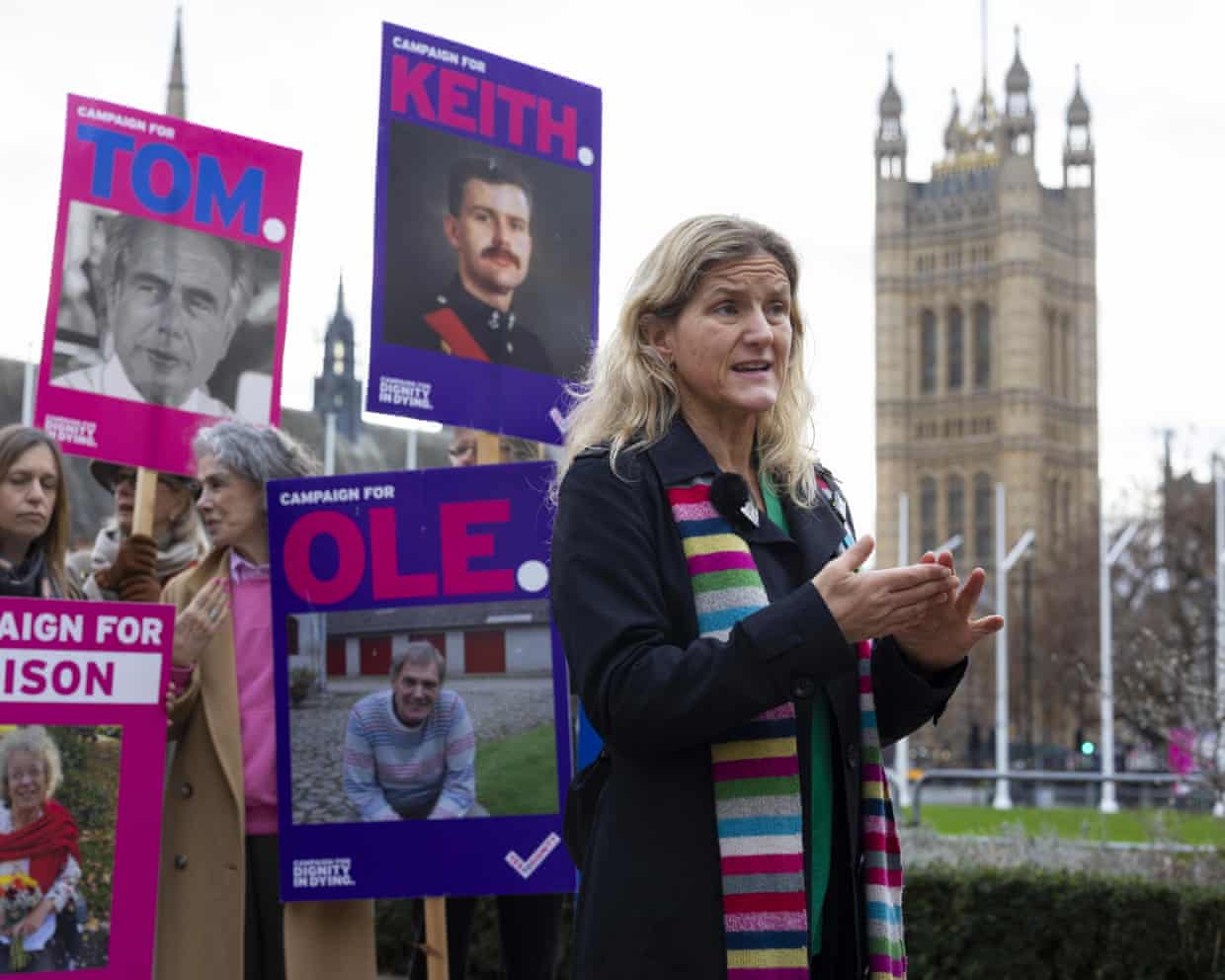
MPs and peers who backed the assisted dying bill now believe it is “near impossible” for it to pass the House of Lords in time because of procedural obstacles used by opponents.Supporters of the bill, including its sponsor, Kim Leadbeater, have been in intense discussions with the government to find ways to move it to a vote in the Lords. With progress so slow, experts and MPs believe it is unlikely the legislation will even be put to a vote before the end of the session in May, after which it will automatically fall.MPs told the Guardian they were in “blind fury” about the apparent inevitability of the billing falling in the Lords despite passing the Commons. “It is our system at its absolute most dysfunctional,” one MP said
Residents in legal fight to halt demolition of Clockwork Orange estate
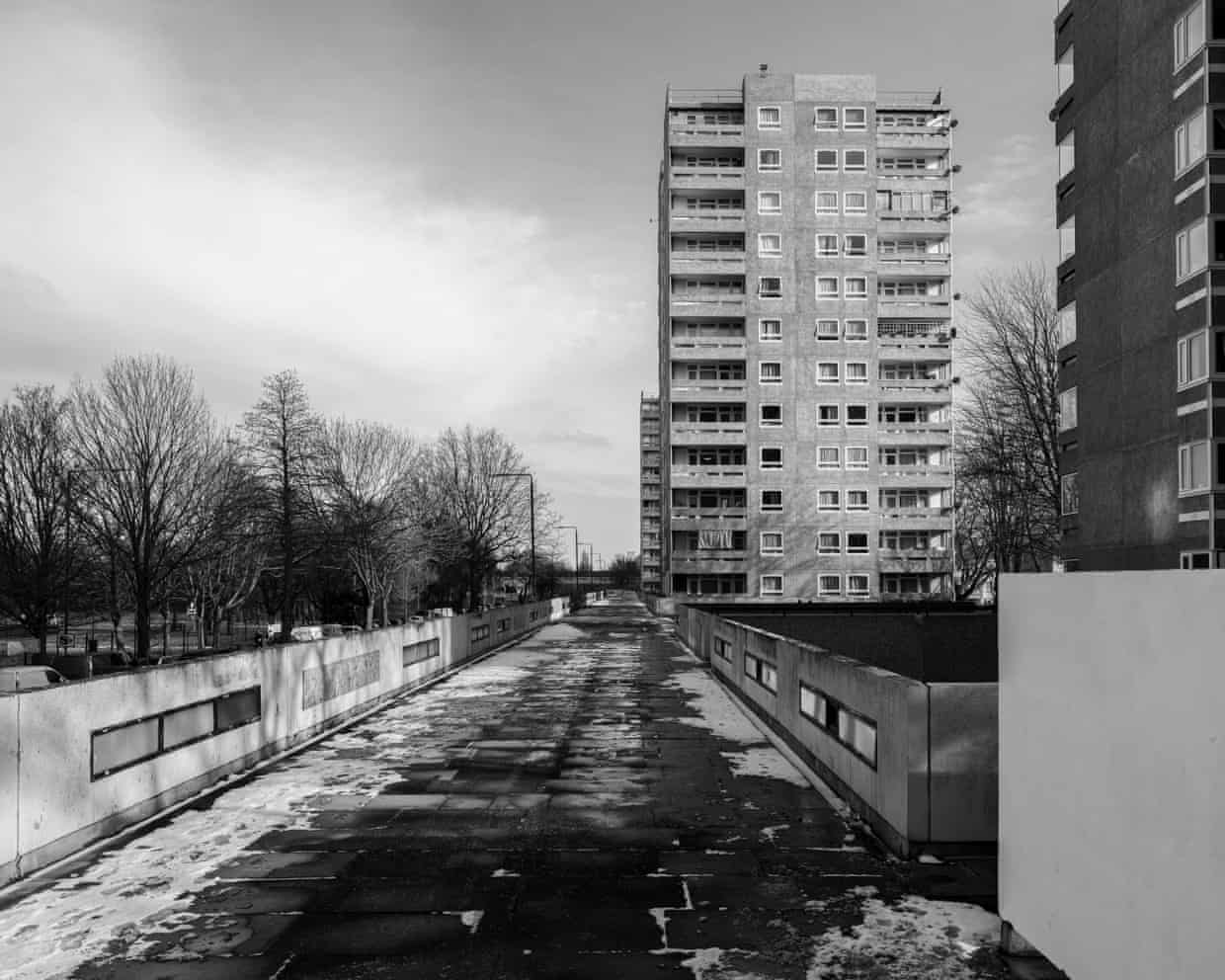
A legal challenge has been launched in an effort to halt the demolition of a 1960s Brutalist estate in south-east London that featured in Stanley Kubrick’s dystopian film A Clockwork Orange.The challenge against Bexley council and Peabody housing association, which will be carrying out the redevelopment, has been launched by the Lesnes estate resident Adam Turk.He and others living there believe the estate could be refurbished rather than demolished and rebuilt under plans for the construction of up to 1,950 homes, which the council approved on 23 December.Residents fear the redevelopment would cause environmental damage and undermine the UK’s legal obligation to reach net zero by 2050.The dispute highlights a wider tension between environmental protection and initiatives to demolish and rebuild estates

How screen time affects toddlers: ‘We’re losing a big part of being human’
In the UK, 98% of two-year-olds watch screens on a typical day, on average for more than two hours – and almost 40% of three- to five-year-olds use social media. Could this lead to alarming outcomes?At Stoke primary school in Coventry, there are many four-year-olds among those starting in reception class who can’t sit still, hold a pencil or speak more than a four-word sentence. Lucy Fox, the assistant headteacher and head of foundations, is in no doubt what is causing this: their early exposure to screens, and a lot of it. When the children experiment with materials and creativity, and make things in the classroom, she says, “We notice a lot of children will cut pieces of cardboard out and make a mobile phone or tablet, or an Xbox controller. That’s what they know
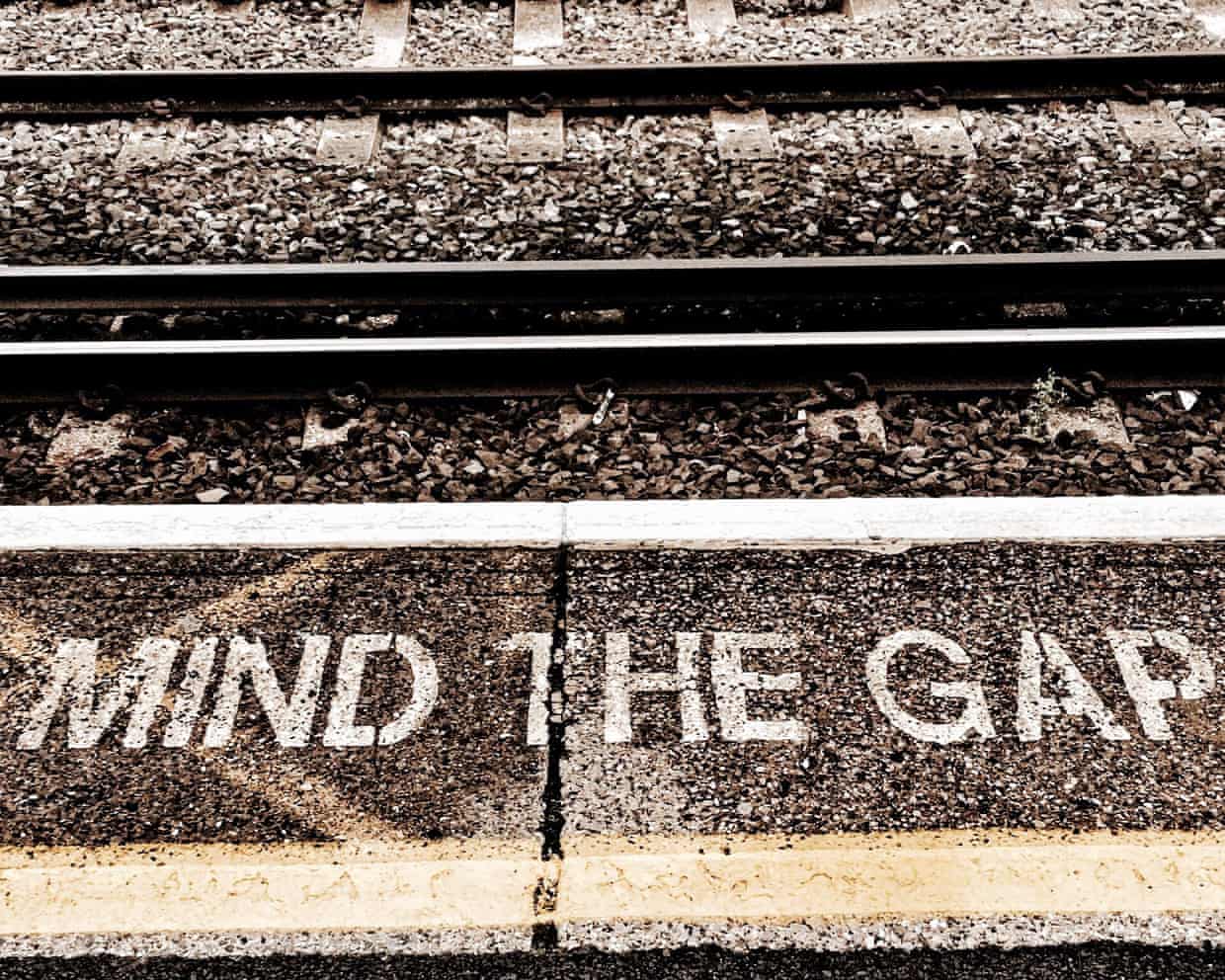
Four in five blind people struggle with gap at UK train stations, survey finds
Four in five blind and partially sighted people in the UK have struggled to cross the gap between trains and station platforms, according to a survey, with some falling and injuring themselves.Many blind and partially sighted people avoid taking train journeys owing to anxieties around whether they will be properly supported after having had inconsistent experiences, according to research from the Royal National Institute of Blind People (RNIB).It found that more than one-third (37%) of blind and partially sighted people felt unable to take all the train journeys they wanted and needed. The gap between the platform and trains was a “significant source of fear”, with some people being struck by a train or coming into contact with an electric rail, or trapped in train doors and dragged as the train departed, the RNIB found.This is partly because tactile wayfinding, which uses raised bumps and colours to help blind and visually impaired people navigate, is less common in British train stations than in many comparable countries such as European nations and Japan, with just one-fifth of blind and visually impaired people surveyed by the RNIB saying they had encountered it at a station

Starmer stands up to Trump at last and has chance to make case for Europe
Can Andy Burnham calm the anger in a Manchester seat Labour fears losing?
‘We have a clear agenda’: the teenager who broke news of Tory MP’s defection to Reform
‘Risky’ Tories, ‘drama queen’ Jenrick and Farage’s Trump problem: voters’ verdict on the battle for the right
Union boss warns against Labour ‘control-freakery’ over Andy Burnham
Starmer’s allies launch ‘Stop Andy Burnham’ campaign to block parliamentary return