Assisted dying bill backers say it is ‘near impossible’ it will pass House of Lords
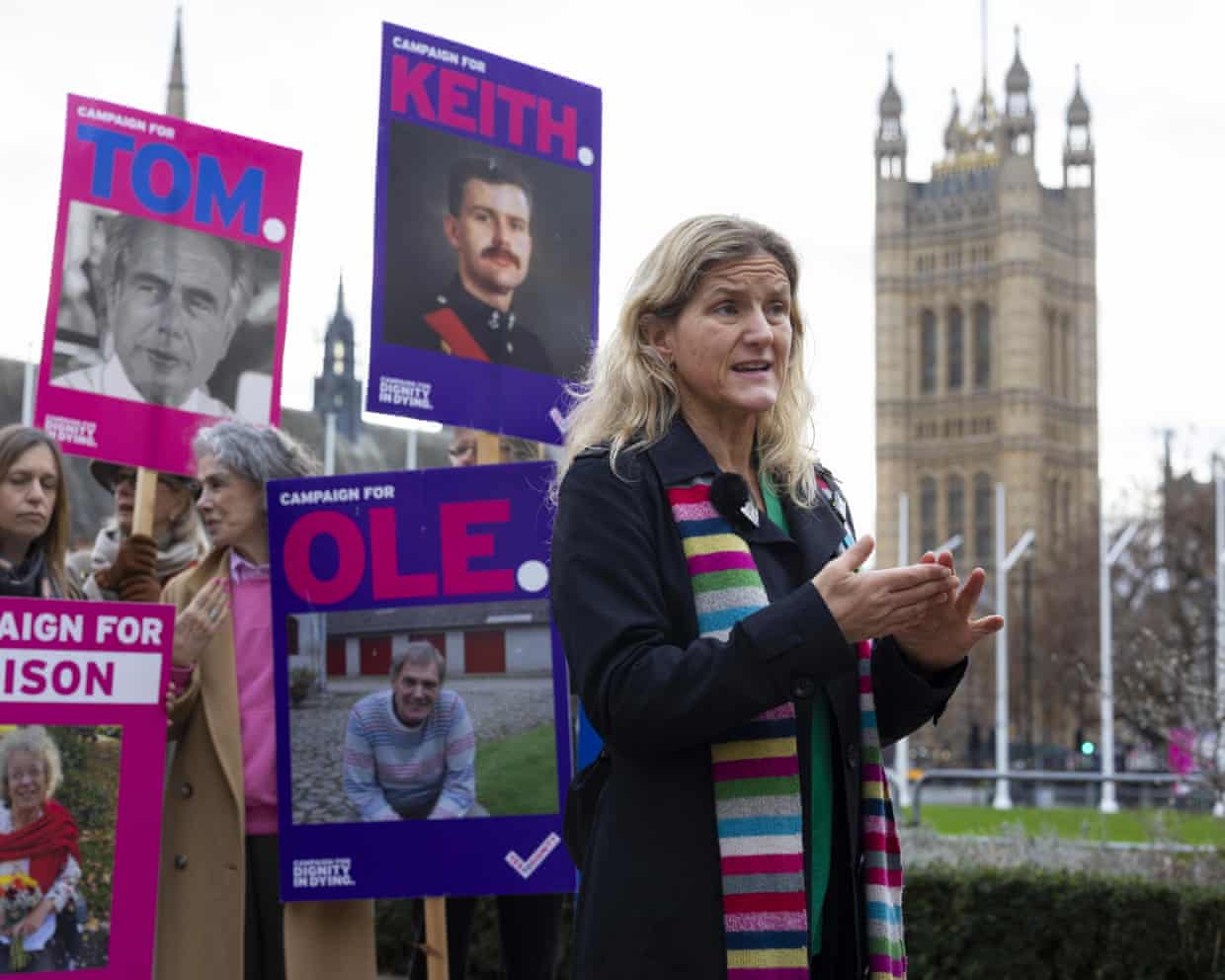
MPs and peers who backed the assisted dying bill now believe it is “near impossible” for it to pass the House of Lords in time because of procedural obstacles used by opponents.Supporters of the bill, including its sponsor, Kim Leadbeater, have been in intense discussions with the government to find ways to move it to a vote in the Lords.With progress so slow, experts and MPs believe it is unlikely the legislation will even be put to a vote before the end of the session in May, after which it will automatically fall.MPs told the Guardian they were in “blind fury” about the apparent inevitability of the billing falling in the Lords despite passing the Commons.“It is our system at its absolute most dysfunctional,” one MP said.
Several MPs named the former Conservative ministers Michael Gove, Thérèse Coffey, David Frost and Mark Harper as peers who were determined to stop the bill.Peers deny they are deliberately filibustering and say the bill is so flawed it merits all the scrutiny it is receiving.One source said MPs should have expected the bill to fall in the House of Lords, which was “routine” for private members’ bills.The bill would legalise assisted dying in England and Wales for those with a terminal diagnosis and with less than six months to live.Dr Simon Opher, one of the Labour MPs on the bill committee who undertook its original scrutiny before the Commons vote, said: “This is an absolute disgrace.
Many MPs who voted against are also outraged.“I believe this is a real threat to our democracy and in the end will hasten the abolition of this unelected second chamber.It shows our system doesn’t work and is fundamentally undemocratic.”A minister said: “They are making a mockery of our parliamentary system and bringing parliament into disrepute.”Another MP said there was now a clear case for extensive Lords reform.
“Parliament expressed a clear democratic will.The public are hugely in support.We reformed the Lords a century ago when they frustrated the will of the people [the budget of 1909 was rejected in the Lords, after which the chamber lost its ability to veto legislation].We can do it again.The Lords can stand for election.
”Leadbeater said on Wednesday she was finding it hard to tell members of the public the bill was not yet certain,“Every day a member of the public comes up to me to say thank you for changing the law, and I have to tell them that we still have to pass the Lords,” she said,Several of the bill’s parliamentary backers told the Guardian they did not believe there was any amount of time that the government could grant that would stop opponents using procedure to eat up more time until the end of the parliamentary session,“They show no interest in making progress,” one peer said,“They give near identical speeches, make no unique points, talk for the sake of it, they send people to speak in the debates before our bill starts to run down the clock as much as possible.
”Another said: “It shows the true power of the House of Lords which is rarely used.You can have a handful of people who can use the power to call votes, decouple amendments and just throw sand in the gears and the Speaker doesn’t have the power to stop it or to control the business.”A source close to Leadbeater said she was aware of the frustrations and had been meeting MPs of all parties to try to convince them it was not hopeless and to hold their nerve.Opponents of the bill reject the accusation they are using “dirty tricks” to stop its passage and say the sheer number of amendments and time for debate is because it is in an unacceptable state to become law.One senior opponent said it was entirely normal for private members’ bills to be blocked by the Lords.
“From the moment it went to the Lords, supporters of the bill have been disingenuous about its chances of passing and the normal processes in the Lords,” the source said,“They’ve continually set false expectations, which seem designed to fail, and do a disservice to parliament and the public,”The Labour MP Florence Eshalomi, who opposed the bill, said it was right that peers should take their time to scrutinise it,“Not a single royal college, professional body or cabinet minister will attest to the safety of this bill,” she said,“Scrutiny should never be conflated with obstruction and it would be reckless for Lords to ignore the concerns of such a wide range of experts.
”Multiple extra days of debate have already been added in the House of Lords.Last week Charles Falconer, the Labour peer leading the bill through the upper house, was granted further time to allow the Lords to sit later to hear more debate.More than 1,000 amendments have been tabled to the bill.Last Friday, just four groups of amendments out of the 72 remaining groups were debated.Of those, an hour was spent on the language used in the bill, changing the wording “assistance to end their own life” to “medical help to commit suicide by provision of lethal drugs”, which was proposed by Lord Frost.

Harry Constable obituary
My friend Harry Constable, who has died aged 94, rose to be a prominent figure in the international paper-making industry in the 1970s and 80s by pioneering new processes and modernising management practices.Among the technical innovations he guided through at the Chartham paper mill in Kent, where he became a senior manager, was the use of photo-base papers for extrusion coaters in tracing paper.From a managerial angle, he was one of the pioneers in the UK of the Total Quality Management system, which stipulates that every employee, regardless of level or role, should clearly understand a company’s purpose and actively participate in quality improvement efforts – an idea that chimed with his own inclusive philosophy.Harry was born in Bridgend in south Wales to Henry, a french polisher, and his wife, Jeanette (nee Murphy), who was in service before they married. After a move to England he went to Wycombe technical college in High Wycombe, Buckinghamshire, and at 16, in 1947, he landed a job as a laboratory assistant at the local Glory paper mill

British retail sales jump as online jewellery firms offer surprise Christmas sparkle
UK retail sales were stronger than expected last month, as the nation’s shops received a surprise boost during the crucial Christmas trading period.Sales volumes across Great Britain rose by 0.4% in December, according to figures from the Office for National Statistics (ONS), with internet sales doing particularly well, especially online jewellers.Economists had been expecting retail sales to fall by 0.1% compared with November, after a number of British stores reported lacklustre trading over Christmas

‘I’m picking winners’: UK business secretary takes activist approach to economic growth
The UK business secretary, Peter Kyle, has said he is “betting big” and “picking winners” as the government takes direct stakes in growing businesses to boost economic growth.Speaking at the World Economic Forum in Davos, where he and the chancellor, Rachel Reeves, have been talking up Britain’s prospects, Kyle said ministers were taking an “activist” approach to industrial policy.The idea of “picking winners” is closely associated with the Conservative prime minister Margaret Thatcher’s attacks on Labour’s 1970s strategy and her argument that it should be the private sector that decides which companies thrive.Kyle was unabashed about invoking the phrase, arguing a muscular approach could accelerate economic growth. “I want to make sure that the benefits of growth are felt quicker than is currently the case

The Australian dollar is (oddly) rising – what does ‘sell America’ sentiment have to do with it?
When Donald Trump threatened tariffs on European allies during the Greenland dispute, the Australian dollar increased in value against its US counterpart.The movement was odd, given the Australian currency typically falls during periods of global unease.Once Trump withdrew his tariff threat after claiming a “framework” deal had been reached, the Australian dollar increased again.The short-lived geopolitical crisis showed that bad news (Trump threatening tariffs) was good news for the Australian dollar, and good news (Trump removing that threat) was also good news for the Australian dollar.It is a theme that has been happening since Trump’s inauguration

JP Morgan chief Jamie Dimon took home $43m pay last year
JPMorgan Chase’s chief executive, Jamie Dimon, took home a total pay package of $43m last year, it has been disclosed.Dimon’s total compensation rose 10% in 2025, according to a regulatory filing, cementing his status as one of the highest-paid bosses in corporate America.Hours after Donald Trump sued JP Morgan and Dimon for at least $5bn, accusing America’s largest bank of “debanking” him, it heaped praise on its veteran boss.Dimon’s vast compensation package for 2025 included a base salary of $1.5m and $41

‘We have to stand together’: Minnesota economic blackout organizers push to take demonstrations nationwide
One of the largest labor unions in the US is pushing to expand Friday’s economic blackout over the surge of federal immigration agents in Minnesota.Organizers are urging Minnesotans not to work, shop or go to school tomorrow, as part of demonstrations against Immigration and Customs Enforcement (ICE) operations in the region, and the fatal shooting of Renee Nicole Good. They are now planning actions beyond the state, and nationwide.There are planned actions in cities across the US – from Orlando, Florida, Columbus, Ohio, and Phoenix, Arizona, to Seattle, Washington, Los Angeles, California, and New York City – in solidarity with the people of Minnesota.The Service Employees International Union (SEIU), which represents nearly 2 million service and healthcare workers across the US, is leading calls for nationwide participation

Experts warn of threat to democracy from ‘AI bot swarms’ infesting social media

Grok AI generated about 3m sexualised images in 11 days, study finds

Scarlett Johansson and Cate Blanchett back campaign accusing AI firms of theft

Why Trump is worried datacenters might cost his party an election

My analogue month: would ditching my smartphone make me healthier, happier – or more stressed?

Big tech continues to bend the knee to Trump a year after his inauguration