Racing’s leadership in chaos but dramatic exits will be limited to track at Cheltenham

In the long-forgotten time, about 30 years or so ago, when the Cheltenham festival was a three-day get-together for country types, no one gave much thought to attendance figures, the price of beer or maximising the customer experience.It was a coming together of the National Hunt clans, much anticipated and hugely enjoyed but not, in the grand scheme, an event with a story to tell about the overall health of the sport.But not any more.The state of the Cheltenham festival is a key indicator of the state of the racing nation as a whole, and perhaps more so than ever this year, as the sport heads to Gloucestershire rudderless after Charles Allen, who took over as chair of the British Horseracing Authority just six months ago, turned out to be a temporary hire.There is even talk of schism in the dysfunctional racing family, as the showpiece tracks, Cheltenham included, demand change “to ensure that significant views from key racecourses can influence outcomes”.
This is a sport in need of a reason to look up and ahead, not always backwards and down.And where better to find that reassurance than the meeting that, in terms of betting turnover, now stages a majority of the top 40 races each year?As recently as 2013, there were 15 festival races in the annual top 40.By 2022, all 28 races were in the top 35.Even the Festival Hunter Chase, with amateur riders aboard obscure point-to-pointers, now makes the list, as punters recycle winnings from the preceding Gold Cup.The Derby, for many years the second-most popular race annually after the Grand National, did not even make the top 10 last year.
The Martin Pipe Novice Handicap Hurdle, however, the last race on Gold Cup day, came in at No 5, as backers grabbed a final chance to bet at the festival before the 361-day wait for Tuesday’s Supreme Novice Hurdle.But while these four frantic days in March remain as popular as ever with off-course punters, the festival’s failure to get bodies through the gates has been a growing concern over the past three seasons.There was a record crowd of 280,627 for the first post-Covid festival in 2022.Since then, the overall attendance has dropped year-on-year, and last year’s total of 218,839 was down by 4.9% on 2024, and no less than 22% below the 2022 peak.
The picture is even more depressing on the first three days, which have lost a quarter of their live audience in three years.It seems, too, that racegoers have fallen out of love with the festival, and not with Cheltenham itself.Attendances at the track’s meetings earlier in the season have been at record levels, including a turnout of 44,151 for the New Year’s Day fixture, which exceeded the 41,949 total for the Wednesday of last year’s festival.These are not like-for-like swaps, however.An extra racegoer elsewhere does not make up for one lost in March.
Festival racegoers generate more turnover and profit per head, and many times more in the case of the corporate clients in hospitality boxes and chalets.Guy Lavender, Cheltenham’s chief executive since January 2025, has already introduced a series of measures to improve the customer experience at the track, including an end to the longstanding ban on taking alcohol on to the lawns in front of the stands, the introduction of a covered food court in the tented village and (slightly) cheaper beer.The car parks have been upgraded, too, and a scheme to reduce the cost of accommodation locally is also under way.Lavender, who arrived from a similar role with Marylebone Cricket Club, had been in situ for just three months last year, but the 2026 festival is his first with a full 12-month run-up.As such, the daily attendance figures will be keenly scrutinised for hints that the word has started to spread among the festival’s lost fans, and crowd numbers could be set for a much-needed revival.
The early signs, it seems, are promising.The week’s other key indicator, meanwhile, will be out on the track, where Irish-trained runners have been cleaning up for a decade.A 14-14 draw in 2019 is as close as the home team have come to an outright victory in the Prestbury Cup since 2015, and the overall score over the last decade is now 175-101 in Ireland’s favour, as one layer of greenwash has been slapped upon another.Again, while no one is expecting a return to the mid-80s days when the Irish were happy with a couple of winners, the mood going into the festival is unusually upbeat.Nerves will be spared on the opening day now that Constitution Hill has been sent on to the Flat, and Britain still has the Champion Hurdle favourite, in Dan Skelton’s The New Lion.
Plumpton 2,00 Five Bar Gate 2,30 Rap Soul 3,00 Lord Of The Glance 3,30 Ferret Jeeter (nap) 4.
00 Scottish King 4.30 Lasko Des Obeaux 5.00 Otie’s FriendTaunton 2.10 Mecene 2.40 Gnomon 3.
10 Kentucky River 3.40 Royal Jewel 4.10 Walkinthepresent (nb) 4.40 Kally Des Bruyeres 5.10 ThankyouandpleaseStratford-on-Avon 2.
20 Cloaks Of Gold 2.50 Gaelic Rambler 3.20 Let It Rain 3.50 Harbour Light 4.20 Star Of Affinity 4.
50 Red Metal 5,20 Corporal Jack JonesWolverhampton 5,30 Always Fearless 6,00 Church Wedding 6,30 Crown Relic 7.
00 Brazilian Rose 7.30 Almaty Star 8.00 Time To Sparkle 8.30 Sweet LoveSkelton has seen his very realistic hopes of a first-ever National Hunt trainers’ title start turning to dust at this meeting in each of the past two years.This, though, could be the week when he exacts some revenge.
In addition to The New Lion, he has the second favourite for Wednesday’s Champion Chase in L’Eau Du Sud and live runners at single-figure odds in several more Grade Ones.It is, of course, impossible to approach the festival with anything but a mood of childlike anticipation and optimism.Hopes were high for a British revival 12 months ago after a 4-3 win on the opening day, and it finished 20-8 to the Irish.But there is a definite sense of greater depth to this year’s home side, with the familiar team leaders – Skelton, Nicky Henderson, Paul Nicholls – joined by live runners from smaller operations, too.That is reflected in the fact that there could be as few as one or two odds-on shots over the week, after two years with seven apiece.
And whatever else happens over the first three days, Harry Redknapp’s King George winner, The Jukebox Man, could serve up one of the best festival stories for decades in Friday’s Gold Cup.Racing’s leadership may be in chaos, but at Cheltenham, the stage is set and the horses are fit and ready.For the next four days at least, dramatic exits will be confined to the track.

Cancer death rate in Britain down by almost a third since 1980s
The rate of people dying from cancer in the UK has fallen by almost a third since the 1980s amid seismic progress in prevention, diagnosis and treatment, a report has found.About 247 in every 100,000 people die from cancer each year, a 29% drop from the peak in 1989 of about 355 per 100,000, according to an analysis by Cancer Research UK (CRUK).Cancer remains Britain’s biggest killer, causing about one in four deaths, and survival rates lag behind a number of European countries, including Romania and Poland.However, in the past decade alone, the rate of people dying from cancer has fallen by 11%. The death rate for ovarian cancer dropped by 19% between 2012-2014 and 2022-2024, stomach cancer fell by 34% and lung cancer 22%
NHS England pauses new referrals for masculinising or feminising hormone treatment in under-18s
The NHS is pausing new referrals for masculinising or feminising hormone treatment for 16 and 17-year-olds after an in-depth review found there was insufficient evidence to support its continued use.Prescriptions for hormones had been available in England for under-18s with a diagnosis of gender incongruence or dysphoria who met certain criteria.But after the Cass review, NHS England commissioned its own review of all the available clinical evidence. That review has now concluded and found the evidence did not back the continued use of the treatment for 16 and 17-year-olds.In her review of children’s gender care, Hilary Cass had recommended “extreme caution” in providing such treatment and a “clear clinical rationale for providing hormones at this stage rather than waiting until an individual reaches 18”
Recreational drugs can more than double risk of stroke, study suggests
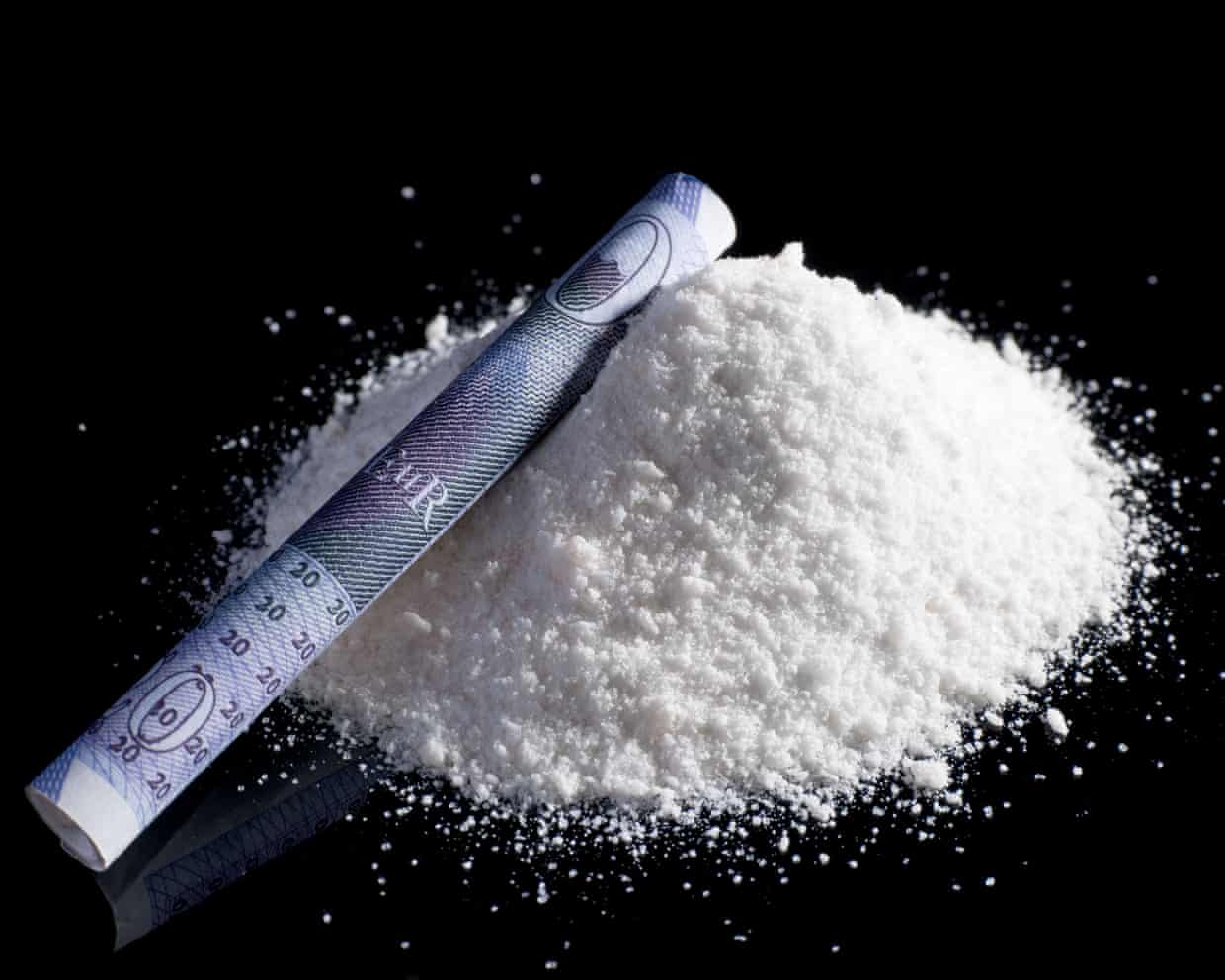
Recreational drugs can more than double the risk of stroke, with some of the most concerning impacts seen among younger people, a major review suggests.Scientists analysed medical data from more than 100 million people and found that the risk of stroke was 122% higher for amphetamine users and 96% higher for cocaine users compared with those who did not take the drugs.Cannabis users were also at greater risk, suffering 37% more strokes than non-users, the review found, though researchers saw no evidence that opioids, a highly addictive painkiller, added to a person’s risk of stroke.The rise in strokes observed in connection with some drugs was not confined to older people. When researchers focused on under-55s, they saw a near tripling in stroke risk among amphetamine users

Martha’s rule may have saved 400 lives so far in England, figures show
More than 400 lives may have been saved as a result of Martha’s rule, which lets NHS patients request a review of their care, official figures reveal.Helplines received more than 10,000 calls in the first 16 months of the scheme after its introduction in England in 2024, according to data seen by the Guardian. Thousands of patients were either moved to intensive care, received drugs they needed or benefited from other changes as a direct result of the calls.The system is named after Martha Mills, 13, who died in 2021 from sepsis after a bicycle accident. A coroner found she would probably have survived if she had been moved to the intensive care unit at King’s College hospital in London when she began deteriorating

How ADHD diagnosis helped my mental health | Letters
In suggesting there is a possibility that we all lie somewhere on an ADHD continuum, your correspondent (Letters, 27 February) is missing the point.ADHD – and autism – are neurodiversities, meaning that the brains of individuals with ADHD and/or autism are “wired” differently from those of people with “typical” brains. In other words, you either have it or you don’t. To suggest that everyone is a bit ADHD or a bit autistic is insulting to those of us who actually are ADHD/autistic, and diminishes our lived experience. Yes, self-help tools can be useful

Labour should aim to end sexual exploitation, not just curb its visibility | Letter
Your editorial on adult services websites (4 March) rightly raises urgent questions about platform harm and the government’s responsibility to act.Unseen’s modern slavery helpline indicated 799 potential victims of sexual exploitation in 2025. Reports of child sexual exploitation more than doubled in 2024 – from 53 to 110. These are not projections. They are cases reported directly to us by victims and frontline workers with nowhere else to call

G7 to discuss release of emergency oil reserves as price tops $100

Iran war drives oil prices above $100 a barrel for first time since 2022

Why has the Iran war sparked fears of stagflation for the global economy?

Average UK office attendance ‘settling’ at highest level since before Covid

Ending UK customs relief on low-value imports could push up prices, BCC says

Britain’s job market ‘floundering’ as companies remain cautious about hiring