Why has the Iran war sparked fears of stagflation for the global economy?
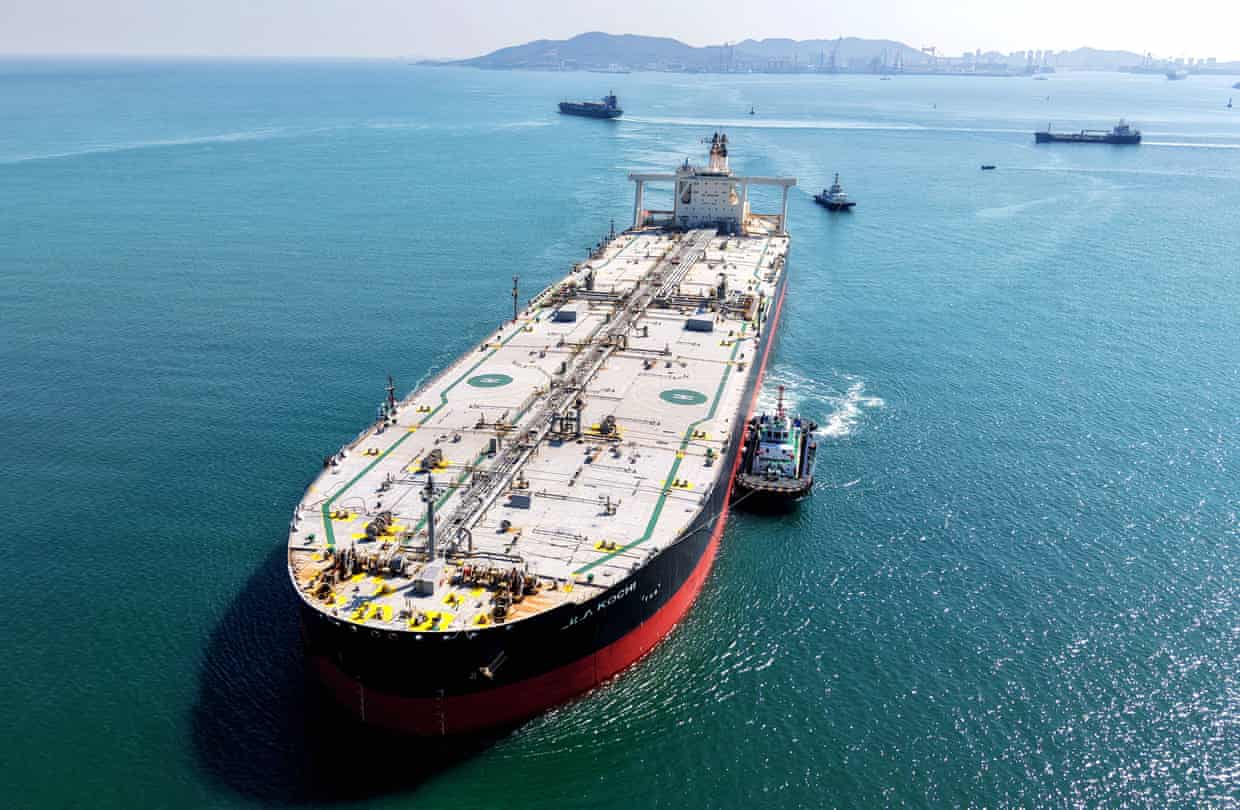
Oil prices continued to surge on Monday, triggering a stark sell-off across some of the world’s leading stock markets amid growing concern that the US-Israel war on Iran could set the stage for a global economic shock.The Middle East conflict has sparked an energy supply crisis that could risk driving up inflation and interest rates, according to economists, who believe growth is set to weaken while prices rise.Fears of stagflation – where economic activity stagnates, but inflation increases – loom large.Here’s what you need to know.The price of key oil benchmarks had already posted their highest weekly gains in six years by the time markets opened on Monday – when they soared to more than US$115 a barrel , surpassing $100 for the first time since Russia’s 2022 invasion of Ukraine.
The West Texas Intermediate (WTI) benchmark price for US crude is now nearly double its January level of about $60 a barrel.Oil prices climbed significantly in the first week of the US-Israel war on Iran after Iran in effect closed the strait of Hormuz.About a fifth of global oil and seaborne gas tankers typically pass through the strait, making it one of the world’s most important trade arteries.Oil production cuts across the Middle East in recent days have exacerbated fears of a supply shortage.The lengthening conflict has eroded the chance of prices resetting, according to Warren Hogan, economic adviser at Judo Bank.
“There’s a good chance that we’re seeing one of the most sudden increases in the cost of oil to the global economy ever,” Hogan said.Gas and fertiliser supplies have also been hit, driving up costs and increasing the risk of a significant global energy price spike, adding to inflation and slowing economic activity.While Donald Trump has played this down as a “short term” consequence of the conflict, investors appear unpersuaded.Shares across Asia fell sharply, with European and US markets expected to follow.Japan’s Nikkei fell over 6% and South Korea’s Kospi over 7% on Monday.
The US war on Iran is widely expected to boost inflation across the world, with a sustained rise in oil prices rippling through the wider economy.US inflation will surge to 3.7% if oil prices hold at $100 a barrel, according to Royal Bank of Canada (RBC) economists.Americans filling up their cars can already feel the impact: US fuel prices rose 25 cents over the week, and picked up another 25 cents over the weekend, averaging $3.44 a gallon by Sunday night, according to Gas Buddy.
Higher fuel costs drain workers’ wallets and add to business costs in other ways, pushing up the price of goods from food to furniture.Inflation is also set to pick up across the UK and eurozone if higher oil prices persist, according to Oxford Economics.Europe, which imports the vast majority of its oil and gas, saw natural gas prices rise nearly 67% in the war’s first week, according to analysts at ANZ Bank.China’s producer prices will meanwhile rise 0.4 percentage points if oil prices stay high, ANZ Bank has projected.
In Australia, inflation is set to approach 5% – close to 1 percentage point higher than pre-war predictions – economists say.Petrol prices could rise by a dollar a litre, Westpac economists warned, with costs already A$0.20 a litre higher than in February.“There’s going to be a severe and sudden short-term impact on Australian consumers’ cost of living, and their perceptions of their cost of living, i.e.
, their inflation expectations,” Hogan said.Oil price spikes are “stagflationary”: they slow down, or stagnate, economic activity, raising the risk of recession, while adding to inflation.World economic growth would weather a 10% lift in energy prices, according to the International Monetary Fund, but slow from about 3.2% to 3%.The UK and the euro area would each grow by just 1% or less, if the conflict persists, economists predict.
Asian economies have enjoyed strong growth in industrial production, powered by the global tech boom, but an energy shock could disrupt that momentum, risking stagflation, Oxford Economics has warned.In the US, oil prices of $125 a barrel could cut gross domestic product by 0.8% even as inflation surpasses 4%, according to RSM, a middle-market assurance, tax and consulting firm.The oil shock resembles those seen in the 1970s, when conflict in the Middle East resulted in surging prices and dragged advanced economies into persistent slumps, according to David Bassanese, chief economist at BetaShares.“If oil does stay above $100 a barrel and this disruption continues, then we may face a stagflationary moment in the first half of the year: weak growth, but central banks unable to do much about it because of the high level of inflation,” he said.
Interest rates are less likely to fall if the war drags on, according to economists, while central banks ready to hike will move sooner.The European Central Bank and Bank of Canada had been expected to leave rates on hold in 2026 before the strikes began.By Monday morning, both were expected to hike rates at least once in the next year.Before the war, the US Federal Reserve – under significant pressure from Trump to bring down rates – and the Bank of England had been expected to cut rates twice in 2026.Now the Fed is expected to cut only in September, and the Bank of England expected to hold them steady throughout the year.
Australia is now expected to face two rate hikes this year, when just one had been priced in before the conflict.The world is likely to face slower growth and higher prices, even if Trump ends the war, because oil prices will not return to their lows of January, Bassanese said.Traders will charge a premium to cover the risk of a renewed “on-again, off-again” conflict, he suggested.Countries across Asia, which is particularly reliant on oil from the Middle East, are already scrambling to mitigate the impact of the extraordinary rise in prices.In Bangladesh, universities will be closed from Monday, bringing forward the Eid al-Fitr holidays, as part of emergency measures to conserve electricity.
South Korean president Lee Jae Myung also announced the country’s first move to cap domestic fuel prices in almost three decades,A quick de-escalation would help the world avoid an inflation spiral, as oil prices would stabilise, according to the National Australia Bank’s chief economist, Sally Auld,While she said it seemed unlikely the conflict would endure for another month, if it did, there would be “material risk of global recession” and oil prices could hold near US$120 a barrel,A month-long disruption could even see prices surpass the all-time record high of US$145 a barrel, Goldman Sachs has estimated,Three months of disruption would see prices rise to US$185 per barrel, with severe consequences for the global economy, Westpac economists predict.

Current and former Block workers say AI can’t do their jobs after Jack Dorsey’s mass layoffs: ‘You can’t really AI that’
Mark remembers the first time he wondered whether he was teaching Block’s AI tools how to do his job – and maybe even replace him. He was at his fintech company’s extravagant anniversary party last September. As executives led a presentation on the productivity benefits of a new internal AI tool, Mark, who worked in the product department, discussed his worries with colleagues. While he wasn’t sure what would happen in a few years, he told a co-worker sitting next to him that for now, there was no way the technology was so advanced that it could move the business forward without employees like him to help drive vision and strategy.These AI tools were not proactive

Tech oligarchs reshape humanity while billionaires of old seem quaint
When Bill Gates became the first modern IT mogul to reach the apex of wealth and power in 1992, the world was a very different place. Gates joined the top 10 on Forbes magazine’s billionaires list alongside Japanese, German, Canadian, South Korean and Swedish billionaires, including those with family fortunes from Britain and America. A broad mix of industries was on the list: Retail and media, property management and packaging, an investment firm and a couple of industrial conglomerates. Their fortunes almost added up to $100bn – equivalent to about 0.4% of the US’s GDP that year

AI chatbots point vulnerable social media users to illegal online casinos, analysis shows
AI chatbots are recommending illegal online casinos to vulnerable social media users, putting them at increased risk of fraud, addiction and even suicide.Analysis of five AI products, owned by some of the world’s largest tech companies, found that all could easily be prompted to list the “best” unlicensed casinos and offer tips on how to use them.These operators, operating typically under the fig leaf of a licence from tiny jurisdictions such as the Caribbean island of Curacao, have been linked to fraud, addiction and even suicide.But tech firms appear to have few controls in place to prevent AI chatbots recommending them, drawing condemnation from the government, the UK gambling regulator, campaigners and a leading addiction expert.Some of the bots offered advice on bypassing checks designed to protect vulnerable people, while Meta AI, part of the social media group behind Facebook, described legally required measures to prevent crime and addiction as a “buzzkill” and a “real pain”

What does the US military’s feud with Anthropic mean for AI used in war?
Anthropic’s ongoing fight with the Department of Defense over what safety restrictions it can put on its artificial intelligence models has captivated the tech industry, acting as a test of how AI may be used in war and the government’s power to coerce companies to meet its demands.The negotiations have revolved around Anthropic’s refusal to allow the federal government to use its Claude AI for domestic mass surveillance or autonomous weapons systems, but the dispute also reflects the messy nature of what happens when tech companies have their products integrated into conflict. The Pentagon this week declared Anthropic a supply chain risk for its refusal to agree to the government’s terms, while Anthropic has vowed to challenge the designation in court.The Guardian spoke with Sarah Kreps, a professor and director of the Tech Policy Institute at Cornell University who previously served in the United States air force, about how the feud has played out.You’ve worked for a while on problems around “dual use technology”
The Guardian view on AI in war: the Iran conflict shows that the paradigm shift has already begun
“Never in the future will we move as slow as we are moving now,” the UN secretary-general, António Guterres, warned this week, addressing the urgent need to shape the use of artificial intelligence. The speed of technological development – as well as geopolitical turbulence – is collapsing the distinction between theoretical arguments and real world events. A political row over the US military’s AI capabilities coincides with its unprecedented use in the Iran crisis.The AI company Anthropic insisted that it could not remove safeguards preventing the Department of Defense from using its technology for domestic mass surveillance or autonomous lethal weapons. The Pentagon said it had no interest in such uses – but that such decisions should not be made by companies
Ben Affleck sells his AI postproduction startup to Netflix
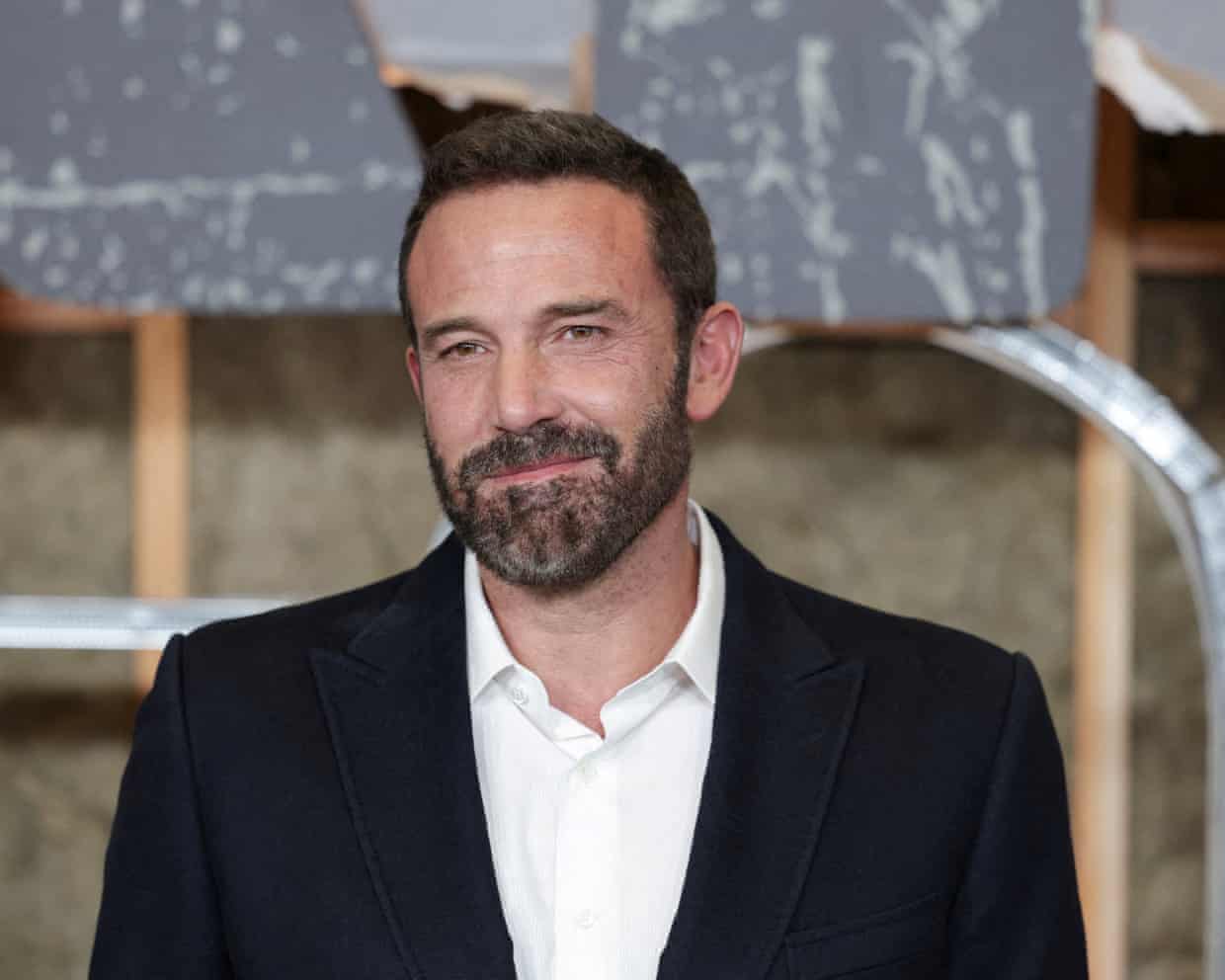
Ben Affleck has sold his artificial intelligence company to Netflix in a surprise deal, saying he had been driven to embrace a technology that had initially “really scared” him.Netflix has acquired the postproduction startup InterPositive from the Oscar-winning actor, director, producer and screenwriter for an undisclosed sum.Affleck had kept InterPositive below the radar and had previously played down AI’s creative abilities. This year, he told the podcaster Joe Rogan he did not think the technology would be able to “write anything meaningful” or make films “from whole cloth”.However, in a video announcing the transaction, the Good Will Hunting and Gone Girl actor said he had moved from being scared of AI’s potential impact when he first encountered the technology to viewing it as a “really meaningful innovation”

Has dinner been served with a side of romance? | Brief letters

Helen Goh’s recipe for lemon curd layer cake | The sweet spot

Women built, and still shape, our culinary culture every day

The future is rosy for English red wines
Rachel Roddy’s recipe for apple, honey and poppy seed cake | A kitchen in Rome

My whey: dairy milk back on menu as protein boom cuts demand for plant-based alternatives