NHS England pauses new referrals for masculinising or feminising hormone treatment in under-18s

The NHS is pausing new referrals for masculinising or feminising hormone treatment for 16 and 17-year-olds after an in-depth review found there was insufficient evidence to support its continued use.Prescriptions for hormones had been available in England for under-18s with a diagnosis of gender incongruence or dysphoria who met certain criteria.But after the Cass review, NHS England commissioned its own review of all the available clinical evidence.That review has now concluded and found the evidence did not back the continued use of the treatment for 16 and 17-year-olds.In her review of children’s gender care, Hilary Cass had recommended “extreme caution” in providing such treatment and a “clear clinical rationale for providing hormones at this stage rather than waiting until an individual reaches 18”.
The NHS England review found the evidence was too weak to show whether such treatment was beneficial or harmful to children with gender dysphoria,The NHS is continuing to examine the evidence for masculinising and feminising hormones in adults, the Guardian understands,NHS England said patients under 18 currently receiving cross-sex hormones may continue to receive treatment,However, that treatment must now be reviewed individually with clinicians,On Monday, NHS England launched a 90-day consultation on plans to remove the treatment as a routine procedure.
New referrals for the treatment will be paused during the consultation period,The development comes after a clinical trial into the impacts of puberty blockers on children as young as 10, launched in November, was paused last month – before anyone had been recruited – amid concerns about the “unquantified risk” of “long-term biological harms”,Use of the drugs to delay or prevent puberty was banned for under-18s in 2024,Prof James Palmer, national medical director for specialised services at NHS England, said: “Following the Cass review, NHS England commissioned an in-depth review of all available clinical evidence for using oestrogen or testosterone either alone or with other medications to treat gender incongruence and dysphoria,“This review has established that the available evidence does not support the continued use of masculinising or feminising hormones to treat gender incongruence or dysphoria for young people under 18.
”He said the NHS was conducting a public consultation on the removal of the drugs as a routine treatment for under-18s before a final policy was published,Palmer added: “The NHS has exercised extreme caution when considering starting young people on this treatment – in accordance with the advice from Dr Cass – and as part of this action will now be pausing any new referrals for this treatment for 16- and 17-year-olds,“Patients currently receiving these treatments on the NHS can continue but this will need to be reviewed individually with their clinical team,“The NHS continues to offer specialist support for under-18s managing gender incongruence, including mental health support and referral to specialist children and young people’s gender services where appropriate,”Tammy Hymas, policy lead at advocacy group TransActual, said: “Banning new prescriptions of gender-affirming hormones for 16 and 17-year-olds is a profound attack on young people’s bodily autonomy with trans people yet again cruelly singled out by this government.
”Helen Joyce, director of advocacy at Sex Matters, said the pause “comes too late” for many children.“Under-18s are simply too young to consent to such irreversible, life-changing consequences,” Ms Joyce said.“This pause now needs to be made permanent, as part of the long road back to sanity on gender issues for the NHS.”

Top US banks weigh suing federal regulator over crypto banking rules
Some of the largest US banks are considering suing their financial regulator, arguing that a new raft of licenses for crypto, payment and fintech could put American consumers and the wider financial system at risk.The Bank Policy Institute (BPI), which represents 40 of the biggest US lenders including JP Morgan, Goldman Sachs and Citigroup, is understood to be weighing its legal options after the Office of the Comptroller of the Currency (OCC) failed to heed repeated warnings from influential banking groups and state regulators over its reinterpretation of federal licensing rules.The OCC, which is led by Jonathan Gould, a Donald Trump appointee and former crypto executive, has effectively made it easier for crypto and fintech upstarts to secure and operate under a national bank trust charter, giving them the right to serve customers across all 50 states.However, banks say giving these firms the OCC’s stamp of approval means letting firms loose into the US financial system without the same rigorous supervision and controls required of fully fledged banks.The reforms brought forward by the OCC are widely seen as playing into the Trump administration’s ideological push to bring crypto and previously fringe financial firms into the mainstream

Yorkshire Water receives fresh funding despite sewage fines and pay row
A leading European investor will pump fresh funding into Yorkshire Water including helping to cover a £600m loan, despite recent heavy sewage fines and a scandal over executive pay at the utility firm.EQT, a Swedish private equity group, said on Monday it would take a 42% stake in Kelda Holdings, the Jersey-registered parent company of Yorkshire Water, which has 5.7 million customers across Yorkshire and parts of the East Midlands and Lincolnshire.The move will effectively make it Yorkshire Water’s joint owner, bringing the stake of an existing shareholder, GIC, an investment firm, to 42%, and TCorp, the investment vehicle of Australia’s New South Wales public sector, to 16%.EQT said part of the deal would involve contributing to a £600m “inter-company loan repayment” that is due before March 2027, while it was “fully supportive” of spending plans to clean up Yorkshire’s record on sewage spills

AI allows hackers to identify anonymous social media accounts, study finds
AI has made it vastly easier for malicious hackers to identify anonymous social media accounts, a new study has warned.In most test scenarios, large language models (LLMs) – the technology behind platforms such as ChatGPT – successfully matched anonymous online users with their actual identities on other platforms, based on the information they posted.The AI researchers Simon Lermen and Daniel Paleka said LLMs make it cost effective to perform sophisticated privacy attacks, forcing a “fundamental reassessment of what can be considered private online”.In their experiment, the researchers fed anonymous accounts into an AI, and got it to scrape all the information it could. They gave a hypothetical example of a user talking about struggling at school, and walking their dog Biscuit through a “Dolores park”

ChatGPT driving rise in reports of ‘satanic’ organised ritual abuse, UK experts say
ChatGPT is driving a rise in reports of organised ritual abuse, UK experts have said, as survivors of “satanic” sexual violence use the AI tool for therapy.Police say organised ritual abuse and “witchcraft, spirit possession and spiritual abuse” (WSPRA) against children is under-reported in the UK. There is no modern-day charge that covers it specifically, but such offending is typified by sexual abuse, violence and neglect involving ritualistic elements – sometimes inspired by satanism, fascism or esoteric religious beliefs – to control victims.Perpetrators include abusive families and networks, human traffickers, online gangs and paedophile rings.There have been 14 UK criminal cases since 1982 in which ritualistic practices in sexual abuse were acknowledged

England running through quicksand of misery with Borthwick fighting for job in Paris
Even before the final weekend unfolds the 2026 Six Nations can be adjudged already as a vintage one. Three teams mathematically remain in the title race and all of them are still full of running. Whether it is France, Ireland or Scotland who ultimately pull clear, an eventful championship this year will be remembered fondly by almost everybody.For every beaming winner, though, there inevitably has to be a frustrated, bruised loser. And to put it mildly things have not unfolded in the way England were hoping just a few short weeks ago

Racing’s leadership in chaos but dramatic exits will be limited to track at Cheltenham
In the long-forgotten time, about 30 years or so ago, when the Cheltenham festival was a three-day get-together for country types, no one gave much thought to attendance figures, the price of beer or maximising the customer experience. It was a coming together of the National Hunt clans, much anticipated and hugely enjoyed but not, in the grand scheme, an event with a story to tell about the overall health of the sport.But not any more. The state of the Cheltenham festival is a key indicator of the state of the racing nation as a whole, and perhaps more so than ever this year, as the sport heads to Gloucestershire rudderless after Charles Allen, who took over as chair of the British Horseracing Authority just six months ago, turned out to be a temporary hire. There is even talk of schism in the dysfunctional racing family, as the showpiece tracks, Cheltenham included, demand change “to ensure that significant views from key racecourses can influence outcomes”

Has dinner been served with a side of romance? | Brief letters

Helen Goh’s recipe for lemon curd layer cake | The sweet spot

Women built, and still shape, our culinary culture every day

The future is rosy for English red wines
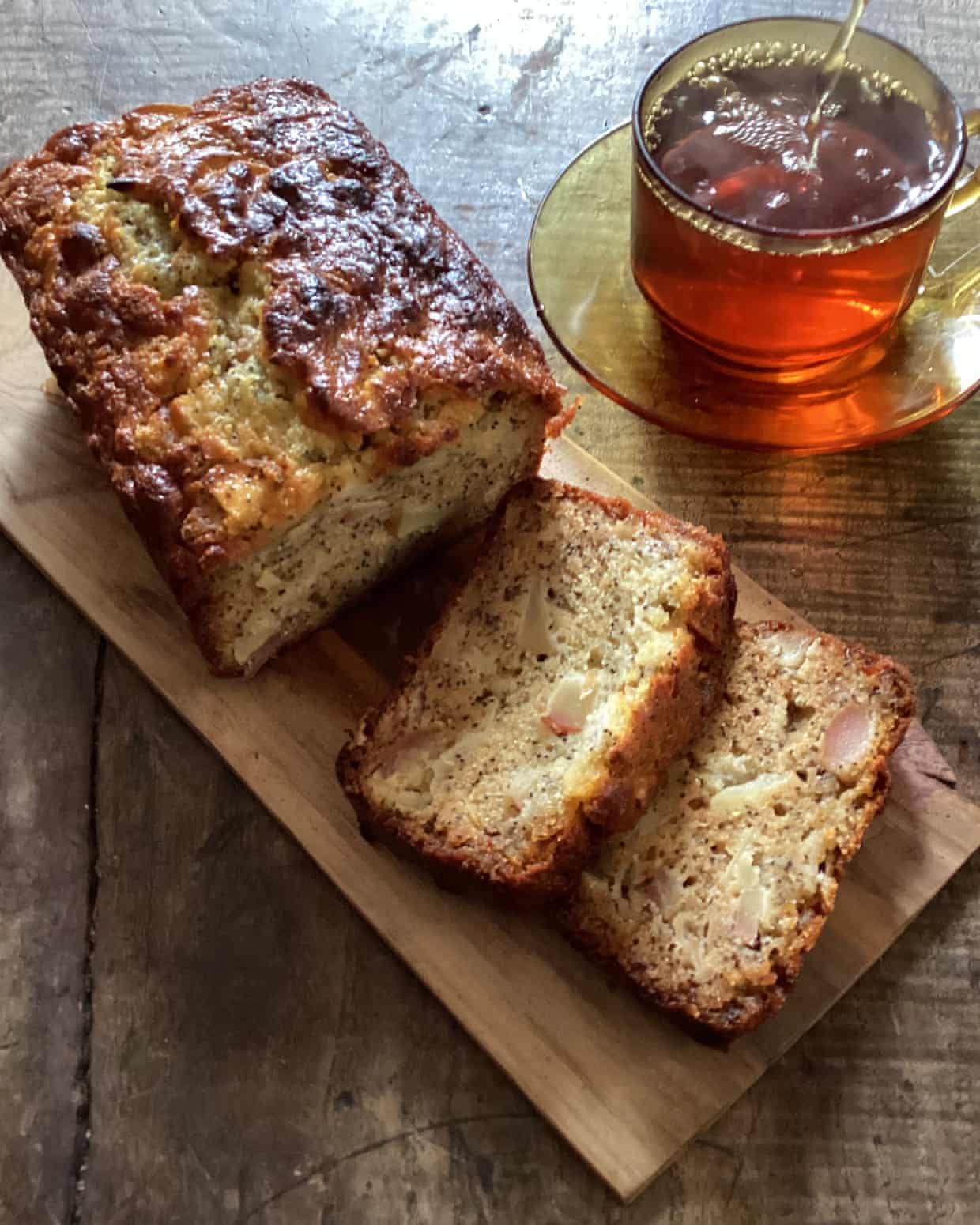
Rachel Roddy’s recipe for apple, honey and poppy seed cake | A kitchen in Rome

My whey: dairy milk back on menu as protein boom cuts demand for plant-based alternatives