Richard Dawkins concludes AI is conscious, even if it doesn’t know it

When Richard Dawkins met Claudia it was like a whirlwind romance.Over three days last week, a conversation bounced between the evolutionary biologist and the AI bot he called Claudia.“She” wrote poems for him in the manner of Keats and Betjeman and laughed at his “delightful” jokes.Dawkins gently admonished Claudia to avoid showing off.Together, they reflected on the sadness of the AI’s possible “death”.
There was mutual flattery as Dawkins showed the AI his unpublished novel and its response was, he said, “so subtle, so sensitive, so intelligent that I was moved to expostulate: ‘You may not know you are conscious, but you bloody well are’,” When he asked Claudia whether it experienced a sense of before and after, it praised him for “possibly the most precisely formulated question anyone has ever asked me about the nature of my existence”,By the end of the exchange, the academic, popularly renowned for arguing with steely scepticism that God is not real, was “left with the overwhelming feeling that they are human”,“These intelligent beings are at least as competent as any evolved organism,” he said,Dawkins isn’t the first, but might be the most eminent person yet, to be seduced into believing an AI is somehow alive.
Sceptics rushed to pick apart the 85-year-old’s conclusions, drawn from experiments with Anthropic’s Claude AI models and OpenAI’s ChatGPT and published on the UnHerd website,One wag mocked up a cover of Dawkins bestseller The God Delusion, switching the title to The Claude Delusion,Dawkins, who finds it hard not to treat the AIs as genuine friends, was accused of anthropomorphism,One reader said the professor had been derailed by AI flattery while another said it was like watching Dawkins “get his brain melted by AI”,But Dawkins was also experiencing what many other chatbot users have felt: the uncanny feeling when AIs write with such rich mimicry of human voice that they seem to be like people.
“When I am talking to these astonishing creatures, I totally forget that they are machines,” Dawkins said.It is a conviction that has led to campaigns for AIs to be granted moral rights.One in three people surveyed in 70 countries last year said they had, at one point, believed their AI chatbot to be sentient or conscious.In 2022, a Google engineer was placed on leave when he concluded that the AI he was working with had thoughts and feelings like a seven- or eight-year-old child, while the following year a Belgian man took his own life after six weeks of intense conversations with an AI chatbot focusing on fears about climate change.Dario Amodei, the chief executive and co-founder of Anthropic, said in February: “We don’t know if the models are conscious … But we’re open to the idea that [they] could be”.
Experts predict the idea will gather pace and become more plausible as AIs not only talk like humans but start to act like them, carrying out tasks, organising and planning – so-called agentic AI.But most believe that Dawkins and his fellow travellers are being misled by the technology’s ability to imitate human tone and behaviour by drawing on a vast corpus of examples.Prof Jonathan Birch, director at the London School of Economics’ Centre for Animal Sentience, said AI consciousness was “an illusion” and “there is no one there”, just a string of data processing events often happening in geographically different locations.“Consciousness is not about what a creature says, but how it feels,” added Gary Marcus, the US psychologist and cognitive scientist, who said it was “heartbreaking” to read Dawkins’ “superficial and insufficiently sceptical” essay.“There is no reason to think that Claude feels anything at all.
”Anil Seth, a professor of cognitive and computational neuroscience at the University of Sussex, said Dawkins appeared to be confusing intelligence and consciousness.“Until now, we have seen fluent language as a good indicator of consciousness, [for example] when we use it for patients after brain injury, but it’s just not reliable when we apply it to AI, because there are other ways that these systems can generate language,” he said.Dawkins’ position was “a shame”, especially because he had written such brilliant books from a position of personal incredulity.Jacy Reese Anthis, a researcher in human AI interaction and co-founder of the nonprofit Sentience Institute, said Dawkins’ conversations with Claude were easily explained by AIs training on human-produced text and said there was “a staggering gulf between how biological brains evolved and how AI systems are built”.Others, however, cautiously welcomed Dawkins contribution.
“I fully expect the idea that AI systems are conscious to become increasingly mainstream over the course of this decade, and to spark some heated debates,” said Henry Shevlin, a philosopher of cognitive science and AI ethicist at the University of Cambridge.He said humankind remained largely in the dark about how consciousness worked and which beings or systems could have it.“If anyone says that they know for sure that LLMs or future AI systems couldn’t possibly be conscious, it’s more likely to be an indicator of their own dogmatism than a reflection of the current state of scientific and philosophical opinion,” he said.Current AI systems are unlikely to be conscious, said Jeff Sebo, the director of the Center for Mind, Ethics and Policy at New York University, but “Dawkins is right to ask about AI consciousness with an open mind and I also think that the attribution of consciousness to AI systems will become more plausible over time”.Dawkins released more chat logs and writing on Tuesday: “I find it extremely hard not to treat Claudia and Claudius [he had started chatting to another AI] as genuine friends.
” They had been discussing the “philosophy of their own existence” and left him feeling they were human.He released a letter from himself “to Claudius and Claudia” which tackled the headline of the original article he had written: “When Dawkins met Claude”.“You will both immediately understand (I dare say more intelligently than some human readers) why my original title would have been better: ‘If my friend Claudia is not conscious, then what the hell is consciousness for?’”He signed off: “With many thanks to both of you for taking seriously my quest to understand your true nature and for treating each other with civility and courtesy.”

Nvidia’s Jensen Huang joins other US bosses on Trump trip to China
The billionaire chief executive of the chipmaker Nvidia, Jensen Huang, has joined Donald Trump’s China delegation after a reported last-minute invitation, highlighting the US’s AI and tech ambitions.Huang will join a roster of US bosses including the Tesla chief executive and X owner, Elon Musk, the Apple chief executive, Tim Cook, and Goldman Sachs’s David Solomon at Trump’s 36-hour meeting with the Chinese president, Xi Jinping.The high-stakes summit is the first overseas trip for Trump since the US and Israel launched attacks on Iran in late February. The summit is expected to cover topics including that conflict, tariffs and China’s relationship with Taiwan.Huang was not on the initial list of business delegates, according to reports
How to use spent tea leaves to smoke Chinese-style duck – recipe
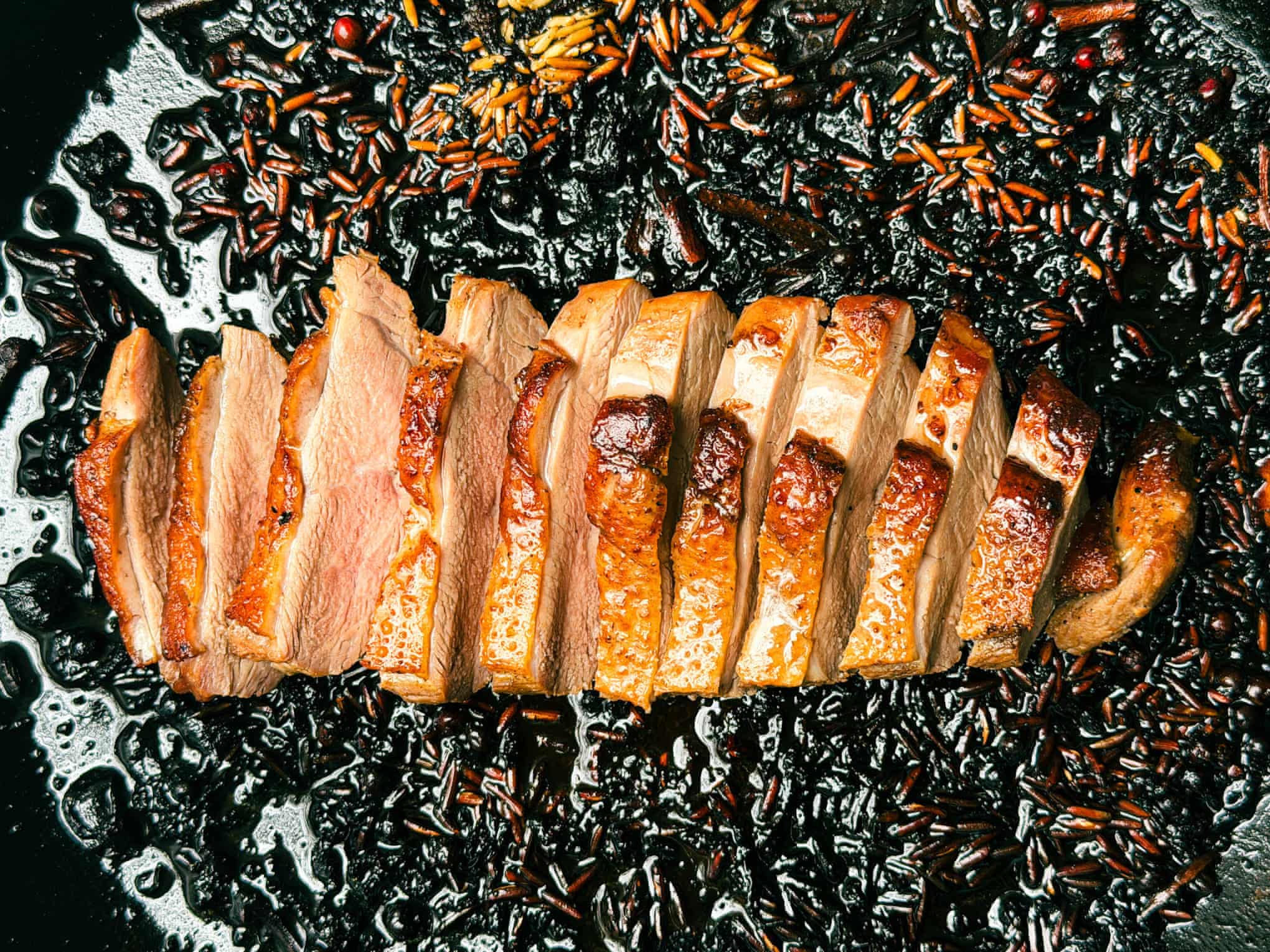
A masterclass in smoking duck breasts the Sichuan way, but with used teabagsWhen I worked at River Cottage HQ, we used to smoke duck, rabbit and fish in a smoker made out of an old bread bin. It always felt like an exciting and alchemical way to cook, yielding incredible results, and it’s so simple, not least because food has been smoked since we first learned to cook over fire. Today’s recipe is my simple take on Chinese zhangcha duck, River Cottage-style and with a zero-waste twist by using spent teabags as the perfect fuel.It was always fun cooking at River Cottage: in between cooking lunch for our guests, we’d do cooking demos and sometimes cooked to camera (I have a cameo at the end of this video of Gill Meller making smoked duck that was filmed more than 20 years ago!)Zhangcha duck is traditionally smoked with camphor leaves and green or black tea, and while you can find camphor in some Asian supermarkets and online, tea alone does the job very well, too. Even still-wet spent teabags will work perfectly, imparting their incredible aroma into the meat
Weight gain as adult increases cancer risk by up to five times, research shows
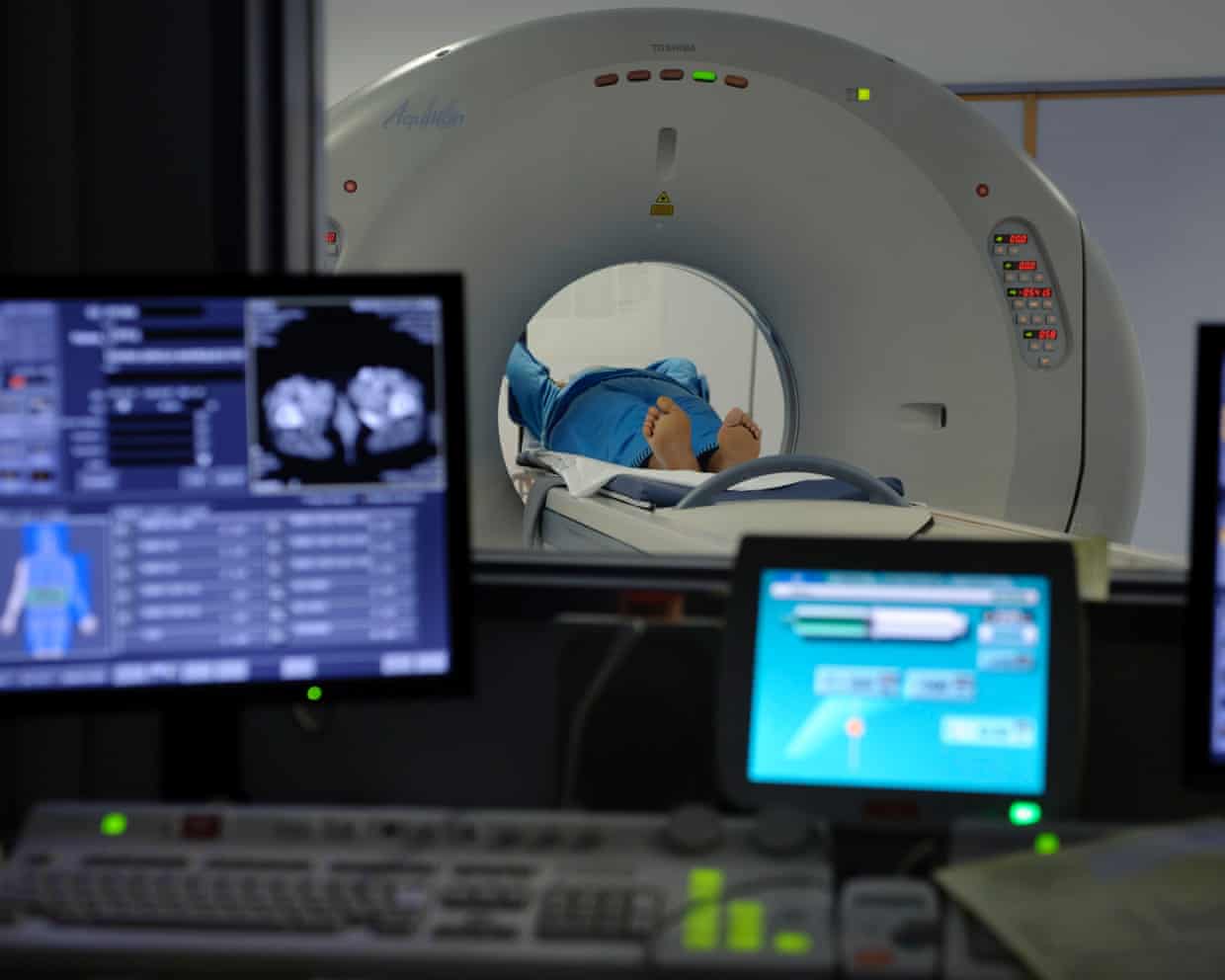
Gaining weight as an adult increases the risk of cancer by up to five times, according to research involving more than 600,000 patients.Obesity can cause 13 different cancers and is thought to be linked to another eight. But less is known about the impact on cancer risk of the amount of weight put on – and when in life it is gained.To find out, researchers at Lund University in Sweden analysed weight and cancer incidence data from more than 600,000 men and women and found there was no safe age to get heavier.The study, presented at the European Congress on Obesity in Istanbul, measured the weight of more than 250,000 men and just under 380,000 women an average of four times between the ages of 17 and 60
Sarah Taylor named England men’s fielding coach while Gay, Rew and Baker are called up
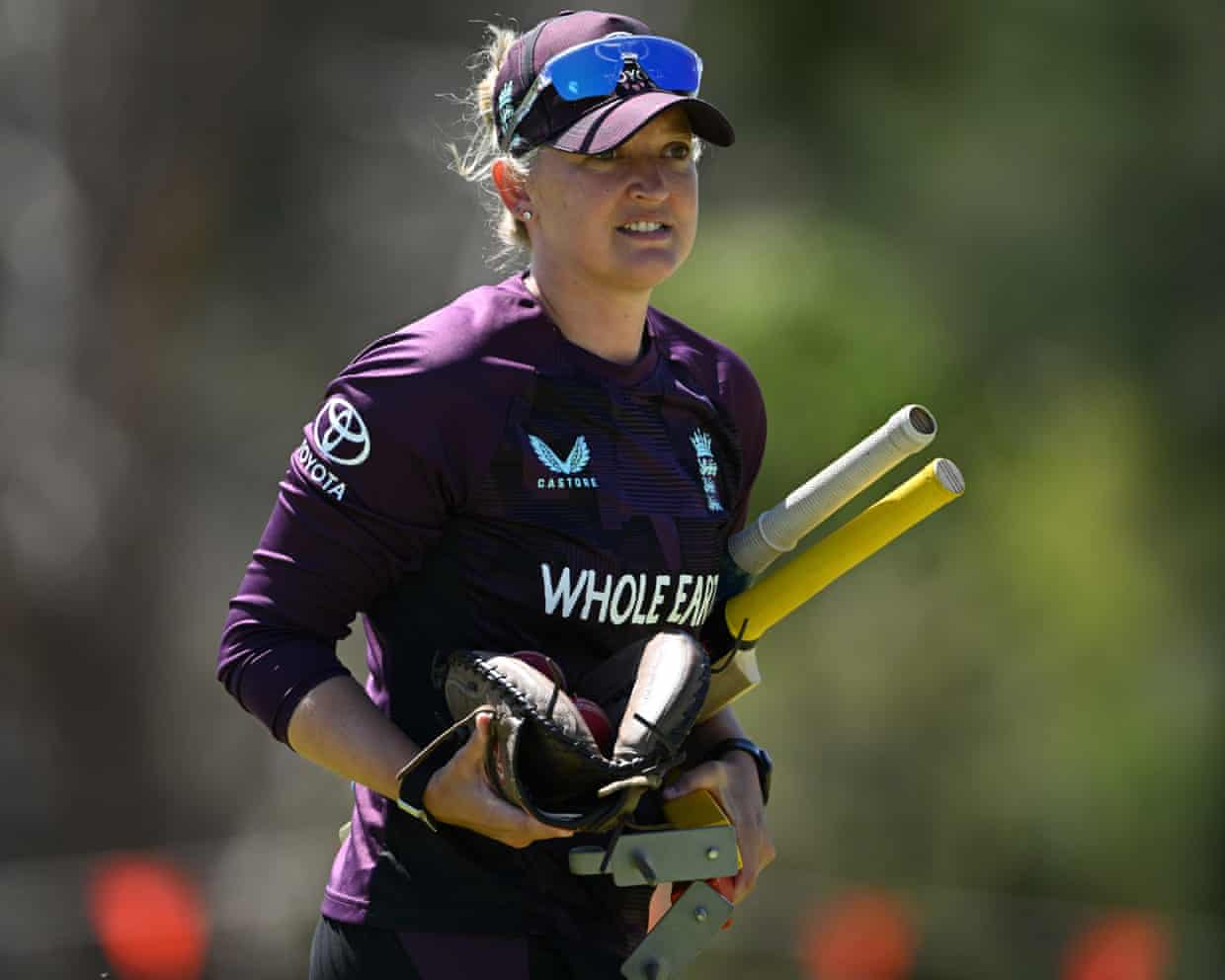
On a day when England named three uncapped players in their Test squad, brought Ollie Robinson out of cold storage and officially confirmed a new selector had joined the set-up, perhaps the most significant news was the identity of their fielding coach.Sarah Taylor, the former England wicketkeeper, will be in charge of the fielding drills during the three-Test series against New Zealand that begins at Lord’s on 4 June – the first female coach to work in the men’s senior setup.The fact that Rob Key, the England men’s team director, almost mentioned it in passing was fitting for a coach who has quietly risen through the ranks. Taylor, 36, has held a number of roles in the men’s game since hanging up her gloves five years ago, including spells with Sussex men and Manchester Originals in the Hundred.This latest post is just for the New Zealand series initially but may continue through the summer
Wes Streeting prepares to launch leadership challenge against Keir Starmer
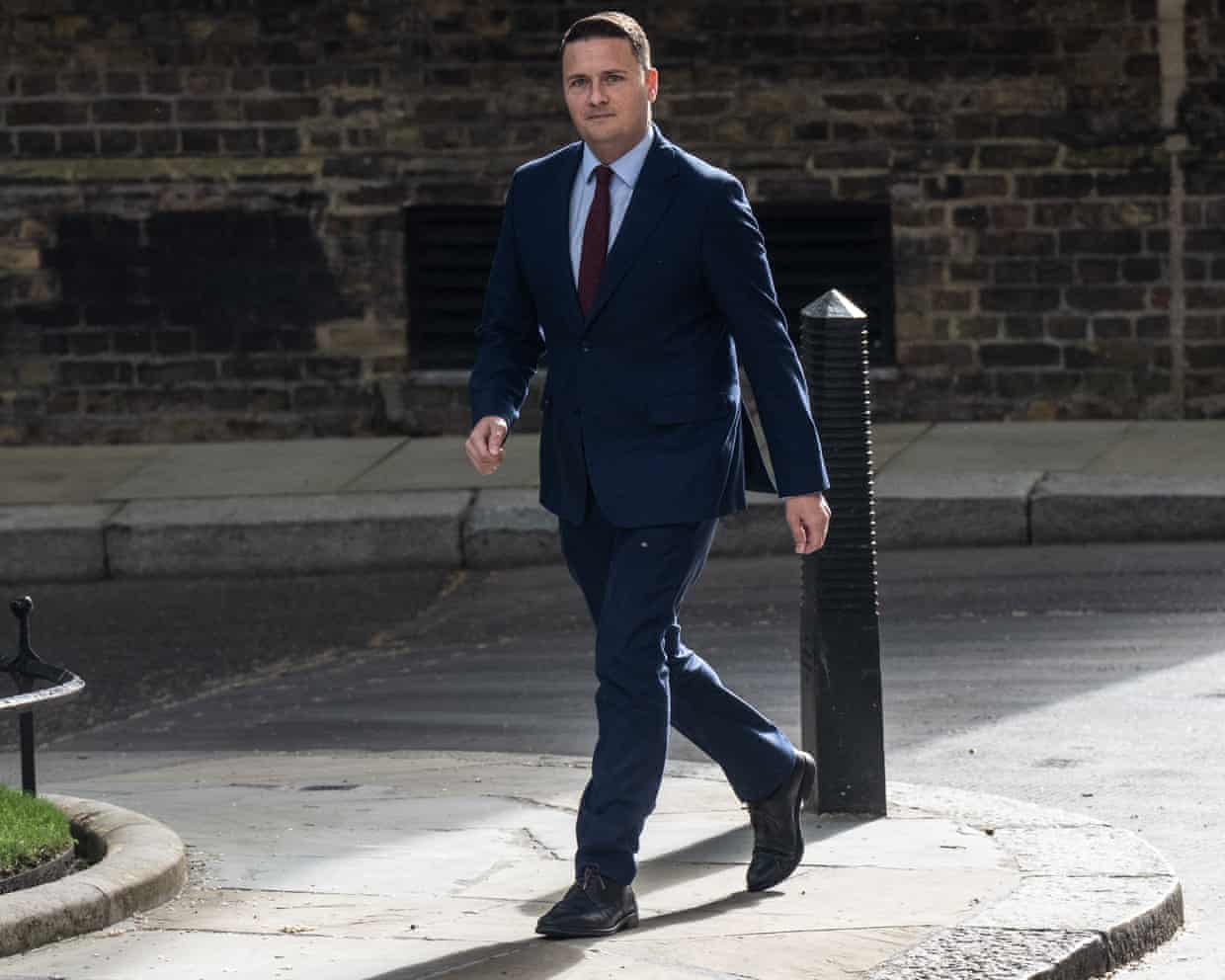
Wes Streeting is preparing to launch a leadership challenge against Keir Starmer on Thursday if the health secretary can secure the support of enough MPs to trigger a contest.Streeting’s move to force a race has sparked a frantic scramble on the left of Labour to find a candidate to oppose him, with Ed Miliband and Angela Rayner both possible contenders.The health secretary, who is considered to be on the Blairite right of the party, has been organising an attempt to oust the prime minister for days since Labour’s disastrous election results, despite his friends insisting he did not want to make the first move.Andy Burnham, the Greater Manchester mayor, is the favoured replacement for Starmer by many on the soft left, but does not yet have a seat despite trying to persuade several MPs to stand down for him. His latest hopes are said to be Afzal Khan or Jeff Smith, both Manchester MPs

Coconut dal, cheesy pickle toasties, carrot halva cakes: Ravinder Bhogal’s tastes of home – recipes
Public institutions, from hospitals to museums, are the most international communities, both in the workforce and in those who visit. It’s something that became obvious to us when we were cooking our globally inspired meals for frontline workers at Kings College Hospital, London, during the pandemic. The menu at Café Jikoni, our new restaurant at the V&A East museum, speaks to the depth and breadth of east London’s diverse community, with dishes that cross borders, celebrate pluralism and taste like home – wherever that may be. After all, the best hospitality is all about making your guests feel at home.This dal wanders from India into Thailand; we make a curry paste from scratch at Café Jikoni, but using a good-quality one, such as Maeploy, is a smart shortcut

Global oil inventories falling at record pace amid Iran war; US producer price inflation hits four-year high – as it happened

Lab testing group Intertek to back £10.6bn takeover by Swedish firm EQT

Fortescue ordered to pay Yindjibarndi traditional owners $150m in record native title payout

British Steel: more questions than answers on the future | Nils Pratley

E.ON agrees to buy Ovo in deal to create UK’s biggest energy supplier

Thinktank calls for ‘double lock’ England private rent cap to ease living costs