How Alex de Minaur can beat Carlos Alcaraz in Australian Open quarter-final

Alex de Minaur went into his quarter-final with Jannik Sinner at the 2025 Australian Open hopeful that he could make life difficult for the defending champion,Not only did that not happen, but the manner of his one-sided defeat left him wondering if he really had the game to trouble the top players,Fast forward a year and the Australian again finds himself in the last eight, again facing one of the sport’s superstars, this time Carlos Alcaraz,As with Sinner, the head to head doesn’t make pretty reading for De Minaur, with Alcaraz leading 5-0,This, though, is their first grand slam meeting and there is a growing feeling that things can be different.
Perhaps it’s because he’s playing the best tennis of his career.De Minaur enjoyed a slightly longer break than usual in the off-season, spending Christmas at home in Spain for the first time in nearly a decade.He won two matches at the United Cup and here, he has looked better than ever, losing just one set on his way to the quarters.De Minaur takes defeats harder than most.Softly spoken, the 26-year-old gives himself a hard time when he doesn’t play the way he wants to.
But there is a lightness about him this year, a realisation that if he plays the way he wants to play – more aggressively – and it doesn’t work, it’s not a mistake,“I need to give myself a pat on the back,” he said in the off-season,The epiphany – all tennis players know this but it tends to take them a long time to vocalise it – that focusing on results alone is not healthy has lifted his spirits and he seems to be walking taller than his 6ft-frame,Maybe it’s because he’s getting married this year, to fellow tennis player Katie Boulter, that he is seeing things this way,And so he will step out on Rod Laver Arena on Tuesday evening, most likely with the roof closed due to predicted temperatures of more than 40C, confident that he will at least play well.
That belief is backed up by the stats; he’s tied 12th in points won on first serve, with 79%, and tied sixth in points won on second serve, at 62%.Former Wimbledon champion Pat Cash noted that De Minaur has altered his position on the baseline.“He’s not being pushed back behind the baseline,” Cash says.“He’s changed his core positioning.I don’t know exactly when, but certainly at Wimbledon, he was pretty good at that.
And here he has just really nailed it.It’s really suddenly starting to work.Which means he looks like he’s attacking more, getting the ball back faster because of his core position.It’s very Andre Agassi.”His returns have always been a strength, but De Minaur is taking things to a new level here.
Across his four matches, he’s won 40% of points on his opponent’s first serve, the best in the field.On second serve, he’s tied 10th, with 57%.He’s going to need to return well, because Alcaraz has been serving especially well this fortnight, making 68% of first serves, enabling him to establish his superiority in the rallies, from where he can unload on his stunning groundstrokes and dictate the points.Watching Alcaraz, it appears he has been playing within himself, not going for too much.He’ll need all his energy against De Minaur, who is perhaps the only man who covers the court even better than the world No 1.
The squeaking of his shoes scuttling around the baseline at breakneck speed has been one of the sounds of this Australian Open,The key for De Minaur, though, won’t be his speed or his returns,It will surely be his serve,Against Sinner last year, he pressed too much, missing way too many first serves, allowing Sinner to attack his second,In his two most recent battles with Alcaraz, his first serve percentage was just 52%.
In his four matches at Melbourne Park, he’s averaging 62%.It should help him that the match is at night and likely to start with the roof closed, denying Alcaraz the extra spin created by the heat of the day.Instead, conditions may help the Australian’s flatter groundstrokes shoot through.For all his brilliance, Alcaraz has yet to make it past the quarters here either, so it’s not a place he feels totally at home yet.De Minaur has long said playing in Australia is a privilege, not pressure.
For a long time, it seemed like those were just words, that if he repeated them enough, he might believe them too.For the first time, there is genuine belief that he can get the job done.

UK’s biggest private hospital provider Spire in talks on sale to private equity
The UK’s biggest private hospital provider, Spire Healthcare, is in talks about a sale to private equity that could lead to it being delisted from the London Stock Exchange.The company, which owns the Claremont hospital in Sheffield and St Anthony’s hospital in south London, said on Monday that Bridgepoint Advisers and Triton Investments Advisers were “amongst the parties” with which it was in talks.Its shares jumped 18%, making Spire the top riser on the FTSE 250 on Monday. Spire said talks were at an early stage, adding: “There can be no certainty that any offer will be made.”It first announced a strategic review of its operations in September, saying it was in discussions with several parties to explore options including a potential sale of the business

Ryanair says it could use Starlink in future despite Elon Musk feud
Ryanair would be open to using Elon Musk’s Starlink wifi on its planes in the future, its finance chief has suggested, amid a feud between the boss of the Irish airline and the world’s richest person.The airline would look at “whoever is the best, when the tech and price is right” for in-flight wifi, the Ryanair chief financial officer, Neil Sorahan, said.Sorahan was speaking after an online spat between Ryanair boss Michael O’Leary and Musk, after O’Leary was asked whether he would follow Lufthansa and British Airways in installing Starlink satellite internet technology on his fleet of 650 aircraft.The chief executive rejected the idea, saying that adding antennas to the jets would result in a “2% fuel drag”, adding an extra $200-250m to its $5bn (£3.66bn) annual kerosene bill
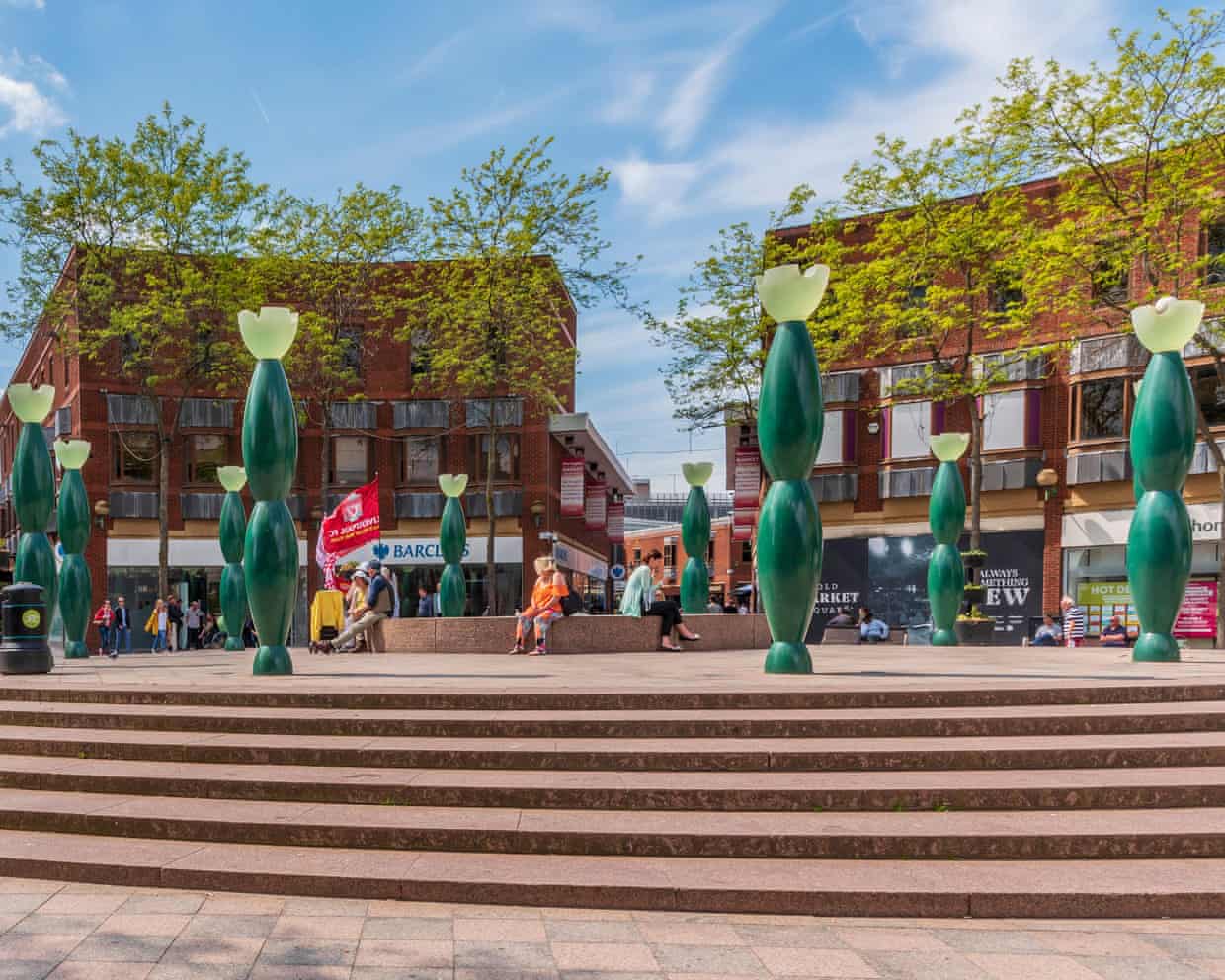
‘A southern economy in the north’: how Warrington has adapted to change
As the demolition excavator crashes its metal jaws through Warrington’s former Unilever soap factory, Carl Oates says the town is good at handling change. Once contractors have finished, his company plans to open a datacentre, reinventing a site from the first Industrial Revolution for the next.“As one industry closes, Warrington has been quite good at opening new ones – and we hope datacentres is one of those new spaces.”A director of a local property firm, Dante Group, he knows the blue corrugated-metal factory looming over Bank Quay station is a well-known local landmark on the Cheshire skyline. Alongside wire, beer and gin, soap helped to power Warrington’s industrial development

Disposable income in 11 towns and cities has risen twice as fast as rest of UK
Eleven towns and cities in the UK, including Warrington, Barnsley and Wakefield, have seen their disposable incomes rise twice as fast as the rest of the UK over the past decade, a study has found.A report from Centre for Cities, a thinktank, showed that between 2013 and 2023, disposable income for residents of these top performing towns and cities – all in England – rose by an average of 5.2%, compared with an increase of 2.4% for urban areas in the UK overall.The report said that if all 63 of the UK’s largest towns and cities had experienced the same rate of growth as the top 11 performers over this period, people would have pocketed an extra £3,200 on average in disposable income

US small businesses are doing fine. Don’t believe me? Look at the numbers
Regardless of all the challenges they face, small businesses have been doing pretty well in this country across the board. Don’t believe me? Take a look at some of the latest numbers.For more than 50 years, the National Federation of Independent Businesses (NFIB) has published a monthly report of small-business economic trends, based on a random sample of the organization’s approximately 300,000 member firms. This survey is one of the longest and most consistent of any I follow, using the same questionnaire since 1973. So where do things stand?Last year ended with a second consecutive monthly uptick in small-business optimism, with small-business owners anticipating that economic conditions would remain generally favorable going into 2026

More than a quarter of Britons say they fear losing jobs to AI in next five years
More than a quarter (27%) of UK workers are worried their jobs could disappear in the next five years as a result of AI, according to a survey of thousands of employees.Two-thirds (66%) of UK employers reported having invested in AI in the past 12 months, according to the international recruitment company Randstad’s annual review of the world of work, while more than half (56%) of workers said more companies were encouraging the use of AI tools in the workplace.This was leading to “mismatched AI expectations” between the views of employees and their employers over the impact of AI on jobs, according to Randstad’s poll of 27,000 workers and 1,225 organisations across 35 countries. Just under half (45%) of UK office workers surveyed believed AI would benefit companies more than employees.Younger workers, particularly those belonging to gen Z – born between 1997 and 2012 – were the most concerned about the impact of AI and their ability to adapt, while baby boomers – born in the postwar years between 1946 and 1964 and nearing the end of their careers – showed greater self-assurance

Ignore the snobbery and get into blended whisky

Helen Goh’s recipe for Breton butter cake with marmalade | The sweet spot
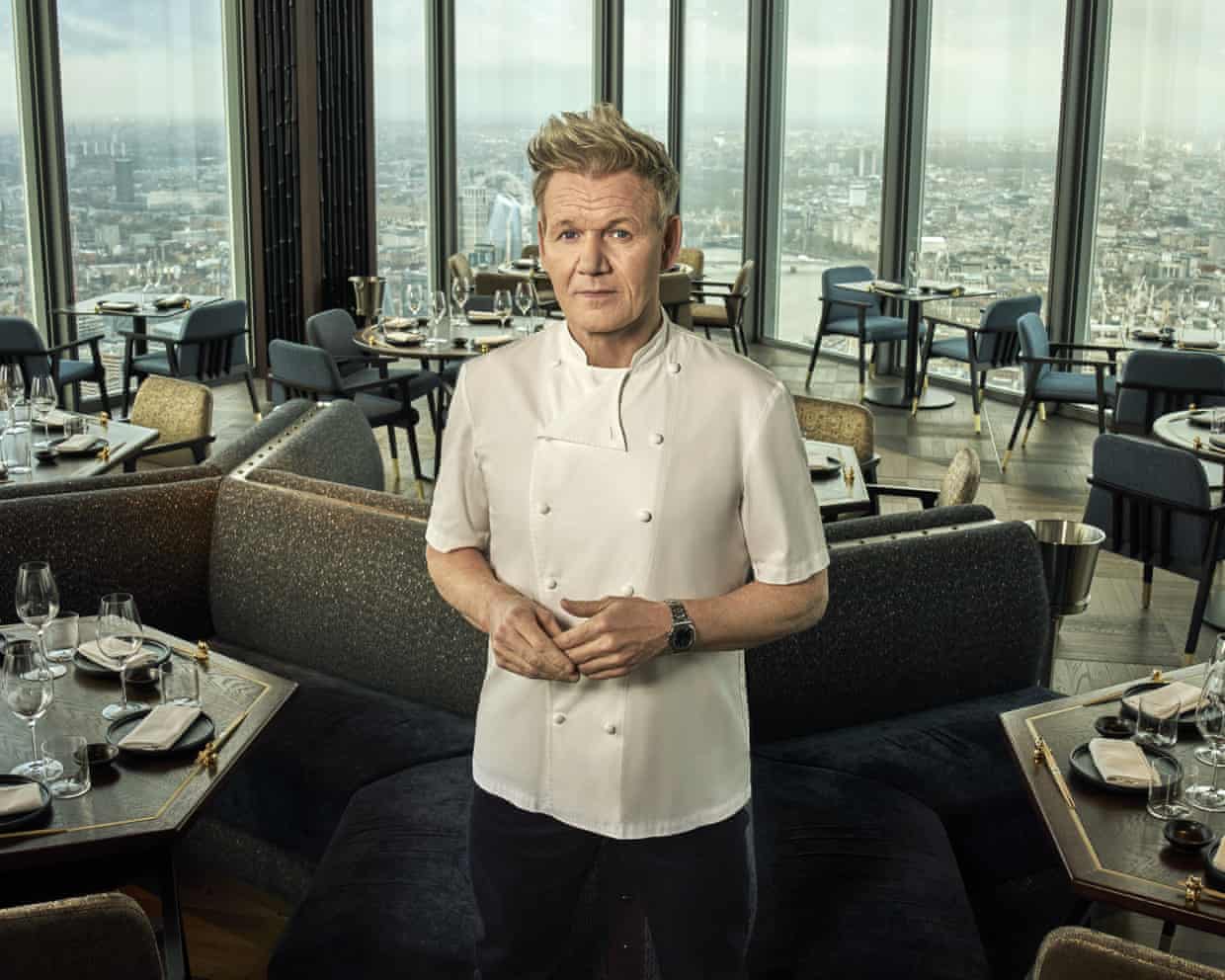
Gordon Ramsay says tax changes will make restaurants ‘lambs to the slaughter’

No more sad sandwiches and soggy salads: here’s how to make a proper packed lunch

Rum is booming but only Jamaican classics have the true funk

Rachel Roddy’s recipe for pasta e fagioli with coconut, spring onion, chilli and lemon | A kitchen in Rome