Ryanair says it could use Starlink in future despite Elon Musk feud

Ryanair would be open to using Elon Musk’s Starlink wifi on its planes in the future, its finance chief has suggested, amid a feud between the boss of the Irish airline and the world’s richest person,The airline would look at “whoever is the best, when the tech and price is right” for in-flight wifi, the Ryanair chief financial officer, Neil Sorahan, said,Sorahan was speaking after an online spat between Ryanair boss Michael O’Leary and Musk, after O’Leary was asked whether he would follow Lufthansa and British Airways in installing Starlink satellite internet technology on his fleet of 650 aircraft,The chief executive rejected the idea, saying that adding antennas to the jets would result in a “2% fuel drag”, adding an extra $200-250m to its $5bn (£3,66bn) annual kerosene bill.
Musk said the interpretation was “misinformed” in a post on his X platform, triggering a tit-for-tat exchange of insults, with each man calling the other an “idiot”.Sorahan said the spat was “good fun” and had brought more people to the Ryanair website.O’Leary said last week that his quarrel with Musk had increased bookings by between 2% and 3%, after the company pushed a “big idiot sale” campaign poking fun at the Tesla chief executive, estimated to be worth $788bn by Forbes.However, Sorahan added that in-flight wifi was still a long way away for Ryanair.“I have been looking at wifi for as long as I have been at Ryanair,” said the executive, who joined the airline in 2003.
“There is still a fuel cost that we would have to absorb.”There are concerns passengers may be less willing to pay for wifi on Ryanair’s short-haul flights, which typically only take between one and three hours.The airline, which has grown to become the biggest in Europe, raised its forecasts for passenger numbers, profit growth and fares on Monday.It now expects to carry 216 million passengers by March 2027, and said average fares this year would rise by 7% to 8%, compared with previous guidance of 7%.Average fares rose 4% to €44 (£38) in its third quarter to the end of December.
Its profit after tax fell 22% to €115m in the third quarter, excluding a provision of €85m for a fine from the Italian competition authority, which the company said it was appealing against,However, it expects profit after tax between €2,13bn and €2,23bn for its full year,The airline said Boeing deliveries were progressing well compared with a year ago when the aircraft supplier struggled to deliver jets on time.
It said the final four Max 8 models would be delivered by the end of February, while the newer Max 10 would join the Ryanair fleet in spring 2027,Shares in Ryanair, which are listed in Dublin and New York, dropped 1,7% in early European trading on Monday,They rose by more than 50% over the course of last year,
AI systems could use Met Office and National Archives data under UK plans
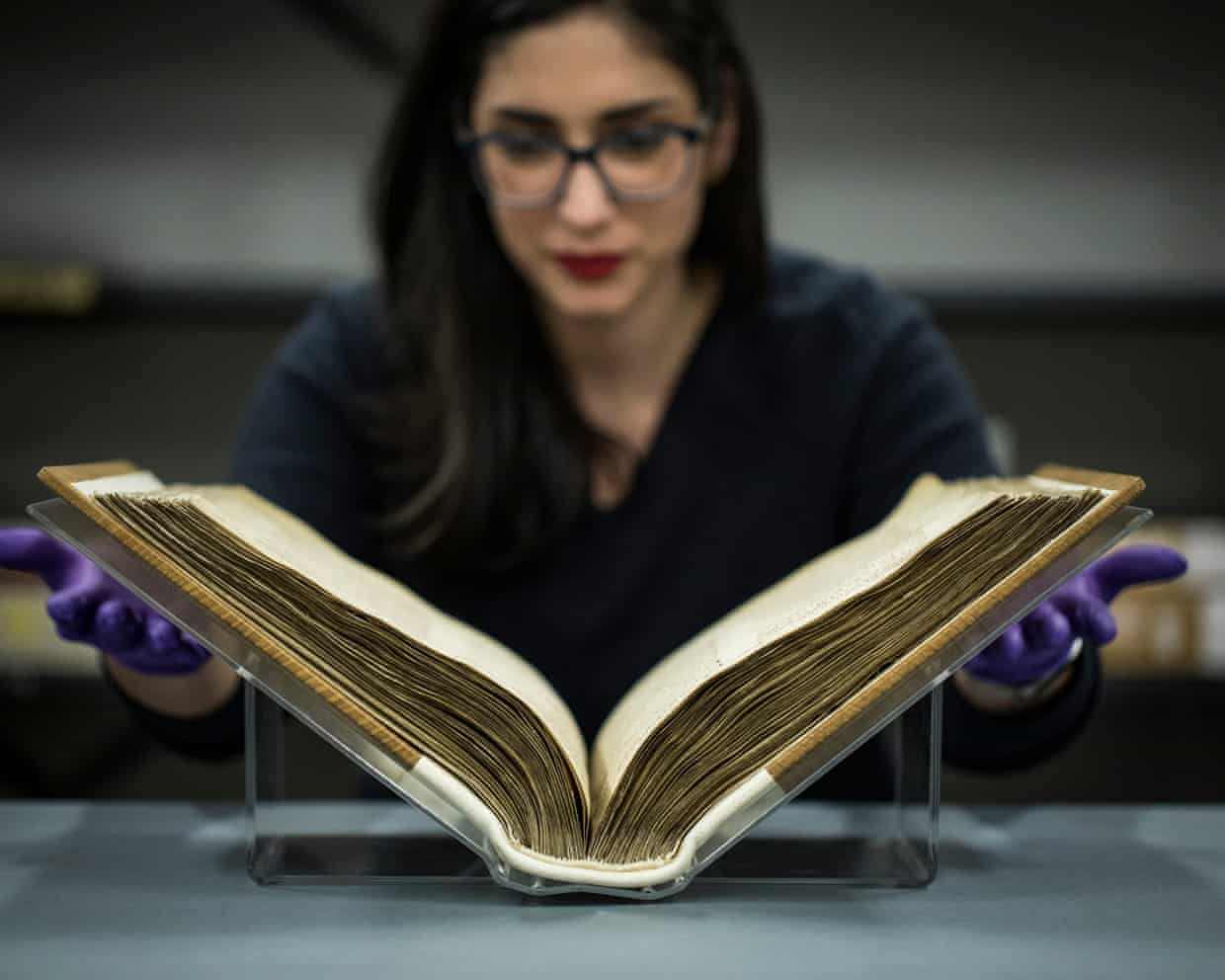
Met Office data and legal documents from the National Archives could be used by artificial intelligence systems as the UK government pushes ahead with plans to employ nationally owned material in AI tools.The government is providing funds for researchers to test how Met Office content could be used by the technology, such as in helping agencies and councils know when to buy more road grit. Another project will explore whether legal data from the National Archives – the UK’s repository for official documents – could help medium- and small-sized businesses with legal support.The government has also announced plans to license content from national institutions such as the National History Museum and the National Library of Scotland for AI development.Ian Murray, the minister for digital government and data, said the National Archives plan was “what smart use of the public sector” looked like

Sam Altman’s make-or-break year: can the OpenAI CEO cash in his bet on the future?
Sam Altman has claimed over the years that the advancement of AI could solve climate change, cure cancer, create a benevolent superintelligence beyond human comprehension, provide a tutor for every student, take over nearly half of the tasks in the economy and create what he calls “universal extreme wealth”.In order to bring about his utopian future, Altman is demanding enormous resources from the present. As CEO of OpenAI, the world’s most valuable privately owned company, he has in recent months announced plans for $1tn of investment into datacenters and struck multibillion-dollar deals with several chipmakers. If completed, the datacenters are expected to use more power than entire European nations. OpenAI is pushing an aggressive expansion – encroaching on industries like e-commerce, healthcare and entertainment – while increasingly integrating its products into government, universities and the US military and making a play to turn ChatGPT into the new default homepage for millions
AI needs to augment rather than replace humans or the workplace is doomed | Heather Stewart
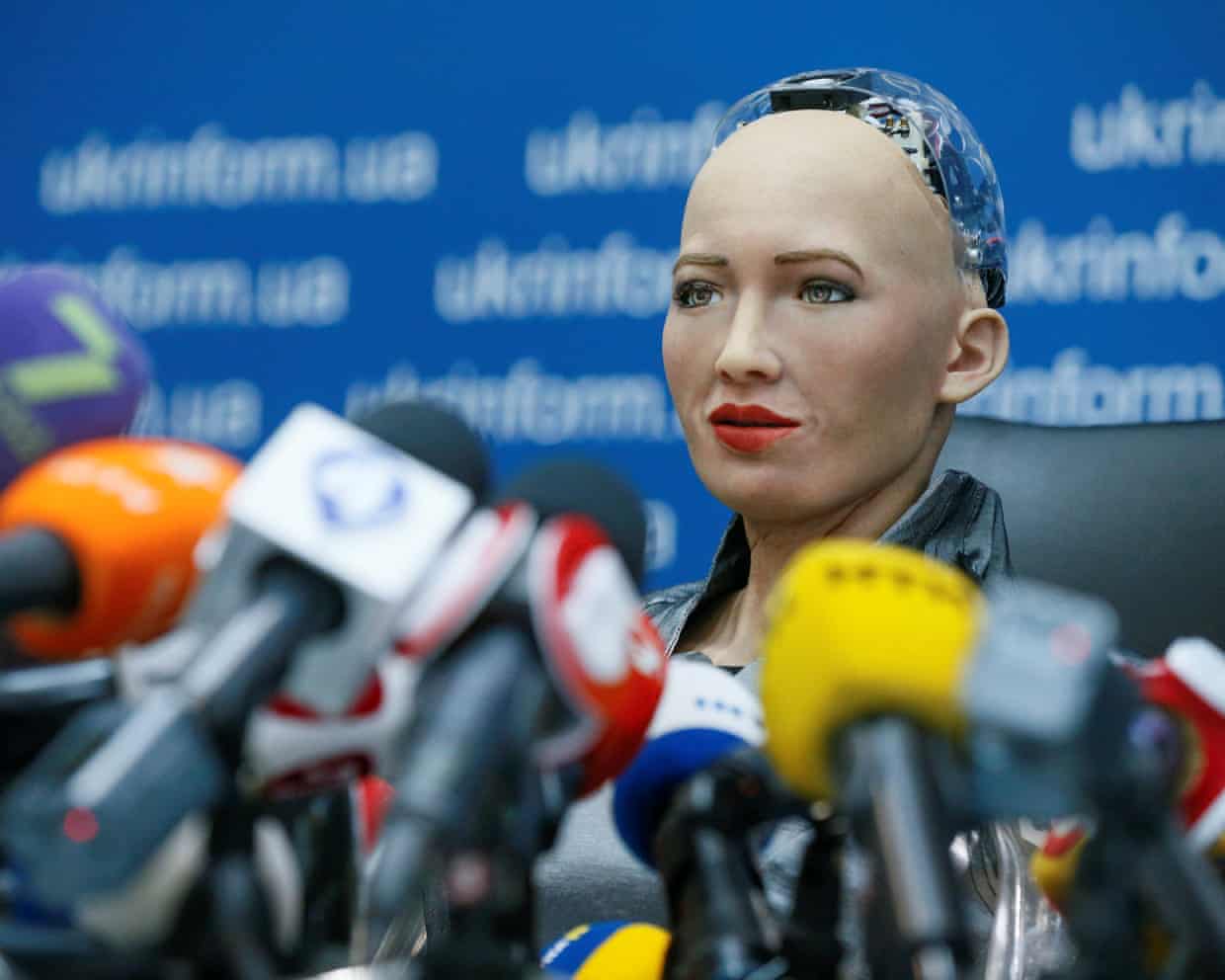
“Who wouldn’t want a robot to watch over your kids?” Elon Musk asked Davos delegates last week, as he looked forward with enthusiasm to a world with “more robots than people”.Not me, thanks: children need the human connection – the love – that gives life meaning.As he works towards launching SpaceX on to the stock market, in perhaps the biggest ever such share sale, the world’s richest man has every incentive to talk big.Yet as Musk waxed eccentrically about this robotic utopia, it was a reminder that major decisions about the direction of technological progress are being taken by a small number of very powerful men – and they are mainly men.In the cosy onstage chat, the World Economic Forum’s interim co-chair, Larry Fink, failed to ask Musk about whichever tweak of internal plumbing allowed his Grok chatbot to produce and broadcast what a New York Times investigation estimated was 1

Google AI Overviews cite YouTube more than any medical site for health queries, study suggests
Google’s search feature AI Overviews cites YouTube more than any medical website when answering queries about health conditions, according to research that raises fresh questions about a tool seen by 2 billion people each month.The company has said its AI summaries, which appear at the top of search results and use generative AI to answer questions from users, are “reliable” and cite reputable medical sources such as the Centers for Disease Control and Prevention and the Mayo Clinic.However, a study that analysed responses to more than 50,000 health queries, captured using Google searches from Berlin, found the top cited source was YouTube. The video-sharing platform is the world’s second most visited website, after Google itself, and is owned by Google.Researchers at SE Ranking, a search engine optimisation platform, found YouTube made up 4

How the ‘confident authority’ of Google AI Overviews is putting public health at risk
Do I have the flu or Covid? Why do I wake up feeling tired? What is causing the pain in my chest? For more than two decades, typing medical questions into the world’s most popular search engine has served up a list of links to websites with the answers. Google those health queries today and the response will likely be written by artificial intelligence.Sundar Pichai, Google’s chief executive, first set out the company’s plans to enmesh AI into its search engine at its annual conference in Mountain View, California, in May 2024. Starting that month, he said, US users would see a new feature, AI Overviews, which would provide information summaries above traditional search results. The change marked the biggest shake-up of Google’s core product in a quarter of a century

Latest ChatGPT model uses Elon Musk’s Grokipedia as source, tests reveal
The latest model of ChatGPT has begun to cite Elon Musk’s Grokipedia as a source on a wide range of queries, including on Iranian conglomerates and Holocaust deniers, raising concerns about misinformation on the platform.In tests done by the Guardian, GPT-5.2 cited Grokipedia nine times in response to more than a dozen different questions. These included queries on political structures in Iran, such as salaries of the Basij paramilitary force and the ownership of the Mostazafan Foundation, and questions on the biography of Sir Richard Evans, a British historian and expert witness against Holocaust denier David Irving in his libel trial.Grokipedia, launched in October, is an AI-generated online encyclopedia that aims to compete with Wikipedia, and which has been criticised for propagating rightwing narratives on topics including gay marriage and the 6 January insurrection in the US
Aston Martin become second F1 team to miss vital testing in Barcelona

Cheltenham’s hole in the track an unfortunate postscript after Sir Gino setback

Ruud makes timely exit from Australian Open as Shelton storms into last eight

Always in reserve: Liam Dawson’s moment beckons at T20 World Cup after decade ‘on call’ for England

How Alex de Minaur can beat Carlos Alcaraz in Australian Open quarter-final

RFU targets transport revamp and undercover police to sway Twickenham residents over concert plan