Is CTE really the main reason behind the rise in NFL player suicides?
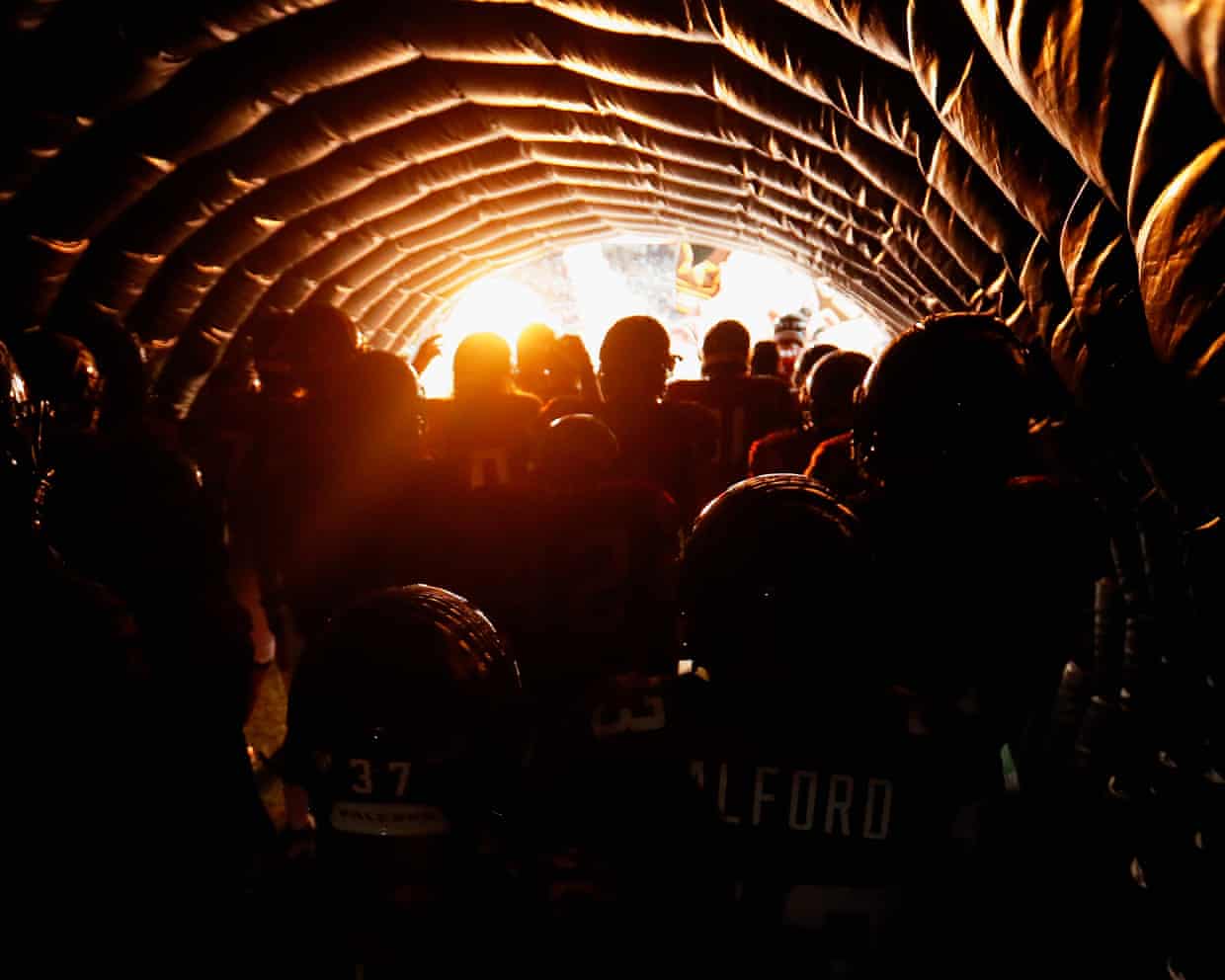
When an NFL player takes his own life, there is often speculation about why,Injuries and unemployment – a common occurrence in a violent sport where players are frequently traded and cut – have been linked with increased risks of suicidal ideation,In parallel to those factors, however, exists chronic traumatic encephalopathy (CTE),A degenerative brain condition caused by repeated trauma to the head, CTE’s links with football are established and almost impossible to ignore,Players ranging from widely admired Pro Bowlers such as Junior Seau and Dave Duerson, to those infamous for more notorious reasons, such as Aaron Hernandez and Phillip Adams, were all confirmed to have CTE by autopsies.
(The condition can only be diagnosed posthumously.) All four players killed themselves.Such anecdotal observations imply a certain, coherent logic that connects playing football with suicide.Tackle football, by its nature, increases participants’ risk of head injury.Head injuries increase the likelihood of an affected individual attempting suicide.
CTE is often the cumulative consequence of years of head injuries and, indeed, many high-profile NFL players who have taken their own lives have been confirmed to suffer from CTE.So it’s easy to reason that football and/or CTE, by their very nature, lead to an increased risk of suicide.It makes sense.But a new study says other factors are at play.To put it more precisely: the study says data does not support the notion that CTE is the only cause of NFL players’ increased risk of suicide.
The findings were published in January by members of Harvard’s ongoing Football Player Health Study (FPHS), a diverse group of neuroscientists, former NFL players and others who have been examining the health and wellbeing of professional football players since 2014.“As someone raised in a basketball family, I came into this research with a lot of assumptions,” Dr Rachel Grashow, one of the FPHS study’s lead authors, tells the Guardian.“I learned pretty quickly that the public narrative around CTE didn’t actually reflect the scientific nuance and the lived experience of many players.”The group’s researchers used the National Death Index to gather cause-of-death information for about 34,000 NFL, NBA and MLB players over a 40-year period between 1979 and 2019.When examined across all four decades, NFL players were found to be 20% more likely than their basketball- and baseball-playing colleagues to die by suicide.
This may be about what the average fan would expect when comparing football to less contact-intensive sports.Viewing the data in a more meticulous manner, however, reveals a more upsetting, but ultimately actionable, truth.If the analysis is limited to the period from 1979 to 2009, NFL players were roughly 10% less likely than their NBA and MLB counterparts to die by suicide.It’s only since 2009 that NFL players have become more likely to take their own lives in relation to their peers, and the change has been significant.In the 10-year period from 2009-2019, NFL players became 260% more likely than NBA and MLB players to die by suicide.
It’s a staggering change which raises a question – what could explain such a swing?At first glance, CTE would seem to be the most obvious explanation.But the picture is a little murkier.Although the first NFL-adjacent case of CTE wasn’t diagnosed until 2002, it is almost certain that undiagnosed CTE cases were at least as prevalent in 20th century football as they are today.Indeed, taking improvements in helmet design into account, instances of CTE were likely even more common in the past.And yet, suicide rates among NFL players increased in the 2010s.
What happened?Suicide contagion – or a rise in copycat attempts in the wake of a high-profile suicide, is a very real and scientifically well-established phenomenon – and may explain some of the rise,The 2010s featured several events at the intersection of the NFL, mental health and suicide which were widely covered in the media,Seau, a beloved Hall of Famer, killed himself in 2012,Concussion, a Will Smith movie retelling of Dr Bennet Omalu’s efforts to convince the NFL of CTE’s risks, was released in 2015,Partly owing to public pressure in the wake of increased media coverage of the issue, the NFL acknowledged a link between football and CTE during a Congressional hearing on the subject in 2016.
Public mentions of CTE have only increased since then.One aspect of CTE may also make it particularly potent when it comes to suicide contagion – CTE can only be definitely diagnosed after death.With no way to confirm if they’ve developed CTE, potentially affected players are left in a perpetual state of uncertainty, wondering whether every headache or misplaced housekey is a momentary mental lapse or a symptom of something more ominous.Broadly speaking, professional diagnosis of a chronic condition is already associated with an increased risk of suicide, and many players are essentially self-diagnosing CTE.To clarify – the Harvard study’s findings do not imply that CTE is blameless when it comes to suicide among NFL players.
Instead, the study reaffirms that CTE is just one of many possible factors.Imagine simultaneously pouring two full pints of juice – orange and apple – at the same rate into a third, empty pint glass.Juice would, of course, soon pour out of the third glass, but was it the orange juice or apple juice that caused the spill?Mental health crises are rarely the consequence of a single input, even among potentially CTE-affected NFL players.It’s therefore important for players and their doctors to consider alternative explanations for CTE-like symptoms.Indeed, many of the symptoms most associated with CTE (memory loss, brain fog, aggression, depression, etc.
) are also symptoms linked to other ailments like sleep apnea, low testosterone and high blood pressure.Adding to the confusion, each of these individual symptoms can also be caused or exacerbated by head injury, with or without the presence of CTE.There’s also the possibility that some of the rise may have to do with how player deaths are classified.“Deaths among NFL players that would not have been classified as suicides by medical examiners prior to 2011 may have been labeled a suicide after 2010, as a result of greater awareness of issues related to head trauma,” the study’s co-author, Marc Weisskopf, told the Daily Mail.Perhaps most importantly, once the spectre of CTE is removed from (or, at least, appropriately framed in) the discussion, treatment options become available, even if CTE remains a real risk factor.
Hall of Fame running back Tony Dorsett was diagnosed with CTE-like symptoms in 2013 (again, definitive diagnosis of CTE is only possible after death and Dorsett is still alive).The symptoms that pushed him to seek testing are familiar: memory loss, depression and suicidal thoughts.Thirteen years later, Dorsett has even become an advocate for sleep apnea treatments.Even more relevantly, recently retired tight end Hayden Hurst, who was diagnosed with a non-CTE neurological condition after an NFL concussion in 2023, has discussed experiencing (and overcoming) a suicide attempt earlier in his career.Which is all to say when an NFL player takes his own life, multiple questions arise around the complicated relationship between professional football, mental health and suicide.
Given the simultaneous surges in CTE awareness and NFL suicides over the last 15 years, a tendency to conflate the two emerges,But, according to the Harvard study, that’s not the correct way of looking at things and Weisskopf says that “more research is needed to determine the individual contributions” of factors that lead to former NFL players’ suicides,When the question is “should those at risk of suicide talk to their doctors or loved ones about CTE, sleep apnea, high blood pressure or something else?” the only accurate answer is “Yes,”In the US, you can call or text the 988 Suicide & Crisis Lifeline at 988 or chat at 988lifeline,org.
In the UK and Ireland, Samaritans can be contacted on freephone 116 123, or email jo@samaritans.org or jo@samaritans.ie.In Australia, the crisis support service Lifeline is 13 11 14.Other international helplines can be found at befrienders.
org

Did breakthrough in US fentanyl crisis start in China?
As Donald Trump travels to Beijing this week, fentanyl – and China’s role in its supply chain – remains an enduring point of acrimony in bilateral relations.At a UN meeting in March, the US again accused China of failing to stop its chemical industry selling the precursors required to make the potent synthetic opioid, while China suggested the US was shifting the blame for its domestic drug problem.Yet there are growing signs that the US fentanyl crisis has turned a corner – and some experts believe that interventions made in China have played a key role.“There was a supply shock: the purity of fentanyl fell,” said Keith Humphreys, a professor at Stanford University. “The question is why was there a supply shock
Older people risk mental decline if they do long hours of caring, UK study shows
The stresses and strains of caring for someone for 50 hours or more a week leads to “accelerated cognitive decline” in middle-aged and older people, research shows.However, providing care for only five to nine hours a week has the opposite effect, boosting brain health so much that the benefits last until older age.Carers UK called the findings “extremely worrying” and said they highlight how long hours spent providing care raises the risk of social isolation and burnout.Dr Baowen Xue, an academic at University College London and the lead author of the paper, said: “Our study shows that the caring responsibilities many people take on in later life can be a double-edged sword.“On the one hand, lighter caring responsibilities can be good for you by providing mental stimulation from interacting with loved ones or others you’re helping and a sense of purpose and usefulness
Steve Lismore obituary
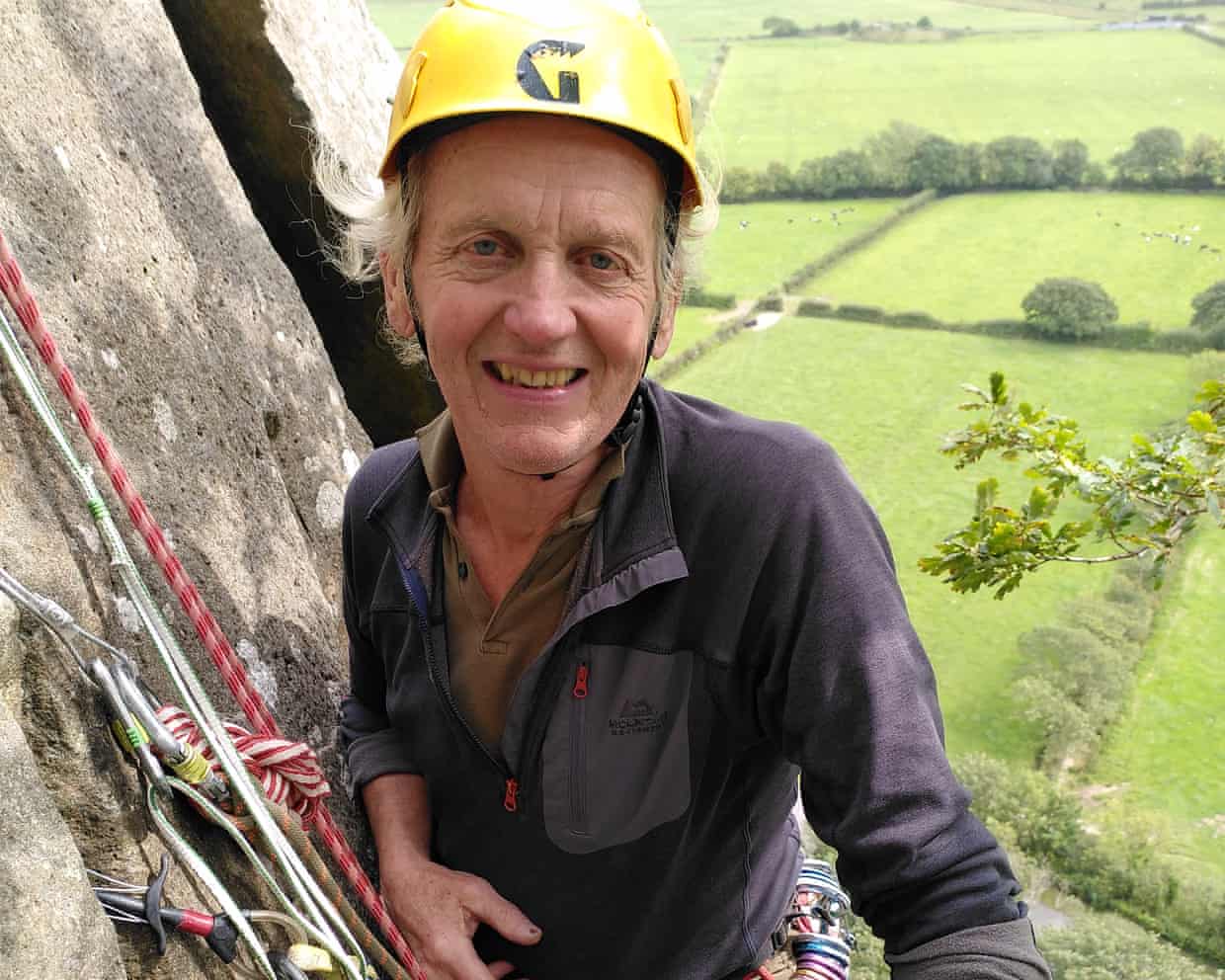
My partner, Steve Lismore, who has died aged 71 in a climbing accident in Italy, was a civil servant and local politician with twin passions for giving children a good start in life and establishing equality of access to employment. Steve’s energy and commitment to action has had a lasting impact across north Derbyshire.Born in Toronto, Canada, to Violet (nee Greaves), a secretary, and Basil Lismore, a toolmaker, Steve loved reading and excelled at Bayview Heights school, Ontario, skipping a grade and winning awards at science fairs.His approach to life was formed in his teens. He combined adventure, practicality and ingenuity as he coaxed cheap motorbikes to ever improved performance

Renters’ Rights Act could worsen court delays without proper funding | Letters
The new Renters’ Rights Act is a step forward in ensuring that both tenants and landlords can access justice, but without proper investment it risks creating new court delays and injustices for both parties (The Guardian view on the Renters’ Rights Act: finally, protections fit for the modern housing market, 5 May).The end of “no fault” evictions in England is expected to lead to an increase in the number of contested repossession cases. If courts do not have the funding to handle the increase, delays will grow and leave many people in limbo, as we have recently seen with the closure of the Hillingdon Law Centre.This investment must include further funding for housing legal aid. While last year the UK government pledged to increase the fees paid to housing legal aid firms, those changes are yet to be fully implemented

‘Everyone was in tears’: the tenants given eviction notices just before ban in England
It was 2pm on 30 April when Carl Kansinde Middleton received a “no fault” eviction from his landlord in Brighton – just 10 hours before section 21 notices were officially banned under the Renters’ Right Act.“As we were getting closer, I really thought I was safe,” he said. “It just never occurred to me that it would just come right on the last day – I truly felt blindsided.“I lost my job in November and it’s been a struggle for me financially as I have no support system. I was just about treading water but this has swept me under

Ash scattering is a risky business | Brief letters
I had a similar experience to Zoe Williams (The day had come to scatter my mum’s ashes. What could possibly go wrong?, 5 May) when I scattered my dad’s ashes near the first tee at his golf club. After reaching into the urn and grabbing a large handful of his ashes, I threw them into the air only to have them all blown back at me by a sudden gust of wind. Friends always said I looked very much like him and I felt a tremendous sense of pride as parts of him went into every orifice.Bob DawsonGreenmount, Greater Manchester Glad to read about the campaign to save the mother of Bramley apples tree (Report, 5 May)

GameStop’s $55.5bn bid for eBay rejected as ‘neither credible nor attractive’

Molière Ex Machina: AI used to create ‘new work’ by beloved French playwright

Who is Louis Mosley, the man tasked with defending Palantir against its critics?

Europe’s AI translation industry told it risks reputation by partnering with US firms

Shivon Zilis, mother of four of Elon Musk’s children, testifies in OpenAI trial

TikTok’s algorithm favored Republican content in 2024 US elections, study finds