Mental health units discharging eating disorder patients with ‘dangerously low’ BMIs
Patients with eating disorders are being discharged from mental health units even though they are still very thin and have “dangerously low” body mass index levels.Some hospitals are sending home people whose BMIs are as low as 12.5, despite usual clinical practice in the NHS seeking to wait until a BMI of 18 or 19 has been achieved.The early discharges were revealed through freedom of information requests to NHS mental health trusts in England submitted by Hope Virgo, a prominent eating disorders campaigner.Experts said the revelation was “horrifying” and was probably linked to NHS services struggling to cope with a rise in demand.
Nine trusts discharged a total of 119 patients with conditions such as anorexia nervosa and avoidant restrictive food intake disorder (Arfid) between January and November last year, even though their BMI was less than 15.Some were discharged from inpatient units, others by community services.These figures are an underestimate given that only nine of the health service’s 54 specialist mental health trusts shared the requested figures with Virgo.“A BMI of 15 represents severe malnutrition, according to the World Health Organization.Discharge at this level may occur, but it means that the person remains seriously unwell and requires ongoing monitoring by the GP,” said Dr Agnes Ayton, an NHS consultant psychiatrist and vice-chair of the eating disorders faculty of the Royal College of Psychiatrists.
She said: “Mortality in anorexia nervosa increases very substantially at very low BMI due to both physical complications or suicide.Discharge at this stage carries a high risk of rapid relapse, progression to a chronic course or further physical and psychological deterioration.”NHS eating disorder services view a BMI of 18.5 or 19 as the usual minimum level to show that a patient’s weight is healthy enough to be safely discharged, doctors said.Dr Ashish Kumar, the chair of the eating disorders faculty of the Royal College of Psychiatrists, said discharges were based on a range of clinical, psychiatric, medical and social “risk factors, rather than a specific number by itself”.
He noted that no single BMI threshold determined when someone could be safely discharged, but agreed 19 was generally considered to be healthy.A spokesperson for NHS England said existing discharge practices were safe.“These figures in isolation are not unusual and clinical guidance including from NICE is clear that BMI should never be used as a sole marker of readiness for discharge,” they said.“Patients are only discharged by expert clinicians when they have achieved sufficient progress in their weight, eating patterns and a range of other factors, and with support plans for recovery.”South London and the Maudsley trust discharged nine people whose BMI was less than 15.
One had a BMI of only 12.5 – the lowest of the 119 identified – and the others were between 14 and 15.Bethany Francois, a dietitian specialising in eating disorders, said: “In my experience, no individual I’ve ever worked with has been well enough to be discharged from eating disorder treatment at a BMI of 15.”Francois said: “Generally a BMI of 15 would raise concerns regarding cardiovascular stability, hormonal disruption, compromised immune function, [and] bone density loss if weight remains suppressed.”Discharge from inpatient care at such a low BMI should never happen to people being treated by community mental health teams, she added.
Dr David Viljoen, a consultant clinical psychologist at the private eating disorders provider Ellern Mede, said he was “concerned” about those with a BMI below 15 being discharged “because this is against all the research evidence”, which warns of the risk of relapse, developing a chronic or longstanding eating disorder, or premature death.Central and North West London trust discharged 38 patients with a BMI below 15 last year and Cumbria, Northumberland, Tyne and Wear trust 14 times.A BMI below 15 was “dangerously low” for anyone to be discharged, said Virgo.“These figures expose a deeply troubling pattern.Discharging people at BMIs associated with extreme severity and high mortality risk is not a neutral clinical decision, it is a failure of care.
Patients are being blamed for ‘not wanting to recover’, while being sent home at weights known to be medically dangerous,” In the UK and Ireland, Samaritans can be contacted on freephone 116 123, or email jo@samaritans,org or jo@samaritans,ie,In the US, you can call or text the National Suicide Prevention Lifeline on 988, chat on 988lifeline.
org, or text HOME to 741741 to connect with a crisis counselor,In Australia, the crisis support service Lifeline is 13 11 14,Other international helplines can be found at befrienders,org

Doom Bar maker Sharp’s Brewery in Cornwall to be closed by US owner
The Cornish brewery that makes Doom Bar ale is to be closed by its US owner, throwing the popular beer brand’s future into doubt and putting about 200 jobs at risk.The drinks company Molson Coors said it plans to shut Sharp’s Brewery in Rock, along with its national call centre in Wales, saying it was “no longer financially sustainable”.The Chicago-based company, which bought Sharp’s 15 years ago, said it was planning to close the site by the end of this year but it “remains committed” to Sharp’s beer brands.Sharp was founded in 1994, and most its sales come from Doom Bar, which is among the bestselling cask ales in the UK, and was named after a notoriously dangerous sandbank in Cornwall’s Camel estuary. Sharp’s also makes Atlantic and Twin Coast pale ales
Table for one: is eating lunch at work on your own a bad thing?
Name: The lonely lunch.Age: Recent, but growing.Appearance: Très misérable.Why are you talking French to me? Have you gone all pretentious? I am talking French to you because this is a French problem.It is? Oui
How to use on-the-turn milk to make an Italian classic – recipe
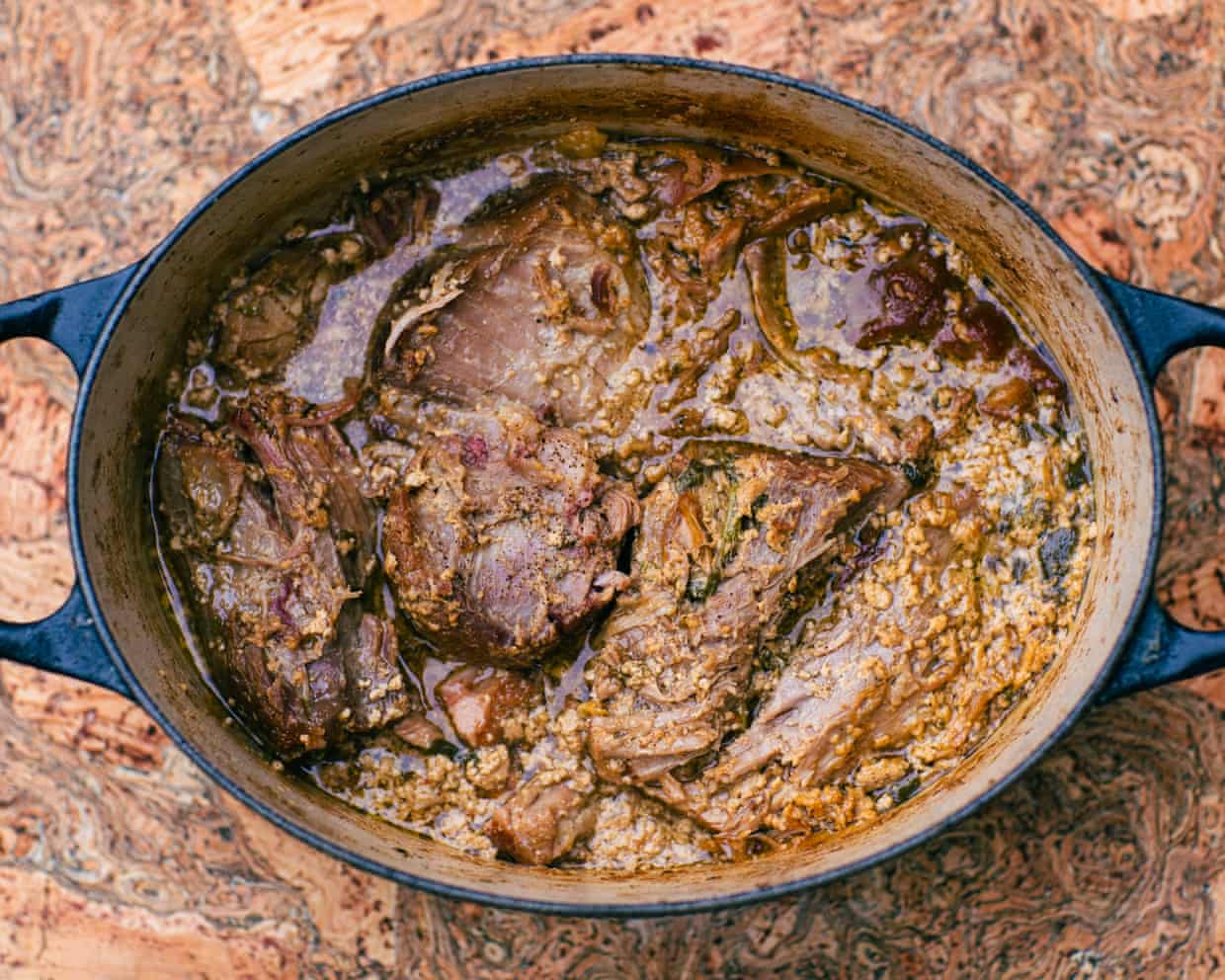
According to the Sustainable Food Trust, “the milk from 40,000 cows (300,000 tonnes) is tipped down the kitchen sink each year – a real slap in the face for the farmer”. Even though some supermarkets have now swapped use-by for best-before dates on their milk, those dates can still be confusing, so always do the sniff test before binning it: even if it’s a little sour, you can still cook with it.The Food Standards Agency advises that food with a best-before date can usually be tested using sensory cues such as the sniff test. And what better way to use up spent or sour milk than maiale al latte, or milk-braised pork, for which pork is slowly braised in milk and flavoured with a few aromatics until tender. The milk splits and forms large curds that thicken and caramelise the sauce, so creating a creamy rich dressing for the meat

Nadiya Hussain on food, faith and finding her voice: ‘I get paid less than the white version of me’
In a food world where the trend is for protein and weight-loss injections and sugar is the supervillain, Nadiya’s Quick Comforts seems somewhat contrary. There are golden syrup dumplings. There is a chapter devoted to deep frying, with cheese balls and ingenious deep-fried cannelloni.“If I could write an entire book on deep frying, I absolutely would,” says Hussain with a laugh. “This is how I cook, this is how I eat, this is how I show love to my family

Should you sanitise your strawberries? Experts on the right way to wash fruit and vegetables
You know the cost-of-living crisis is biting when videos of influencers unpacking their grocery “hauls” are viral on TikTok. Chewing through millions of views, fruit and vegetables are aesthetically plopped into a sink filled with water, piece by piece. “Sanitising” products are then added, ranging from the fizz of baking soda and vinegar to specialised vegetable soaps (“Amazon link in my bio!”). There are even expensive electronic purifiers, which shake, shimmy and bubble away in the basin, supposedly removing any nasties.But is ASMR deep-cleaning your fresh produce really necessary? And is it all too late for those of us who can barely remember to rinse our pears?For Queensland’s Rebecca Scurr, who shares what it’s like to “sell fruit for a living” to her 26,000 TikTok followers, fruit-washing videos make her “cringe so much”
Do you really need to chill cookie dough? | Kitchen Aide
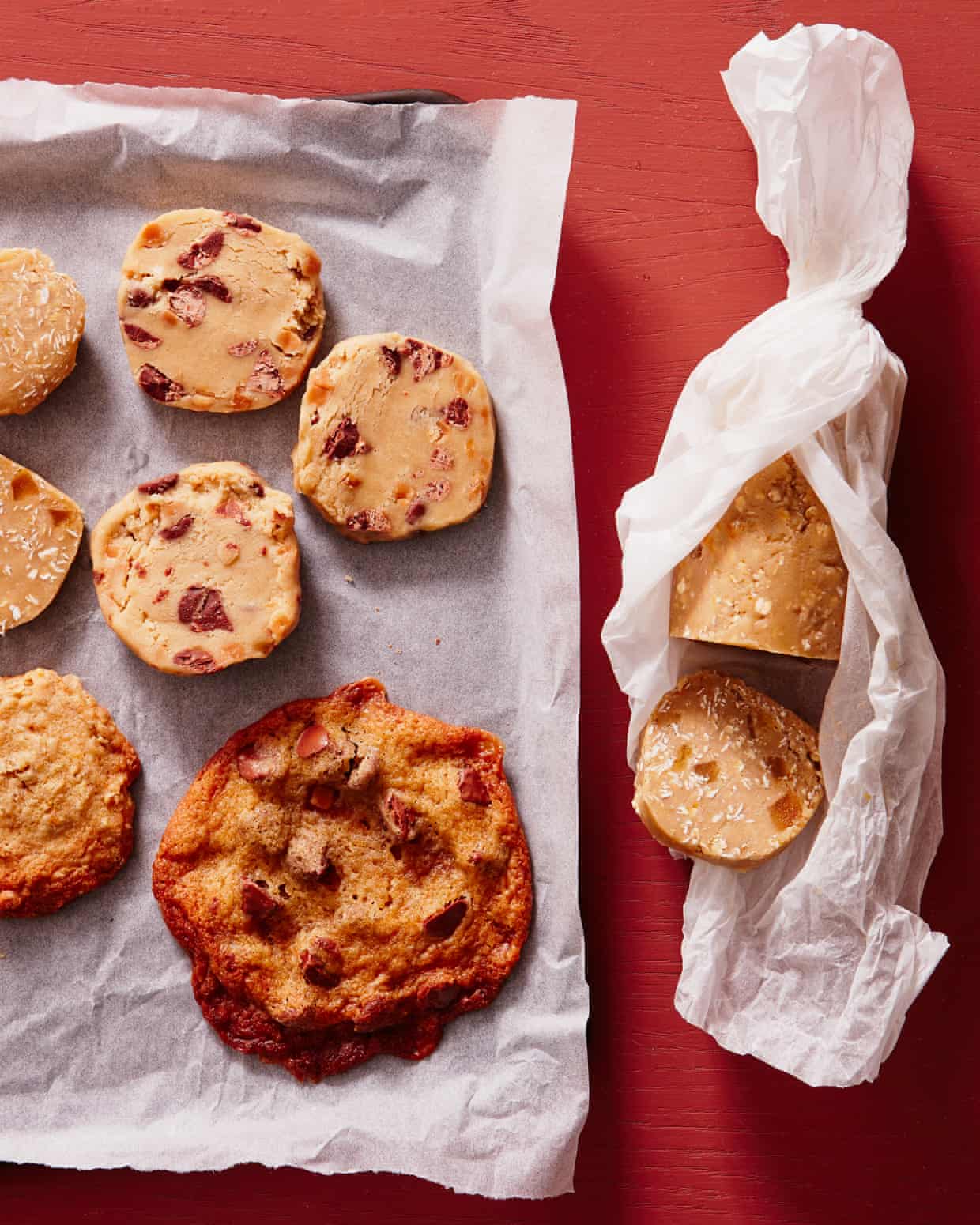
Does chilling cookie dough really make for a better result?Emily, by email “It all depends on what kind of cookie it is,” says Guardian baker Helen Goh. “Let’s say it’s a cookie that you need to stamp out – the dough needs to be firm enough to roll it, but not so firm that you can’t.” That said, the question of whether to fridge or not to fridge is probably most prevalent in the chocolate chip cookie sphere. “There’s a perceived wisdom that chilling helps the dough develop the flavour and caramelisation,” Goh says, “but, to be honest, it also makes the dough a little easier to roll and ensures it bakes evenly, which is worth far more than that slight improvement in flavour.”Recommended chilling times vary from 30 minutes to overnight, although Goh finds the latter results in a “cakey” cookie: “I’m a real Goldilocks, so I like crisp at the edges with a chewy centre
Mental health units discharging eating disorder patients with ‘dangerously low’ BMIs
Diagnosing mental health conditions need not be a case of yes/no | Letters
‘Violent bully’ who broke partner’s neck and left her paralysed jailed for 16 years

European girls aged 13-15 have world’s highest rate of tobacco use for age group
Vegetarians have ‘substantially lower risk’ of five types of cancer

Kinship carers in England to be given financial support in government pilot