Diagnosing mental health conditions need not be a case of yes/no | Letters

Lucy Foulkes explores the possibility that the rising numbers of young people receiving a diagnosis of mental illness or ADHD are subjects of overdiagnosis (Are we really overdiagnosing mental illness?, 22 February),She posits that changes in terminology, increasing societal awareness and reductions in stigma are all factors in the increase in diagnoses,However, there is another way of looking at this issue,If we treat ADHD as binary (you have it or you do not), we are missing the possibility that we all lie somewhere on a continuum with diagnosed ADHD towards one end (and perhaps an ability to focus and concentrate at the other),A diagnosis of ADHD then depends on where the line is drawn.
I suggest that this line has been moved in recent years, so that a large group of people have been caught up in the positive ADHD group, who would not have been previously.If we all lie on this continuum many of us may benefit from recognising that, and self-help tools may be useful.Only a minority, as now, may need intervention.The concept of diagnosis may be less useful and we may all, more readily, accept each other’s differences.Sue SimmonsBovey Tracey, Devon Dr Foulkes is right to suggest we need a more nuanced approach to understanding why more young people are reporting signs of mental illness, including the implications of the complicated shift in the use of language around mental health.
Young people are indeed often growing up in a more challenging era than their parents.However, challenges aren’t a new phenomenon historically.Their 20th-century counterparts lived through two world wars, the Spanish flu pandemic, the Great Depression, deindustrialisation under Margaret Thatcher, and the cold war.Might the ability to respond to challenges have been reduced by increasingly protective parenting and spoon-feeding school environments – reducing the opportunities to develop resilience enjoyed by previous generations?Has the UK’s response been one-dimensional and reactive? Medical diagnosis and treatment when symptoms are reported, rather than a more preventive approach? Research suggests that active play in childhood, physical activity, time in nature, and the creative and performing arts are all protective of mental health – unlike sedentary screen time and junk food.Is it time for a more holistic approach to young people’s mental health?Michael BaberDirector, Health Action Research Group Have an opinion on anything you’ve read in the Guardian today? Please email us your letter and it will be considered for publication in our letters section.
Diagnosing mental health conditions need not be a case of yes/no | Letters
Lucy Foulkes explores the possibility that the rising numbers of young people receiving a diagnosis of mental illness or ADHD are subjects of overdiagnosis (Are we really overdiagnosing mental illness?, 22 February). She posits that changes in terminology, increasing societal awareness and reductions in stigma are all factors in the increase in diagnoses.However, there is another way of looking at this issue. If we treat ADHD as binary (you have it or you do not), we are missing the possibility that we all lie somewhere on a continuum with diagnosed ADHD towards one end (and perhaps an ability to focus and concentrate at the other). A diagnosis of ADHD then depends on where the line is drawn

‘Violent bully’ who broke partner’s neck and left her paralysed jailed for 16 years
A “violent and controlling bully” who broke his partner’s neck, leaving her paralysed and her life “destroyed”, has been sentenced to 16 years in prison.Robert Easom, a landscape gardener, violently assaulted Trudi Burgess, a schoolteacher and former singer, when she threatened to leave him after enduring eight years of coercive, controlling behaviour.A court heard that Easom, 57, pinned Burgess down in a rage and pushed her head into her body until her neck snapped. He denied a charge of causing grievous bodily harm with intent but was found guilty after 27 minutes of deliberation by a jury at Preston crown court in November.He had admitted causing the injury but denied intending to cause her serious harm

European girls aged 13-15 have world’s highest rate of tobacco use for age group
Teenage girls in Europe have the highest rate of tobacco use in their age group around the world, while one in seven adolescents across the continent use vapes and e-cigarettes, figures show.The data, based on analysis by the World Health Organization (WHO), shows that Europe is on course to maintain its status as the world’s biggest consumer of tobacco up to 2030, and reveals “particularly concerning” trends of tobacco use among women and young people.Four in 10 adult female smokers around the world – about 62 million women – live in Europe, while 4 million teenagers aged 13 to 15 across the continent use tobacco products.For vapes and e-cigarettes, Europe has the highest prevalence of teenage regular users, at 14.3% of children aged between 13 and 15

Vegetarians have ‘substantially lower risk’ of five types of cancer
Vegetarians have a substantially lower risk of five types of cancer, a landmark study on the role of diet has revealed.The research, using data from more than 1.8 million people who were tracked over many years, found that vegetarians had a 21% lower risk of pancreatic cancer, a 12% lower risk of prostate cancer and a 9% lower risk of breast cancer compared with meat eaters. Combined, these cancers account for around a fifth of cancer deaths in the UK.Vegetarians also had a 28% lower risk of kidney cancer and a 31% lower risk of multiple myeloma, according to the study published in the British Journal of Cancer

Kinship carers in England to be given financial support in government pilot
Grandparents who step in to provide full-time care for their grandchildren to prevent them being taken into care will be given guaranteed financial support under a government pilot scheme.Charities welcomed the trial as groundbreaking and said if fully rolled out across England it had the potential to transform the lives of tens of thousands of children looked after under “kinship care” arrangements.Kinship carers are grandparents, aunts and uncles, older siblings or close family friends who take on full parental responsibility when a child loses their birth parents as a result of death, a family court order, severe illness or imprisonment.Campaigners have fought for more than two decades to establish financial recognition of the role and personal sacrifices that kinship carers make. Some carers say they have felt ignored and exploited as a “cheap option” despite saving the state billions it would otherwise have had to spend on foster or residential care
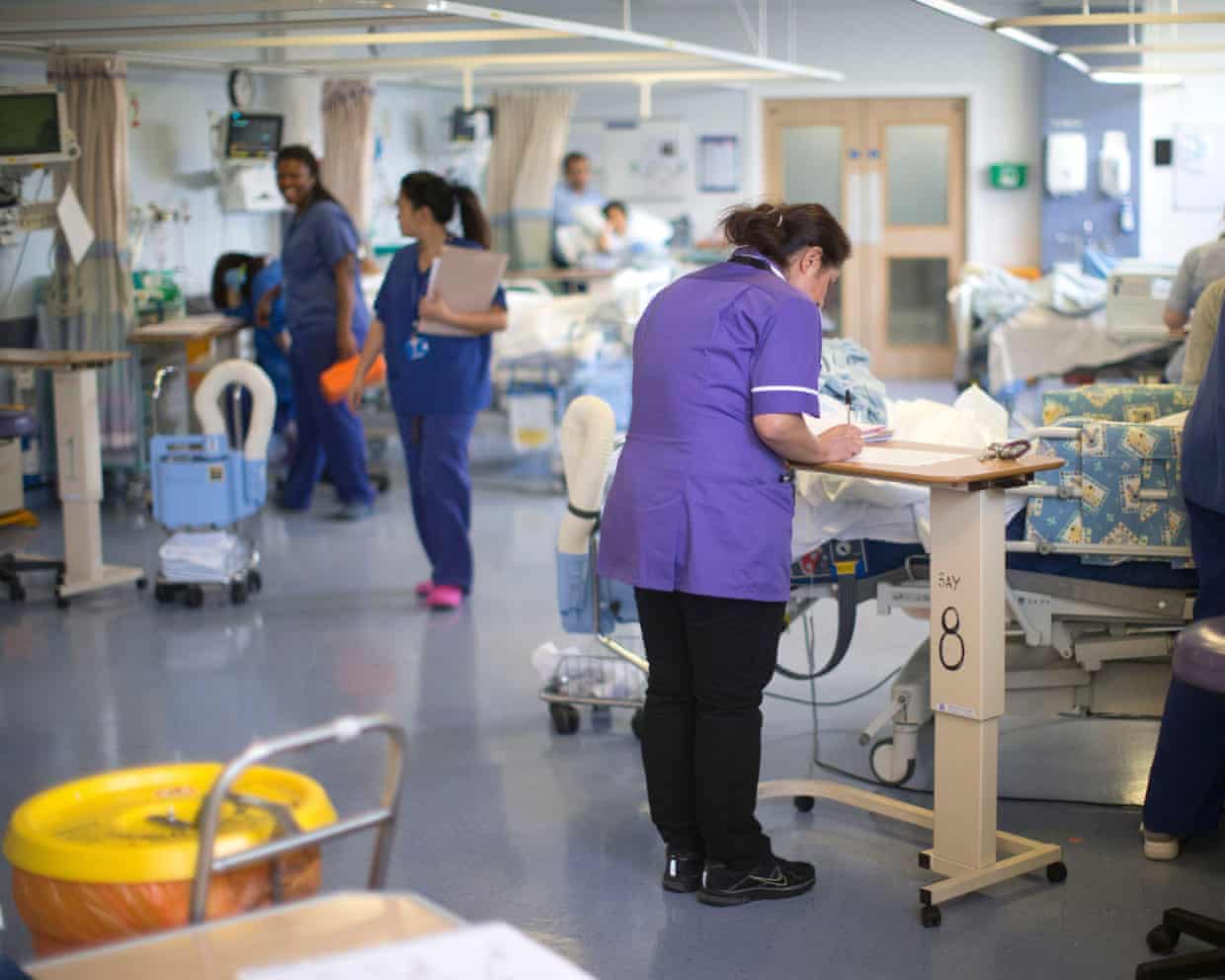
Drop in overseas workers is ‘car crash’ for UK hospitals and care homes, say experts
Hospitals and care homes in the UK face “an impending car crash”, experts have warned, as research shows the number of overseas nurses and carers has collapsed.Analysis of Home Office quarterly data reveals the number of overseas nurses granted entry to the UK has fallen by 93% over three years. Just 1,777 overseas nurses were granted entry in 2025, compared with 26,100 in 2022.Visas for workers in the caring personal service occupations category – which includes care workers, but also nursing auxiliaries, ambulance staff and dental workers – had the steepest decline in new workers from overseas in absolute terms.The figure fell from 107,847 workers granted entry in 2023 to just 3,178 in 2025, a 97% decline over two years

Dissatisfaction with life in UK unchanged since Covid, official data shows

Netflix quits Warner Bros takeover battle; FTSE 100 ends week at record high – as it happened

BA owner’s profits rise by 20% despite drop in passenger numbers last year

Sainsbury’s to cut 300 jobs as it restructures tech team and Argos deliveries

Trump says affordability crisis is over. Voters and data disagree

Hornby sells slot car racing brand Scalextric for £20m