A new diagnosis of ‘profound autism’ is under consideration. Here’s what parents need to know

When it comes to autism, few questions spark as much debate as how best to support autistic people with the greatest needs,This prompted the Lancet medical journal to commission a group of international experts to propose a new category of “profound autism”,This category describes autistic people who have little or no language (spoken, written, signed or via a communication device), who have an IQ of less than 50, and who require 24-hour supervision and support,It would only apply to children aged eight and over, when their cognitive and communication abilities are considered more stable,In our new study, we considered how the category could impact autism assessments.
We found 24% of autistic children met, or were at risk of meeting, the criteria for profound autism.The category is intended to help governments and service providers plan and deliver supports, so autistic people with the highest needs aren’t overlooked.It also aims to re-balance their under-representation in mainstream autism research.This new category may be helpful for advocating for a greater level of support, research and evidence for this group.But some have raised concerns that autistic people who don’t fit into this category could be perceived as less in need and excluded from services and funding supports.
Others argue the category doesn’t sufficiently emphasise autistic people’s strengths and capabilities, and places too much emphasis on the challenges that are experienced.We conducted the first Australian study to examine how the “profound autism” category might apply to children attending publicly funded diagnostic services for developmental conditions.Drawing on the Australian Child Neurodevelopment Registry, we examined data from 513 autistic children assessed between 2019 and 2024.We asked:How many children met the criteria for profound autism?Were there behavioural features that set this group apart?Because we focused on children at the time of diagnosis, most (91%) were aged under eight years.We described these children as being “at risk of profound autism”.
About 24% of autistic children in our study met, or were at risk of meeting, the criteria for profound autism.This is similar to the proportion of children internationally.Almost half (49.6%) showed behaviours that were a safety risk, such as trying to run away from carers, compared with one-third (31.2%) of other autistic children.
These challenges weren’t limited to children who met criteria for profound autism.About one in five autistic children (22.5%) engaged in self-injury and more than one-third (38.2%) showed aggression toward others.So, while the category identified many children with very high needs, other children who didn’t meet these criteria also had significant needs.
Importantly, we found the definition of “profound autism” doesn’t always line up with the official diagnostic levels which determine the level of support and national disability insurance scheme funding children receive,In our study, 8% of children at risk of profound autism were classified as level 2, rather than level 3 (the highest level of support),Meanwhile, 17% of children classified as level 3 did not meet criteria for profound autism,We looked at children when they first received an autism diagnosis,Children were aged 18 months to 16 years, with more than 90% under the age of eight.
This aligns with our earlier research showing that the average age of diagnosis in public settings is 6.6 years.From a practical perspective, our biggest concern about the profound autism category is the age threshold of eight years.Because most children are already assessed before age eight, introducing this category into assessment services would mean many families would need repeat assessments, placing additional strain on already stretched developmental services.Second, modifications will be needed if this criteria is going to be used to inform funding decisions as it didn’t map perfectly on to level 3 support criteria.
On balance, however, our results suggest the profound autism category may provide a clear, measurable way to describe the needs of autistic people with the highest support requirements,Every autistic child has individual strengths and needs,The term “profound autism” would need to be promoted with inclusive and supportive language, so as to not replace or diminish individual needs, but to help clinicians tailor supports and obtain additional resources when needed,Including the category in future clinical guidelines, such as the national guideline for the assessment and diagnosis of autism, could help ensure governments, disability services and clinicians plan and deliver supports,If you’re concerned your child requires substantial support, here are some practical steps you can take to ensure their needs are recognised and addressed:Explain your concernsNot all clinicians have experience working with children with high support needs.
Be as clear as possible about behaviours that affect your child’s safety or daily life, including self-injury, aggression or attempts to run away.These details, while difficult to share, help give a clearer picture of your child’s support needs.It can also be a challenge to find and access clinicians with appropriate expertise.Another potential benefit of having a defined category is that it can better help families navigate care.Ask about support for the whole familyOur studies show that many caregivers want more support for themselves but don’t always ask.
Talk with clinicians about supports for yourself as well, including respite care or family support groups.Reach outComing together with other carers and families can reduce your own isolation and normalise many of the unique challenges you face.Connecting with like-minded people can provide a supportive, empathetic and empowering community.Plan for safetyFor children with high support needs, prioritise safety planning with your child’s care team.This can include strategies to reduce risks, as well as planning how best to support your child’s interactions with health, education and disability services.
Kelsie Boulton is a senior research fellow in child neurodevelopment at the University of Sydney’s Brain and Mind Centre.Marie Antoinette Hodge is a clinical lecturer and Rebecca Sutherland is a lecturer and speech pathologist, both at the University of Sydney.This article was originally published in the Conversation
A new diagnosis of ‘profound autism’ is under consideration. Here’s what parents need to know
When it comes to autism, few questions spark as much debate as how best to support autistic people with the greatest needs.This prompted the Lancet medical journal to commission a group of international experts to propose a new category of “profound autism”.This category describes autistic people who have little or no language (spoken, written, signed or via a communication device), who have an IQ of less than 50, and who require 24-hour supervision and support.It would only apply to children aged eight and over, when their cognitive and communication abilities are considered more stable.In our new study, we considered how the category could impact autism assessments
Katie’s story: her abusive ex-partner said ‘kill yourself’. When she did, police dropped domestic violence inquiry
Hours before Katie Madden took her own life, she had a tense phone call with her former partner Jonathon Russell. Russell was on bail after allegedly assaulting Madden – he was banned from contacting her – but the conversation took place nevertheless.There was a witness to the call who gave evidence to the inquest into Madden’s death. Mason Jones, a friend of Madden’s, said Russell was “vile” and “abusive”. Although Jones said he could not remember the exact words Russell used, he said: “I recall Jon saying at least once that he was in control of the town and would end her life if she didn’t do it herself

Revealed: The true toll of female suicides with domestic abuse at their core
The number of women who are driven to suicide by domestic abusers is being under-reported, and their cases overlooked by police, in what has been described by experts as a “national scandal”.Domestic violence suicides are already growing at such a rate that a woman in an abusive relationship is now more likely to take her own life than be killed by a partner.But research into the number of women who take their own life in such circumstances has suggested official statistics could track as few as 6.5% of the true number of cases.According to the Domestic Homicide Project, a programme led by the National Police Chiefs’ Council (NPCC), there were 98 suspected suicides in England and Wales following domestic abuse in 2024, compared with 80 intimate partner homicides

Fast-spreading measles outbreak takes hold among under-10s in north London
A big measles outbreak in north-east London is affecting unvaccinated children under the age of 10, the UK Health Security Agency (UKHSA) has confirmed.UKHSA previously reported 34 laboratory-confirmed measles cases among children who attend schools and nurseries in Enfield from 1 January to 9 February, with some requiring hospital treatment.Measles is a highly infectious viral illness that can spread very easily among people who are not fully vaccinated. While many people recover, the illness can lead to serious complications such as pneumonia, brain inflammation and, in rare cases, long-term disability or death.Dr Vanessa Saliba, a consultant epidemiologist at the UKHSA, said: “Our latest data shows we are now seeing a big measles outbreak in north-east London, mostly affecting unvaccinated children under 10 in schools and nurseries, with some being hospitalised

Jess Phillips calls for Epstein files to be catalyst for long-term legislative change
Institutions can be persuaded to take action on violence against women and girls only when some sort of “calamity” or “political scandal” hits the headlines, Jess Phillips has said.Phillips, the minister for safeguarding and violence against women and girls, said she wanted to use the momentum from the Jeffrey Epstein files to push for long-term legislative change and greater support for survivors, rather than quick-fix reactive policy announcements.Writing for the Guardian, the Labour MP for Birmingham Yardley said: “If repentance and sorrow is all we achieve out of the courage of the Epstein victims, we will have failed. Change is all that will suffice.“The long-term strategy of the government must be exactly that – long term
‘We almost lost you in the night’ - the life-threatening rise of measles in the UK
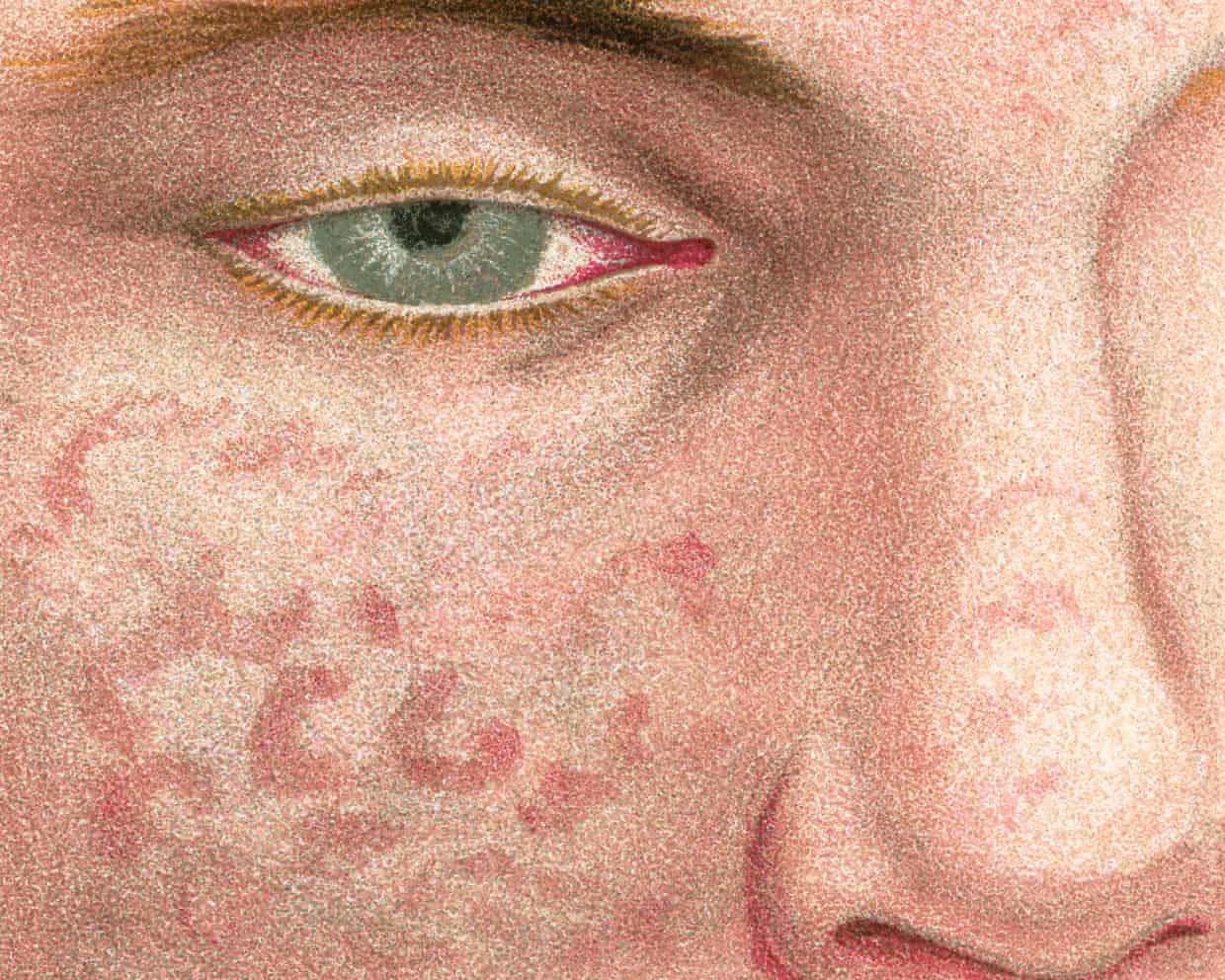
Saijal Ladd’s week in hospital remains a blur. The very worst days still feel like a fog, punctuated by two nightmarish memories. First, attempting to speak to a consultant to discuss if she should be rushed to ICU, but being unable to form words through her breathlessness. And later, a family member’s exhausted face mouthing: “We almost lost you in the night.”The 53-year-old had called an ambulance when what she had assumed was flu became so severe she could barely walk, and she experienced diarrhoea and violent vomiting

Car dealership tycoon ousted from his Kent company in ‘coup’, high court hears

UK bank bosses plan to set up Visa and Mastercard alternative amid Trump fears

TikTok creator ByteDance vows to curb AI video tool after Disney threat

Google puts users at risk by downplaying health disclaimers under AI Overviews

Winter Olympics 2026: women’s big air final under way after weather delay, USA reach women’s ice hockey final – live

Winter Olympics: USA reach women’s ice hockey final with rout of Sweden