The Joy of Six: incredible Winter Olympics moments

From a golden goal on ice, to Eve Muirhead’s redemption moment and more, here are half a dozen Winter Games classicsThe greatest show on Canadian ice, and it boiled down to overtime.For the Canada team, stacked with NHL talent, the pressure was immense; a loss in this high-profile final might have soured the entire 2010 Olympics.A rivalry with the USA that, on paper, has been largely one-sided – Canada’s men’s ice hockey dynasty has long reigned supreme – suddenly felt terrifyingly and gloriously level.The USA, refusing to be a footnote, had clawed back a 2-0 deficit in the men’s gold-medal game with Zach Parise snatching an equaliser in the dying seconds.Then, seven minutes into sudden-death overtime, the 22-year-old Sidney Crosby, a man built for the biggest moments, slipped the puck between Ryan Miller’s pads with a flick of his wrist.
A gold-medal-winning goal, for ever immortalised as “The Golden Goal” and considered an iconic moment in Canadian sports history.Sixteen long, unforgiving years.That was the sentence Lindsey Jacobellis served after Turin 2006, when a premature, unnecessary celebratory method grab on the second-to-last jump of the snowboard cross final cost her gold.The showboating was a needless flourish in a simple four-person race and led her to botch the landing and fall just yards from the finish line.Tanja Frieden of Switzerland seized top spot and relegated Jacobellis to a humiliating silver.
She became the living embodiment of counting your chickens.But in Beijing 2022, in her fifth Games, Jacobellis made no mistake.The most successful snowboarder in her event for over a decade, she led from the gate, kept her head down, and crossed the line with a cry of unbridled joy.At 36, she became the oldest American woman to win a Winter Olympic gold, finally burying the past with a vengeance.During the men’s downhill in 1998, Austria’s Hermann Maier lost control at a terrifying 120km/h, was launched into the air and cartwheeled through two safety nets before slamming into the snow.
Fears about the severity of his injuries were short-lived, however, when Maier stood up, covered in snow, and shook his finger as if to say: “I’m OK.” His right shoulder and knee were badly bruised, but weather delays in Japan meant that he had time to recover enough to compete and three days later “The Herminator” returned to win gold in the Super-G and the giant slalom.On Valentine’s Day in 1984, British ice dancers Jayne Torvill and Christopher Dean transformed figure skating into pure theatre in Sarajevo.Taking the French composer Maurice Ravel’s building score Boléro, they created a flawless, 4min and 18sec narrative on ice that had the entire Zetra Olympic Hall crowd on their feet, waving flags.They received 12 perfect 6.
0s and six 5.9s which included artistic impression scores of 6.0 from every judge, a feat unmatched in Olympic figure skating history.Their self-choreographed routine was watched by an estimated 24 million people in the UK, roughly half the country.Last year, four decades on from their historic gold-medal performance, the duo returned to that same Sarajevo spot to announce their retirement.
Amid the euphoria of the Miracle on Ice (the US hockey team’s improbable defeat of the Soviet Union), another American quietly made history.The speed skater Eric Heiden delivered a performance of dominance that sits among the greatest individual achievements in winter sport.Over nine days in Lake Placid, the 21-year-old won every men’s speed skating event, taking five individual gold medals, and setting Olympic records in every event, from the 500m sprint to the gruelling 10,000m race, where he set a new world record by more than six seconds despite waking up late and hurrying to make the race in time.Heiden was the most successful athlete at those Games, winning more gold medals than all nations except for the Soviet Union (10) and East Germany (nine).To this day, he remains the only athlete to pick up five individual golds at a single Winter Games.
Eve Muirhead’s journey to the top of the podium was less a gentle curve and more a white-knuckle rollercoaster.After years of near misses and Olympic heartbreak, Muirhead led her Team GB rink – Vicky Wright, Jennifer Dodds, Hailey Duff and Mili Smith – to gold in the pandemic-impacted Games.They had scraped through qualification, and then barely survived the group stages.But in the final against Japan, they delivered a masterclass as Muirhead scored a four in the seventh end to clinch the 10-3 victory.She could not hold back the tears as she stood on top of the podium after securing GB’s only gold medal of the Beijing Games.

‘Menopause gold rush’? Boom in hi-tech products as stigma starts to recede
For any bodily function you want to measure these days there is a gadget – a wristband for step-counting, a watch to track your heart rate or a ring for measuring sleep.Now the march of wearable tech is coming to the aid of what some say is a long underserved market: menopausal women.One startup has recently launched a high-end cooling bracelet that kicks into action during a menopausal hot flush. The device is one of a growing number of lifestyle products being launched in this area, which some experts say is growing as stigma around menopause recedes. Companies are developing everything from apps offering dietary advice to devices that track symptoms, hormones and body temperature
Paying kidney donors won’t solve the problem | Letters
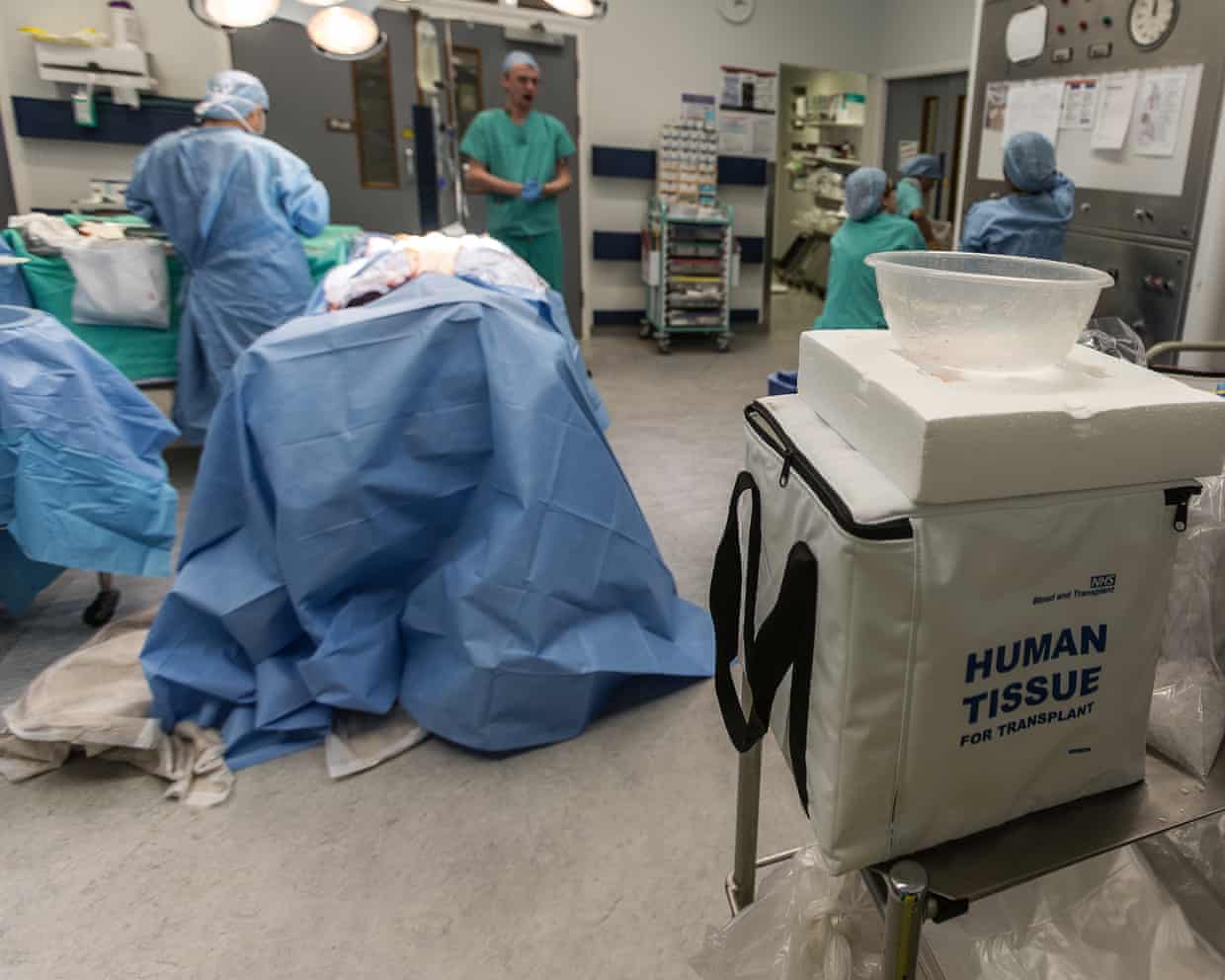
It is hard not to feel a certain sadness reading arguments for legalising the sale of kidneys that rely more on provocation than on engagement with how healthcare systems actually work in the UK (The big idea: Should we sell our kidneys?, 25 January).Kidney failure is devastating, and the shortage of donor organs costs lives. About 7,000 people in the UK are currently waiting for a kidney transplant, and six people die every week while waiting. It is therefore concerning to read an argument that implicitly accepts continued late diagnosis of kidney disease and progression to kidney failure as an inevitability, rather than recognising the urgent need to raise awareness of kidney disease and prioritise its prevention before lives reach crisis point.Furthermore, the notion that altruism in the UK has reached its limits, justifying a legal market for human organs, is not supported by public attitudes, social evidence or ethics

Creature comforts in times of grief | Letters
I can empathise very closely with Amy-Jane Beer (Country diary, 27 January) and her moving encounter with a singing robin. Thirty years ago, on the night when my father died, we returned to the family house and were greeted by the unmistakable sound of a robin’s song.This threnody that greeted our return from the hospital was heard in bitterly cold February conditions – and this was after midnight. As a seasoned birdwatcher, it seemed very unusual to me to hear this song at that hour, but I couldn’t help attributing some deeper significance to it.Adrian HughesCastell Caereinion, Powys In the weeks and months after my husband died in October 2024, like Amy-Jane Beer, I’m sure I was “visited”

On Polymarket, ‘privileged’ users made millions betting on war strikes and diplomatic strategy. What did they know beforehand?
In the early hours of 13 June, more than 200 Israeli fighter jets began pummeling Iran with bombs, lighting up the Tehran skyline and initiating a 12-day war that would leave hundreds dead.But for one user of the prediction market Polymarket, it was their lucky day. In the 24 hours before the strike occurred, they had bet tens of thousands of dollars on “yes” on the market “Israel military action against Iran by Friday?” when the prospect still seemed unlikely and odds were hovering at about 10%. After the strike, Polymarket declared that military action had been taken, and paid the user $128,000 for their lucky wager.But was it just luck?Polymarket is an online platform where people can bet on just about anything, from what the most-streamed song on Spotify will be to how many times Donald Trump will say “terrible” that day

‘Chilling’ hacking network is targeting vulnerable children, charity warns
A leading UK online safety charity has issued a “public warning” about a hacking community that is targeting vulnerable children for sexual abuse, self-harm and suicide.The Molly Rose Foundation (MRF) said online networks linked to a global ecosystem labelled the Com were carrying out extreme exploitation, cyberbullying, violence and abuse – and called for a coordinated global response from governments, regulators, law enforcement and tech companies.The warning follows the publication of a report by the online risk consultancy Resolver in partnership with the MRF, which was founded by the family of Molly Russell, a British teenager who killed herself in 2017 after viewing harmful content online.“The growing threat posed by Com networks is the most chilling and urgent threat to children online today and it requires a swift and comprehensive response,” said Andy Burrows, MRF’s chief executive, who described the report as a “public warning”.“These groups prey on children’s vulnerabilities to coerce and groom girls on gaming and messaging platforms, inflicting appalling harm and cruelty including acts of self-harm, livestreamed abuse or even suicide

NHS medical negligence persisting in England ‘despite 24 years of warnings’
Medical negligence in the NHS keeps harming and killing patients because governments and health service bosses have not acted on 24 years’ worth of warnings, MPs have said.In a scathing report published on Friday, the public accounts committee (PAC) excoriates the Department of Health and Social Care (DHSC) and NHS England for allowing the cost of mistakes to balloon to £3.6bn a year.Between them, the two bodies have failed to take “any meaningful action” to address the problem in England, despite four PAC reports from as early as 2002 advising them to do so, the committee says.“It feels impossible to accept that, despite two decades’ worth of warnings, we still appear to be worlds away from government or [the] NHS engaging with the underlying causes of this issue,” said Geoffrey Clifton-Brown, the chair of the influential cross-party committee

Real estate agents in Australia using apps that leave millions of lease documents at risk, digital researcher says

Price of consumer goods could surge as shipping costs soar, industry body says

The long-term cost of high student debt in the UK is not just for graduates | Heather Stewart

US, UK, EU, Australia and more to meet to discuss critical minerals alliance

Can French Connection make FCUK fashionable again?

Impose sanctions on refineries that buy Russian crude oil to end war, says Bill Browder