Paying kidney donors won’t solve the problem | Letters
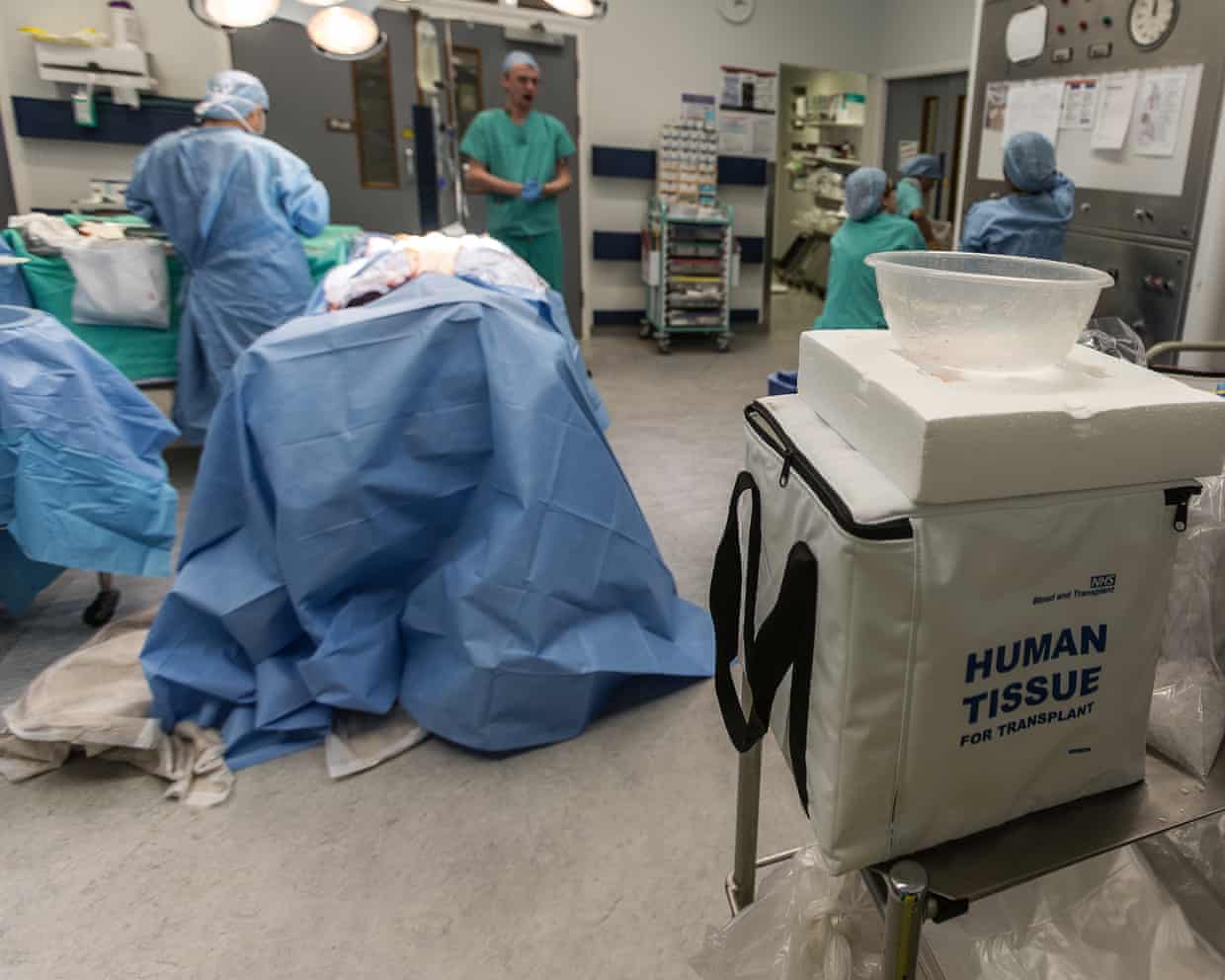
It is hard not to feel a certain sadness reading arguments for legalising the sale of kidneys that rely more on provocation than on engagement with how healthcare systems actually work in the UK (The big idea: Should we sell our kidneys?, 25 January).Kidney failure is devastating, and the shortage of donor organs costs lives.About 7,000 people in the UK are currently waiting for a kidney transplant, and six people die every week while waiting.It is therefore concerning to read an argument that implicitly accepts continued late diagnosis of kidney disease and progression to kidney failure as an inevitability, rather than recognising the urgent need to raise awareness of kidney disease and prioritise its prevention before lives reach crisis point.Furthermore, the notion that altruism in the UK has reached its limits, justifying a legal market for human organs, is not supported by public attitudes, social evidence or ethics.
Kidney disease, and access to care, are already shaped by inequality,Dr Paul Sagar may recognise concerns about exploitation, but he does not answer the central ethical question,How can a system be just if it starts to depend on people under financial pressure selling their organs and allowing economic vulnerability to become the engine of organ supply, while the causes of kidney failure and unequal access to care remain unaddressed?Altruism is yet to have its day,Research by the Robert Dangoor Partnership for Living Kidney Donation has shown that more than half of UK adults would consider donating a kidney to a family member, nearly a third to a friend, and one in seven to a stranger,More than two-thirds of people say they want to make a positive impact on the world, even when it comes at a personal cost.
The issue is not the absence of altruism, but how effectively we inform and enable people to act on their existing willingness to help others by raising awareness and providing support for living kidney donation.Our work is making an active difference in this space, with support available through donateakidney.co.uk.Saving lives doesn’t mean monetising our organs.
It demands investment in prevention, research, fair access to transplantation, and sustained support for ethical, voluntary donation.Sandra CurrieChief executive, Kidney Research UK “It turns out that the main arguments against legalising the sale of kidneys aren’t very robust,” writes Dr Paul Sagar.There are many arguments for and against the use of financial incentives for organ donation.Coherent debate, however, requires engagement with reliable empirical evidence.Unfortunately, in advocating for the introduction of markets in the UK, Dr Sagar’s case appears to rest on the assumption that payment for kidneys will inevitably ensure sufficient supply to meet the demands of people in need of kidney transplant.
He bases this assumption on historical and unfounded claims that the Iranian market in kidneys eliminated the waiting list.Eliminating a waiting list is easy; one need only restrict the eligibility criteria for wait-listing.A recent study by Ali Nobakht Haghighi and colleagues reported 32,000 patients undergoing dialysis in Iran, with only 2,500 receiving a transplant each year; only 40% of those transplants were obtained from living donors.They also highlighted some of the concerns about the Iranian organ market, noting the limitations of market regulation in prevention of exploitation.The Iranian waiting list continues to grow, as Alireza Heidary Rouchi and colleagues noted more than a decade ago, in part due to better identification and referral of patients who would benefit from transplantation, but also to the rising burden of kidney disease.
Around the world, the most effective way to reduce the gap between supply and demand for kidneys for transplant remains investment in prevention and management of kidney disease.Dominique E MartinProfessor in health ethics and professionalism, Deakin University The figures from the NHS in Paul Sagar’s article, that although 7,000 people in the UK require a kidney transplant, only 3,302 adult transplants took place in 2024/25, really angered me.Why? Because a few years ago I applied to be an altruistic living kidney donor, and the process was such a shambles and so disheartening that I gave up on the application, and they didn’t even bother to follow up.Almost two years ago I met someone who needed a kidney and she put me forward as her donor.Since then the NHS has been incompetent with her case and to this day continues to cause huge delays.
This is without even vetting me to confirm I’m a suitable match, or if I’m even eligible to donate at all.It’s been an impossible battle.If the whole NHS donor system matches our experiences with it, I’m not surprised there’s so much need outweighing availability.Name and address supplied Have an opinion on anything you’ve read in the Guardian today? Please email us your letter and it will be considered for publication in our letters section.
Catherine O’Hara managed to make difficult characters utterly delightful
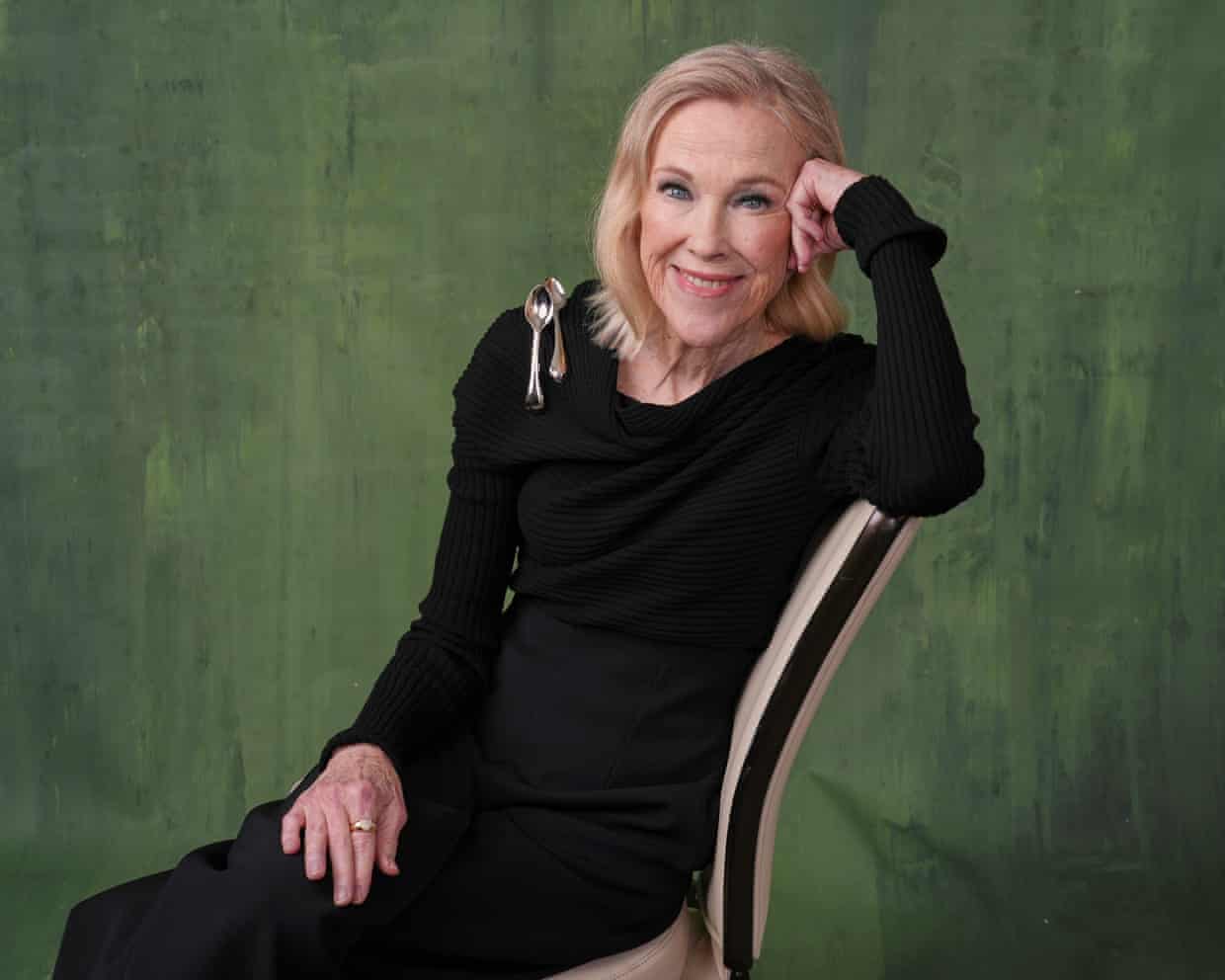
One of the later and less beloved Christopher Guest comedies featuring his troupe of peerless, often SCTV-related improvisers is For Your Consideration, a medium-funny savaging of Hollywood’s feverish awards-season prestige campaigning.The film’s unquestionable highlight is Catherine O’Hara, playing an actor who gets a whisper of awards buzz for a schlocky, still-filming drama called Home for Purim, and slowly loses her mind with the knowledge that she could maybe, possibly be recognized by her peers. O’Hara, known for her distinctively brassy yet malleable trill of her voice and her frequently red hair, peels back her performer’s bravado to expose the frenzied need beneath it. She somehow plays the outsized beneath the regular-sized, as her Marilyn Hack goes from plugging-away workhorse to desperate striver. Unsurprisingly, O’Hara briefly generated awards buzz of her own for playing this part; even less surprisingly, an Oscar nomination was not forthcoming
Catherine O’Hara, actor known for Home Alone and Schitt’s Creek, dies aged 71
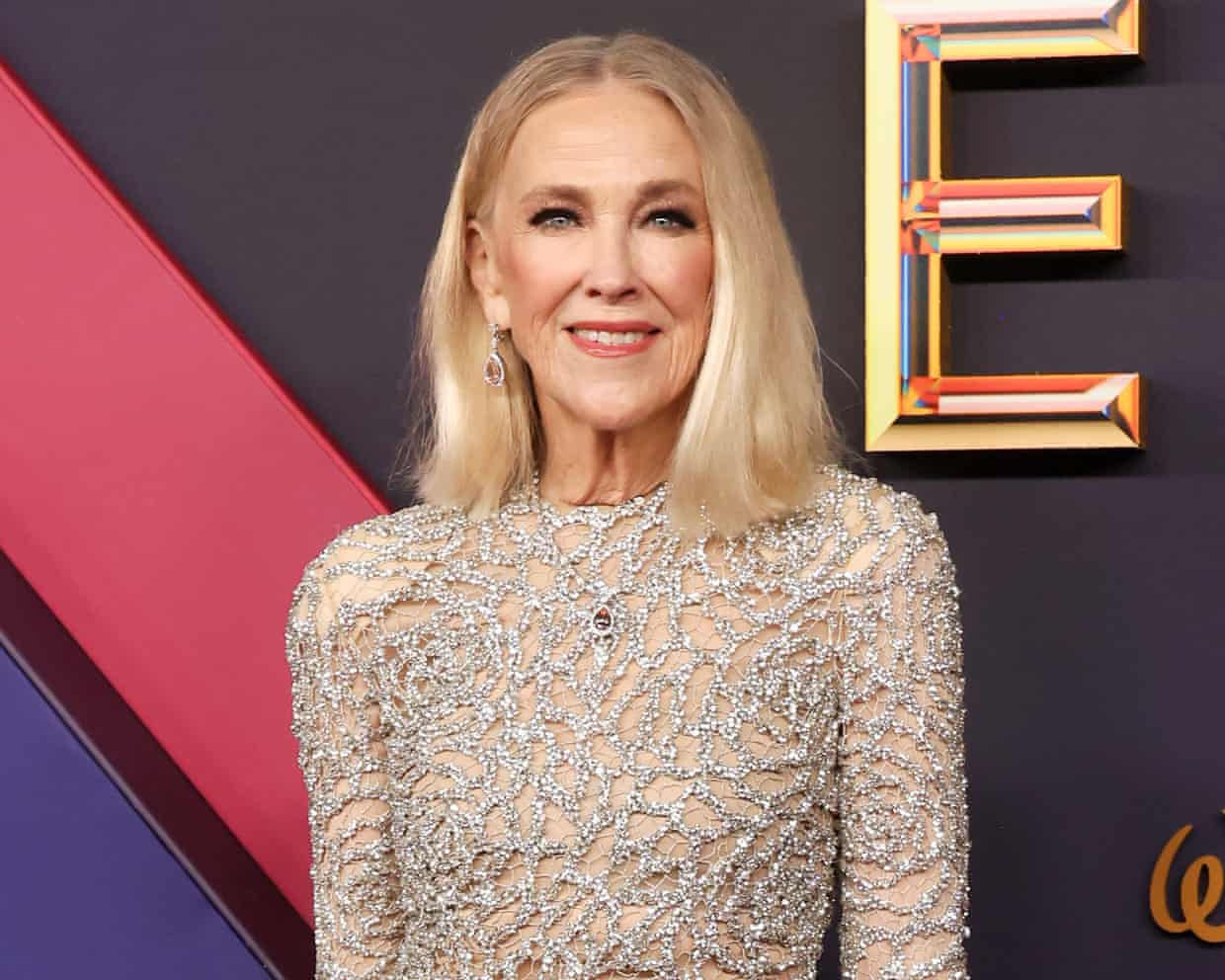
Catherine O’Hara, actor known for Schitt’s Creek, Home Alone and Best in Show, has died at the age of 71.Her manager confirmed the news to Variety. She died after a brief illness.O’Hara started her comedy career in the 1970s and helped to create the Canadian sketch show SCTV. She broke into film in the 1980s with her first big-screen credit in the romantic comedy Nothing Personal with Donald Sutherland, and in 1985 she had a role in Martin Scorsese’s black comedy After Hours

Colbert on Springsteen’s anti-ICE song: ‘Do you know how hard it is to rhyme with Minneapolis?’
Late-night hosts spoke about Bruce Springsteen’s anti-ICE song and Donald Trump’s repeated attacks on Ilhan Omar.On The Late Show, Stephen Colbert spoke about Trump’s “plunging popularity over his goons’ brutality”, which has reportedly left him unsettled and backed into a corner, according to reports.Colbert said that was the most dangerous place for him to be because “if you startle him when he’s cornered, he’ll inflate his neck pouch”.The “incredibly unpopular mass deportations” have also led Bruce Springsteen to write a fiery anti-ICE song called Streets of Minneapolis.The much-loved musician previously wrote a song about the Aids crisis called Streets of Philadelphia

Ṣọpẹ́ Dìrísù: ’If the west doesn’t say a film is good, that doesn’t mean it’s no good’
When Ṣọpẹ́ Dìrísù becomes animated during conversation, his speaking voice – ordinarily a sort of polished inner-city London dialect – dances into a smooth Nigerian accent. As it happens, his shoulders ease, his eyes smile, he is totally relaxed. If it is true that we become the most distilled versions of ourselves when we are at our most comfortable, then it is clear here that the very essence of Dìrísù’s personhood is a Nigerian man.The opportunity to nurture his Nigerian identity was a significant factor in Dìrísù’s decision to take on his latest film, the Bafta-nominated My Father’s Shadow. The entire project – on which he serves both as lead actor and executive producer – was shot on location in Lagos, the country’s former capital city, over an eight-week period in early 2024

‘Begging my boyfriend to get one’: Paul Mescal inspires yet another fashion craze with Hamnet earring
While Chloé Zhao’s Hamnet has been nominated for eight Academy Awards including best picture, for many it is a tiny silver hoop earring worn by Paul Mescal in his portrayal of William Shakespeare that steals the show. Worn in his left ear lobe, the barely there hoop has people fixated online.“Begging my boyfriend to get a tiny hoop earring too,” reads one post dedicated to the accessory. “I cried for over half of Hamnet, but Paul Mescal’s slutty little earring made me feel conflicted,” reads another.Mescal previously sent viewers of Normal People into a frenzy over Connell’s chain, a thin silver “Argos chic” necklace, and shortly after thrust short shorts into the mainstream
Seth Meyers on Minneapolis: ‘Trump is trying to distance himself from the chaos he created’
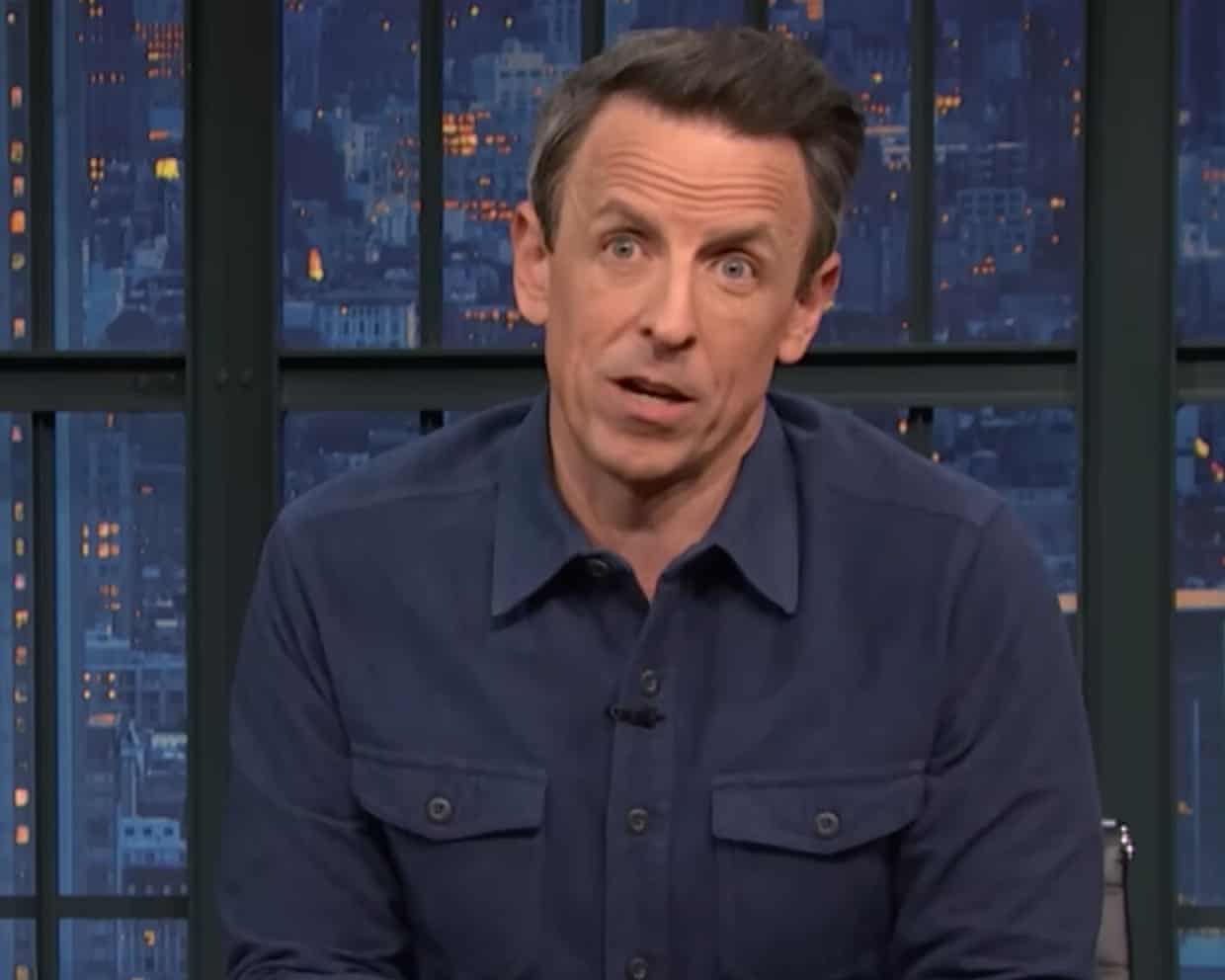
Late-night hosts discussed the ongoing Minneapolis chaos and how some Republicans are starting to turn against Donald Trump.On Late Night, Seth Meyers spoke about the “intense national backlash from both sides of the aisle” that Trump is facing for his ICE occupation in Minneapolis.The host said that when Trump and his inner circle got back into power, they thought they could do “whatever they wanted whenever they wanted”, but some found that what Stephen Miller wanted was “much different”.The homeland security adviser has been reportedly screaming in meetings, demanding a high quota of deportations and even asking officers to raid local businesses.“No one wants an ICE raid at a Home Depot,” Meyers said, adding that it was “already bad enough” in there

UK hospitality firms demand more help with business rates amid questions over Heathrow discount

Employers are spreading raises like peanut butter – and workers are paying the price | Gene Marks

‘It’s really sad’: US TikTok users rethink app over concerns about privacy and censorship

Why TikTok’s first week of American ownership was a disaster

Brighterdaysahead topples favourite Lossiemouth to win Irish Champion Hurdle

Tuskegee basketball coach ‘violated’ after being handcuffed by police at end of game