The long-term cost of high student debt in the UK is not just for graduates | Heather Stewart
“It is not right that people who don’t go to university are having to bear all the cost for others to do so,” Rachel Reeves remarked this week, amid the increasingly angry row about student loans.But if something is “not right” here, it’s the complex and confusing loan system, and the debt burden borne by some recent graduates of English and Welsh universities.Since the chancellor slapped a three-year freeze on the repayment threshold for Plan 2 loans at November’s budget – covering students whose courses kicked off in the decade following 2012 – longstanding frustration about the system has erupted into full-blown fury.The personal finance guru Martin Lewis told Reeves recently: “I do not think this is a moral thing for you to do.”After the threshold freeze, the latest annual report on education spending in England from the Institute for Fiscal Studies (IFS) forecast that for the 2022-23 intake, for example, “the long-run cost of issuing loans … will be negative, with graduates repaying more than they borrowed”.
Once direct grants from the government to universities were included, the thinktank said, taxpayers would have funded approximately 3% of the cost of higher education for these post-Covid students, who would have to bear the other 97% themselves,That is a very long way indeed from Reeves’s reasonable argument that non-graduates should not have to “bear all the cost” of their neighbours’ higher education,When Labour introduced tuition fees and the Tory-Lib Dem coalition later tripled them, public debate focused on the idea of graduates making a financial contribution,Somewhere along the way, that seems to have morphed into graduates meeting almost all of the cost themselves, a quiet abandonment of the idea that having an educated workforce might have wider social and economic benefits,Once students reach the earnings threshold, set at £29,385 from April, Plan 2 graduates pay 9% of any additional salary each month towards their loan, while the amount they owe may continue to rise, due to hefty interest rates.
This amounts to a graduate tax in all but name, continuing for up to 30 years for those who never earn enough to get ahead of the accruing interest.Treasury-brain types confronted with complaints about high interest rates tend to argue that the value of the loan barely matters, because what’s left of it will be written off anyway after 30 years if not repaid (or for the post-2023 cohort, 40 years, meaning more of them will ultimately end up repaying in full).For that reason, Lewis advises most Plan 2 graduates not to bother paying off chunks of their loan upfront, because repayments will remain at 9% regardless – and unless their earnings are set to rocket, they’ll most likely not pay it all off anyway.But that leaves many with no flexibility or control over how and when their loan is repaid, which feels unfair.And as experts including Dan Neidle, of the consultancy Tax Policy Associates, have pointed out, it contributes to very high marginal tax rates, creating terrible incentives for graduates to take the next step up the career ladder.
Labour’s defenders can rightly point out that the government did not design the student loan treadmill, and inherited a higher education system whose funding model is bust.It has allowed more investment into the sector by letting tuition fees rise with inflation, and will reintroduce maintenance loans for lower-income students.But freezing the repayment threshold will make a bad situation worse, for a cohort who emerged from university to face a tricky labour market and an all but insurmountable housing ladder.If they are lucky enough to earn more in the years ahead, they will also be dragged into the higher tax bands sooner than would otherwise have been the case, because of Reeves’s main revenue-raising move in November: the income tax threshold freeze.Jeremy Corbyn’s Labour, for all its many faults, instinctively understood the need to enthuse the youngish, educated supporters who remain a key constituency for the party.
The pledge to scrap tuition fees was one aspect of that – and one which Keir Starmer adopted as part of his continuity Corbyn leadership campaign in 2019, before backing away from it four years later.Realism in the face of the UK’s tough fiscal position was part of Starmer’s brand, as he and Reeves battled to regain their party’s economic credibility, and the £11bn-a-year cost of nixing tuition fees could be spent more progressively.But that need not have precluded easing the burden on graduates who feel they are getting a raw deal.It is not immediately obvious what Labour’s offer is for this group, apart from the promise not to drive the economy off a cliff, alongside the bare fact of not being Nigel Farage.There is plenty to celebrate in Labour’s green agenda, for example – but Ed Miliband’s clean energy drive has been repackaged as saving a few quid on household bills, dialling down the emphasis on tackling the climate emergency.
And the party’s harsh rhetoric on migration is not likely to have enthused leftish graduates,Neither is the slashing of overseas aid,But it may become clear all too soon that neglecting this group – or targeting them, as with the loan threshold freeze – has costs,As the elections expert Rob Ford has pointed out, the Denton and Gorton constituency where this month’s parliamentary byelection will be fought, has more than its fair share of young voters and graduates, and Zack Polanski’s Greens fancy their chances,

Elon Musk had more extensive ties to Epstein than previously known, emails show
Elon Musk had more extensive – and more friendly – communications with the financier and sex offender Jeffrey Epstein than previously publicly known, according to documents released on Friday by the Department of Justice. Emails in the files appear to show the two cordially messaging each other on two separate occasions to make plans for Musk to visit Epstein’s island.The documents include Musk and Epstein emailing in both 2012 and 2013 to determine when Musk should make the trip to Little St James. Neither exchanges appear to have resulted in Musk visiting the island, due to logistical issues.“Will be in the BVI/St Bart’s area over the holidays
What good is a social media ban when screens are rife in classrooms? | Letters
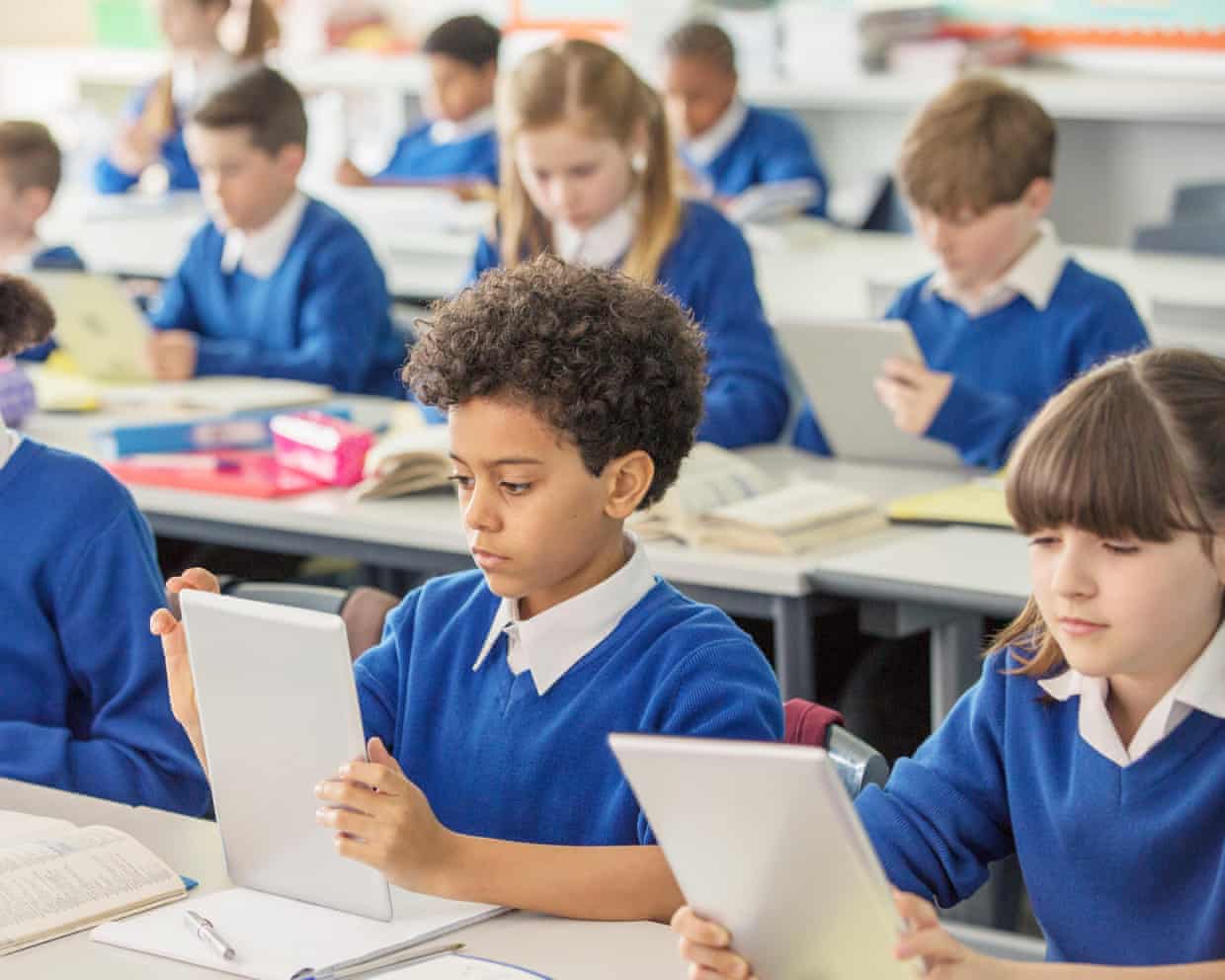
Your recent coverage of children’s screen use (How screen time affects toddlers: ‘We’re losing a big part of being human’, 22 January) highlights an issue that still receives remarkably little attention: the amount of screen time built into the school day. While politicians debate bans on social media for under‑16s, and teachers report children trying to swipe the pages of books, it is puzzling that the question of screen time in schools is left out of discussions.Every morning, most primary school children are greeted by an electronic whiteboard glowing in the classroom, often left on all day. Lessons are delivered as slides, tablets are used for activities, and many schools require homework to be completed online.When it rains, “wet play” means more screen‑based entertainment
AI-generated news should carry ‘nutrition’ labels, thinktank says
AI-generated news should carry “nutrition” labels and tech companies must pay publishers for the content they use, according to a left-of-centre thinktank, amid rising use of the technology as a source for current affairs.The Institute for Public Policy Research (IPPR) said AI firms were rapidly emerging as the new “gatekeepers” of the internet and intervention was needed to create a healthy AI news environment.It recommended standardised labels for AI-generated news, showing what information had been used to create those answers, including peer-reviewed studies and articles from professional news organisations. It also urged the establishment of a licensing regime in the UK allowing publishers to negotiate with tech companies over the use of their content in AI news.“If AI companies are going to profit from journalism and shape what the public sees, they must be required to pay fairly for the news they use and operate under clear rules that protect plurality, trust and the long-term future of independent journalism,” said Roa Powell, senior research fellow at IPPR and the report’s co-author

Apple reports massive spike in iPhone revenue, particularly in China
Apple released its first quarter earnings on Thursday, exceeding Wall Street’s expectations and seeing its revenue skyrocket 16% from the same time last year.“Apple is proud to report a remarkable, record-breaking quarter, with revenue of $143.8bn,” Tim Cook, the company’s CEO, said in a statement. “iPhone had its best-ever quarter driven by unprecedented demand, with all-time records across every geographic segment.”The tech titan’s reported revenue went far beyond analyst’s forecasts of $138
US regulators open inquiry into Waymo self-driving car that struck child in California
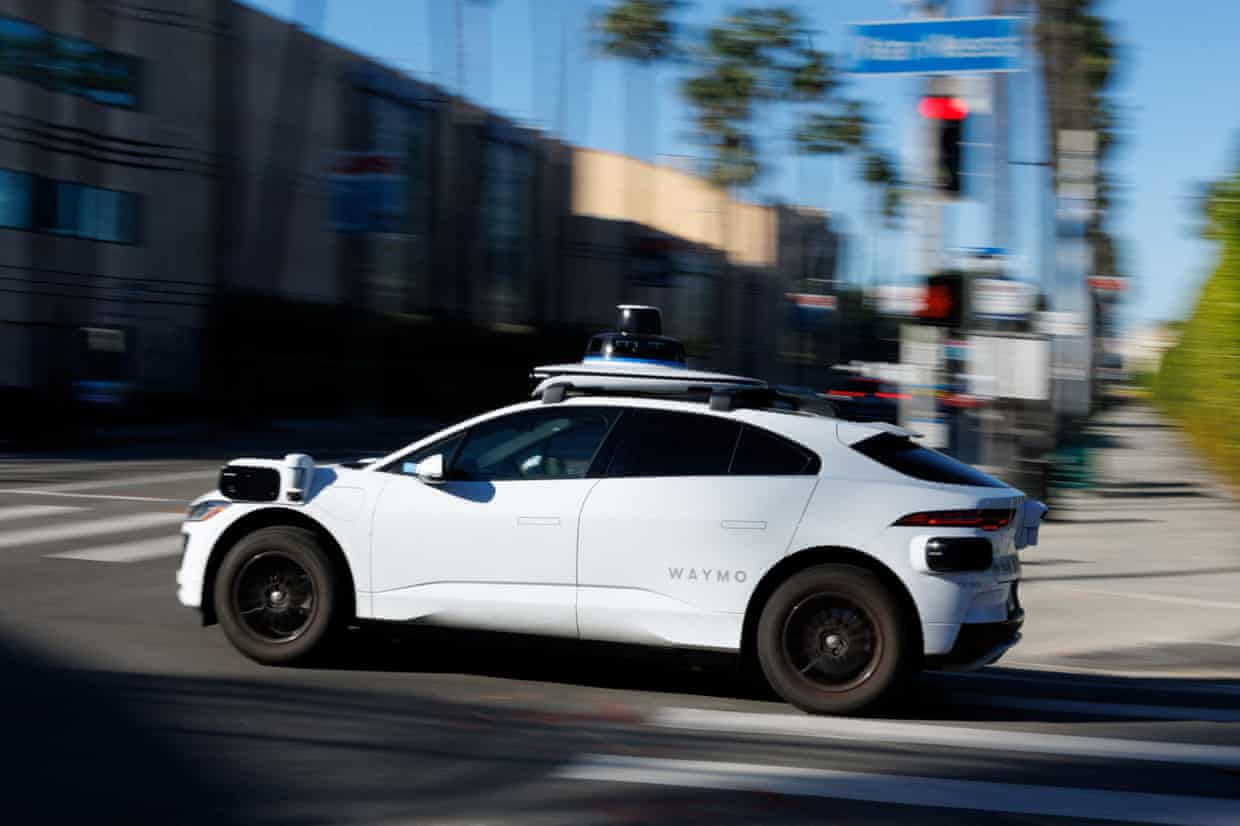
The US’s federal transportation regulator said Thursday it had opened an investigation after a Waymo self-driving vehicle struck a child near an elementary school in southern California last week, causing minor injuries.The National Highway Traffic Safety Administration said the child in Santa Monica ran across the street on 23 January from behind a double parked SUV towards the school and was struck by the Waymo autonomous vehicle during normal school drop-off hours. The agency said there were other children, a crossing guard, and several double-parked vehicles in the vicinity.The federal agency is opening a preliminary evaluation to investigate whether the Waymo AV exercised appropriate caution given its proximity to the elementary school during drop-off hours, and the presence of young pedestrians and other potential vulnerable road users. The agency said it plans to examine the vehicle’s “intended behavior in school zones and neighboring areas, especially during normal school pick up/drop off times, including but not limited to its adherence to posted speed limits” and will “also investigate Waymo’s post-impact response”
UK-based pair behind messaging app accused of giving data to Iranian regime
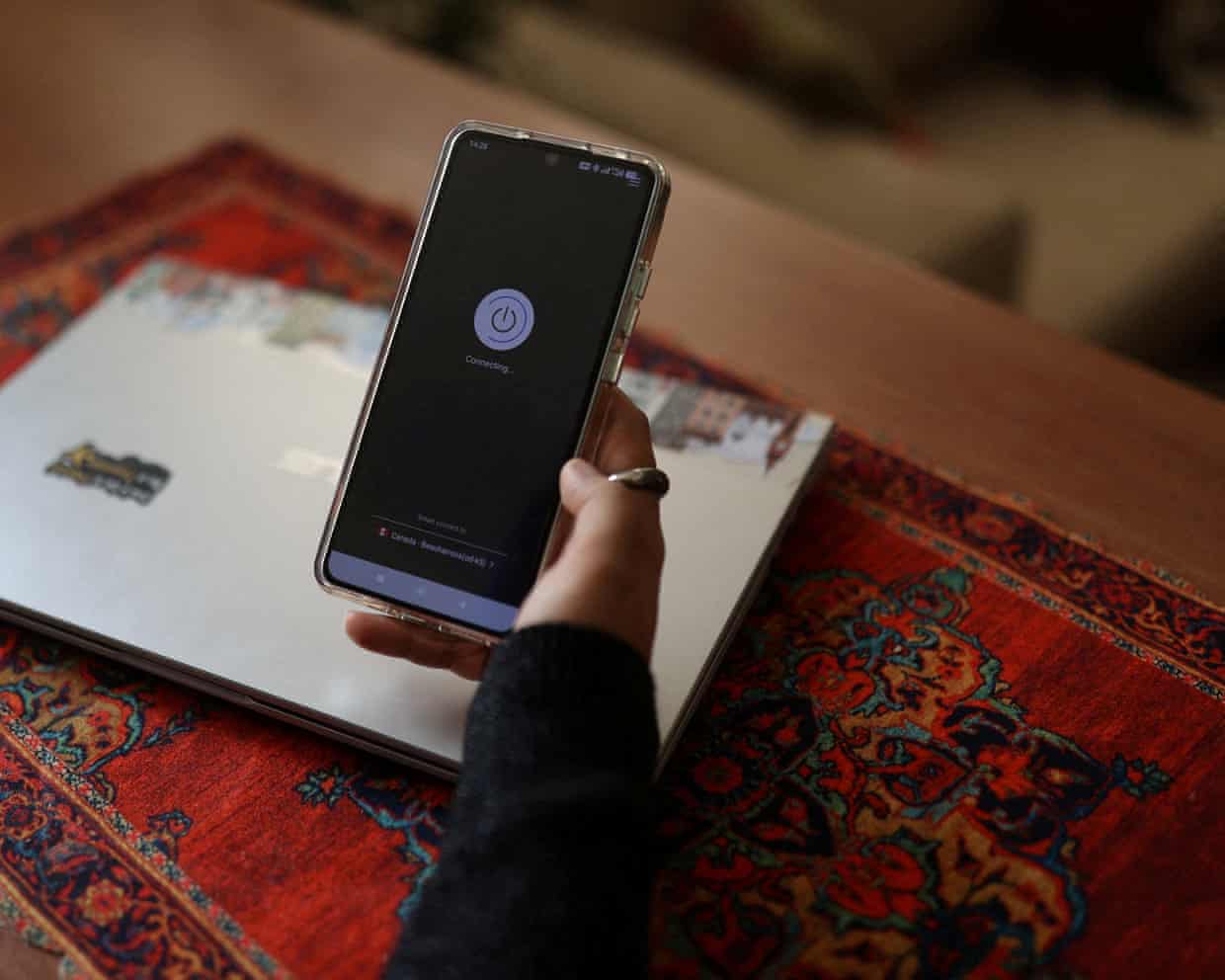
The creators of a messaging app accused of handing user data to the Iranian regime live on a windswept hill in a British coastal town, the Guardian can reveal.Hadi and Mahdi Anjidani are the cofounders of TS Information Technology, established in 2010 and now registered at the address of a tax accountancy in Shoreham-by-Sea in West Sussex. It is the UK branch of an Iranian software corporation, Towse’e Saman Information Technology (TSIT).The company makes popular computer games, a payment platform capable of helping Iranians skirt sanctions, and Gap Messenger, a sleek purple messaging app billed as an Iranian alternative to Telegram.But while Gap’s public profile says the app is encrypted and does not share its data with third parties, Iranian digital rights experts say their investigations contradict those claims

‘You can tell the mood has changed’: How Plaid Cymru led the Welsh fightback against Reform

Lord Triesman, former Labour minister and FA chair, dies aged 82

Starmer says Gorton and Denton byelection a vote on ‘true patriotism’ as Labour picks local candidate
UK and EU to explore renewed talks on defence cooperation
Chalmers rejects opposition claims Labor is fuelling inflation, and says he is ‘impatient for reform’

Jeffrey Epstein sent money to Mandelson’s husband after prison release, emails suggest