Minister defends UK’s decision not to hit back at Trump tariffs threat, saying ‘aim is to de-escalate’ – as it happened
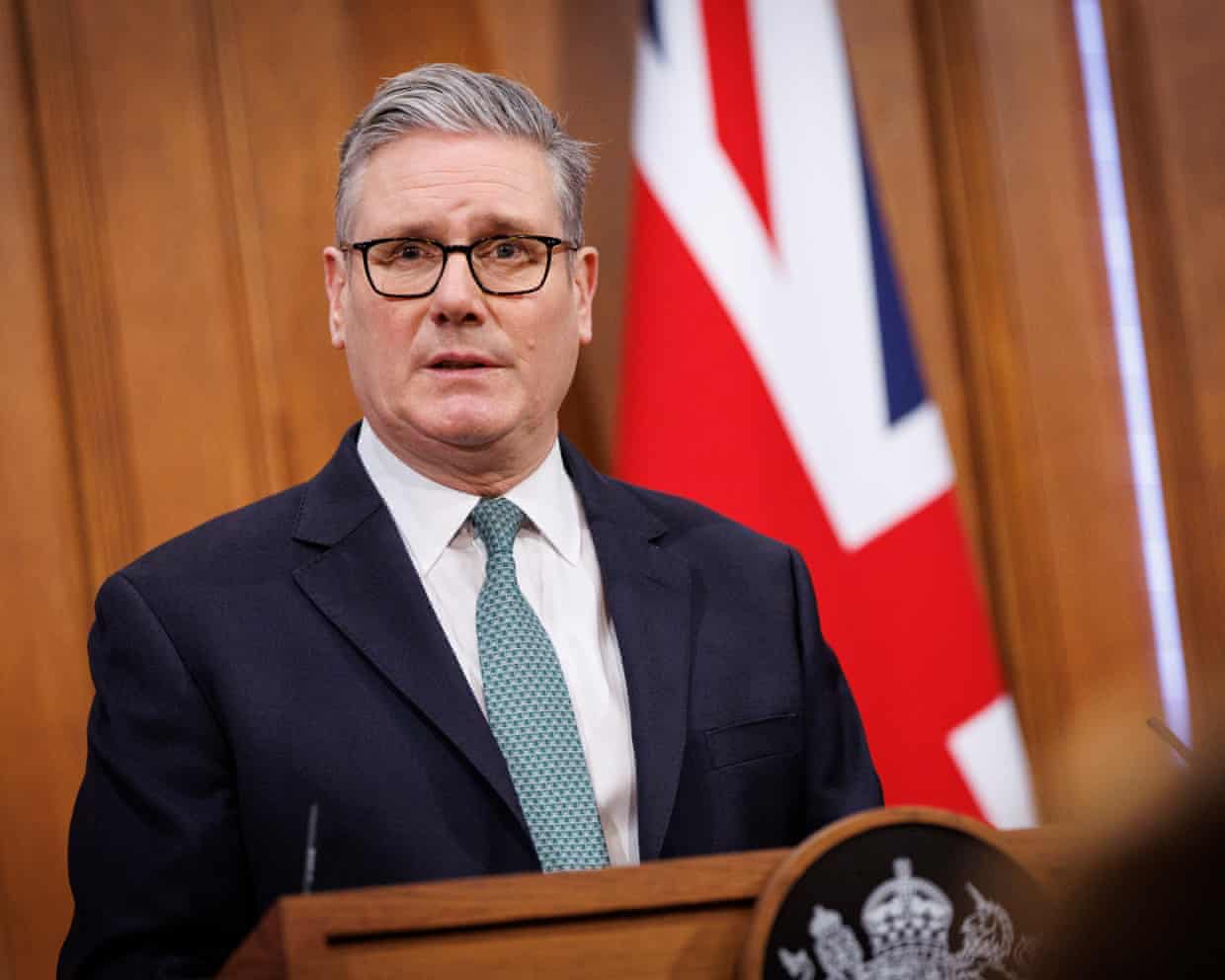
Nigel Farage, the Reform UK leader, is normally proud of his friendship with Donald Trump, and he rarely criticises him in public.But on Saturday, after Trump announced tariffs on eight Nato countries not supporting his proposed purchase of Greenland, Farage said he did not support the move, which he said would “hurt” the UK.Today, speaking to journalists as he unveiled his latest defector (see 12.56pm), Farage said that Trump’s proposal was “wrong” and that he would be said he would be “having some words with the American administration” about it in Davos.Keir Starmer has played down the prospect of retaliatory tariffs on the US, saying they would be the “wrong thing to do”, after Donald Trump threatened them against Nato allies to try to secure Greenland.
Robert Jenrick’s defection does not mean the Conservatives are moving towards the centre ground, Kemi Badenoch has told her MPs in a letter that warned about people seeking to “undermine the party from within”.Jakub Krupa has ongoing coverage of the Greenland crisis on his Europe live blog.For a full list of all the stories covered on the blog today, do scroll through the list of key event headlines near the top of the blog.Kemi Badenoch has said that the defection of Robert Jenrick is not a sign that the Conservative party is moving, or will move, away from the right.She declared this in a letter to Tory MPs in which she also pledges to deal “firmly” with anyone undermining the party.
As GB News reports, Badenoch has invited MPs to a meeting on Wednesday where, it is implied, she will challenge anyone else minded to defect to Reform UK to leave now,In her letter, she says:Differences of opinion are part of a healthy party,But there is a clear line between disagreement and trying to damage the party from within,Those who cannot be part of a Conservative party that is changing in this way are free to make other choices,Those who want to undermine or destroy the party will be dealt with firmly and fairly.
She also insists that the recent defections of Andrew Rosindell, who has always been one of the most rightwing Tory MPs, and Jenrick, who has become increasingly rightwing and anti-migrant over the past year or so, does not mean the party is moving to the centre.She says:The Tory party was not about to lurch to the centre ground.Some of our colleagues opining on social media seem to have taken these defections as a signal that the party is shifting (or should) ideologically away from the right.That is a serious misreading of the situation.These defections are not about policy differences or ideology; they are about character.
We are THE party of the right and must remain so.These comments are particularly unhelpful given they come from people who actively stood against the Conservative party in the 2019 election and themselves worked to split the centre-right vote.The issue right now is not about right or left, but between those who are here for public service and those who put individual ambition above all else.That is the very culture we are now fixing.Badenoch may have been referring to people like David Gauke, the former cabinet minister who was thrown out of the Conservative party for rebelling over Brexit in 2019.
In an article for ConservativeHome published today, Gauke argues:With Jenrick gone, the debate over strategy should be resolved for two reasons.First, the balance of opinion within the party has shifted because the leading voice for a more populist approach is no longer there.Second, it is even more obvious that the Conservatives are not going to win the votes of those most exercised by immigration to the exclusion of all other issues.Badenoch is justified in arguing that Jenrick’s defection had more to do with personal factors than policy.In his defection speech, Jenrick criticised the record of the past Tory government, but he said very little about why he thought current Reform UK policy was better than current Conservative policy in any particular area.
(In many areas, there is considerable overlap.) When he ran for Tory leader in 2024, his biggest disagreement was over the European convention on human rights, which he was wanted to leave, while Badenoch was non-committal.But she adopted ECHR withdrawal as policy last summer, meaning that Jenrick ultimately won on the biggest policy debate of the Tory leadership contest.Badenoch’s declaration that Jenrick’s departure will not result in the Tories shifting back to the centre may disappoint some of her potential media supporters.In its editorial on the subject last week, the Times said:What remains now is for [Badenoch] to stake out solid ground on the pragmatic centre right, filling a yawning gap in the political market between the creeping paralysis of Labour and the populist fantasies of Reform.
The Daily Telegraph was a bit more non-committal, but in its editorial on the Jenrick defection it said: “For Mrs Badenoch, [the defection] is a chance to show that her diagnosis – Britain is not “broken”, merely in need of repair – can win the support of the electorate, and that Britain’s oldest and most successful political party can reinvent itself yet again to meet this challenge.”Labour MPs have urged the Treasury to say when it will “replace the business rates system”, to tick off a manifesto pledge, PA media reports.PA says:Liam Byrne said his party vowed to “replace the business rates system, not tinker with it or subsidise it”, as Treasury minister Dan Tomlinson faced questions about policies which are set to leave pubs and hospitality firms paying more tax.And Meg Hillier, who chairs the Commons Treasury committee, warned pubs in her Hackney South and Shoreditch constituency were “seeing eye-watering increases in business rates”.Tomlinson told the Commons the government was phasing out hospitality support schemes introduced during the Covid-19 lockdowns, which began in 2020, and added properties have been revalued.
A £4.3bn support package will help protect businesses which would otherwise have seen sharp increases in their bills this year, according to the Treasury.“The manifesto commitment was to replace the business rates system, not tinker with it or subsidise it,” Byrne told MPs.The Commons business committee chairman added: “Pubs alone are going to see bill increases of 4% this year alongside VAT thresholds, which are strangling hospitality businesses along the high street, on top of a tax compliance bill for small businesses of £25bn, not least because HMRC doesn’t answer four million phone calls a year.”Byrne asked: “When is the government going to table comprehensive radical reform that meets the test of the manifesto commitment?”In his reply, Tomlinson said: “There are things that we want to look at, for example, a switch from a slab system to a slice system [where successive bands are taxed at increasing rates], which should support and encourage investment.
“We’ve already extended small business rates relief, which was confirmed at the budget by the chancellor [Rachel Reeves] so that businesses that expand from one to two premises cannot have that disincentive,”Hillier said: “Many pubs in my constituency of Hackney South and Shoreditch are seeing eye-watering increases in business rates,“And we know from the VOA [Valuation Office Agency], which gave evidence to the select committee last week, that the formula that was used is the same formula that’s been used for 20 years, so it should have been no surprise that this was going to happen,“Yet we had learned in that meeting … that there are over 2,000 pubs with a doubling of their business rates,“This government came in with a mission to transform business rates – the government inherited a part-way-through valuation cycle – but regardless of what may or may not happen to the hospitality sector, where are the plans for reform of business rates in the medium to long term?”Tomlinson said: “At the budget, we set out the first significant fundamental reform of the business rates system that we have ever seen.
“For the first time now, there is a very significant divergence in the tax rate paid by businesses on our high street and the very largest businesses, including those online giants.“That means the tax rate is around 13p lower for those businesses than the largest ones – that’s a 25% reduction, it cost around £1bn, and that’s a £1bn reduction for those businesses on the high street paid for by higher taxes on those who can most afford it.”Keir Starmer said this morning that he did not favour retaliatory tariffs against the US in response to any tariffs imposed by Donald Trump on the UK and other Nato countries opposing his plan to buy Greenland (see 9.36am), and Jenny Chapman, the development minister, defended this approach in the Lords this afternoon (see 4.05pm).
But the public thinks differently.By a margin of more than four to one, voters would support retaliatory tariffs, a YouGov poll suggests.Some 67% of people would either strongly (45%) or somewhat (22%) support the idea; only 14% of people would be opposed, either strongly (6%) or somewhat (8%).Kalyeena Makortoff has more on the potential economic impact of the new tariffs proposed by Donald Trump on our business live blog.In the Lords the former Tory Foreign Office minster Lord Ahmad of Wimbledon asked Jenny Chapman during the PNQ on the Greenland tariffs threat (see 4.
05pm) if the government had assessed the impact the proposed tariffs might have.Chapman said they would be “extremely damaging, not least to our car industry, to aerospace, life sciences, to steel”.But she not put a figure on that.But the British Chambers of Commerce has tried to estimate the potential damage.After a meeting this morning about the crisis with Chris Byrant, the trade minister, Shevaun Haviland, the BCC director general, said:Throughout tariff developments, the government has kept a cool head and continued to negotiate.
That’s seen us establish a competitive advantage over many other countries in the US market for goods like steel and pharmaceuticals,We are still in the foothills when it comes to these new tariff proposals from the President and there is some way to go before we will have final clarity on them,But should the worst-case scenario come to pass, then the impact would be significant,A £6bn hit at the end of January, rising to £15bn in June,If that happens, orders will drop, prices will rise, and global economic demand will be weaker as a result.
That would be a lose-lose situation for everyone.Jenny Chapman, the development minister, has defended the government’s refusal to hit back at the US over President Trump’s latest threat to use tariffs against the UK.She was responding in the House of Lords during a private notice question on the latest tariffs threat.Lord Purvis, the Lib Dem leader in the Lords, said that the threat showed something “obvious to everyone”, that Trump was an “unserious person”.He went on:The threat from the US to, not only a very close ally in the European Union, but a Nato partner, and then to punish us for standing with them, is utterly reprehensible.
The PM said the actions are completely wrong.But the government refuses to raise a formal complaint to the WTO [World Trade Organization], whose rules these are trashing.He said that they’re completely wrong because they’re economic coercion, but has refused to put in place protective anti-coercion measures.What is the point of saying something is completely wrong when you do completely nothing? As a result of it?Chapman replied:I think it’s called diplomacy.And our aim is to de-escalate the situation and not to take measures which would inevitably cause this to escalate and get more damaging for our manufacturers and for people’s jobs.
Robert Jenrick, the former shadow justice secretary, told a female broadcaster “you need your head checking” after she asked him about his attitude to women.In an interview on Times Radio, Kate McCann put it to Jenrick that most of the former Tory colleagues he had been criticising were women.She also asked why, at his press conference with Nigel Farage last week, Jenrick made a point of repeatedly mispronouncing Kemi Badenoch’s name.(He pronounced the initial syllable “bad”, as in opposite of good, whereas it is meant to be “bade”, as in bade farewell.)Jenrick replied:I honestly have no idea what you’re talking about.
If you, Kate, think that this is important, then you need your head checking.What matters here is the state of the country, and the country’s in a real mess.When McCann said the press conference came across as “quite blokey”, Jenrick again said that he had no idea what she was on about.McCann said that most women would understand.Jenrick said, if she was suggesting he was sexist, that was “extremely offensive”, because he was a husband and father of three daughters.
“If you, Kate, think that this is important, then you need your head checking.”Robert Jenrick says he finds suggestions he's dismissive of female journalists and politicians "offensive".@RobertJenrick | @KateEMcCann pic.twitter.com/YLyKTMMwruJenrick’s new colleagues in Reform UK are unlikely to side with McCann on this.
Farage himself has been criticised for being patronising towards female journalists.One of the women criticised by Jenrick, and mentioned by McCann, was Liz Truss, the former PM.In an article for the Times published this morning, Jenrick said Badenoch should have expelled Truss from the party.He said:Truss’s disastrous tenure as prime minister destroyed the savings of tens of thousands of people in this country.In 42 days, she single-handedly demolished the party’s reputation for fiscal credibility, undermined the country’s credit ratings and forced many to re-evaluate their retirement.
Since that time, Mrs Truss has embarked on an unrepentant, vainglorious global media tour in which she proudly declares that her unique blend of economic incompetence should be the model for fiscal policy worldwide,All this as a Tory member,Why hasn’t she been removed? Well, because removing her would be difficult,She has friends in the party,It isn’t the done thing.
It’s easier to let her just remain.Nobody has the gumption to face the issue, no matter how offensive it is to the victims of her ineptitude.And if the party doesn’t have the balls to kick out Truss, will it really have the gumption to take on the vested interests that stand in the way of all the change our country needs?Nigel Farage, the Reform UK leader, has said that Keir Starmer’s response on Saturday to President Trump threatening to impose tariffs on Nato allies not supporting his Greenland plans was correct.Starmer said:Applying tariffs on allies for pursuing the collective security of NATO allies is completely wrong.In an interview with Matt Chorley for Radio 5 Live, Farage said:I felt the prime minister’s instinctive response, to say this was completely wrong, was actually the correct thing to say.
But let’s see how tough we can be.Let’s see how good a negotiator he is.Some of the evidence, when it comes to the EU reset and the Chagos deal, is our prime minister is not a born negotiator, and that would be my concern.

The inside track on curbing UK prison violence | Letters
Alex South’s harrowing account of violence in prisons (Death on the inside: as a prison officer, I saw how the system perpetuates violence, 13 January) deserves more than our sympathy – it demands we recognise these murders and assaults not as symptoms of a broken system, but as a foghorn blaring warnings about fundamental failures.I work in prisoner rehabilitation. I see what South describes from the other side: men whose “scaffolding” is indeed flimsy, who have accumulated trauma before and during incarceration. But I also see what happens when that changes. Our service users work in cafes, bakeries and bike shops, not because we believe in the redemptive power of bread or bicycles, but because meaningful work and purposeful activity are the foundations of desistance
She’s just autistic Barbie – let children play | Letters
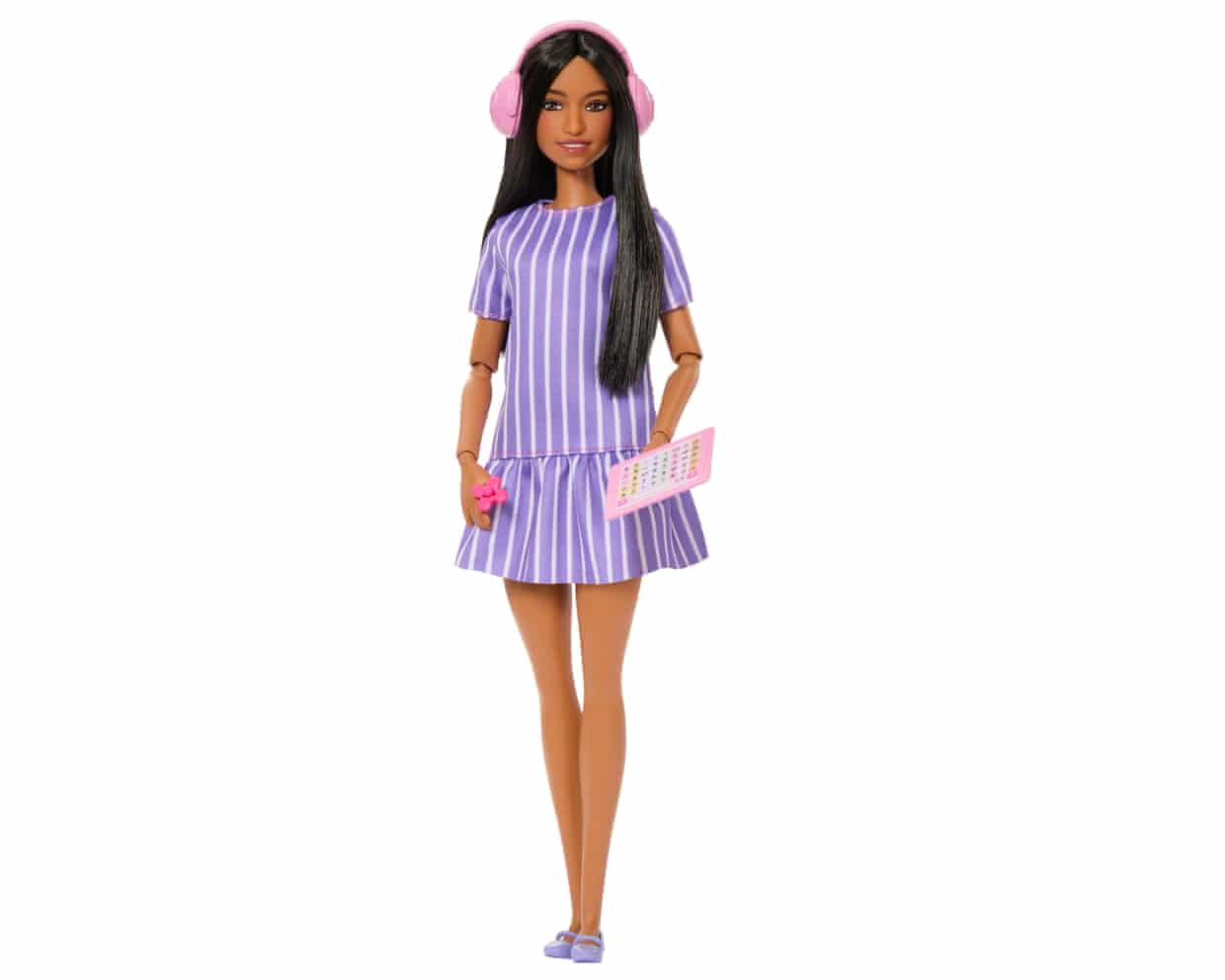
As the parent/carer of autistic children, I’m pleased that my kids have more visibility in mainstream culture with the launch of the “autistic Barbie” doll (Mattel launches its first autistic Barbie, 12 January). For the kids, they’re interested, but, given my youngest’s penchant for graffiti, “autistic Barbie” will be drawn all over and resemble “weird Barbie” in no time.I’ve found it hard to share this pleasure, having seen my academic and activist colleagues slam the doll. I completely understand their reasoning. Of course it lacks nuance to use visible accessories to represent a hidden disability

Private investigators must be trained to spot signs of domestic abuse and stalking | Letter
I was grateful to read the Guardian investigation revealing how perpetrators of abuse are using private investigators to further harm by proxy, exposing the unseen threat faced by victims and their supporters (You feel violated’: how stalkers outsource abuse to private investigators, 11 January).As the manager of a sexual and domestic abuse service, I see the impact of stalking on a monthly basis, not as an adjacent concern but as one of the clearest predictors of intimate partner homicide we have. Victim-survivors who disclose stalking and associated behaviours are rarely paranoid; they are often correctly identifying imminent danger.Extraordinary measures are taken by victim-survivors to stay safe: changing names, abandoning jobs or study, moving across the country, and fleeing into refuges or new areas to live anonymously. Yet even these steps can prove redundant if an unregulated investigator is paid to track them

Positive thinking could boost immune response to vaccines, say scientists
Positive thoughts may boost the immune system according to research that points to a connection between the mind and our body’s natural defences.Scientists have found people who used positive thinking to boost activity in the brain’s reward system responded better to vaccination, with their immune systems producing more antibodies than others after having the shot.The work does not mean being hopeful can rid people of disease, but hints at the potential for mental strategies to help the immune system fight infections and even attack tumours to keep them at bay.“It’s the first demonstration in humans, in what seems to be a causal manner, that if you learn how to recruit your reward system in the brain, the effectiveness of immunisation increases,” said Talma Hendler, a professor of psychiatry and neuroscience at Tel Aviv University.Previous work has shown that positive expectations can benefit patients with some medical problems, as seen in the placebo effect

Pepper spray use at young offender institutions in England ruled legal
An attempt to halt the use of pepper spray on children held in young offender institutions (YOIs) has failed after the high court ruled on Monday that the weapon’s rollout was lawful.The Howard League for Penal Reform challenged the Labour government’s decision to authorise the use of Pava, a synthetic form of pepper spray, in three prisons in England holding boys as young as 15.Risks such as the physical and psychological harm posed by Pava, the likely disproportionate use of the spray against disabled children and black and minority ethnic prisoners, and propensity to increase violence overall, had not been considered, the charity said.But in a judgment on Monday, Mr Justice Calver said that the then justice secretary, Shabana Mahmood, had sought to ensure that its use was only as a “last resort”.“It is plain that the secretary of state was closely involved in the formation of the Pava policy and was insistent upon thorough safeguards being introduced concerning its use, as well as constant ‘live’ monitoring and oversight of the limited use of Pava which she expected to be extremely rare in view of the limitations upon its use: viz, as a last resort, and only where there is an immediate threat of life-changing or life-ending violence,” the judgment said

‘Jess’s rule’ posters remind GPs in England to re-examine patients’ symptoms
Millions of patients in England will this week be urged to ask their GP to think again if they have not had a diagnosis for their symptoms after three appointments.From Monday, GP practices across the country will use posters to promote Jess’s rule, a new system aimed at preventing serious illnesses from being missed and needless deaths. It is named after Jessica Brady, a 27-year-old who contacted her surgery 20 times before dying of cancer in 2020.Jess’s rule urges family doctors to consider a second opinion, conduct a face-to-face physical examination or order more tests if a patient has had three appointments for their symptoms but no diagnosis.Posters advertising Jess’s rule have been sent to all 6,170 GP practices in England

Nervous rex: the Davos elite brace for Trump and his dinosaur diplomacy
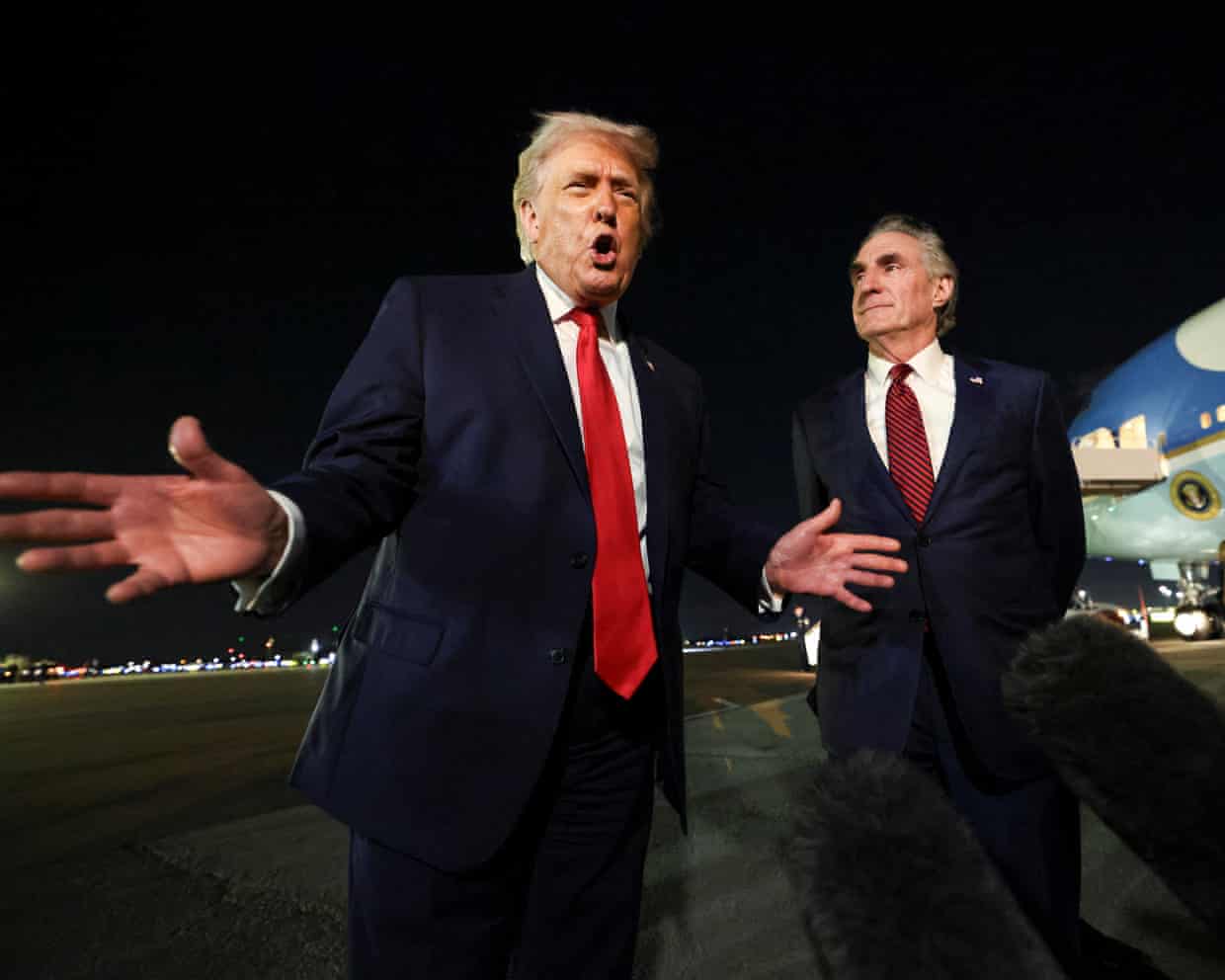
US and European markets fall as Trump steps up Greenland rhetoric

Big tech continues to bend the knee to Trump a year after his inauguration
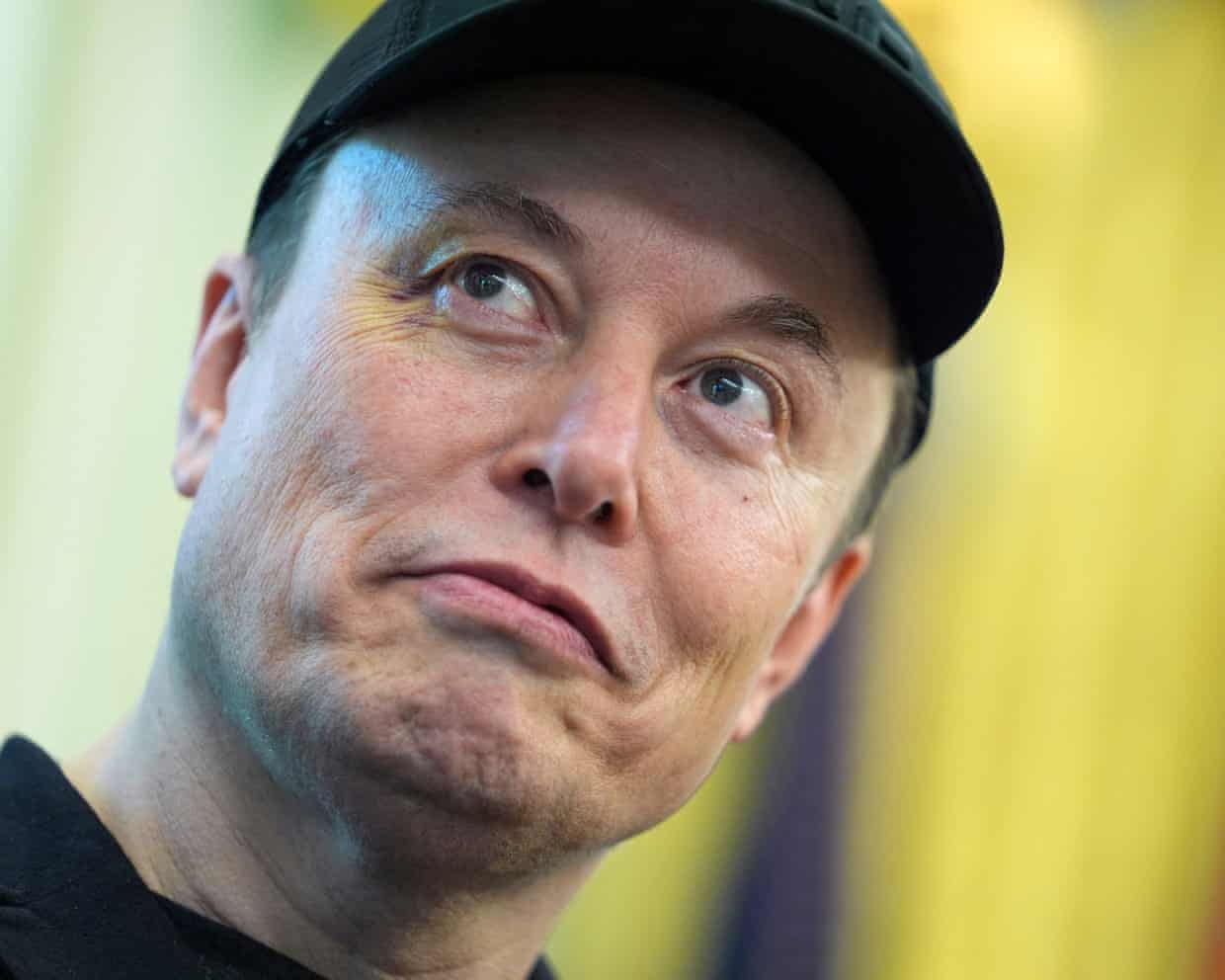
Elon Musk floats idea of buying Ryanair after calling CEO ‘an idiot’
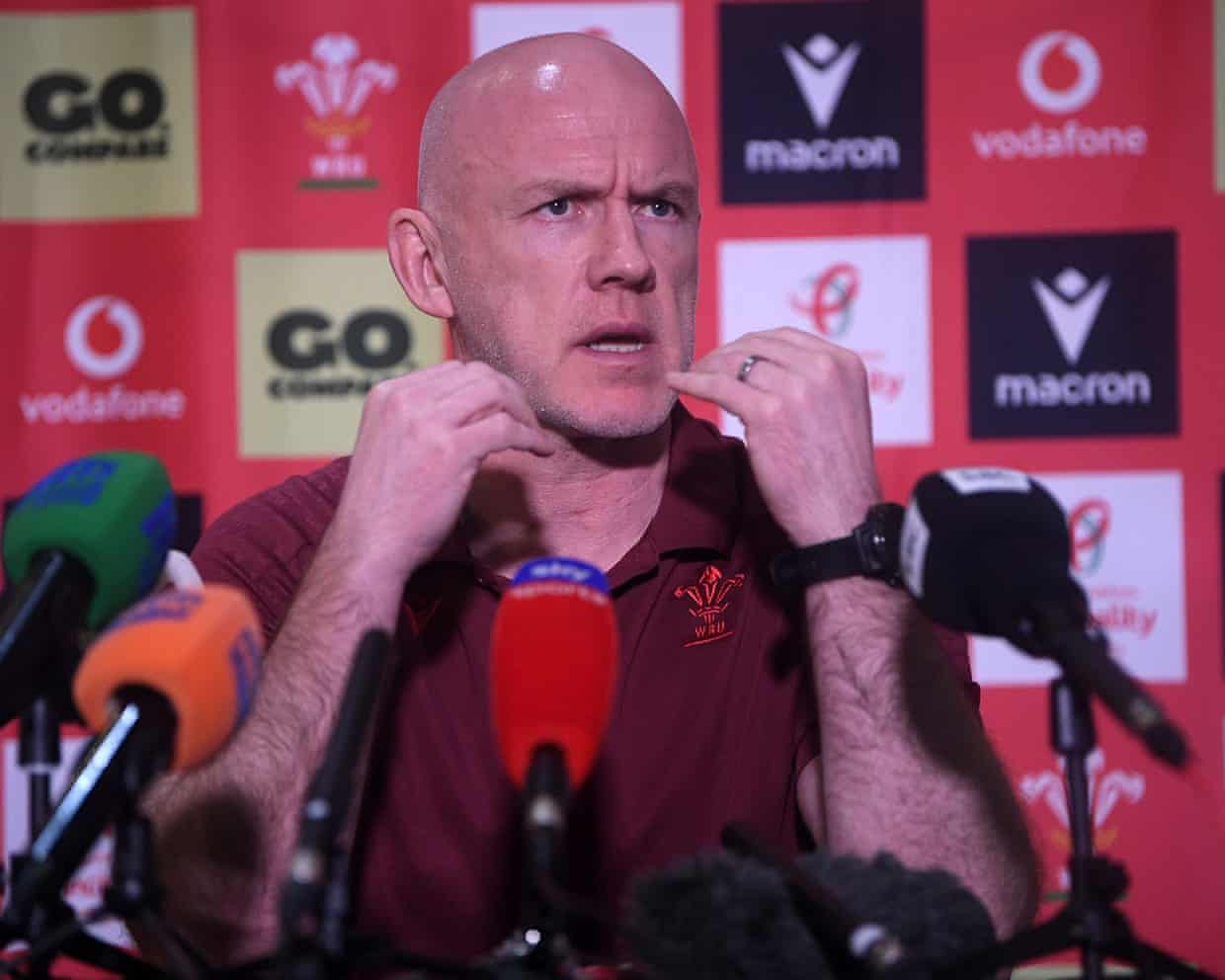
Wales coach Steve Tandy left trapped in middle of toxic Ospreys and Cardiff saga

Naomi Osaka’s jellyfish-inspired outfit steals the show at Australian Open