Big tech continues to bend the knee to Trump a year after his inauguration
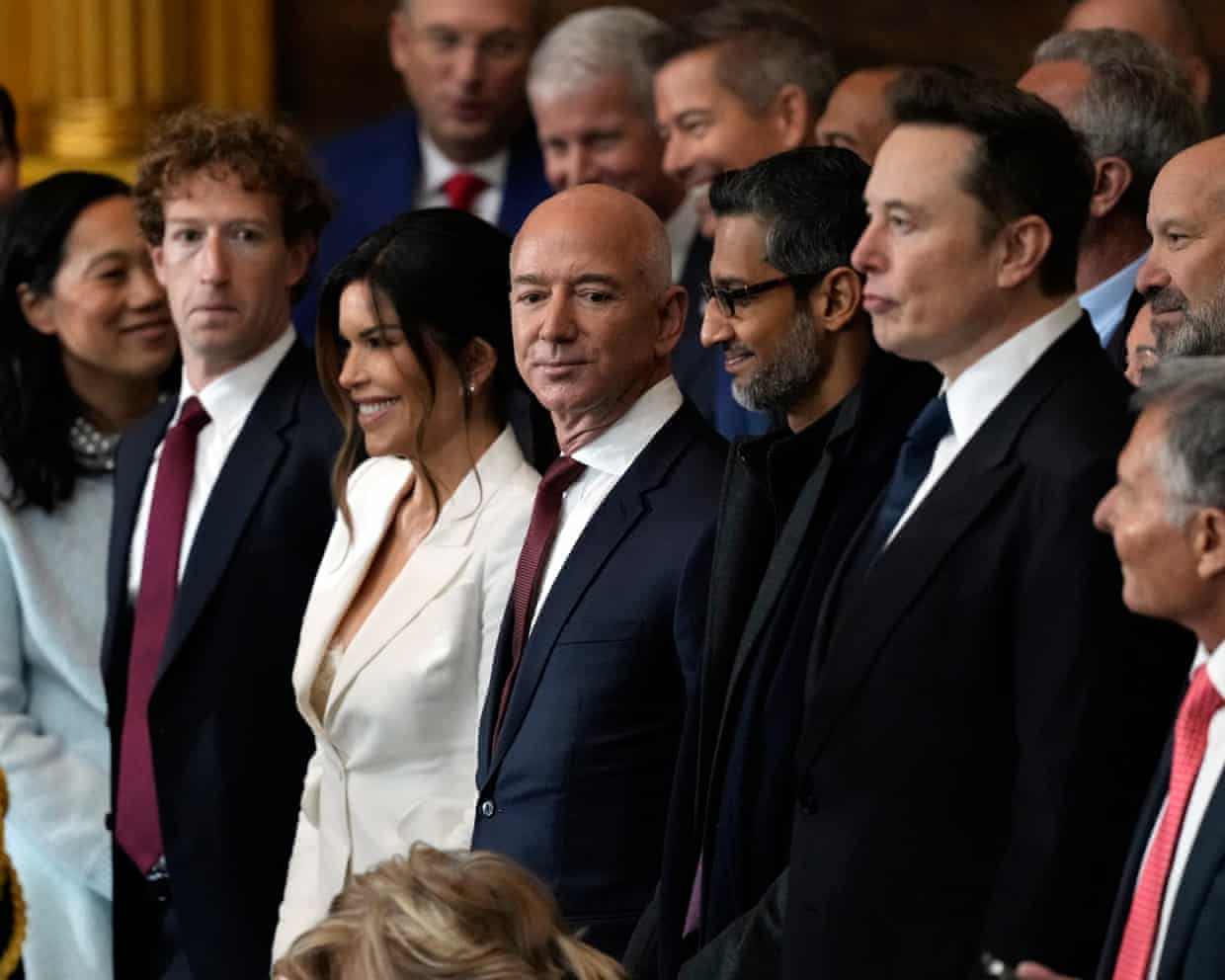
Hello, and welcome to TechScape.I’m your host, Blake Montgomery, the Guardian’s US tech editor.One year ago today, Donald Trump was inaugurated as president of the United States.Standing alongside him that day were the leaders of the tech industry’s most powerful companies, who had donated to him in an unprecedented bending of the knee.In the ensuing year, the companies have reaped enormous rewards from their alliance with Trump, which my colleague Nick Robins-Early and I wrote about last month after Trump signed an executive order prohibiting states from passing laws regulating AI.
Trump has sponsored the tech industry with billions in government funding and with diplomatic visits that featured CEOs as his fellow negotiators in massive, lucrative deals.As year two of Trump’s second term begins, Silicon Valley’s titans appear poised to enrich themselves even more with the president’s enthusiastic aid.Today in tech, we’re exploring the political consequences of the expansion of datacenters in the US and Europe as well as taking stock of Australia’s under-16 social media ban.Donald Trump is worried about datacenters.Specifically, he is concerned about their effects on an already expensive electricity market in the United States.
Will Americans’ resentment of sharply rising energy costs scuttle his goal of total deregulation of AI and his party’s November election ambitions?Trump’s anxiety is evident in two actions last week,On 13 January, Trump and Microsoft’s president jointly announced that the tech giant would pay more for its datacenters, paying full property taxes and accepting neither tax reductions nor electricity rate discounts in towns where it operates datacenters,““We are the ‘HOTTEST’ Country in the World, and Number One in AI,Data Centers are key to that boom, and keeping Americans FREE and SECURE but, the big Technology Companies who build them must ‘pay their own way,’” Trump wrote on Truth Social.
“Thank you, and congratulations to Microsoft.”And then on Friday, Trump and governors of states in the north-east US directed the country’s largest power grid operator to hold an emergency reliability power auction by September, per Bloomberg.The move could force tech giants to pay for the construction of new power plants by requiring them to bid on the future reliability of the electricity they plan to draw from the grid.“I never want Americans to pay higher Electricity bills because of Data Centers,” Trump said.Trump is tugging at the edges of the problem of rapidly rising electricity demand.
He promised Americans he’d slash their electricity bills by half.But as my colleagues Oliver Milman and Dharna Noor reported over the weekend, there’s little prospect of him delivering on that vow.At the same time that AI is increasing the demand for electricity, the administration is blocking renewable energy projects Trump calls a “scam” and a “con job” but were set to provide electricity for millions of US homes, instead pushing the expansion of drilling for gas and oil.Administration edicts to reverse the closure of ageing coal plants and to restart the overseas export of liquified natural gas could counterintuitively raise costs further for domestic consumers.Power prices play into larger concerns about the cost of living in the US, an issue which has Trump’s party on its back foot as congressional elections loom in November.
As ever with technology news, Elon Musk is part of the story.On Thursday, the US Environmental Protection Agency (EPA) ruled that Musk’s company xAI had illegally been operating methane-powered generators at its Memphis facility.The ruling establishes a precedent for tech companies in search of more electricity than they can obtain from the grid: you can’t simply bring in a backup generator, like a homeowner would do when facing regular power outage.You’ll have to purchase nuclear power plants like the rest of us (Meta, Microsoft, Google and Amazon).Musk and xAI have not commented.
European governments are likewise confronting the limitations their resources pose on the potential growth of datacenters, which are limitlessly hungry.In Germany, which boasts the highest number of datacenters in Europe, high energy prices constrain growth.Chancellor Friedrich Merz, like Trump, is very much in favor of constructing more datacenters, but has taken an opposite tack to the US president’s deal with Microsoft.In November, Merz’s ruling party agreed to subsidize heavy industrial use of electricity until 2028 and reduce grid fees for consumers and businesses alike.One important distinction from the US: datacenters in Germany are required to source half of their electricity from renewable sources.
Germans are skeptical of the tech industry’s ability to abide by the requirement, which leads to general wariness of expanding datacenter construction, according to a survey published in October.In the UK, home to the second-highest number of datacenters in Europe, construction of new facilities is expanding, and energy costs are rising.Electricity rates in the UK are already multiple times those of the US and among the highest in the world, and increases pose severe problems for a populace that has dealt with a cost of living crisis for multiple years now.Despite the brewing problem, the Department for Science, Innovation and Technology proposed in November to offer electricity discounts to datacenters in so-called “AI growth zones” to encourage investment and development.A nearby example looms large: in neighboring Ireland, datacenters’ electricity use overtook that of all urban homes in 2024.
The strain on the grid has led to significantly higher costs for everyday Irish people, so much so that the Irish government imposed a ban on new datacenters connecting to Dublin’s power grid in 2021.The measure effectively prohibited new construction in the city and its surrounding area.It ended in December.The next stop in the datacenter boom: the Middle East, where energy is cheap but water is not abundant, and India, where the power grid is not as reliable …Lawmakers in the UK and around the world are calling for bans on social media accounts for teenagers and children in the wake of Australia’s successful social media ban for under-16s.My colleague Josh Taylor offers a look at how the ban is playing out in its native country.
Despite social media companies reporting millions of accounts deleted in compliance with the ban, the opposition party is questioning its effectiveness:More than 4,7m social media accounts held by Australians who platforms have judged to be under 16 years of age were deactivated, removed or restricted in the first days after the ban came into effect on 10 December, the prime minister has said,Despite the high numbers, the federal opposition, which campaigned for the policy before it was adopted by the government, last week said the ban implementation had “fallen flat”,“New accounts are being created and the age-verification tools that the government assured Australians would be effective, have proven laughably easy to bypass with some makeup and good lighting,” said the shadow communications minister, Melissa McIntosh,He called himself an ‘untouchable hacker god’.
But who was behind the biggest crime Finland has ever known?ChatGPT to start showing ads in the USMy picture was used in child abuse images,AI is putting others through my nightmare | Mara WilsonIran plans permanent break from global internet, say activistsTrump imposes 25% tariff on Nvidia AI chips and others, citing national securitySocial media time does not increase teenagers’ mental health problems – study
The government’s retreat from Carillion audit reforms is feeble | Nils Pratley
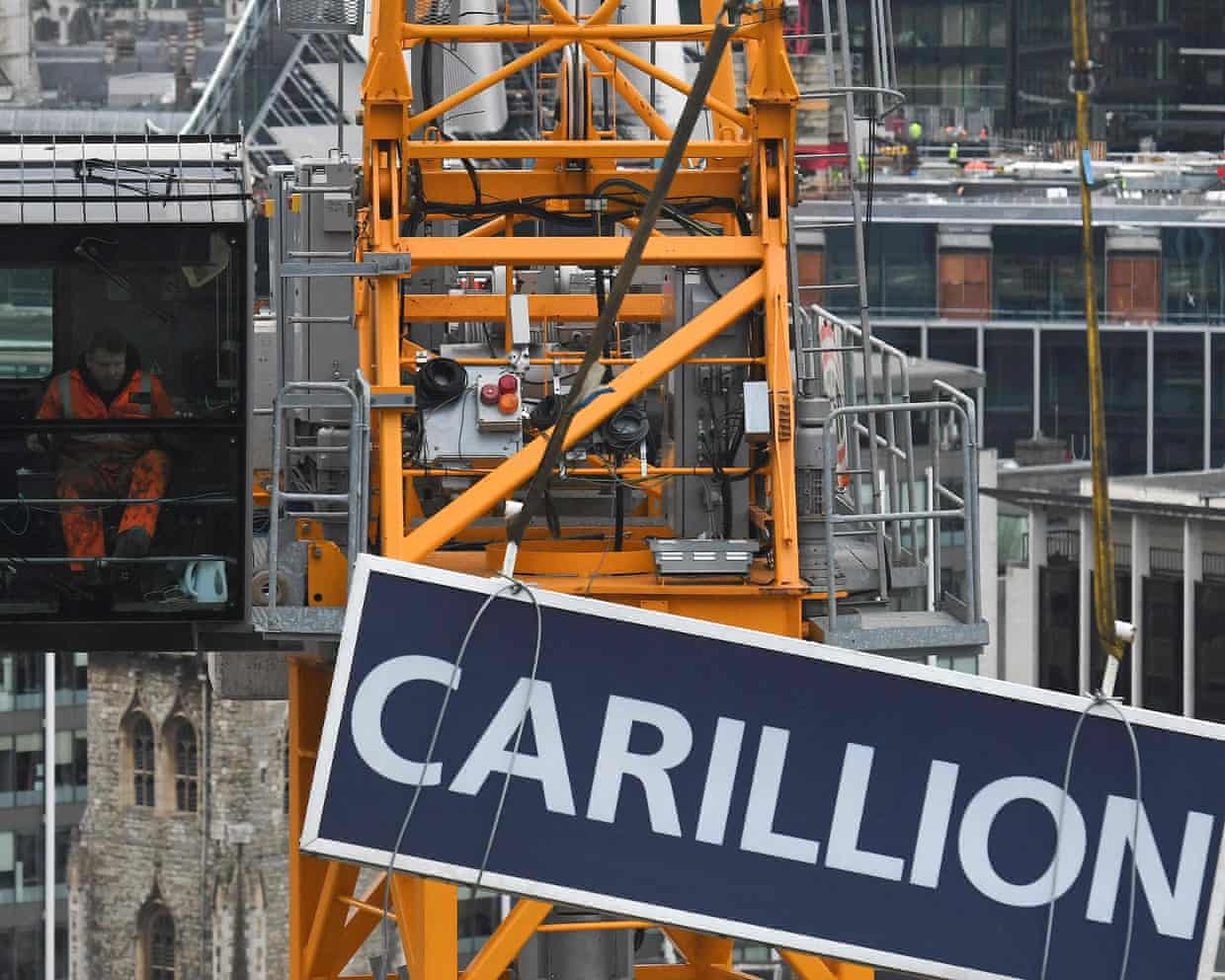
The wait for the “long-awaited” government bill to reform the audit market is over. It is not because ministers have decided it’s embarrassing that eight years have passed since the collapse of Carillion, the massive corporate failure that reminded everybody that auditing is boring until it matters greatly that outsiders can trust the published numbers. Rather, it is because the government has given up on a reform bill. It would rather give another airing of its “pro-growth” refrain.“While the planned reforms would be beneficial, some would increase costs on business, and it would not be right to prioritise these over more deregulatory measures,” the minister for small business, Blair McDougall, formally told the business select committee
Davos: Reeves urges leaders to keep cool heads over tariff threat in free trade call – business live
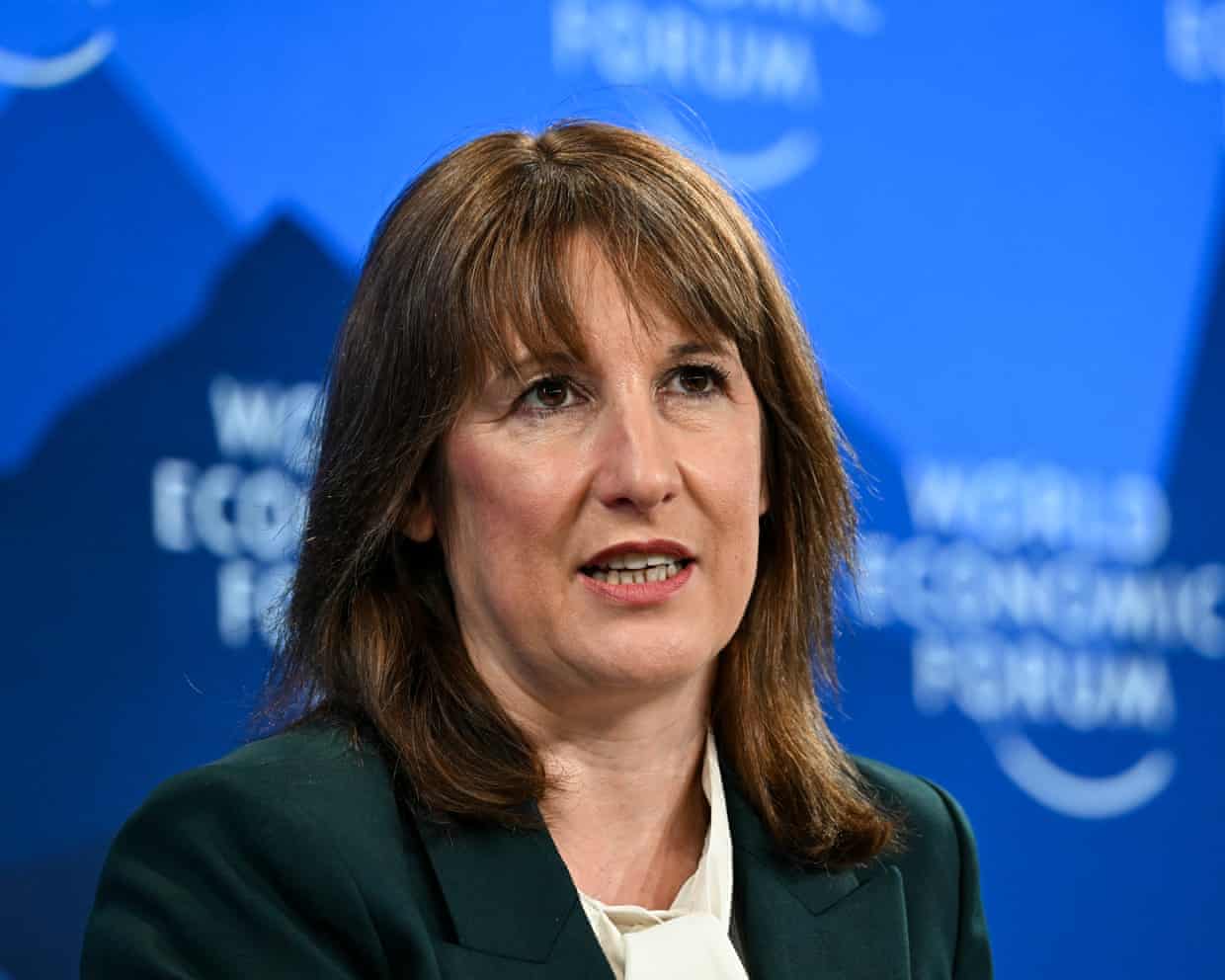
Rachel Reeves, the UK chancellor of the exchequer, is now speaking at a Bloomberg session just outside the WEF congress centre.Asked about the tariff threats from the US, Reeves says that she would urge everyone to keep cool heads.The chancellor cites the trade deal between the US and UK which has brought down tariffs (although Trump is threatening to put them up again, and that deal was actually frozen in December).She also points to other trade deals either signed off or under negotiation, such as with India and South Korea.Reeves tells her audience:I believe in free and fair trade

Tell us: has a chatbot helped you out of a difficult time in your life?
AI Chatbots are now a part of everyday life. ChatGPT surpassed 800 million weekly active users in late 2025. Some people are forming relationships with these chatbots, using them for companionship, mental health support, and even as therapists. Has a chatbot helped you get through a difficult period in life? If so, we’d like to hear about it.You can tell us how an AI chatbot has helped you get through a difficult period in life using this form

Ed Zitron on big tech, backlash, boom and bust: ‘AI has taught us that people are excited to replace human beings’
His blunt, brash scepticism has made the podcaster and writer something of a cult figure. But as concern over large language models builds, he’s no longer the outsider he once wasIf some time in an entirely possible future they come to make a movie about “how the AI bubble burst”, Ed Zitron will doubtless be a main character. He’s the perfect outsider figure: the eccentric loner who saw all this coming and screamed from the sidelines that the sky was falling, but nobody would listen. Just as Christian Bale portrayed Michael Burry, the investor who predicted the 2008 financial crash, in The Big Short, you can well imagine Robert Pattinson fighting Paul Mescal, say, to portray Zitron, the animated, colourfully obnoxious but doggedly detail-oriented Brit, who’s become one of big tech’s noisiest critics.This is not to say the AI bubble will burst, necessarily, but against a tidal wave of AI boosterism, Zitron’s blunt, brash scepticism has made him something of a cult figure

Kasatkina frustrated after defeat on day of mixed fortunes for Australian players
Melbourne is known for its unpredictable wind and it blew both ways for Australian tennis fans on Tuesday. Torturous, late-night losses suffered by Daria Kasatkina and Kimberly Birrell came about 12 hours after Maya Joint’s straight-sets defeat, ending the Australian Open ambitions of the three highest ranked local female players.As the sun comes up on Wednesday morning, however, the country will have six women in the second round, the most at a grand slam since eight progressed at Melbourne Park in 1992. The last to secure their berth was qualifier Maddison Inglis, who defeated compatriot Birrell 7-6 (6), 6-7 (9), 6-4 in an all-Australian clash that lasted three hours and finished after midnight.Inglis broke down at the match’s conclusion, overcome with emotion after beating her close friend

Rob Key likely to survive but T20 World Cup crucial to Brendon McCullum’s fate
Rob Key’s position as England’s managing director of men’s cricket is looking increasingly secure after the initial stages of the England and Wales Cricket Board’s review of the Ashes defeat, but the future of Brendon McCullum as coach remains uncertain and will be heavily influenced by his side’s performances at next month’s T20 World Cup.Key is understood to have spoken to the ECB chief executive, Richard Gould, and chair, Richard Thompson, and taken responsibility for England’s poor preparation for the Ashes and some bungled selections while on tour. He is believed to have indicated a willingness to do things differently if allowed to stay on, a crucial concession that could end up saving him.It was reported after England’s defeat in the third Test in Adelaide last month, which gave Australia a 3-0 lead and retention of the urn after just 11 days of cricket, that the ECB wanted to avoid a mass cull. That remains the case despite the tourists slumping to a 4-1 defeat, with their only victory coming in the freakish two-day fourth Test in Melbourne on a sporting pitch

Mercedes lead designer John Owen to leave team during upcoming F1 season

Australian Open 2026: Osaka opens ‘jellyfish season’ with win, Tsitsipas battles through – as it happened

Bencic delivers statement Australian Open performance to outclass Boulter

One phone call and John Roberts had the full story – there was an air of amazement in the room

Luke Donald to hold talks with Ryder Cup executives as he eyes third tilt at captaincy

The Breakdown | England prepare to reveal Six Nations hand with Borthwick aware of ticking clock