Wes Streeting faces narrow road to Labour members’ favour

“Country first, party second” is a mantra Keir Starmer and his cabinet have repeated since being in opposition, seeking to draw a dividing line between Labour and their Conservative predecessors’ inclination for self-destruction.But party members do matter in politics – and a key problem for Wes Streeting, one of those with ambitions to succeed Keir Starmer, is that many of Labour’s do not like him.Just before Labour’s heavy local election losses, a Compass survey of more than 1,000 members found that if they were given a free choice, 42% would pick Andy Burnham to succeed Starmer – against just 11% for Streeting.And whereas Burnham had a 44% favourability rating, only 18% felt the same towards the health secretary.That result put Streeting roughly on a par with Angela Rayner and Ed Miliband – but given those potential candidates and Burnham are firmly to his left, it would appear to suggest that the majority of the party would prefer not to have a candidate in Streeting’s place on the ideological spectrum.
Both Miliband and Rayner were viewed favourably by comfortably more members than Streeting was,Among all the plotting and jostling for position in the leadership contest, that presents a serious challenge for Streeting,While he is thought to be the candidate most ready for a leadership contest, he is on the right of the party, formerly close to Peter Mandelson and of the Blairite Progress wing,In recent months he has been seen as seeking to position himself further to the left, perhaps in an effort to secure more support from the members who will ultimately choose the victor from a list nominated by MPs,Recent research by Queen Mary University of London found that about 48% of Labour member describe themselves as “fairly leftwing”.
The close result of Labour’s deputy leadership election and a low turnout suggested that members are still largely on the so-called soft left.And they may remain cautious of any successor trying to appear more leftwing than their record states, given Keir Starmer’s 2020 leadership pledges, which many viewed as having ultimately been betrayed after he won the job.Since Starmer succeeded Jeremy Corbyn in April 2020, many members have quit: from a peak of 532,046 members at the end of 2019, Labour lost more than 200,000 members, ending 2024 with 333,235 onside.“Lots of grassroots members have left the Labour since the general election, either to join the Greens (and to a lesser extent Your Party), or just to give up belonging to any party,” said Tim Bale, a professor of politics at Queen Mary University of London.“Starmer, inasmuch as he has any strong values, is pretty much like your [current] average Labour member, and the fact that in some ways he seems to have betrayed them is partly responsible for their disillusionment with him,” Bale said.
“But anyone on the right of the Labour party hoping that this means those remaining are on their side is probably fooling themselves.”Still, Bale said, there may be hope for Streeting yet.“Even those who’ve stuck around are highly likely to be leftwing and very socially liberal.But one thing we know about members – and Starmer getting himself elected in 2020 rather than Corbyn’s anointed successor, Rebecca Long-Bailey, is proof of this – is that party members also want to win elections,” he said.“So if Streeting can show them he’s the guy to do that, he still has a chance, even if he’s not their ideological ideal.
”

How to match wine with vegetables
At a recent tasting, I got chatting to a winemaker from Australia’s Clare Valley as I bravely made my way through his wares: a ripe, leathery shiraz and a deep, dark cabernet sauvignon that put me in mind of blackcurrant bushes. These were serious wines – and good value, too. A generation ago, such gutsy New World reds were all the rage, but now, lamented the winemaker, gen Z was more interested in lighter, cooler-climate wines, lower on the alcohol and brighter on the palate.The Guardian’s journalism is independent. We will earn a commission if you buy something through an affiliate link
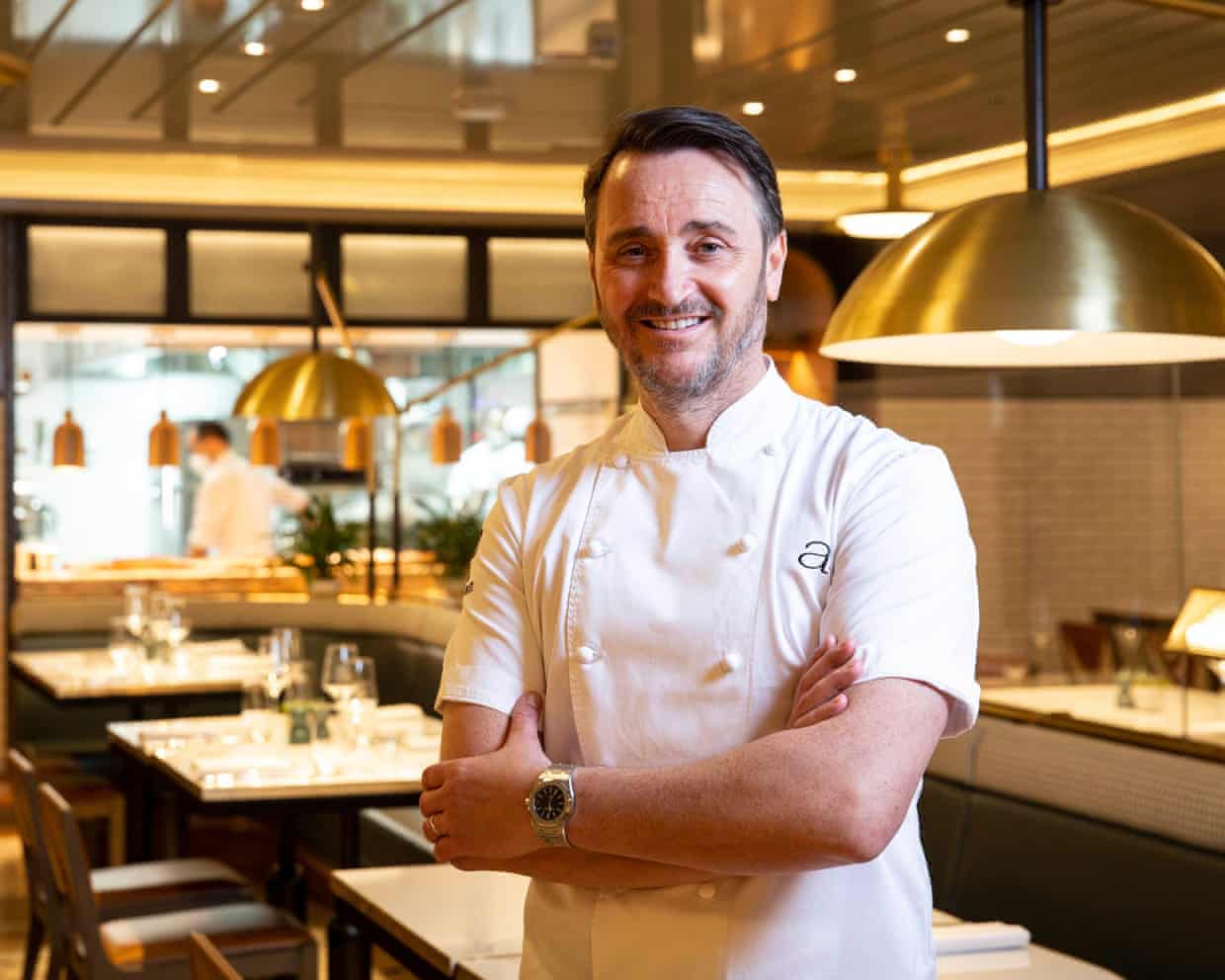
‘Restaurants won’t survive’: Michelin chef opens venues abroad to withstand UK taxes
A British Michelin-starred chef says he is opening restaurants abroad to subsidise his UK venues against a backdrop of high taxes and a struggling hospitality sector.Jason Atherton is now in Forte dei Marmi, on the Tuscan coast in Italy, where he is preparing his newest opening, Maria’s, which will be in the Principessa hotel. The Sheffield-born chef now has restaurants all over the world, including in Dubai and St Moritz.He said he was finding it easier to make a profit in countries with more forgiving policies towards restaurants, pubs and bars. “I am trying to sustain our business by opening abroad

Rachel Roddy’s recipe for spring chicken thighs with spring onions, mint and peas | A kitchen in Rome
The weather lately has been as temperamental as peas in pods. But peas are even harder to read than the sky: some pods contain sweet things no bigger than peppercorns, which explode when you bite them; the contents of others, however, are closer to small ball bearings, their size very likely a sign that all the natural sucrose has been metabolised and transformed to pea starch. The best thing for the tiny ones is to snack on them alongside a bit of cheese, whereas the path for big ones is the same as for dried peas, so pea and ham soup or a long-simmered puree.The Guardian’s journalism is independent. We will earn a commission if you buy something through an affiliate link

Navel gazing: oranges, mandarins and persimmons top Australia’s best-value fruit and veg for May
“Sweet, low seed and great for snacking” imperial mandarins have just started their season, says Josh Flamminio, owner and buyer at Sydney’s Galluzzo Fruiterers. The tangy-sweet citrus is selling for between $2.99 and $3.99 a kilo in major supermarkets. At Galluzzo, Queensland-grown imperial mandarins are $3

How to save asparagus trimmings from the food-waste bin – recipe | Waste not
Asparagus butts are a particularly tricky byproduct to tame because they’re so fibrous. I usually cut them very finely (into 5mm-thick discs, or even thinner), then boil, puree and pass them through a sieve (as in my green goddess salad dressing and asparagus soup), but even then you’ll still end up with a fair bit of fibrous waste. Enter asparagus-butt butter: a recipe that defies all odds, making the impossible possible by transforming a tough offcut into an intense compound butter that’s perfect for grilling or frying asparagus spears themselves, or for eggs, bread, gnocchi or whatever you can think of. The short fibres brown and caramelise in the butter, and in the process become the highlight of the dish, rather than the problem.This transforms an unwanted byproduct into an intense expression of the plant’s flavour
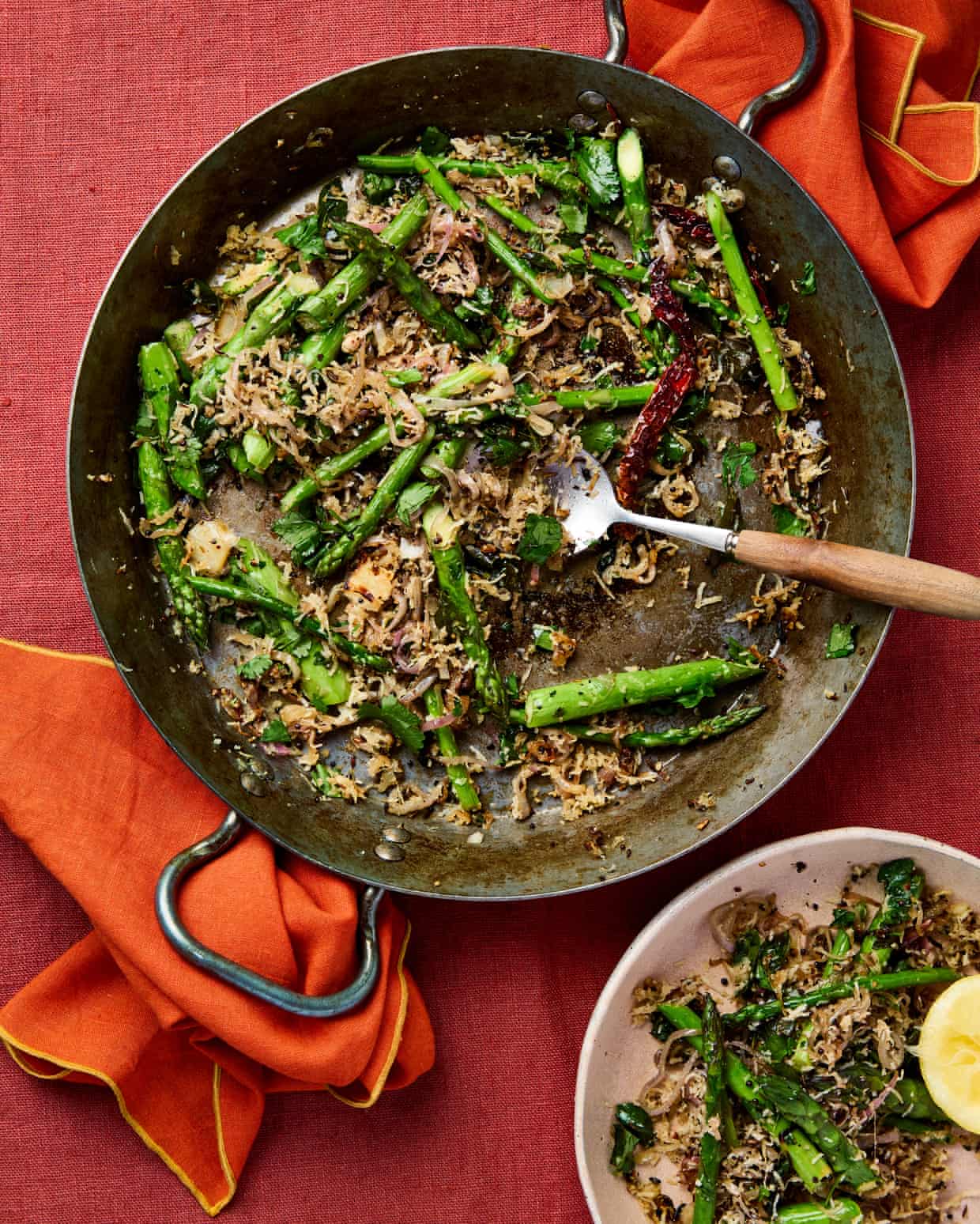
Thoran and chaat: Romy Gill’s Indian-style asparagus recipes
Spring’s first asparagus always feels like a celebration, but there’s so much more to cooking those spears than just butter and lemon. Here, those tender stems combine with bold Indian flavours in two playful dishes. The thoran, inspired by Keralan home cooking, involves stir-frying asparagus with coconut, mustard seeds and curry leaves to create something warm and comforting (my friend Simi’s mum always used to drizzle it with a little lemon juice to give the flavours a lift). The chaat, meanwhile, tossed with tangy tamarind, yoghurt, spices, crunchy chickpeas and sweet pomegranate, is a delicious snack or side. Together, they show how versatile asparagus can be: easy to cook, vibrant and moreish even in unexpected culinary traditions

Lotus boss calls for UK government support as it commits to Norfolk plant

The budget in seven graphs: no big surprises but this may be one of the most ambitious moves to fix Australia’s finances | Greg Jericho

Molière Ex Machina: AI used to create ‘new work’ by beloved French playwright

Mistaking AI behaviour for conscious being | Letter

Multiple Olympic and world champion cyclist Katie Archibald retires to become nurse

Too many of us were traumatised by sport at school – but it’s never too late to change | Cath Bishop