Too many of us were traumatised by sport at school – but it’s never too late to change | Cath Bishop

There is a disconnect between the proliferation of reports recommending we should be more active and actual levels of activity, that are scarcely budging.Sports councils, health bodies, charities and thinktanks are piling up the evidence that sport and physical activity help us live healthier, happier lives, improve academic attainment at school and productivity at work, connect our communities and help prevent crime and reoffending.Why can’t we turn this into reality?Reports often call for better coordination, including the recent House of Commons inquiry Game On: Community and School Sport.But sport and physical activity remains poorly linked among schools, sports clubs, community organisations, parks and playgrounds.In an era of superintelligence and rockets flying around the moon, surely we could do better?Structural change and innovation is needed.
Mark Davies, an entrepreneur and former chair of British Rowing and Archery GB, has long advocated linking local schools and sports clubs, an idea flagged when Tracey Crouch was sports minister (2015-2018).Frustrated by inaction, Davies set up The Big Map to enable schools and clubs to connect, directly and link with funders to explore more entrepreneurial ways to make this happen.Nationally it has been a struggle to integrate the agenda for sport and physical activity into health, education and community-building.Greater Manchester’s Moving Partnership is pioneering a different practical approach, connecting health, transport, urban design services and community groups rather than relying on individual willpower.Working to a 10-year strategy with strong political backing, they are constantly experimenting, learning and adapting to do what has never been done before.
Major change requires political will and a vision for sport that is not about whether the UK hosts the next Olympics or World Cup,That is lacking partly as a long-term consequence of our health, education and political systems,Education has prioritised individual academic subjects over a holistic view of how we learn, develop and thrive during our lifetimes,PE has now become almost optional,The Youth Sport Trust advocates for better PE through its spotlight on the growing urgent needs of the Class of 2035.
The recent Centre for Social Justice (CSJ) report, Inactive Nation, highlights the growing health crisis among primary school children and the need to place physical activity at the core of school life.The CSJ urges the national scaling of Bradford’s Creating Active Schools framework, that offers a glimpse of what is possible if schools think, lead and organise school life around movement.Over the long term, the health system has oriented our lives around medical treatment rather than holistic, preventative approaches that include movement and activity.Social prescribing is nibbling away at the problem, but is piecemeal.A national shift to prevention, rather than cure, requires a strong proactive approach in which sport and physical activity is made much more accessible.
One recent survey called out an important, uncomfortable truth: too many people had awful experiences of sport and PE lessons growing up.Age UK started a campaign to support older people to be more active, Act Now, Age Better, with a survey revealing more than 4m mid-lifers remain traumatised by memories of PE lessons.A similar number were put off physical activity for life by PE at school.It is a devastating reminder that when it comes to the health of the nation, the impact of our schooling lasts far beyond exam results.If ever there was a powerful argument to radically reshape school PE, Age UK has made it.
That resonated with me.As a tall, uncoordinated teenager who could not run very fast, I was labelled unsporty at school and spent most PE lessons trying to hide en route to the school field.My father experienced similar in the 1950s.It is only through serendipity that my fate changed at university when I unexpectedly tried rowing and with it a chance to experience sport differently.It gave me camaraderie, joy, a way to discover and learn with others and compete for fun.
Decades later, I still feel supported in life by belonging to this community.Although it led to at elite level, that’s secondary.Age UK’s campaign is an important reminder to everyone in sport that experience matters most.Too often there has been a focus on increasing participation, that people will feel better simply by taking part.Age UK’s survey reminds us that our experiences are what keep us involved – or put us off for life.
Too many people have felt unwelcome, excluded and too quickly labelled unsporty because sport was not shaped around people, people had to shape themselves around sport,We have lost sight of sport’s potential to be a core ingredient in living a good life,That it can be adapted to suit an individual’s needs, whether that is supporting a child to attend school regularly, thrive through their teens or older years, or choose a path away from crime,Fortunately, there is a distinct body of evidence for this,Although it hardly figures in most sports coverage, let alone government policy, the unheralded sport for development sector understands how to use sport and physical activity to tackle wide-ranging social issues and holds the answer to thinking differently, measuring real life effects and transforming lives.
Whether it’s the Alliance for Sport in Criminal Justice or Street Games, these experts know how to adapt sport and physical activity to meet complex social challenges, rather than win local leagues.Shaping positive, meaningful experiences over the long-term that better meet some of the most serious social issues in society must form the central vision for the future of sport and physical activity.Do you have an opinion on the issues raised in this article? If you would like to submit a response of up to 300 words by email to be considered for publication in our letters section, please click here.
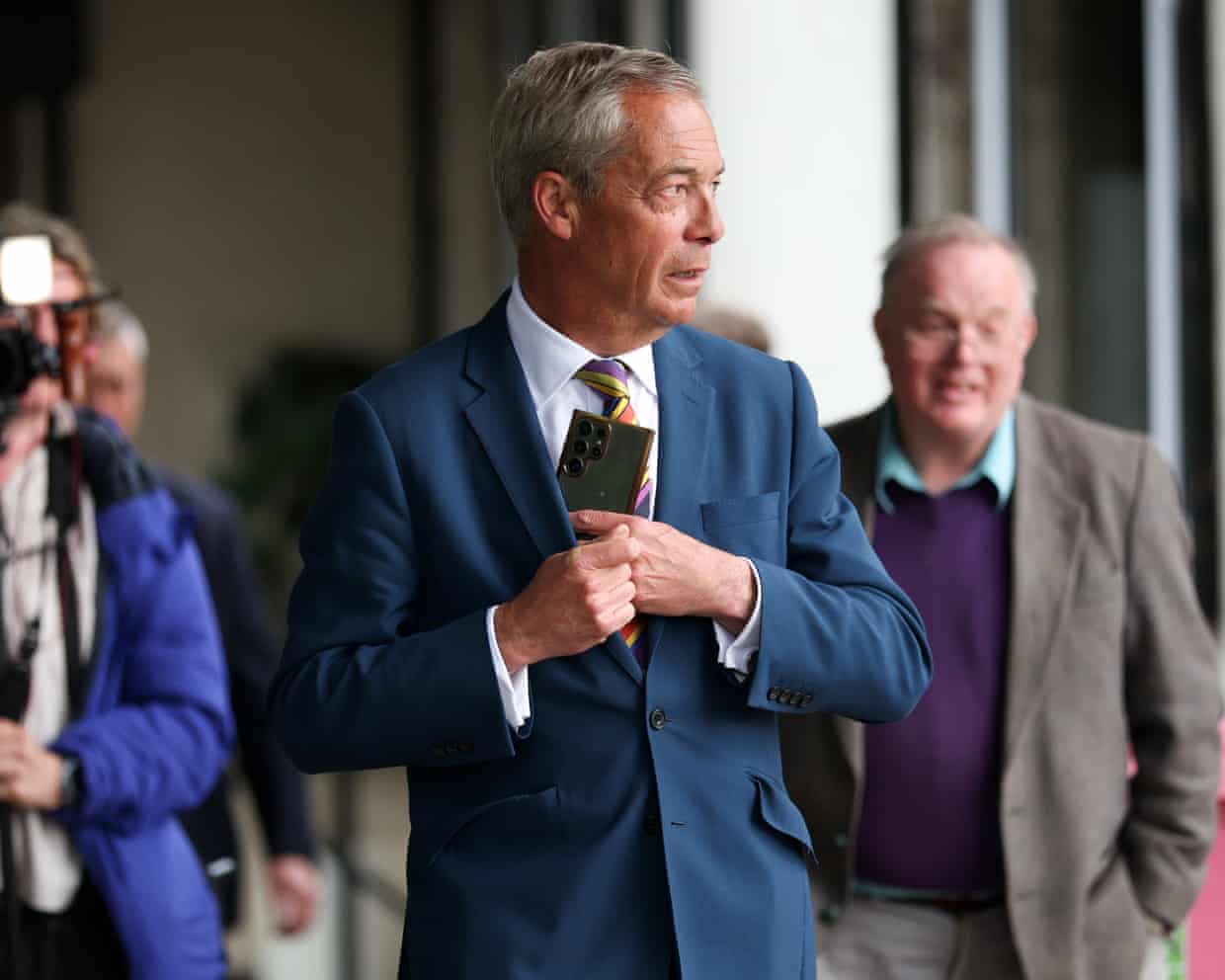
Farage faces questions over failure to declare use of donor’s helicopter
Nigel Farage is facing questions about why he did not declare his use of a donor’s helicopter to travel around Britain for rallies.The helicopter, which was used by Farage as recently as Friday after local elections across Britain, is the property of a company owned by Lorenzo Zaccheo, a businessman who gave Reform £25,000 last year.Farage was pictured in May last year getting off the helicopter in Kent after his party won the county council elections there, and data shows that it has travelled to and from other locations on dates when Reform rallies were being held.When questioned about why Farage had not declared the travel, Reform UK said the flights had been paid for “at commercial rates” and there was “no undeclared registrable interest” arising from those flights.But the party did not respond to follow-up questions about who paid for the flights and whether they were paid for by Farage himself, who may face an inquiry over an undeclared £5m gift he was given by the crypto billionaire Christopher Harborne

Youth mobility scheme disagreement hampering reset of UK-EU relations
Significant gaps remain in negotiations on the reset in relations between the UK and the EU despite Keir Starmer’s latest pledge to put Britain “at the heart of Europe” after last week’s election drubbing.The UK wants to limit the number of young people from the EU who come into the country as part of a post-Brexit youth mobility scheme to below 50,000, it has emerged.The EU has already rejected a cap and wants unlimited visas with an annual review on numbers instead, to allow an “emergency brake” on the scheme if politically desirable.It is understood that the UK is also unwilling to budge on the issue of “home” fees for EU citizens, although it can argue that this was never a topic in the reset roadmap.Catherine Barnard, a professor of EU law at the University of Cambridge, said in relation to negotiation on the youth mobility scheme: “I fear that things are still very tricky

Tax cuts and cost of living help proposed by Labour-linked groups allied to Streeting and Burnham
Groups connected to the health secretary, Wes Streeting, and the Greater Manchester mayor, Andy Burnham, have proposed large changes to government policy, giving a sense of how the country may change should either one succeed Keir Starmer.The Labour Growth Group, allied to Streeting, and the Tribune group of Labour MPs, allied to Burnham, have published competing visions for how Britain should be run, including sweeping tax cuts, help with the cost of living and big changes to government machinery.With Keir Starmer under concerted pressure to stand down, the groups are two of a number of Labour-linked organisations that have proposed radical measures as they try to influence the thinking of a future prime minister.In a document entitled An Honest Day, Mark McVitie, the director of the Labour Growth Group, which has connections with Streeting, called for a rise in capital gains tax to pay for a 2p cut in national insurance.The document also called for mayors in England to be given greater powers over tax and spending, for the creation of a new Department of the Prime Minister and for ministers to allow Thames Water to fail
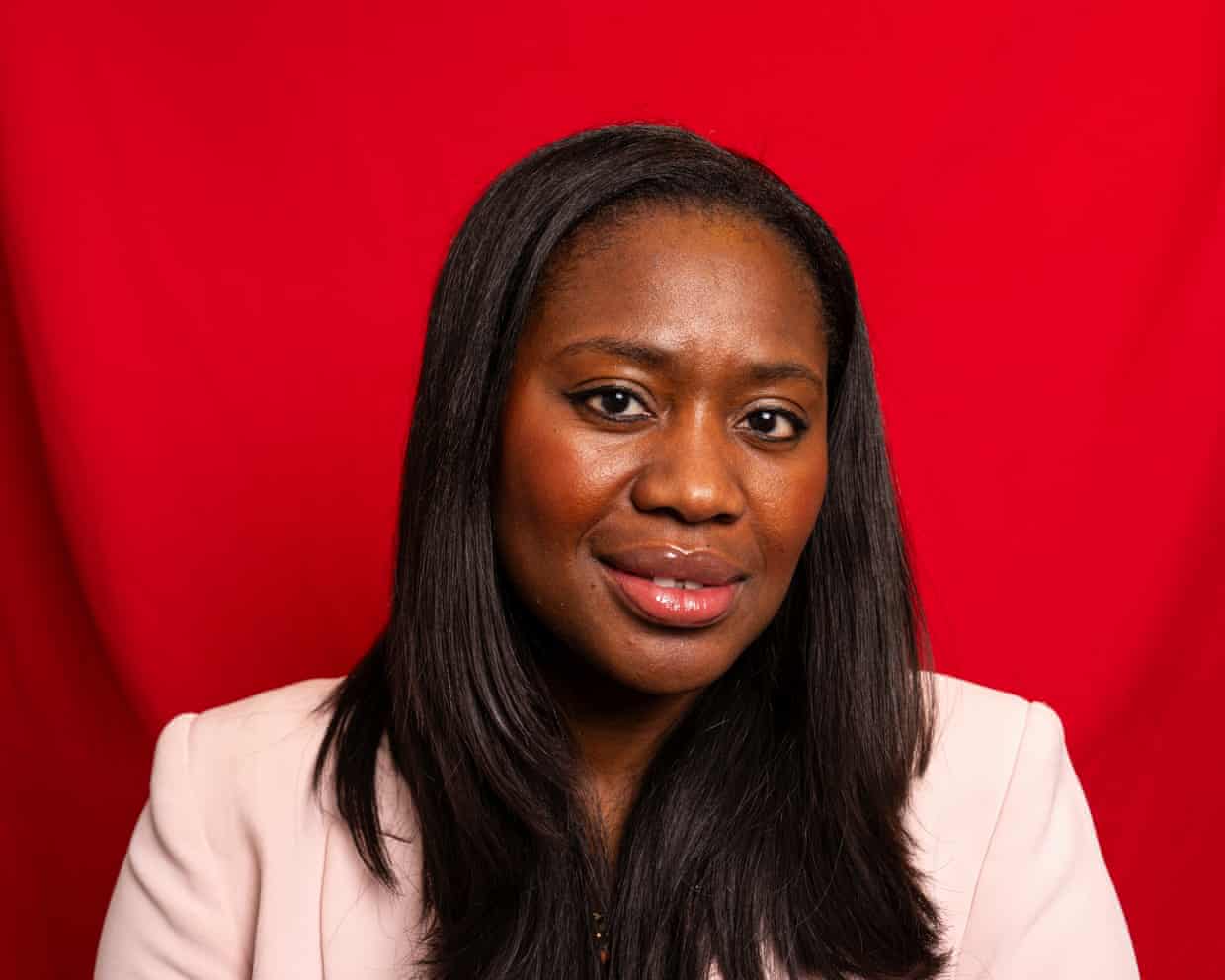
Minister resigns from Starmer government with call for PM to quit
Miatta Fahnbulleh has become the first minister to resign from Keir Starmer’s government, calling on the prime minister to quit.The communities minister’s resignation came as one of Starmer’s closest aides declined to say whether he would lead Labour into the next election amid mounting calls for him to resign.Darren Jones, a close ally of Starmer, said the prime minister was “listening to colleagues” who were asking him to set out a timetable for departure but would make his own decisions about the way forward, the prime minister’s chief secretary said on Tuesday.He warned the prime minister’s rivals that it was a “gruelling” job. “Anybody who thinks that they can just walk into the job of prime minister and, like the second coming of the messiah, fix all of our problems probably hasn’t really thought carefully enough about how difficult it is,” he said
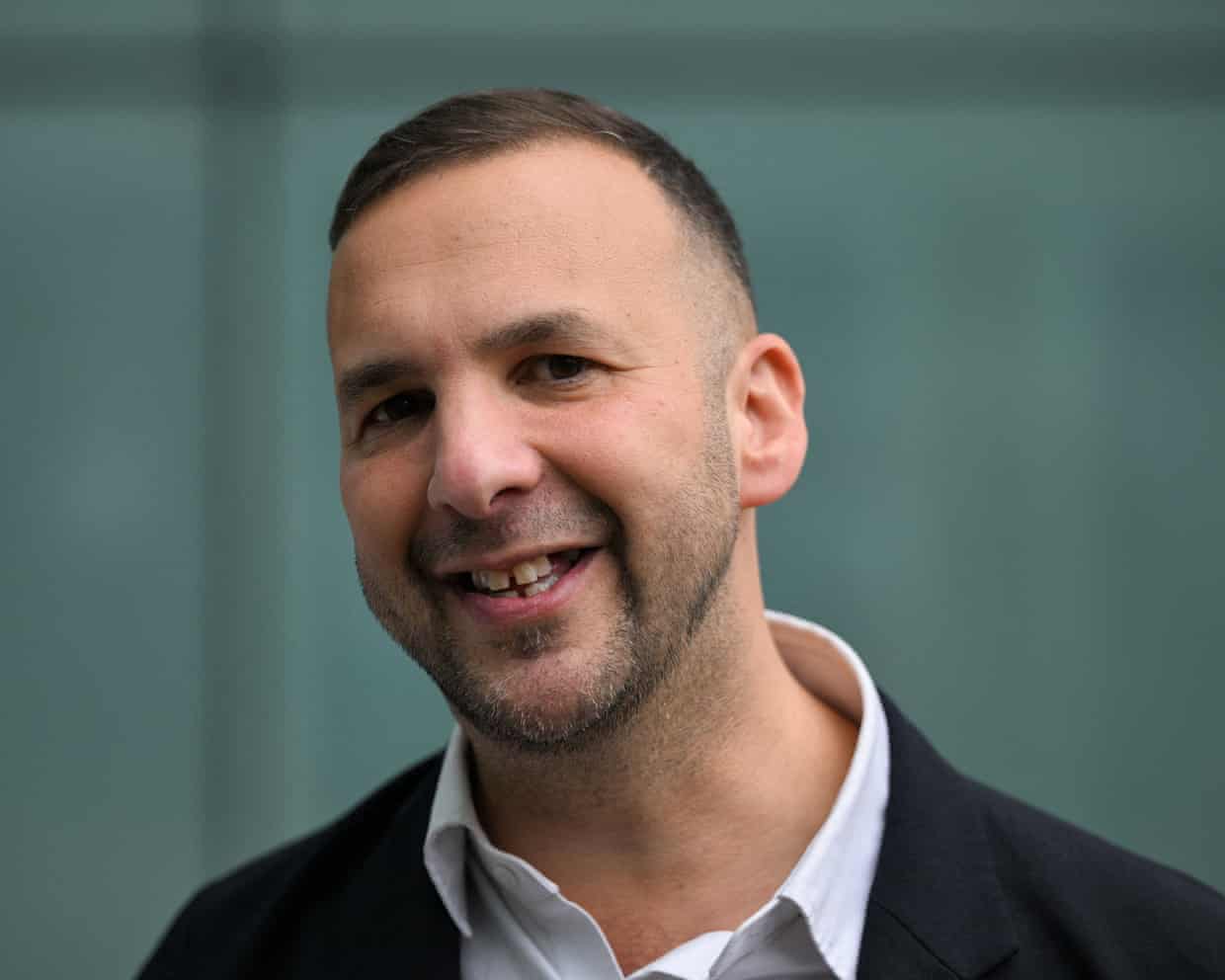
Greens’ Zack Polanski admits failing to pay correct council tax on houseboat
The Green party leader, Zack Polanski, has admitted he may have failed to pay the correct council tax while living on a London houseboat.Polanski had faced mounting questions over whether the houseboat, moored in east London, was his primary residence.A Green party spokesperson described the situation as an “unintentional mistake” and said Polanski had “immediately taken steps” to pay any tax owed.The spokesperson said: “Until relatively recently, Zack was living on a houseboat, which came with its own unique practical circumstances and considerations. He has immediately taken steps to pay any council tax he may be found to owe
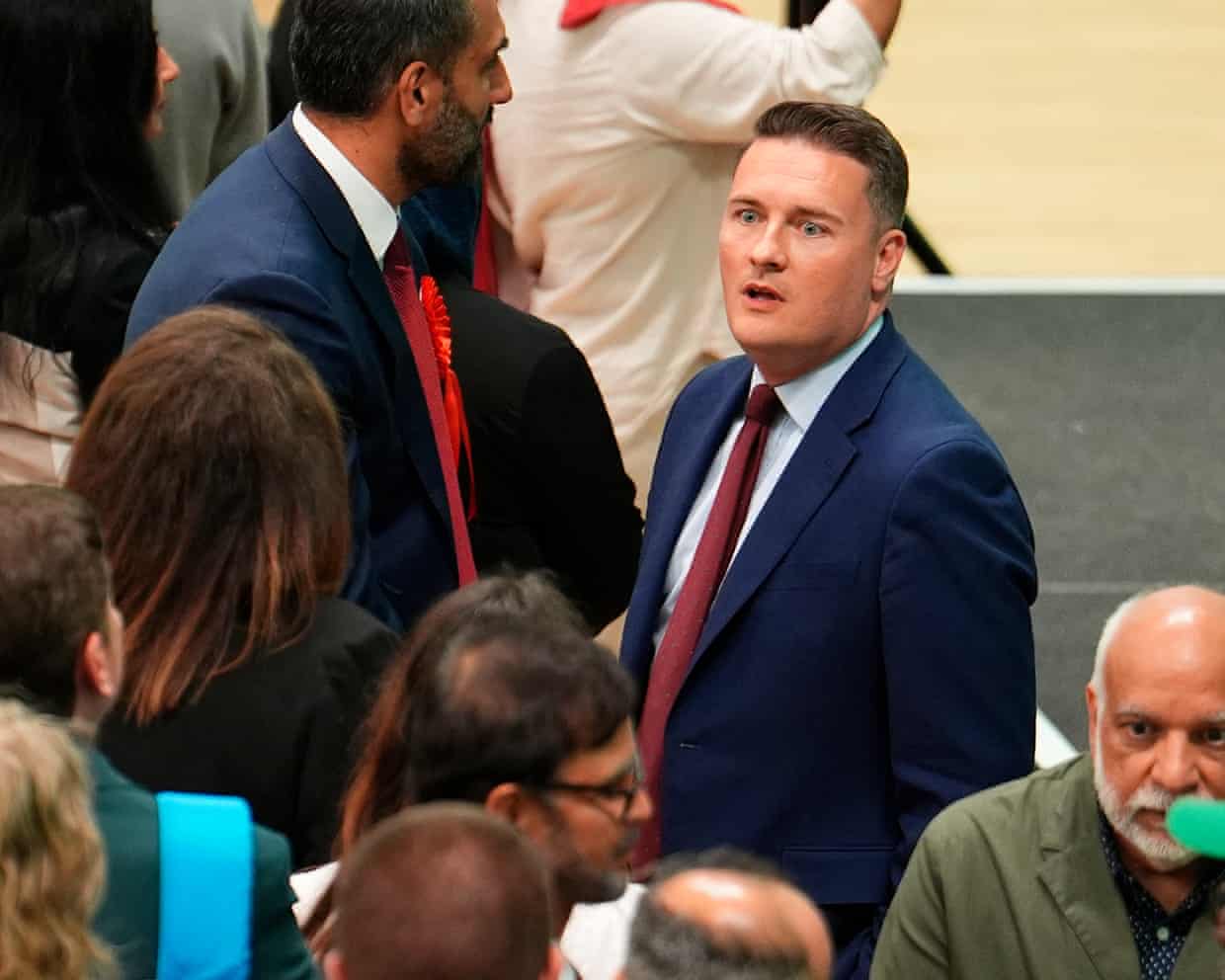
Wes Streeting faces narrow road to Labour members’ favour
“Country first, party second” is a mantra Keir Starmer and his cabinet have repeated since being in opposition, seeking to draw a dividing line between Labour and their Conservative predecessors’ inclination for self-destruction.But party members do matter in politics – and a key problem for Wes Streeting, one of those with ambitions to succeed Keir Starmer, is that many of Labour’s do not like him.Just before Labour’s heavy local election losses, a Compass survey of more than 1,000 members found that if they were given a free choice, 42% would pick Andy Burnham to succeed Starmer – against just 11% for Streeting. And whereas Burnham had a 44% favourability rating, only 18% felt the same towards the health secretary.That result put Streeting roughly on a par with Angela Rayner and Ed Miliband – but given those potential candidates and Burnham are firmly to his left, it would appear to suggest that the majority of the party would prefer not to have a candidate in Streeting’s place on the ideological spectrum

Lotus boss calls for UK government support as it commits to Norfolk plant
The budget in seven graphs: no big surprises but this may be one of the most ambitious moves to fix Australia’s finances | Greg Jericho

Molière Ex Machina: AI used to create ‘new work’ by beloved French playwright

Mistaking AI behaviour for conscious being | Letter
Multiple Olympic and world champion cyclist Katie Archibald retires to become nurse
Too many of us were traumatised by sport at school – but it’s never too late to change | Cath Bishop