‘Unprecedented territory’: are UK polls as volatile as they seem? – in charts

Cabinet reshuffles, party infighting, policy reversals, byelections, defections and apparently huge swings in support – the UK’s political news cycle feels especially relentless at the moment.But if you look closely at the polls since last year’s local elections, remarkably little has changed.While there have been some noticeable individual polls, most movements have been limited to a small number of percentage points.The big parties are roughly where they were.Reform has had a comfortable lead for almost a year.
As the local elections loom in May, analysts will be scrutinising the polls more closely – testing how these shifts will translate into electoral swings and the extent to which Keir Starmer’s Labour will struggle.This became even more apparent as Nigel Farage complained about YouGov’s methodology potentially underestimating Reform’s support, suggesting that he values polling coverage as a way to drive increased coverage of his insurgent party.So why do the polls feel so volatile?These charts show how, in what is looking like a fragmented five-party system, small movements can produce dramatic political consequences – even as the underlying balance between the left and right remains relatively stable.Every poll has a margin of error, often of two or three points – a number that can produce quite different headline results in a close multiparty contest.This means that we shouldn’t pay too much attention to any one poll – rather, look at the longer-term shifts in the overall average of polls.
Since the 2025 local elections, the changes on the main political parties’ polling ratings have been muted.Labour’s drop and the Greens’ gain are notable, but these swings are quite normal in polling across an entire year.Experts argue that the UK is no longer operating in a two-party environment.Five parties now poll at meaningful national levels: Labour, the Conservatives, Reform, the Lib Dems and the Greens.This is alongside the SNP in Scotland and Plaid Cymru in Wales.
Joe Twyman, the founder and director of the public opinion consultancy Deltapoll, said that this helps create a confusing picture: “A five-party system makes polling more difficult.It amplifies a lot of the problems that pollsters were already facing.”Exacerbating the problem, Twyman says, is the instability that often goes along with a sharp surge in popularity for a party that was previously on the fringes.“Some of these parties are on the rise.Parties like the Greens and Reform have new support, so that creates uncertainty.
How do we precisely gauge the popularity of these new movements?”In a five-party system, a two-point swing becomes much more significant as it can alter entire races.A shift of a couple of points nationally could move Labour between second to fourth, put the Greens into second, bring Reform and Labour neck-and-neck, or push the Conservatives into a clear second.Over the past month, Labour, the Conservatives and the Greens have each been in second place in individual polls.In each of these polls, the gap between the second- and third-placed party has been no more than five points.Looking at the broader leftwing and rightwing groups of parties, there has been little shift in the polls.
Combined support for left-leaning parties (Labour, the Lib Dems and the Greens) has remained between 43% and 47% since January 2025.While the Lib Dems have appealed to wavering Conservative voters, especially in the south of England, overall they position themselves on the progressive side of politics.Meanwhile, the right-leaning bloc (the Conservatives and Reform) has hovered between 44% and 49%.Since 2013, which is when PollBase has consistent data from, the leftwing bloc has shifted between 40% and 66%, while the rightwing bloc has shifted between 29% and 54%.The movement between these groups is significantly less when you exclude the years 2021 to 2024, when there were big swings in public support after the pandemic and partygate.
While the progressive parties SNP and Plaid Cymru have significant support in Scotland and Wales, they have not been included due to data availability and the fact that they do not stand for election across the whole of Britain.Jane Green, professor of politics at Oxford University, pointed to the fact that these blocs of voters have stayed broadly stable over time to argue: “What’s going on isn’t random at all.It’s highly structured.“There is a huge amount of stability across the structure of the two blocs.They have the same demographic structure as before.
”There has been a decline in Labour and the Conservatives’ dominance over their respective blocs, says Green: “What we’re seeing is the leftwing bloc fragmenting and the rightwing bloc is consolidating towards Reform.”Over 2025, Labour’s share of the leftwing parties’ collective vote share declined from 56% to 39% – a drop of 17 points.This came as some leftwing voters switched to the Greens, which commanded 32% of the collective leftwing vote – an increase of 14 points over the year.At the turn of 2025, the Conservatives held 50% of the collective rightwing vote – but this had dropped to 40% by December 2025.Three in five people who picked a rightwing party in the polls said they supported Reform.
This is the highest level for a non-Conservative rightwing party for over a decade.Prof Sir John Curtice, of the University of Strathclyde, said: “There are the two blocs – and most of the movement is between either Conservative-Reform or between Labour-Green-Lib Dem.”In the recent byelections in Caerphilly, then Gorton and Denton, the vote fractured both to the left, with Plaid Cymru and the Greens winning the seats, and to the right, with Reform claiming second place in both seats.In Gorton and Denton, the two insurgent parties collectively won 69.4% of the vote.
Green argued that, compared with previous election cycles, it is likely that we could see different parties representing these blocs across different constituencies.Pointing to the importance of tactical voting, she added: “What we might see is that people still identify with being on the right or left, but being more willing to switch within those sides.”Under first-past-the-post, the UK runs 650 separate constituency races.With the rise of Reform and the Greens, many seats are now three- or four-way contests with thinner winning margins.Twyman noted: “Individual constituency polling is costly and difficult so we use methods like MRP [multi-level regression and post-stratification] modelling to replicate it.
But this doesn’t take into account hyper-local factors.And when parties are winning seats on 20 to 25% of the vote, in five-party races, any small swings – including those caused by hyper-local factors – become more significant.”Two recent MRPs – by More in Common and Find Out Now/ Electoral calculus – both had Reform on 31% of the vote.However, More in Common forecast Reform would win 381 seats, compared with the predicted 331 seats in the other – a huge difference between a strong or fragile majority.Prof Curtice said that “under first-past-the-post, there are no rules dictating the relationship between a party’s share of the vote and share of the seats.
The crucial thing is that it all depends on geography.“A swing of two points between two parties which are both geographically distributed across the country is very significant.It’s not so important if the two parties are focused in specific geographical areas.”The Lib Dem vote is geographically concentrated around the south of England, compared with Reform’s, which is more spread out.Prof Curtice added: “If you are first, you want to have a geographically-even spread of your vote.
But if you are second or third, you want a geographically concentrated spread.“The system that was the ballast of the two-party system for decades could become its undoing.”Voter volatility remains historically high, with more people saying they might switch parties than in previous decades.But a lot of this switching is people moving within their voter coalitions, meaning that the overall balance of left and right doesn’t hugely change.Prof Green said: “There is greater churn among voters, and that’s increasing between elections.
It hasn’t been the majority of people, but it’s increasing.The broad trajectory is moving towards switching parties, with a greater proportion of people wanting to reject the major parties.”Green argued that we are now in the middle of this movement from establishment to insurgent parties, within the two major voter blocs.It is part of a longer-term trend of increased voter fluidity, but now appears to have come to a head as two charismatic leaders – Zack Polanski and Nigel Farage – seek to capitalise on the feeling of disillusionment with the two major parties.Warning that history doesn’t give us clues on where we are heading, Curtice said: “We have never had five-party politics before.
We’re in unprecedented territory and none of us know exactly where this will go.”
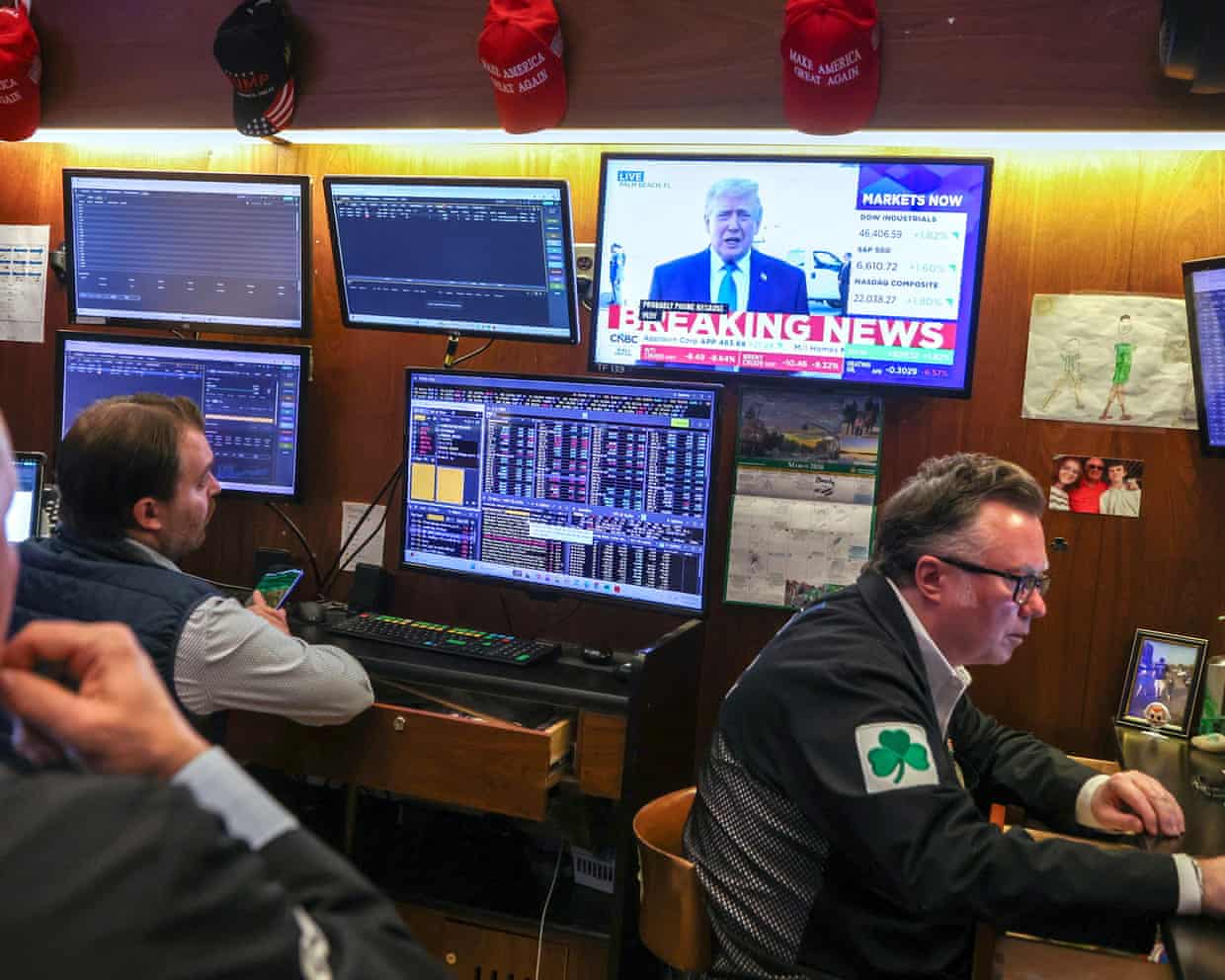
Dow Jones Industrial Average posts best day since early February as hopes of Middle East de-escalation lift markets – as it happened
Wall Street has joined the global relief rally after Donald Trump postponed attacks on Iran’s power plants, sending a surge of optimism though trading floors.In New York, the Dow Jones industrial average has jumped by 2% or 928 points to 46,505 points.Construction equipment firm Caterpillar (+4.4%), manufacturing conglomerate 3M (+3.7%) and DIY chain Home Depot (+3
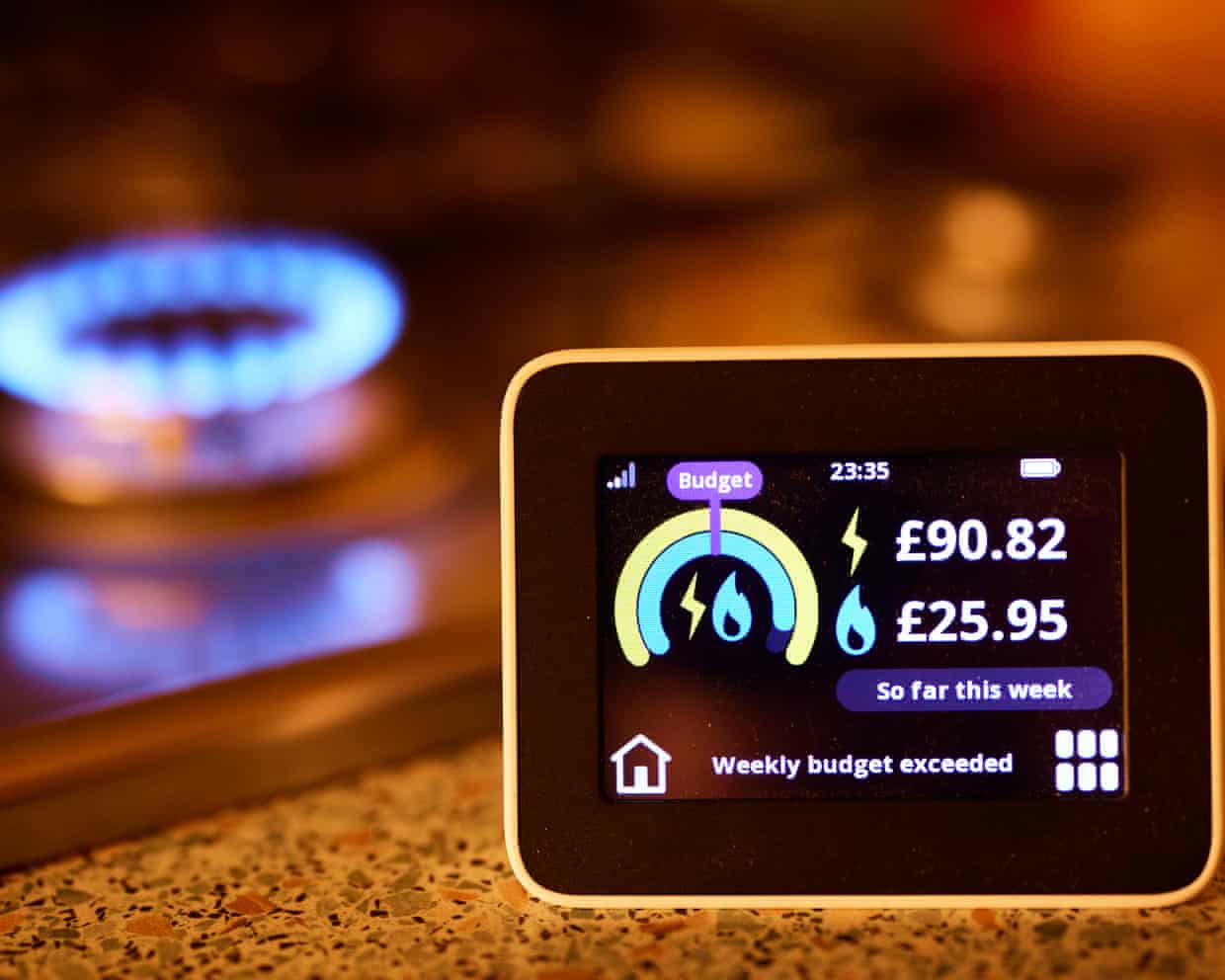
The UK sleepwalked into this energy price shock | Nils Pratley
“Because of the choices we made before the conflict in the Middle East began, we are better prepared for a more volatile world”, the chief secretary to the Treasury, James Murray, claimed last week. That statement – surprise, surprise – failed to calm the bond vigilantes who had pushed the yield on 10-year government debt to a punishing 5% before Monday’s modest retreat.Murray seemed to be referring to tax increases and the chancellor’s decision to shift £150 of green levies from energy bills into general taxation. Count those if you wish but, come on, they are minor entries. The UK’s vulnerability to energy price shocks flows from bigger forces, such as our large and growing dependency on imports

MPs urge UK government to halt contract giving Palantir FCA data access
MPs have urged the government to halt its latest contract with Palantir after the Guardian revealed that the US spy-tech company is to gain access to a trove of highly sensitive UK financial regulation data.The Financial Conduct Authority, the watchdog for thousands of financial bodies from banks to hedge funds, has hired Palantir to apply its AI systems to two years’ worth of internal intelligence data to help it tackle financial crime.But the Liberal Democrats on Monday called for a government investigation into the contract, which the party said could be “a huge error of judgment”, while the Green party said it should be blocked over Palantir’s links to Donald Trump.Questioned on whether the UK was becoming “dangerously overreliant” on US tech companies including Palantir, Keir Starmer told parliament he would prefer to have more domestic capability but added: “I don’t think we’re overreliant.”Palantir was founded by the Trump-backing billionaire Peter Thiel and it supports the US and Israeli militaries and the ICE immigration crackdown
AI boom risks widening wealth divide, says BlackRock’s Larry Fink
The boom in artificial intelligence risks widening inequality, with only a handful of companies and investors likely to reap its financial rewards, the BlackRock chief executive, Larry Fink, has said.The boss of the $14tn (£10.4tn) asset manager used his annual letter to investors on Monday to highlight potential hazards around the exponential growth in AI, which has attracted rapid investment and become, he said, “central to strategic competition” between global powers such as the US and China.“The massive wealth created over the past several generations flowed mostly to people who already owned financial assets,” Fink said. “And now AI threatens to repeat that pattern at an even larger scale

Victoria Mboko and Mirra Andreeva lead new generation of friendly rivals
Victoria Mboko and Mirra Andreeva, the two highest-ranked teenagers in the world, prepared for their marquee Miami Open fourth-round match in an unusual manner. Aside from being the two protagonists of the freshest rivalry in women’s tennis, they are also great friends, and so they spent the afternoon before their big match against each other competing on the same side of the net in doubles.This was an opportunity to giggle, relax and enjoy themselves on one of the smaller courts in Miami, but Mboko and Andreeva are ranked No 9 and No 10 in the world for a reason. Two fiercely competitive beings determined to win every time on the court, they fought desperately and emerged with an impressive result. After trailing 0-5 against the eighth seeds, Demi Schuurs and Ellen Perez, in the opening set and facing eight set points scattered across the set, they somehow emerged from the match with a straight-sets win

ECB has taken a risk keeping McCullum and Key – who must now placate the public | Ali Martin
Having endorsed Brendon McCullum’s continuation as men’s head coach after an Ashes defeat riddled with self‑owns and kept Rob Key above him as team director, the England and Wales Cricket Board could in one sense be viewed as having taken the path of least resistance.McCullum’s contract runs to the end of 2027 and it would cost a pretty penny to cut him loose. The players enjoy the pair’s methods and tend to call the shots in the modern era. There may not be an all-format candidate for head coach out there. Besides, look over there: the Hundred returns in July, ready to overload your eyeballs with multicoloured content

Starmer says ‘every lever’ will be explored to ease rising costs of living from Iran conflict
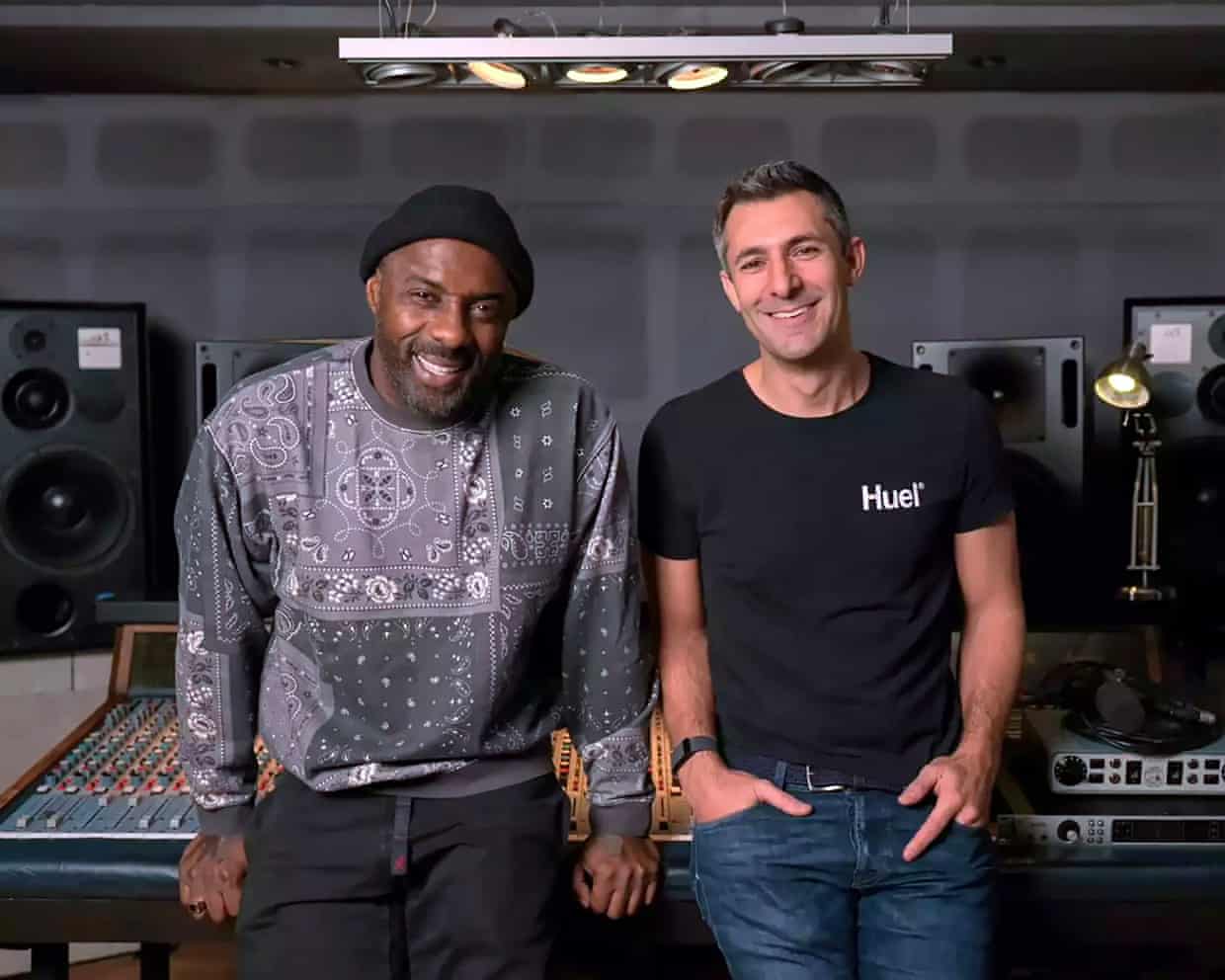
Idris Elba-backed firm Huel bought by Danone in €1bn deal

Australia’s generation Alpha faces $185k bill over lifetime without urgent action on climate crisis, report finds
UK mortgage interest rates expected to rise despite Trump’s Iran pause

Workers who fall for ‘corporate bullshit’ may be worse at their jobs, study finds

World’s broadcasters urge EU to tighten rules for big tech in smart TV battle