Australia’s generation Alpha faces $185k bill over lifetime without urgent action on climate crisis, report finds

The next generation of Australian workers will cop a $185,000 bill over their lifetimes if the country does not act more urgently to address the climate crisis, according to new modelling by a team of young economists at Deloitte.The new report finds that global heating consistent with the current projections would cost the average millennial approximately $130,000 over the rest of their lives, increasing to $165,000 for gen Z.A gen Z Australian’s lifetime income could be $165,000 lower by 2070 without further global action.For generation Alpha, the eldest of whom turn 16 this year, the bill stretches to $185,000 a person by 2070.The report estimates the damage to worker productivity, infrastructure and property, as well as increased health risks and healthcare costs.
The changing climate and more frequent and extreme natural disasters would undermine tourism and destabilise agriculture.Rhiannon Yetsenga, an associate director at Deloitte Access Economics, said the analysis, co-authored by Rhiain Powell, Will Neumann and Chern Han Mah, highlighted how “taking action on climate change is not just an environmental or moral issue, it’s really a question of intergenerational inequity”.“For this generation, climate change is not a distant threat but an immediate, lived experience with severe consequences,” Yetsenga said.“These compounded impacts slow growth, inflate costs, and jeopardise future wellbeing – especially for younger generations,” she said.Alternatively, if today’s decision-makers can drive the climate action needed to reach net zero by the middle of the century, then millennials and generations Z and Alpha will avoid costs, respectively, of about $50,000, $70,000 and $80,000 over the course of their lives, the modelling shows.
The damage to generation Alpha’s prosperity from a business-as-usual approach to addressing climate change will be nearly 10 times that suffered by boomers, and more than double the costs borne by gen X Australians.“Many of these costs are already locked in because emissions linger in our atmosphere for 30 years,” Yetsenga said.“I think there is a lot of goodwill and people trying to do a lot of good things.But it’s fair to say that young people are frustrated.“For many young people they feel they can’t trust the government to take action on the things that matter most to them, and the two things that came through strongly in our research were housing and climate change.
”The economists modelled two scenarios: an “insecure youth prosperity” scenario where global warming continues based on current policies, and a “secure” scenario where more aggressive action gets the world to net zero by 2050, and limits the damage,The model then estimates the loss of GDP per capita over the coming decades in both scenarios against an imagined world of no climate change, before discounting that future impact into dollars in today’s terms for each generation,The young economists advocate for a price on carbon as the most efficient mechanism to drive emissions reduction, but say expanding the safeguard mechanism would be a step in the right direction,The report argues that economists and policymakers must take a more holistic view of how we measure progress as a country, and especially that “a growth model cannot be sustainable if it is not emissions-reducing”,“The idea would be to have sustainable growth – that we are not pursuing growth at all costs, but also considering the environment and how it affects different communities,” Yetsenga said.
But Yetsenga said taking action on climate change need not come at the cost of slower growth.She said the nation should pursue new green and sustainable industries, such as green iron and critical minerals, to “future-proof” the economy.“I think there is a big opportunity for Australia if it invests the right way and sets itself up for a green future.We are blessed as a country with an abundance of resources and land, sun and wind.“I wouldn’t want to send the message that we have to compromise, because done right, this could be an opportunity.
”Ken Henry, a former Treasury secretary, said the Deloitte modelling showed the “shifting of the intergenerational burden”.“We have been kicking this can down the road so future generations will have to bear more of the impact of climate change and pick up the tab for more climate action and the costs of adapting to climate change,” Henry said.“At some point if climate change is not addressed it poses an existential risk to human survival, so it’s right up there.It’s difficult to imagine anything that could or should be ranked higher.”In a report released on Monday, United Nations body the World Meteorological Organization confirmed 2015 to 2025 were the hottest 11 years ever measured, although the rising temperature experienced by humans on the surface was only 1% of the faster-accumulating heat in the wider Earth system.

Osteria Vibrato, London W1: “Worth singing loudly about” – restaurant review | Grace Dent on restaurants
Osteria Vibrato appeared last month on Greek Street, Soho, feeling to any passerby just like any other neutral-fronted Italian restaurant in this pasta-swamped part of the capital. Not much to see here. Pushing your face against the window wouldn’t achieve much, either, apart from an unsightly smear.Meanwhile, all the in-the-know people – that bunch of infuriating, generously paunched “foodies” who keep London restaurant gossip alive – understood that this particular osteria is the latest opening by Charlie Mellor, former proprietor of the Laughing Heart in Hackney, which opened in 2016 and very quickly became favoured by chefs and industry media types alike, because it took food very seriously, stayed open late and danced a dainty line between debauched and old-school cosseting. It sold pumpkin cappelletti with sage, and chicken liver paté with crisp chicken skin and jellied walnut liqueur
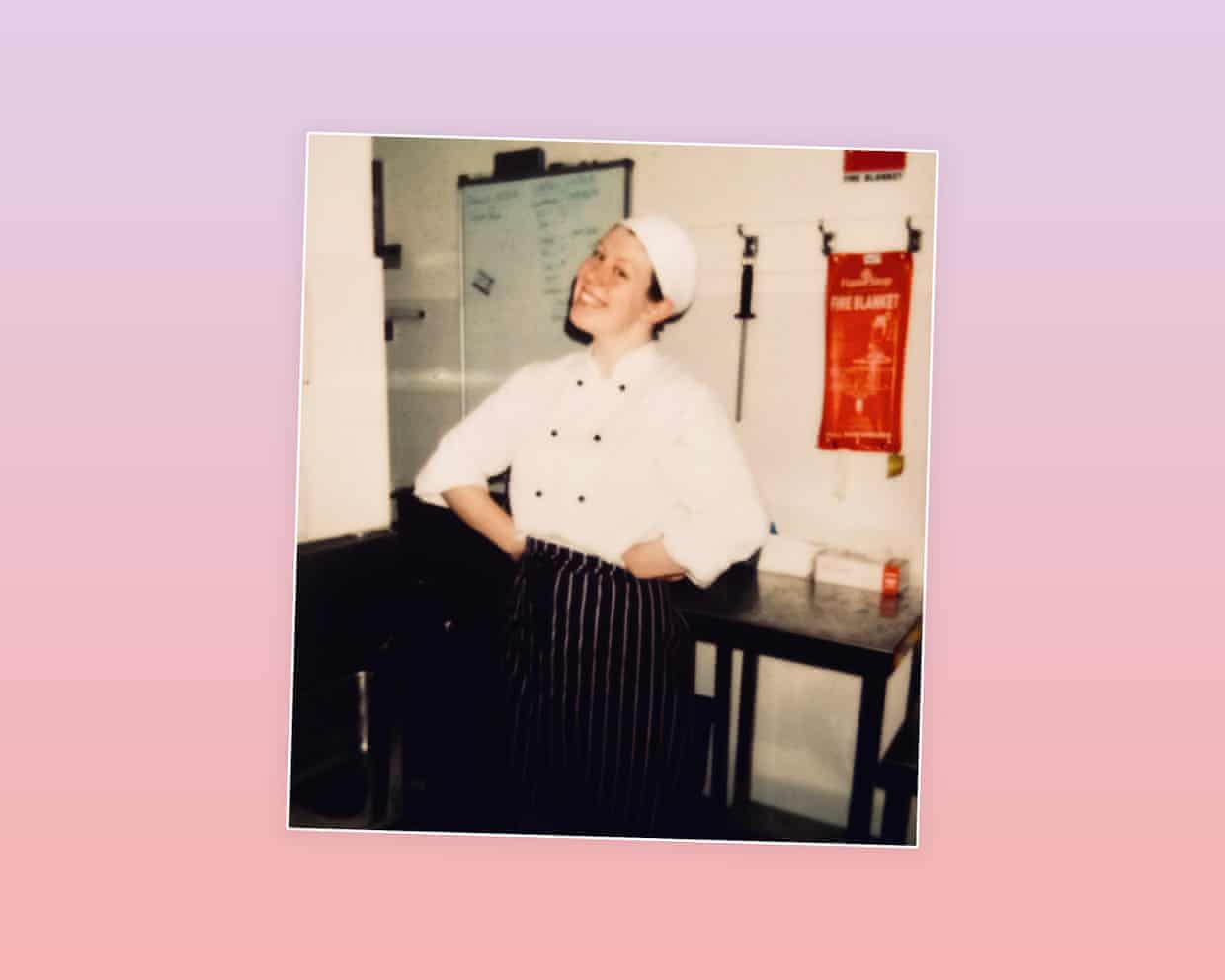
I lost my love of cooking after 12 years as a chef. Moving to a pig farm restored it
I was a keen-bean 15-year-old when I got my first job in a commercial kitchen in Canberra, raised on a diet of Jamie and Nigella and bursting with a passion for food. I dived headfirst into an apprenticeship and eagerly put my training into practice on my days off, cooking elaborate meals for friends and creating plenty of dirty dishes.But as the years went on, my love for the kitchen was dulled by a series of toxic workplaces, bullying bosses and long hours. Eventually, cooking for myself became a chore. I was more likely to eat cereal on my kitchen floor than do anything creative that would result in dirty dishes
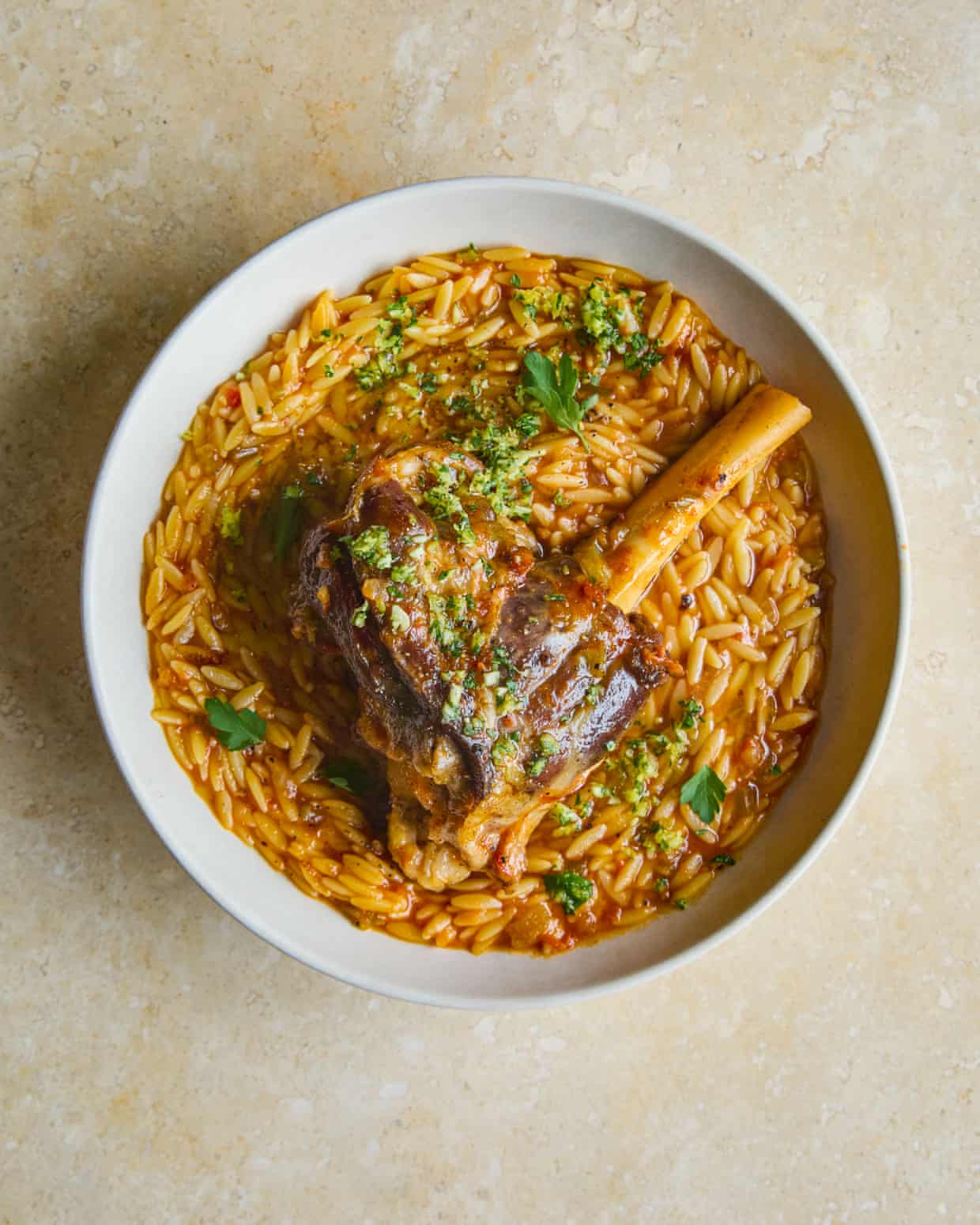
Lamb shanks with orzo and rhubarb galette: Anna Tobias’ Easter recipes
Easter for me immediately brings to mind two things: cracking dyed red eggs together in the style of conkers (a Serbian Easter game that we play every year) and lamb. We always eat lamb at Easter lunch, and I suppose that simply harks back to religious tradition. Today’s lamb shank dish is a wonderfully straightforward and moreish take on a popular Greek recipe. I’ve gone for rhubarb for pudding, because it’s just so representative of this time of year – it’s also very pretty on the eye and a treat to eat, too.Prep 15 minCook 2 hrServes 650ml olive oil 6 lamb shanks Sea salt and black pepper 3 sticks celery, washed and finely chopped2 onions, peeled and finely chopped3 garlic cloves, 2 peeled and finely chopped, the other peeled1 tbsp dried oregano200g tinned chopped tomatoes (ie, ½ tin)375ml white wine 300g orzo 1 lemon 1 small bunch flat-leaf parsley, leaves pickedHeat the oven to 185C (165 fan)/360F/gas 4¼
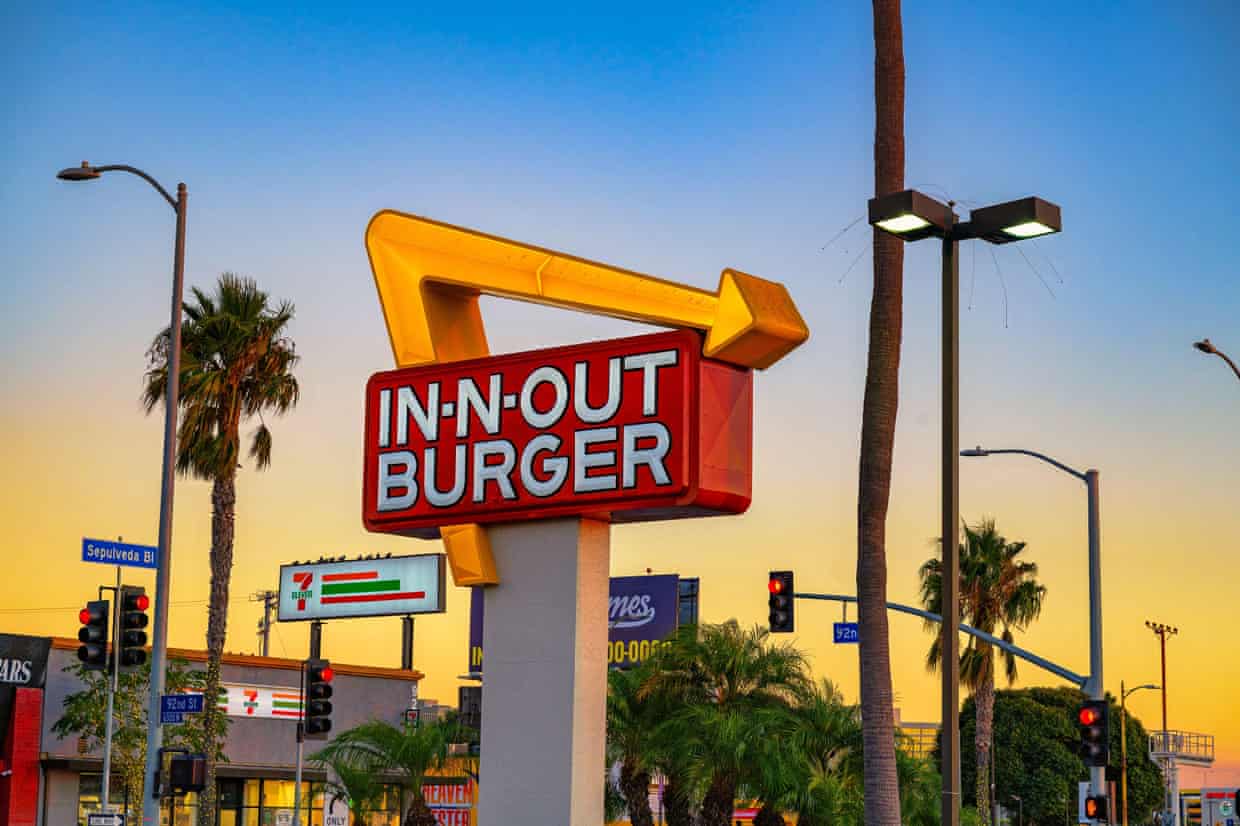
Best thing I ever ate? My first In-N-Out burger in LA
They say you never forget your first time, but for most of us, this doesn’t apply to cheeseburgers. We can’t really remember our first cheeseburger, because we start eating them at such an early age, before the memory centres of our brains are fully formed. In fact, in Wisconsin (“America’s dairyland”) babies are traditionally weaned on a fortifying diet of cheeseburgers, bratwurst and fondue, along with little sips of lager, just to make sure we acquire the taste.But while I may not be able to recall the particular details of my very first cheeseburger, the sense-memories of them are embedded deep within my subconscious. The perfect flavour-chord of ketchup, mustard and pickles on molten cheese and juicy beef occupies the same psychological space as the peppery cinnamon-and-clove aroma of my father’s Old Spice and the warmth of my mother’s hug

Reheated rivalry: why I’m the champion of leftovers
There is nothing lovelier than seeing a cook do their thing. By “doing their thing”, I do not mean just going about kitchen work – that is often excruciating to watch (why are they cutting onions like that?) I mean doing their thing: their culinary equivalent of a Mastermind subject, that one dish or process that they do so well, and with such evident pride, that the most crotchety backseat cook is forced to shut up.Take my partner’s method for making fish-finger sandwiches, which involves frying the fish fingers in butter, then creating an in-pan sweatbox to melt artisanal cheese on to them and custom blending condiments. It creates, on average, as much washing up as a full cooked dinner. Others have a special pancake hack or carrot cake recipe, and people tend not to let these things go unnoticed – it’s always my salad dressing, possessive, but we forgive their hubris, because each of us has “A Thing” of our own
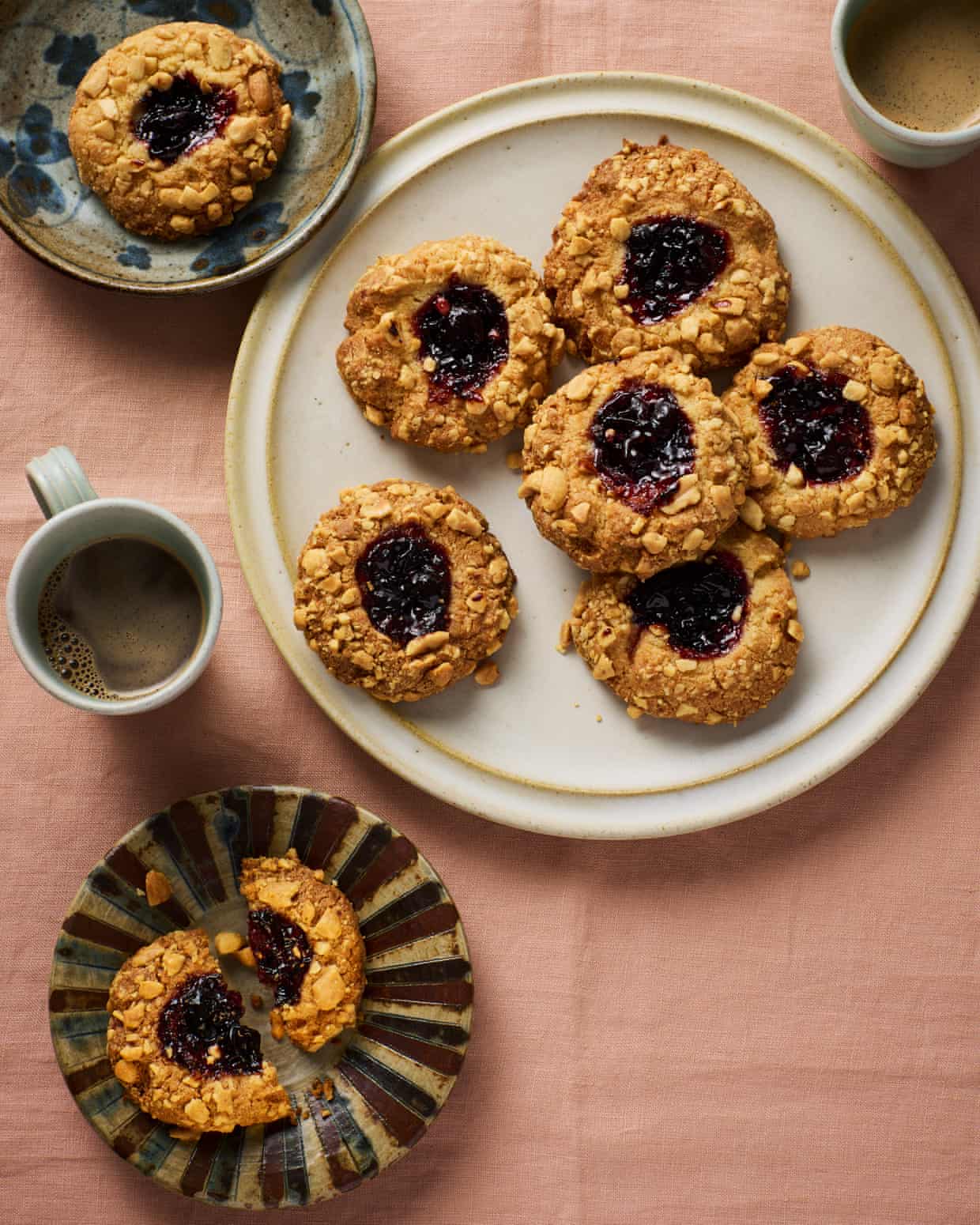
Helen Goh’s recipe for peanut and blackcurrant thumbprint cookies | The sweet spot
Niki Segnit writes in The Flavour Thesaurus that, while grape jelly is the familiar partner to peanut butter in the classic PBJ, she thinks blackcurrant, with its sharper, more complex character, would be a far better match for the fatty and salty peanuts. I couldn’t agree more, though I’ll admit I’m not entirely impartial: blackcurrant is my favourite jam. Here, it’s spooned into the centre of a tender, peanut-crusted shortbread, where it bakes into a glossy, slightly chewy jewel that sits in perfect contrast to the crumbly, buttery biscuit. It’s the sort of small pleasure I find myself returning to again and again.Prep 15 min, plus chilling and cooling Cook 35 min Makes 13110g unsalted butter, at room temperature50g caster sugar¼ tsp salt 100g plain flour, sifted60g ground almonds 1 tsp vanilla extract 60g salted roasted peanuts 60g blackcurrant jamPut the butter, sugar and salt in the bowl of an electric mixer fitted with the paddle attachment and beat for two minutes on medium–high speed, until pale and creamy

Starmer says ‘every lever’ will be explored to ease rising costs of living from Iran conflict

Idris Elba-backed firm Huel bought by Danone in €1bn deal

iPhone 17e review: Apple upgrades its cheapest new smartphone

Campaign groups rail against Palantir, but the UK contracts keep coming

Hull FC turn tide and tame Leeds before era-defining moment for Super League

Resilient Korda stuns Alcaraz in Miami Open after almost letting advantage slip