Stock markets rocked by Trump’s Iran ultimatum, as UK economy faces growth hit – business live
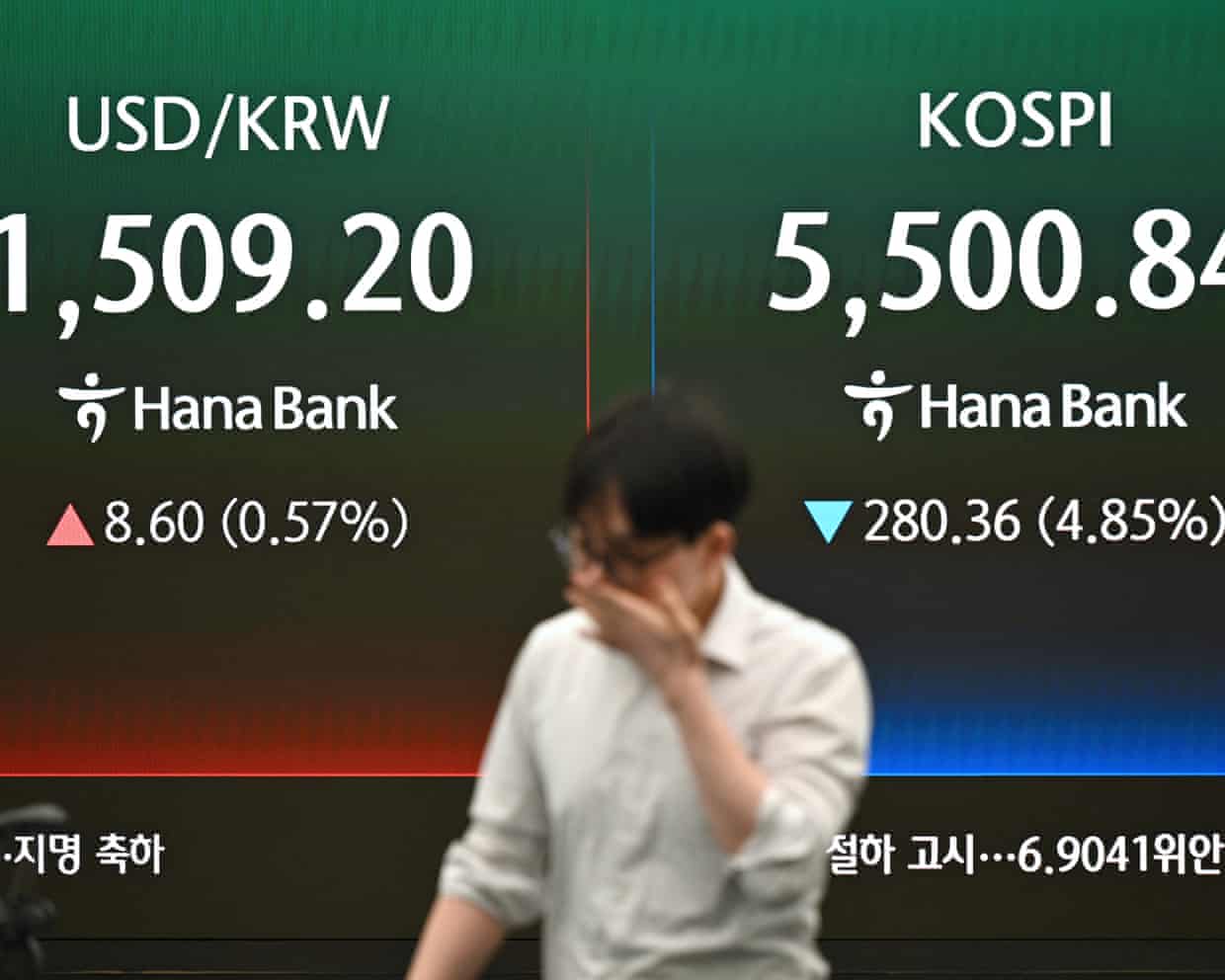
Donald Trump’s threat to ‘obliterate’ Iran’s power plants unless the strait of Hormuz reopens is hitting global stock markets today.A wave of selling is sweeping through Asia-Pacific markets at the start of the week.Japan’s Nikkei has dropped by 3.4% in afternoon trading, China’s CSI 300 has lost 2.8%, and South Korea’s KOSPI index has slumped by 6.
5%.Trump’s ultimatum, and Tehran’s threat to “irreversibly destroy” essential infrastructure across the Middle East in response, means the war is entering a new phase of escalation, analysts warn.Markets are finally starting to wake up to the gravity of the potential for long-term impact on energy markets, reports Neil Wilson, investor strategist at Saxo UK.double quotation markThis is an escalatory doom loop – or ‘escalation trap’ with currently no realistic off-ramp.Neither side has an incentive to back down as the costs of doing so are increasing day by day.
Each side thinks pushing harder will force the other to back down.As well as fears of escalation in the conflict, investors are also bracing for rises in interest rates this year, with central banks under pressure to fight a rise in inflation.Fears that the spike in energy prices will hurt economic growth are weighing on metal prices today.Copper has fallen to a over three-month low this morning; the benchmark three-month copper contract on the London Metal Exchange has fallen by more than 1.5% to $11,742 a ton, its lowest since December.
Gold is continuing to tumble – it’s now down by more than 6% at $4,218 an ounce,Quite a reversal, given it hit almost $5,600 an ounce in late January,Kathleen Brooks, research director at XTB, says:double quotation markLast week, the gold price lost the $5,000 handle, this week the $4,000 handle looks like it is at risk,This means another bruising day could be on the cards for UK equities, after heavy losses for the UK-listed gold miners last week, Antofagasta and Fresnillo both saw their stock prices drop 10%,Aside from oil majors and a trickle of well-received corporate news, there are few hiding places for stock investors at this stage of the conflict.
Bloomberg has spotted that two Indian-flagged vessels carrying liquefied petroleum gas are making their way through the Strait of Hormuz, taking a route close to the Iranian coastline.They reportt:double quotation markThe Jag Vasant and the Pine Gas, two India-flagged very large gas carriers flagged to India, traveled northwards from the UAE coast toward Iran’s Qeshm and Larak islands early Monday, ship-tracking data show.The two supertankers were signaling Indian ownership instead of a destination, but are likely to be heading to India, which has been facing acute shortages of LPG, used as cooking gas.The pair follow two other Indian-flagged LPG vessels that made the transit earlier this month.And here they are:Wholesale gas prices in Europe have jumped in early trading.
The UK month-ahead gas prices is up 3.1% at 155p per therm, nearly double their levels before the Iran conflict began.That’s still below below the 180p hit last week, after Israel attacked Iranian South Pars gas field.The Dutch front-month gas contract is up 3.7% to €61.
45 per megawatt hour.US crude oil futures are rising this morning, up more than $3 to $101.26 per barrel.European stock markets are expected to fall when trading begins in half a hour’s time.The futures contract for the UK’s FTSE 100 share index is down over 1% this morning.
Last Friday it dropped below 10,000 points, meaning it has lost all its gains for 2026.🚨 UK markets set for a rough open.FTSE 100 futures down ~1.2% (117 pts), hitting correction territory.📉 Main drivers:• Escalating Middle East tensions & Hormuz blockade fears 🛢️• Brent Crude spiking to $113• Global shift to safe havensA volatile morning ahead.
The chief executive of Saudi Aramco, the world’s biggest energy company, is reported to have withdrawn from a major energy conference in Houston, as the situation in the Middle East threatens to escalate further.The oil is relatively calm this morning, so far anyway.Brent crude is up 1.2% at $113.34 a barrel, some way below the record highs of nearly $120/barrel seen earlier this month.
Ipek Ozkardeskaya, senior analyst at Swissquote, says:double quotation markOil prices are higher this morning as risks build that regional energy infrastructure could suffer further damage, potentially triggering a larger and more prolonged energy shock,The IEA’s Fatih Birol warned last week that this conflict could be the “greatest threat to global energy in history”—which can also be read as a reminder of the urgency to accelerate alternative energy efforts,The global energy crisis caused by the war in Iran is equivalent to the combined force of the twin oil shocks of the 1970s and the fallout of Russia’s invasion of Ukraine, the head of the International Energy Agency has warned,Fatih Birol, the IEA’s executive director, said the growing fallout could be seriously compounded through interuptions to the “vital arteries of the global economy”, including petrochemicals, fertilisers, sulfur and helium,Speaking at the National Press Club of Australia in Canberra on Monday, Birol said the depth of the problems in energy markets caused by American and Israeli bombings in Iran, and the closure of the strategic strait of Hormuz, had not initally been properly understood by world leaders.
The US dollar is rising today, as investors seek out a safe haven.With risk appetite curbed by the escalating retaliatory threats in the Middle East conflict, the dollar’s reputation as a safe-haven asset meant it’s in demand.The dollar index, which measures the greenback against a basket of currencies, is up 0.2%, while the pound has lost half a cent to $1.329.
The gold price is sliding fast today too.Spot gold has dropped by 4.6% today to $4,280 an ounce, hitting a nearly four-month low.Gold is suffering from rising expectations of higher global interest rates, traders say.Tim Waterer, chief market analyst at KCM Trade, explained:double quotation mark“With the Iranian conflict into its fourth week, and oil prices hanging around the $100 level, expectations have pivoted from rate cuts to potential rate hikes, which have tarnished gold’s appeal from a yield point of view.
”Donald Trump’s threat to ‘obliterate’ Iran’s power plants unless the strait of Hormuz reopens is hitting global stock markets today.A wave of selling is sweeping through Asia-Pacific markets at the start of the week.Japan’s Nikkei has dropped by 3.4% in afternoon trading, China’s CSI 300 has lost 2.8%, and South Korea’s KOSPI index has slumped by 6.
5%.Trump’s ultimatum, and Tehran’s threat to “irreversibly destroy” essential infrastructure across the Middle East in response, means the war is entering a new phase of escalation, analysts warn.Markets are finally starting to wake up to the gravity of the potential for long-term impact on energy markets, reports Neil Wilson, investor strategist at Saxo UK.double quotation markThis is an escalatory doom loop – or ‘escalation trap’ with currently no realistic off-ramp.Neither side has an incentive to back down as the costs of doing so are increasing day by day.
Each side thinks pushing harder will force the other to back down,As well as fears of escalation in the conflict, investors are also bracing for rises in interest rates this year, with central banks under pressure to fight a rise in inflation,Good morning, and welcome to our rolling coverage of business, the financial markets and the world economy,Growth across the UK economy is expected to almost halve this year, as the Iran war drives up energy prices,New forecasts from KPMG this morning show that UK GDP is only expected to increase by 0.
7% in 2026, down from 1.5% in 2025.Back in December, KPMG had forecast growth would slow by less, to 1% this year.The energy price shock rippling through the UK economy will push up inflation, weigh on spending and delay interest rate cuts, they predict.KPMG also forecast a slowdown in investment, and.
a rise in the unemployment rate – to 5.3% this year and next, up from 4.8% in 2025.Yael Selfin, chief economist at KPMG UK, said:double quotation mark“The outlook for growth in 2026 has taken a hit from the impact of higher energy prices, a cooling labour market and weak household spending.“The weaker growth outlook coupled with growing cost pressures will likely see firms scale back any investment plans over the coming year.
Consumers could also cut back on discretionary spending to offset the squeeze from higher prices.“With inflation likely to re-accelerate from this summer, the Bank of England will be reluctant to move quickly on rates, meaning households and businesses will face higher borrowing costs for longer, even as the economy slows.”With fears of a new cost of living crisis growing, Andrew Bailey, the Bank of England governor, is due to meet Keir Starmer and senior ministers later today.The TUC are calling for an emergency taskforce that would bring employers, unions and the government together to help protect the UK from the economic fallout of the US-Iranian conflict.12.
30pm GMT: Chicago Fed National Activity Index for February3pm GMT: EU Consumer Confidence Flash for March

Family courts in England and Wales ‘not good enough’ for women and children, minister says
Family courts are “not good enough” and have treated women and children unfairly for decades, a government minister has said.Announcing a major overhaul of the family justice system in England and Wales that will play a central role in “rebalancing” the family courts, Alison Levitt said often brutal legal showdowns will be replaced with a “problem-solving”, child-focused model.Part of a move across the Ministry of Justice to tackle court backlogs, the department said child focused courts – which centre on child welfare and seeks out-of-court resolutions – have reduced child trauma, cut a backlog of cases and reduced waiting times.They will now become the standard model for all section 8 cases, which involve child arrangements including where that child lives, who they have contact with and how long they spend with each parent.The Labour peer, who was Keir Starmer’s principal legal adviser when he was the director of public prosecutions, said that she had been repeatedly accused of sexism since she became a minister last autumn, including as a result of the proposed repeal of the legal presumption that both parents should be involved in their children’s lives in the Courts and Tribunal bill, which passed its second reading earlier this month

HMRC anti-fraud scheme that wrongly cut child benefits to resume
A controversial government anti-fraud scheme that incorrectly stripped thousands of parents of their child benefit is to resume, despite ongoing concerns about inaccurate Home Office travel data on which the crackdown is based.HMRC used flawed Home Office travel records to deduce that thousands of parents who went on holiday or work trips abroad were fraudsters, with 23,800 families having child benefit payments stopped late last year.It was later discovered that the Home Office failed to record their return journeys and, in some cases, had incorrectly recorded people as leaving the country even though they had not boarded flights they had booked.These included a woman whose child became ill at the departure gate, and other people who made business trip bookings but then changed their plans without cancelling the outward journey.About 13,800 households were later found to have had their benefits suspended incorrectly, with 40% of families found to be ineligible for their benefit

Experts consider expanding meningitis vaccine eligibility after Kent outbreak
Experts are considering the case for routinely vaccinating more people against meningitis B in response to the fatal outbreak in Kent.The Joint Committee on Vaccination and Immunisation’s review was announced after the health secretary, Wes Streeting, asked it to “re-examine eligibility for meningitis vaccines” for a wider range of people than those who now qualify.Health officials in Kent, where there have been two fatalities, said cases could spread outside the county as students return home for Easter. On Friday the UK Health Security Agency said there were 18 confirmed cases, and 11 more under investigation.The Guardian understands the JCVI started a review of the outbreak in Kent and is considering a wider review of eligibility for routine meningitis B vaccinations
Ambulance delays during power cut possibly contributed to man’s death, coroner rules
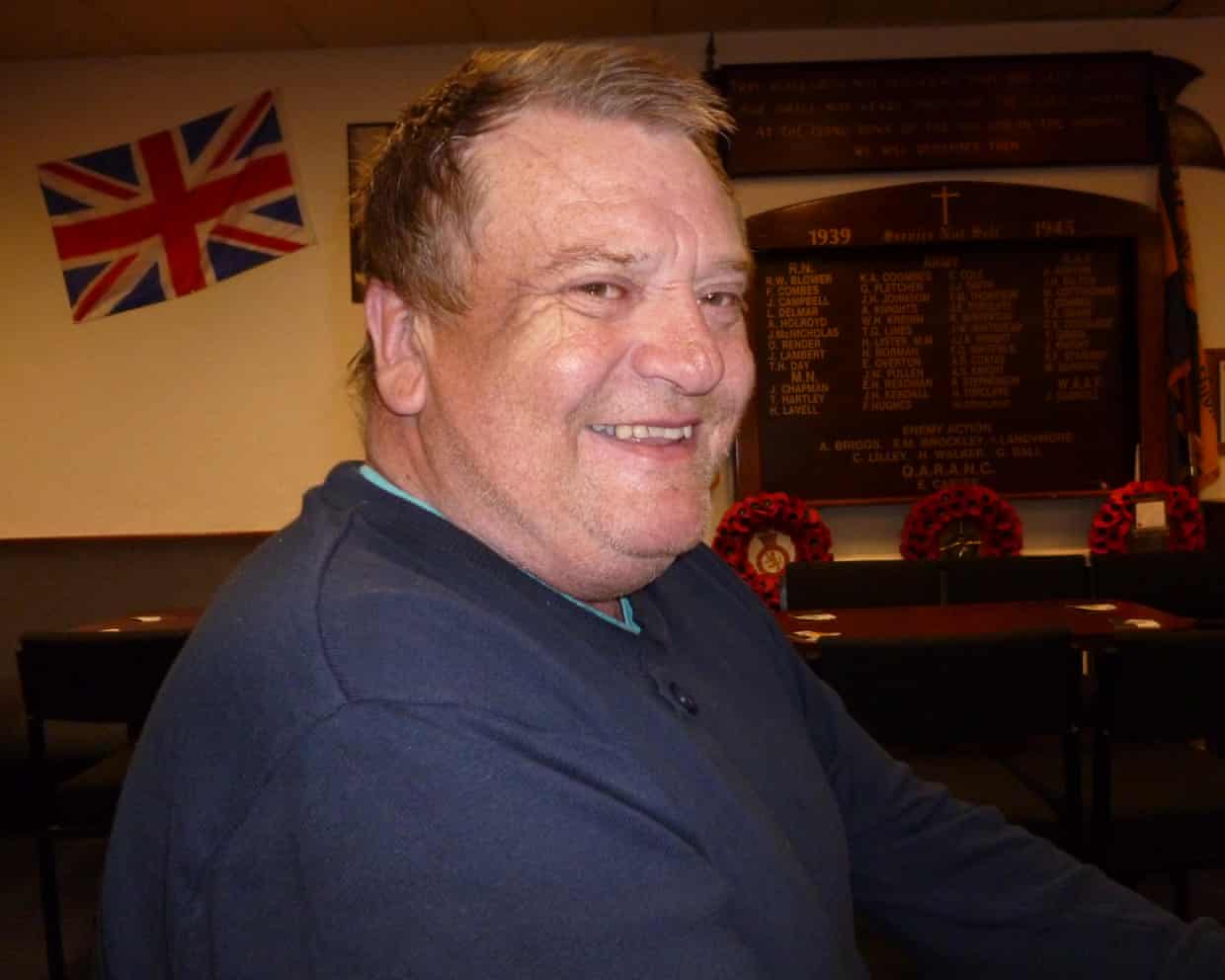
A family has welcomed a coroner’s conclusion that ambulance delays possibly contributed to a man’s death in 2019 after enduring “years of distress trying to pursue answers”.The family of Peter Coates said they had been met with “delays and resistance” from a regional ambulance service as they tried to discover the full circumstances of his final minutes.Kellie Coates, the daughter of Peter, said: “This process for us has not just been about managing grief it has been about challenging a system that seems to be more focused on protecting itself than it is on acknowledging and learning from mistakes in its processes.”Coates died aged 62 in the early hours of 14 March 2019 after a power cut stopped the mains-operated equipment he needed at home to breathe from working.An inquest in Middlesbrough heard Coates, of Redcar, rang 999 and an ambulance was dispatched by the North East ambulance service (NEAS)

Volunteers in the UK: what happened when your local charity shut down?
Across the UK, many small charities face increasing financial pressures, forcing some to shut their doors. When this happens, it can leave the people who relied on those services without support - and volunteers and communities trying to step in and keep things going.We’d like to hear from volunteers who have experienced a charity closing. Have you or others tried to continue the work informally and what were the challenges of doing that? Did you try to keep it going - and what difficulties did you face? What happened to the people who depended on the service?You can share your experience using this form.Please include as much detail as possible

‘It all feels very natural’: Britain’s sauna boom heats up as people seek warmth of human connection
From fields to floating pontoons, in horseboxes, barrels and beach huts, saunas are springing up across Britain. The British Sauna Society now lists about 640 saunas – up from 540 at the start of the year – while a recent report predicted that the UK could become the world’s largest sauna market by 2033, outpacing even Finland and Germany.“The continuing growth suggests that the peak has still yet to come – if there is one,” said Gabrielle Reason, the society’s director. But are saunas a tonic for the nation’s health – or a wellness fad with hidden risks?When it comes to measurable health effects, the strongest evidence relates to the cardiovascular benefits of sauna use. These are “substantial”, said Prof Setor Kunutsor, the Evelyn Wyrzykowski research chair in cardiology at the University of Manitoba in Canada
Starmer adviser urges ministers to look at profits cap for energy and petrol firms
Thousands of care leavers in England ‘locked out’ of work as firms slow to adapt

Palantir extends reach into British state as it gets access to sensitive FCA data
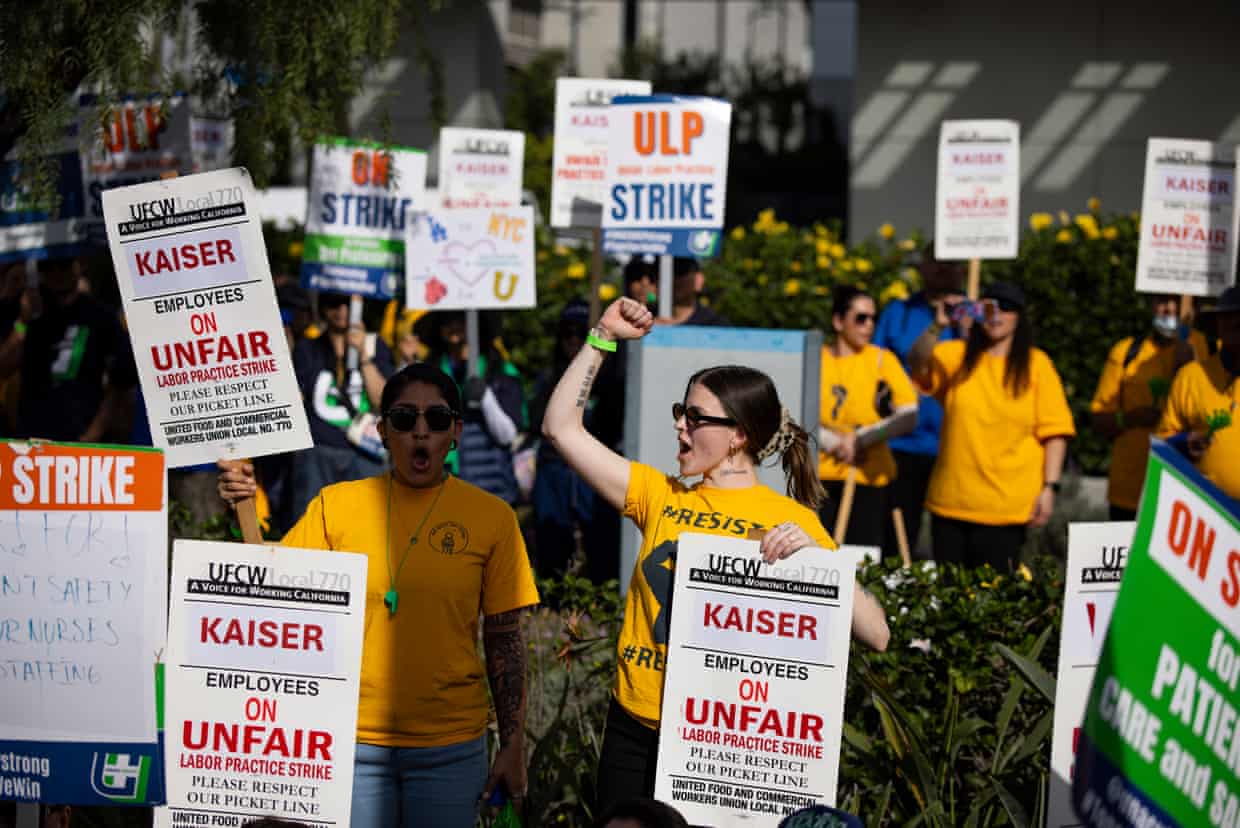
‘Thank God they’re still alive’: Kaiser therapists claim its new screening system puts patients at higher risk by delaying their care

GB strike golden treble at world indoors with Hodgkinson, Hunter Bell and Caudery

Chessum makes Tigers purr on return from England duty as Bristol fall short