Is it time for the UK to acknowledge the ‘rhetoric to reality gap’ on its military power?
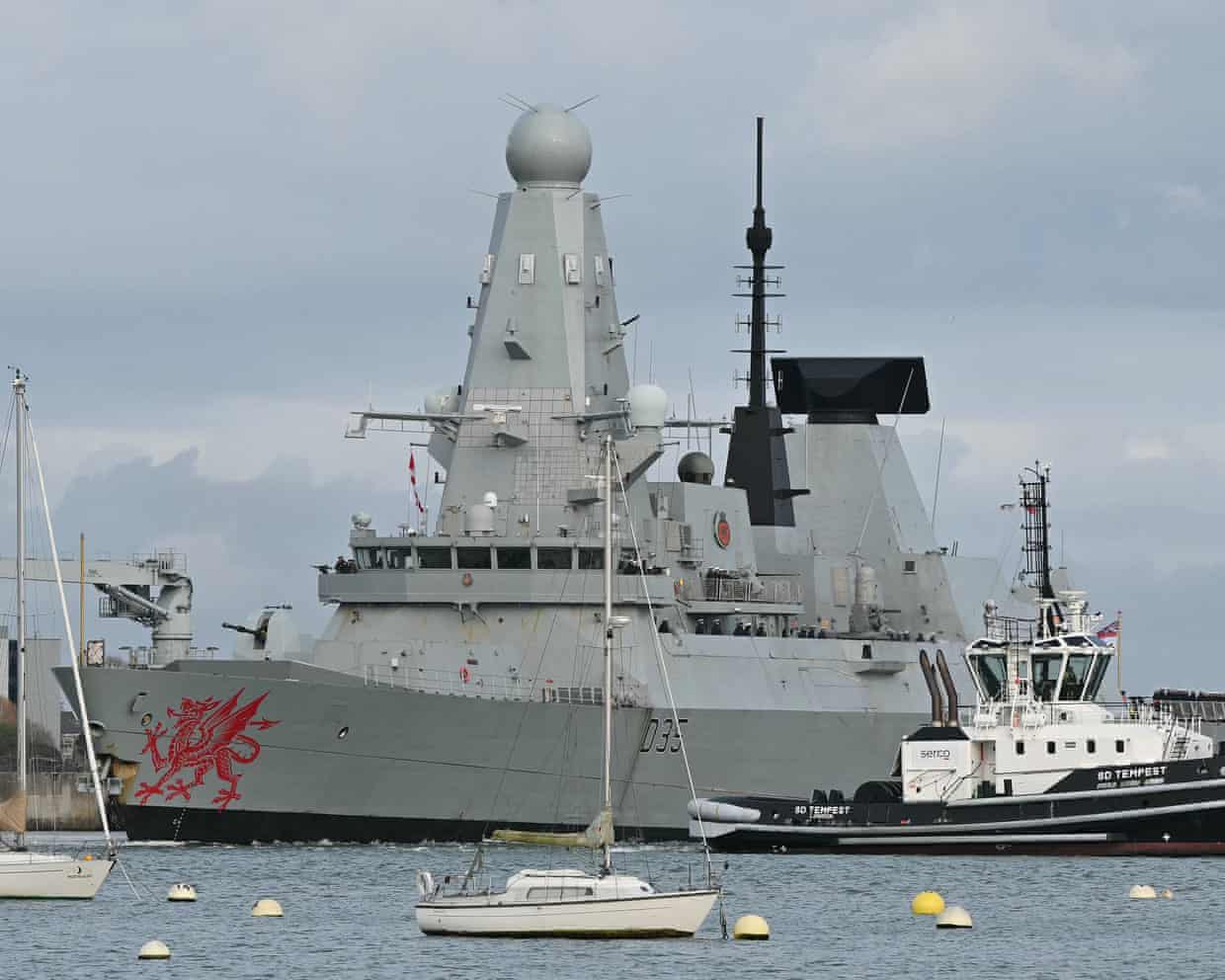
It will have been more than three weeks since the US and Israel first attacked Iran when the first British warship finally arrives off the coast of Cyprus, a belated defensive deployment that has highlighted the lack of military capacity available to the UK,Nominally, HMS Dragon was one of three destroyers available out of six,In reality the warship has had to be hauled out of dry dock, prepared and then, after launch, tested for several days in the Channel,Its arrival date is still unconfirmed,“It’s clear one of the military’s big problems is giving the government contingency options,” said Matthew Savill, of the Royal United Services Institute, reflecting years of spending constraints.
“Numbers and capacity have been cut, though the UK has tried to argue that smaller can be better.”Political priorities also lay elsewhere.As the US began to build up forces in the Middle East from late January, the UK chose to stand aside.A handful of fighter jets were sent to RAF Akrotiri, in Cyprus, and Qatar early in 2026 as a modest extra layer of defence in case Iran retaliated across the region.“Keir Starmer had decided this is not our war,” a former senior British military commander said.
But, he added, “if you’ve made that decision it colours your deployments elsewhere” – meaning that the UK is not likely to be highly prepared if the war started by the US and Israel suddenly spirals out of control.Ministry of Defence (MoD) insiders insist the decision to send HMS Dragon was decided on the fourth day of the war against Iran.Only then was the option presented to Richard Knighton, the chief of defence staff, and approved by him and the defence secretary, John Healey.That was about 36 hours after hostile drones had targeted the UK’s base at Akrotiri.One struck a hangar used by US spy planes, prompting the evacuation of non-essential personnel and thousands of Cypriot residents nearby.
HMS Dragon is the only Royal Navy warship confirmed to have been deployed so far, although there has been US pressure on the UK to participate in a possible naval escort in the strait of Hormuz,The only nuclear attack submarine available out of six, HMS Anson, may be heading towards the Middle East after leaving western Australia more than a week ago,The lack of wider military readiness, argued former general Richard Barrons, one of three members of Labour’s strategic defence review team, was a product of the “armed forces we have ended up with at the end of the post-cold war era – a military right-sized for an era free of threat”,At the end of the cold war, the UK had 51 destroyers and frigates after a period during which Britain spent 3,2% of its GDP on defence.
The number had halved to 25 by 2007 and is currently at just 13, with much of that smaller fleet ageing,The UK spends 2,4% of GDP on defence, a figure that Labour has promised to lift modestly to 2,5% by April 2027,Britain had maintained four minehunters and a mothership in Bahrain for 20 years, in the belief that Iran might, in a crisis such as now, have tried to mine the Gulf and the strait of Hormuz.
But the final three were removed in the past year, two to be retired, including HMS Middleton, which was towed back to the UK in January.“We had prepared for this eventuality [the conflict with Iran], but when it happened the UK was not there,” a naval officer said.A persistent complaint among military figures is that Labour ministers, and Conservative predecessors, have been reluctant to acknowledge what one former senior figure describes as the “rhetoric to reality gap” – where the UK tries to act like it is a global power with global military capabilities that are in reality stretched very thin.An example is the UK’s commitment to a stabilisation force for Ukraine, which Starmer has said Britain would lead alongside France, if a durable ceasefire can be agreed, at a time when the size of British army is at a low of 71,151 personnel.A mission in which Russia is considered to pose a moderate threat could require around 5,000 UK troops, which one army figure said would become “quite testing” to sustain for more than two years given the need for rotation, particularly if the existing commitment to maintain a battle group in Estonia is to be continued.
Others familiar with Whitehall’s workings complain that Starmer is “not playing the cards we have in the US relationship well” and argue that “no one in the cabinet or elected Labour has a mind to use hard power”,The loss of niche contributions, such as minehunting, makes the UK less relevant, the former Whitehall insider said,Keeping out of the bombing of Iran is politically popular in the UK and Starmer has been clear that the UK “will not be drawn into the wider war”,Meanwhile an erratic Donald Trump appeared surprised by Israel’s recent bombing of Iranian gasfields and may be considering a ground campaign to seize Iran’s Kharg Island in the Gulf,Nevertheless, increased UK military spending amid global uncertainty is something that has been accepted in theory by Starmer.
At last summer’s Nato summit he agreed to lift defence budgets by about £30bn to 3.5% of GDP by 2035.But in practice, this has not been agreed by the Treasury in its budgeting – and earlier this week the chancellor, Rachel Reeves, only referred to reaching 3% “for the next parliament”, which could run until 2034.Financial stasis has run on for months as a 10-year defence investment plan, setting out spending on a line by line basis, has been on hold since last autumn with no date for publication.The Treasury has so far failed to make the money available; a brief flurry of speculation last month that the defence budget could rise to 3% by 2030 was quickly quashed by Downing Street.
The MoD believes it will need a further £28bn to meet existing commitments in the next four years, including a long list of programmes such as the £31bn Dreadnought nuclear submarine replacement, the building of new frigates with Norway, plus the development of new combat aircraft with Italy and Japan, and new Aukus nuclear powered submarines with the US and Australia,“Could we do that with the budget that we have got? The answer is no,” Knighton conceded in January as he surveyed the totality of the MoD’s aspirations,But with UK economic growth stalling, money is tight,“Everybody is saying there is no financial headroom,” a former senior civil servant said,And there is no sign of a politically weak Starmer overruling the Treasury.
The problem for the UK’s long-term national security, the ex-official argued, is that “we are entering a world of strong, mad leaders and I can’t say I’m confident there won’t be a China-US confrontation in the next few years”.It is a last resort argument: that greater military investment for a medium-sized country is a necessity, because the world could yet get more dangerous.
US interest in electric vehicles surges as gas prices jump amid Iran war
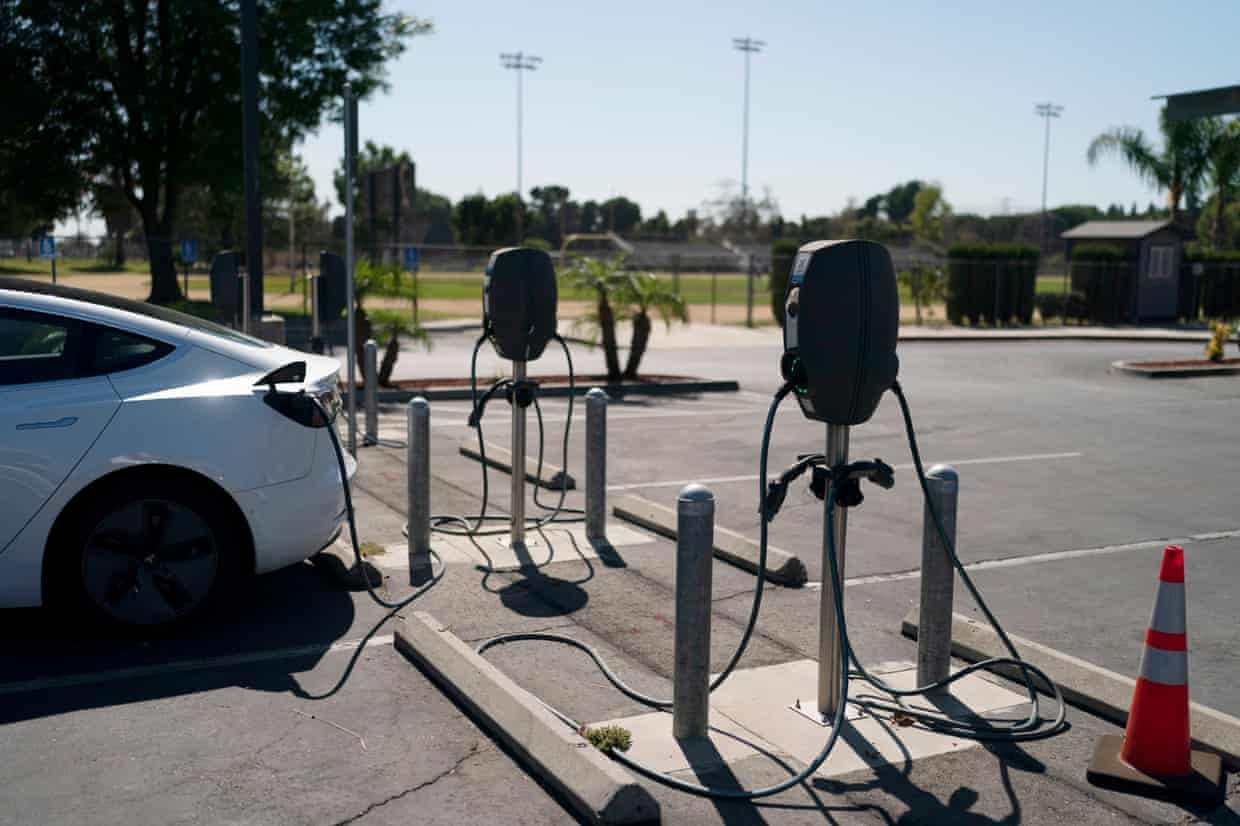
US car buyers are showing a surge in interest in electric vehicles after Donald Trump’s decision to attack Iran helped cause a major jump in gasoline prices.The cost to refuel a vehicle in the US is at its highest level in nearly three years, with the average national price of gas standing at $3.90 a gallon on Friday.This increase has been driven by the rising global cost of oil in the wake of the US and Israel’s bombing of Iran, a major oil producer. The conflict has resulted in the strait of Hormuz, a vital waterway that conveys around a fifth of the world’s oil, being shut off by Iran
‘It’s come at the wrong time’: how Iran war has floored the Gulf as a sports hub
The sight of Nasser al-Khelaifi grounded in Doha when Paris Saint Germain hosted Chelsea in the last-16 of the Champions League last week provided a symbolic illustration of the fragility of the Gulf’s sports project amid the conflict in the Middle East.Al-Khelaifi is the president of PSG, the chair of Qatar Sports Investments and, most crucially, the European Football Clubs, a lobby group that, along with Uefa, runs the Champions League. He is seen as the second-most powerful individual in world football, after the Fifa president, Gianni Infantino. Yet, with Qatari airspace closed, the 52-year-old was forced to miss his first PSG match for years.After watching PSG’s thrilling 5-2 victory in the first leg on the sports channel of the global TV network he also chairs, BeIN Media Group, Al-Khelaifi made it to London to watch Luis Enrique’s side inflict further misery on Chelsea with a 3-0 win in the second leg at Stamford Bridge on Tuesday

Musk responsible for Twitter investors’ stock dropping when he bought company, jury rules
A California jury has ruled that Elon Musk is responsible for Twitter investors’ stock plummeting when he sought to buy the social media platform for $44bn in 2022. Jurors handed the win to a group of investors who sued the billionaire saying he publicly disparaged the company with the aim of bringing down Twitter’s stock price to get a better bargain.The trial, which began earlier this month in federal court in San Francisco, focused on whether Musk intended to move the market with his comments. During a six-month period in 2022, after his offer to buy Twitter, he posted constantly to his millions of followers that the social network was rife with bots that produced spam and created fake accounts.Musk did eventually buy Twitter for $54

Senior European journalist suspended over AI-generated quotes
The publisher of the Dutch newspaper De Telegraaf and the Irish Independent has suspended one of its senior journalists after he admitted using AI to “wrongly put words into people’s mouths”.Peter Vandermeersch, the former head of the Irish operations at Mediahuis, said he “fell into the trap of hallucinations” – the term for AI-generated errors – when using the technology.Vandermeersch, a fellow of “journalism and society” at the European publishing group, has been suspended from his role.The experienced journalist said he had summarised reports using AI tools such as ChatGPT, Perplexity and Google’s NotebookLM, and not checked whether the quotes from those summaries were accurate. He subsequently published them in his Substack newsletter
Carlos Alcaraz cuts through the noise to ease past Joao Fonseca at Miami Open
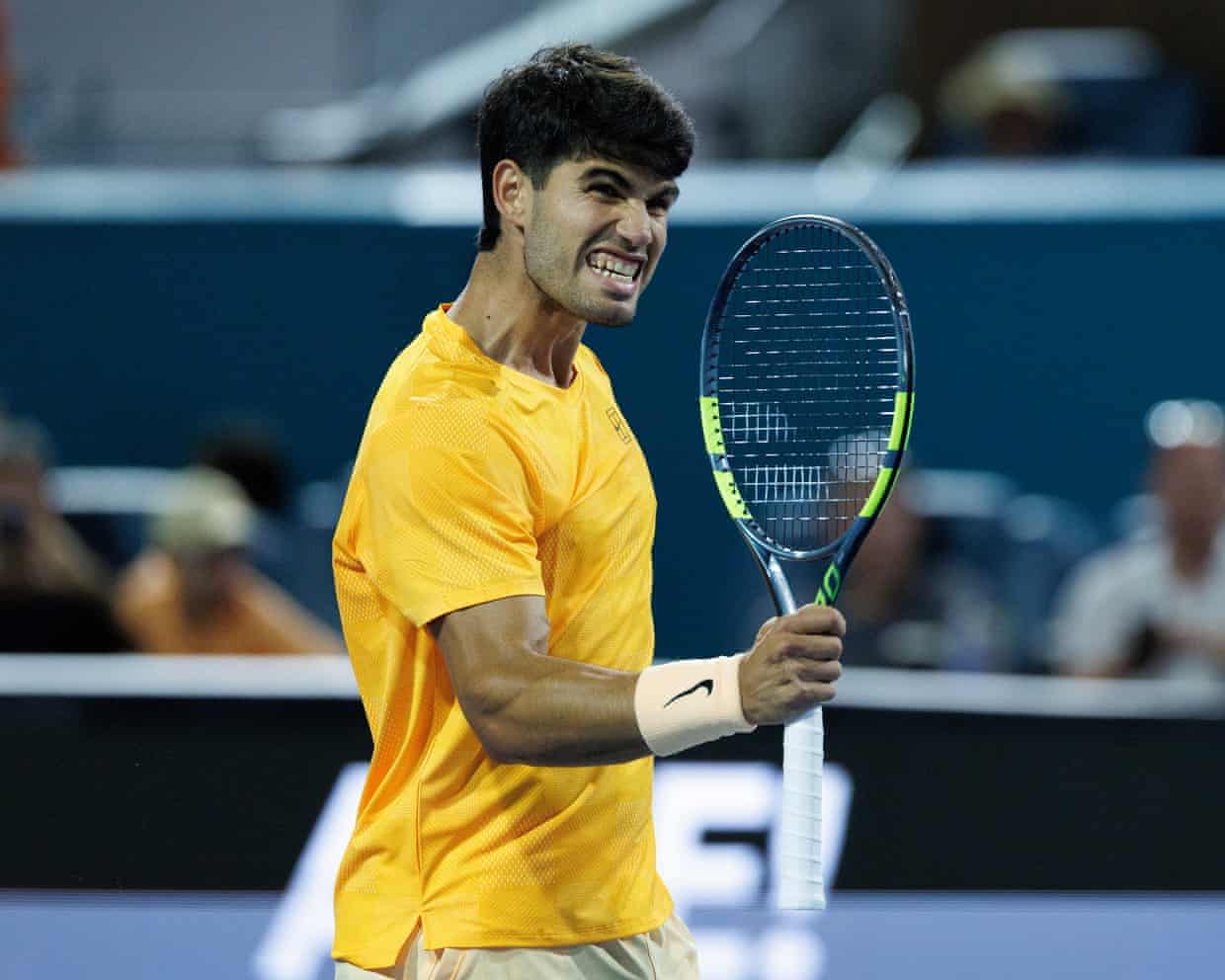
As Carlos Alcaraz worked through his service motion midway through his opening match at the Miami Open, a scream pierced the night-time air. One of the 16,000 spectators breathlessly cheering Alcaraz’s demise had attempted to distract the Spaniard just before he struck the ball.In a spectacular atmosphere unlike many other Masters 1000 second round matches in recent memory, Alcaraz maturely navigated both a passionate, adversarial crowd and a prodigious teenage opponent in Joao Fonseca to reach the third round of the Miami Open with a 6-4, 6-4 win.This meeting had been greatly anticipated ever since Fonseca began to emerge on the tour. Still just 19 years old, Fonseca has risen rapidly up the rankings, outpacing many legendary players with some of his early achievements, such as an ATP 500 title in Basel last year
Jack Draper blown away in straight sets by US star Reilly Opelka at Miami Open
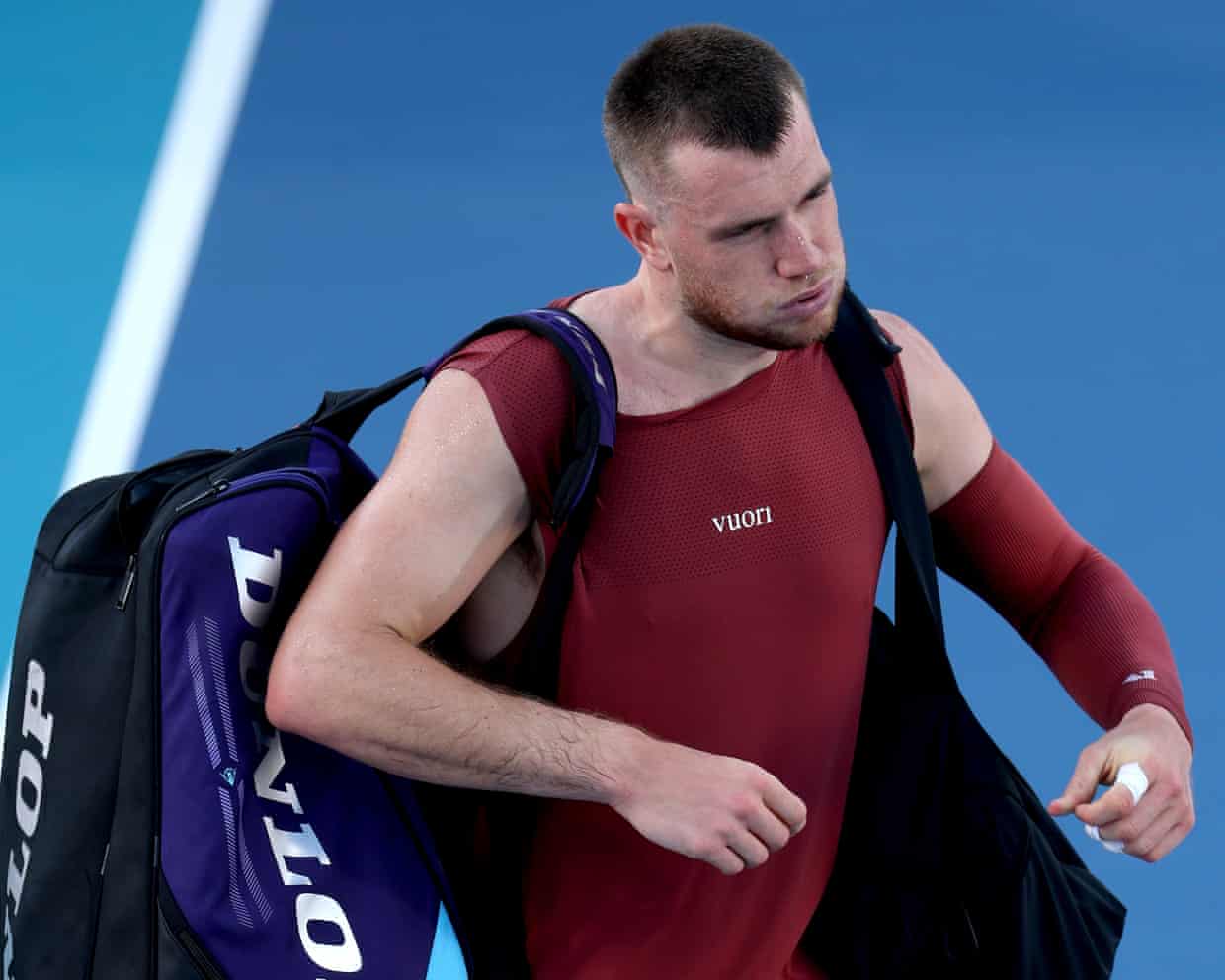
Jack Draper suffered a tough defeat in his opening match at the Miami Open as he could do little to neutralise a dominant serving performance from Reilly Opelka, who fired down 25 aces in two sets en route to a 7-6(3), 7-6(0) win.The defeat is a difficult setback for Draper, the 25th seed, as he continues to navigate the early stages of his return to competition from a bone bruise injury that forced him off the tour for seven months. Miami is just the third ATP tournament of his comeback.While some big servers view the phrase as a pejorative, undermining the other qualities in his game, the 6ft 11in Opelka proudly describes himself as a servebot. This performance was a demonstration of his destructive serving and his ability to completely take his racket out of the hands of his opponents

‘It all feels very natural’: Britain’s sauna boom heats up as people seek warmth of human connection
House of Lords has ‘signed its own death warrant’ by stalling assisted dying bill, says MP
Kent meningitis outbreak may have peaked as UKHSA reports slowdown in cases
The Kent meningitis outbreak: what is happening and why?

Tessa Richards obituary

Father of meningitis victim, 18, tells of family’s ‘immeasurable’ devastation