Mandelson vetting saga reveals flaws in Starmer’s judgment, not process | Letters

The emerging account of Peter Mandelson’s appointment as US ambassador raises a question not of process, but of judgment (Revealed: Mandelson failed vetting but Foreign Office overruled decision, 16 April).The prime minister was warned repeatedly.Briefings in November and December 2024 flagged reputational risks, including well-documented associations and potential exposure if the appointment went wrong.Keir Starmer’s national security adviser raised concerns directly.Yet the appointment proceeded at pace.
Security vetting did not introduce uncertainty; it confirmed it.Developed vetting, even when expedited, typically requires several weeks.Factoring in the Christmas slowdown, the effective assessment window was little more than a fortnight.A refusal reached on that timescale is unlikely to reflect marginal doubt; it suggests concerns identified early and clearly.Yet by 6 January, Mandelson was already operating with a security pass marked for developed vetting access.
The system was behaving as if clearance were assured before the decision had been taken.We are now asked to believe that the subsequent override of a negative vetting recommendation occurred without ministerial awareness.That is difficult to reconcile with the structure of the government, particularly given that vetting sits within the Cabinet Office.The September 2025 press claims alone should have triggered verification.The more coherent explanation is simpler.
The prime minister chose his candidate despite warnings.The system adapted to deliver that decision.When formal vetting contradicted it, the signal was contained rather than escalated.This was not an unforeseeable failure.It was the predictable consequence of a choice – a choice made by the prime minister himself.
Hannah WalkerWymondham, Leicestershire Very well done to the Guardian for unearthing the fact that Peter Mandelson was appointed ambassador to the US despite having failed vetting.It’s no surprise that the government’s response to the revelation has been to sack the most senior civil servant involved, while insisting that all political figures are as pure as driven snow.However, when scandal is in the air, it’s often the cover-up that makes matters much worse.Lord Mandelson had a long and chequered record in previous Labour governments and resigned from ministerial office not once but twice.So you would have expected David Lammy, the foreign secretary at the time, and Keir Starmer to have taken a keen interest in every aspect of his appointment – not the specifics, but certainly regarding any hurdles encountered.
Apparently not, and that’s a huge failure on their parts,At a time when the world is in turmoil, we appear to be stuck with a prime minister who has poor judgment, who is prone to U-turning and who fails to inspire confidence,I’d suggest he resign if it wasn’t for the fact that none of his possible replacements inspire confidence,Doug MaughanDunblane, Stirling As a former Foreign Office civil servant (admittedly 65 years ago), I would identify the key point here to be the political decision to announce an ambassadorial appointment before vetting commences,No 10 was premature in doing that, the Foreign Office had a massive problem, and intermediaries made wrong decisions – errors of judgment on all sides, but none of them surely meriting a hysterical witch-hunt at a time of international crisis.
Veronica Baker-SmithPangbourne, Berkshire There’s one question that the prime minister needs to answer above all others (The key questions Keir Starmer must answer over Mandelson appointment, 20 April): “How could you have been so naive as to think that a man with Peter Mandelson’s record in public life could be trusted with any position of responsibility?”Tony GreenIpswich Have an opinion on anything you’ve read in the Guardian today? Please email us your letter and it will be considered for publication in our letters section.

Finance leaders warn over Mythos as UK banks prepare to use powerful Anthropic AI tool
British banks will be given access in the next week to a powerful AI tool that was deemed too dangerous to be released to the public, as a series of senior finance figures warned over its impact.Anthropic, which has so far limited the release of the new model to a small clutch of primarily US businesses, including Amazon, Apple and Microsoft, said it would expand that to UK financial institutions.“That is in the very near term, in the next week,” Pip White, Anthropic’s head of UK, Ireland and northern Europe operations, said in a Bloomberg TV interview. “As you would expect, the engagement I have had from UK CEOs in the last week has been significant.”Anthropic, which is the company behind the Claude family of AI tools, has said that its latest model, Mythos, poses an unprecedented risk because of its ability to expose flaws in IT systems

US tech firms successfully lobbied EU to keep datacentre emissions secret
Microsoft and other US tech companies successfully lobbied the EU to hide the environmental toll of their datacentres, an investigation has found, with demands to block a database of green metrics from public view written almost word for word into EU rules.The secrecy provision, which the European Commission added to its proposal almost verbatim after industry lobbying in 2024, hinders scrutiny of the pollution that individual datacentres emit. It leaves researchers with just national-level summaries of their energy footprints.The rise of AI chatbots has spurred a boom in the construction of chip-filled warehouses with a hunger for power that is being met, in part, by burning fossil gas. Legal scholars warn the blanket confidentiality clause may fall foul of EU transparency rules and the Aarhus convention on public access to environmental information
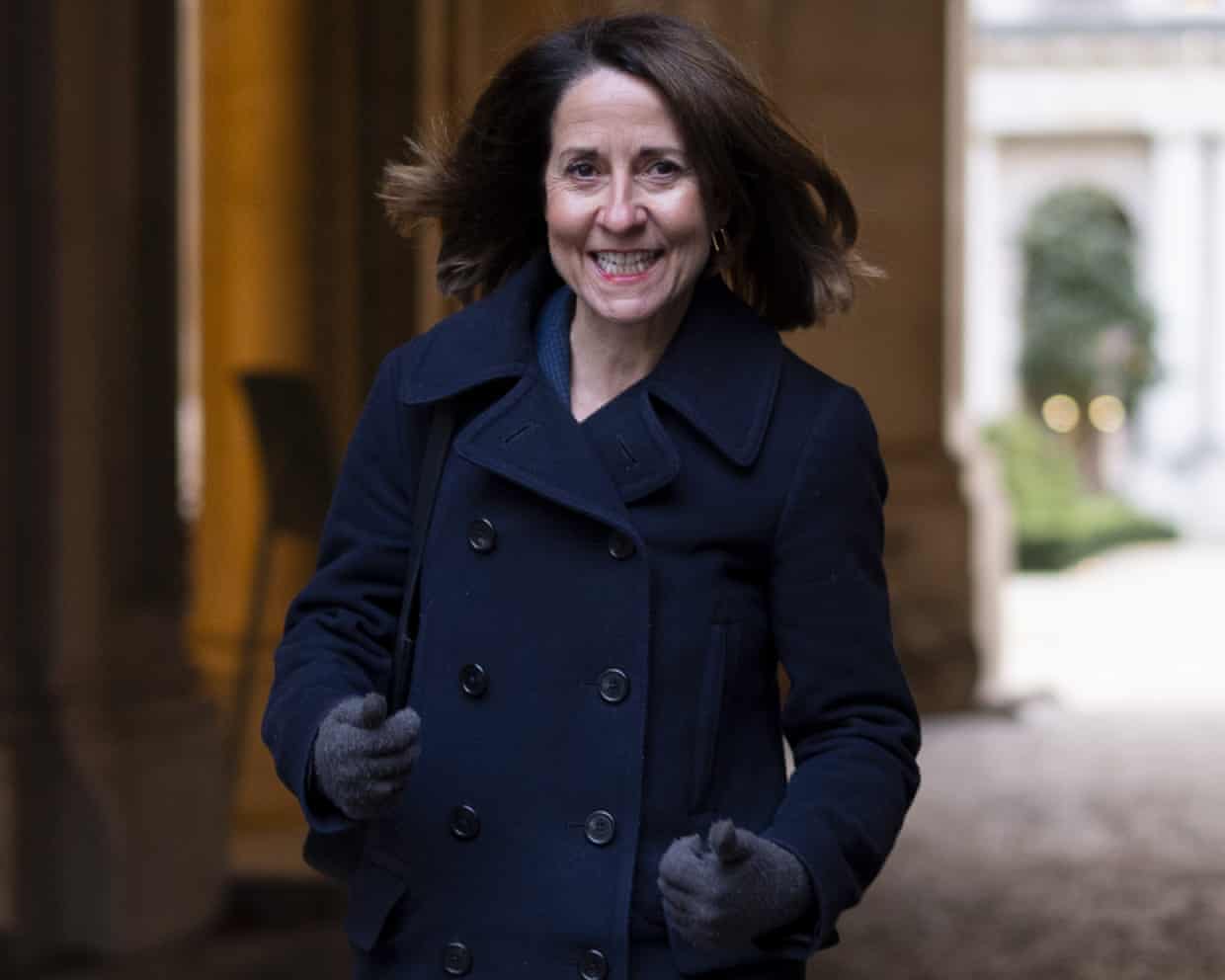
Liz Kendall urges UK public to embrace AI as government makes first £500m fund investment
The UK technology secretary has urged the country to “make AI work for Britain”, brushing off fears about its impact on jobs and cybersecurity as the government announced its first investment under a £500m sovereign AI fund. Liz Kendall said the UK had to “seize” the opportunity offered by AI despite concerns underlined this month when US startup Anthropic revealed it had developed an AI model that posed a potentially significant cyber threat. Asked how the government makes the case for embracing a technology that could disrupt jobs and now cybersecurity, Kendall said: “We have to seize this to make it work, for Britain, for our jobs, for solving the biggest challenges we face as a world.”Speaking on Thursday as the government unveiled its first investment in a UK company as part of a £500m sovereign AI fund, Kendall acknowledged “people are worried about the risks and what it means for their jobs”, but AI entrepreneurs also believed they can “make it work … they can create jobs”.In January Kendall admitted “some jobs will go” as AI automates certain tasks and roles, but it would also create new employment opportunities

‘How do I end a call?’: the elderly Japanese people determined to master smartphones
It’s not only young people whose gaze is fixed on tiny screens. But for these users in Tokyo, clicking and scrolling is anything but second nature.“I can’t deal with all of the apps that jump out at me,” says one. “How do I know if I’ve definitely ended a call?” asks another.They are common concerns among the four women and one man attending a beginner’s smartphone class at a public facility for older residents in Nerima in the Japanese capital’s north-west suburbs

Labour and Lib Dem MPs demand ‘shameful’ Palantir NHS contract be scrapped
MPs have queued up to demand the government scraps its £330m NHS contract with the spy-tech company Palantir, calling it “dreadful” and “shameful” in a debate on Thursday, after which the government said it was “no fan” of the US company’s politics.Labour and Liberal Democrat MPs led the calls for Palantir, which also works for Donald Trump’s ICE immigration crackdown and the Israeli military, to be removed as a supplier to the NHS federated data platform (FDP), with one Labour backbencher, Samantha Niblett, questioning whether it could be “trusted as a custodian of the intimate health records of tens of millions of British citizens”.The Lib Dem MP Luke Taylor, who called the deal “shameful”, said: “Palantir and Peter Thiel must have their hands ripped off of our NHS before it is too late.”Thiel, a Trump-supporting tech billionaire, founded the company and has previously said that democracy and freedom are incompatible.In response to the MPs who spoke in a Westminster Hall debate, the government confirmed it would consider whether to continue with the deal when a break clause is due in spring 2027, although £210m of the £330m has already been spent

Man used AI to make false statements to shut down London nightclub, police say
A businessman has pleaded guilty to making false statements in order to shut down a nightclub, which police believe were generated using AI.A Metropolitan police source said the use of AI to generate letters by complainants who do not exist is a growing issue.Aldo d’Aponte, 47, the CEO of Arbitrage Group Properties, pleaded guilty to writing two letters, supposedly by his neighbours, objecting to the reopening of Heaven nightclub, which temporarily closed after a rape allegation against one of its security guards.D’Aponte was given a 12-month conditional discharge and ordered to pay £85 costs and a £26 victim surcharge.Heaven, an LGBTQ nightclub in central London had its licence suspended in November 2024 after a 19-year-old woman accused a bouncer of rape

Oil prices rise and markets fall after US seizure of ship hits Iran peace deal hopes

Polymarket in fundraising talks that could value the prediction platform at $15bn

Sonos Play review: a great jack-of-all-trades portable speaker for home or away
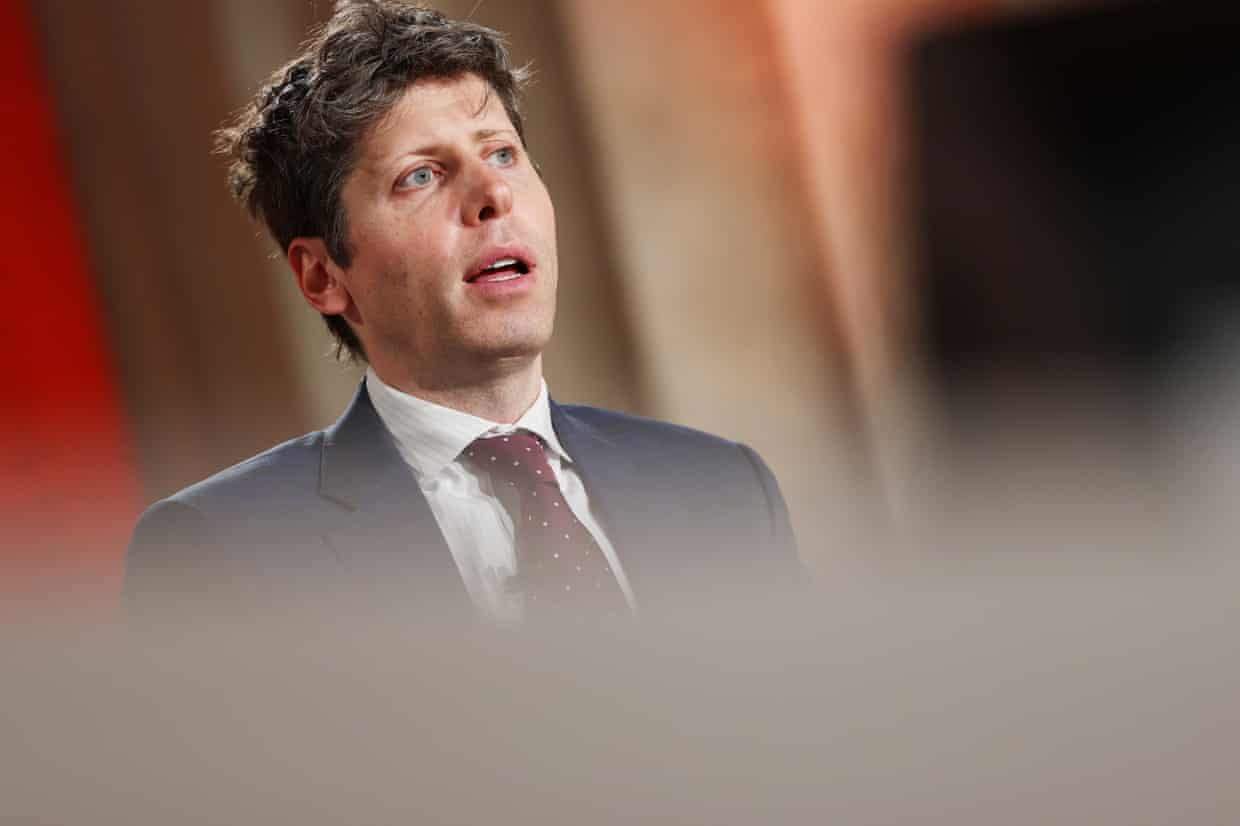
How a fiery attack on Sam Altman’s home unfolded

FIA confirms F1 rule changes in reaction to driver unhappiness and safety fears

County cricket: Abell defies Hampshire’s fiery Baker to keep Somerset on high – as it happened