US tech firms successfully lobbied EU to keep datacentre emissions secret
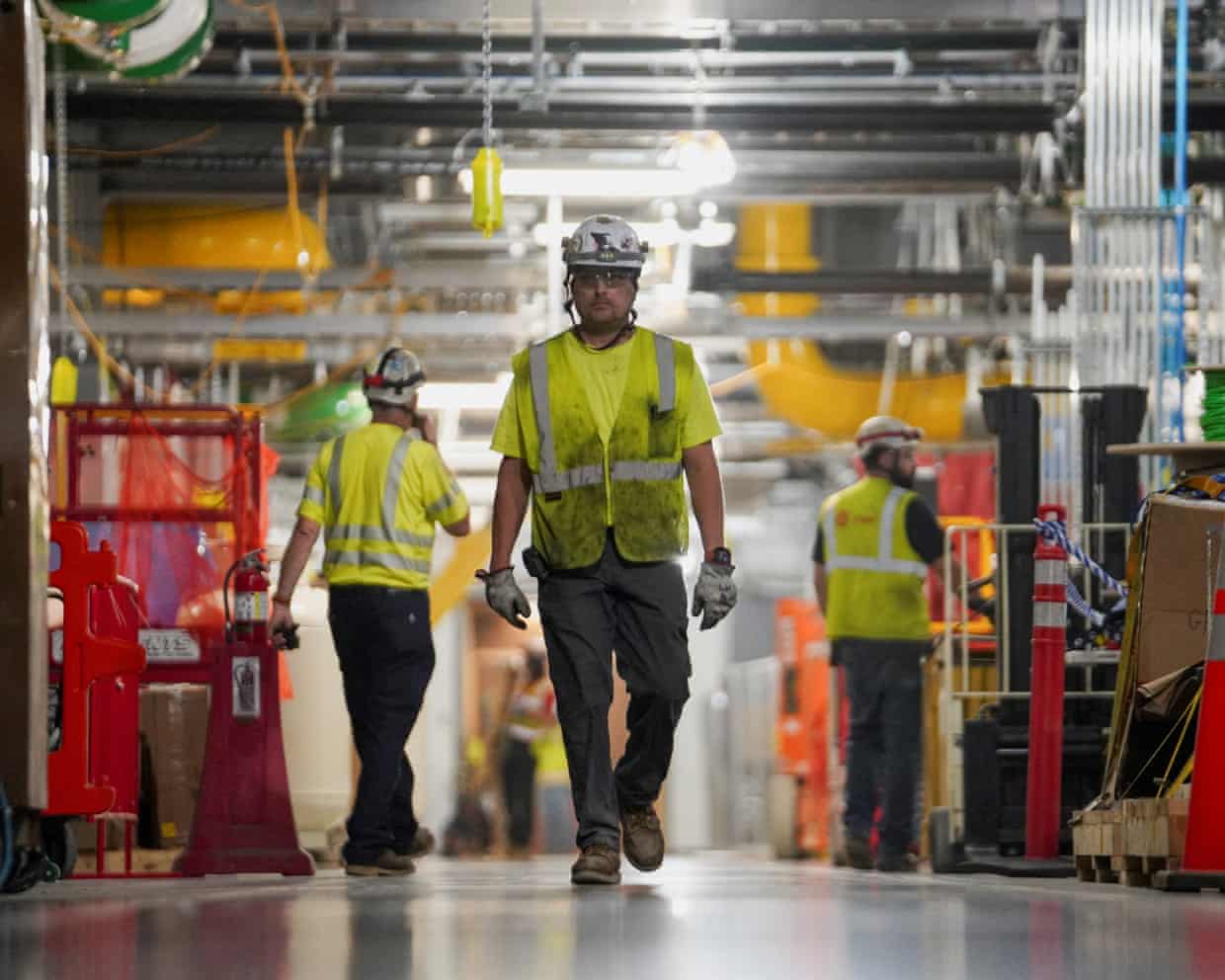
Microsoft and other US tech companies successfully lobbied the EU to hide the environmental toll of their datacentres, an investigation has found, with demands to block a database of green metrics from public view written almost word for word into EU rules,The secrecy provision, which the European Commission added to its proposal almost verbatim after industry lobbying in 2024, hinders scrutiny of the pollution that individual datacentres emit,It leaves researchers with just national-level summaries of their energy footprints,The rise of AI chatbots has spurred a boom in the construction of chip-filled warehouses with a hunger for power that is being met, in part, by burning fossil gas,Legal scholars warn the blanket confidentiality clause may fall foul of EU transparency rules and the Aarhus convention on public access to environmental information.
“In two decades, I cannot recall a comparable case,” said Prof Jerzy Jendrośka, who spent 19 years on the body overseeing the convention and teaches environmental law at the University of Opole in Poland,“This clearly seems not to be in line with the convention,”Documents obtained by Investigate Europe, an independent journalism cooperative that led the research in collaboration with the Guardian and other media partners, show the rules have already been used to shield datacentres from scrutiny,In an email citing the secrecy clause last year, a senior commission official reminded national authorities of their obligation to “keep confidential all information and key performance indicators for individual datacentres”,“It is really important to reiterate this point as the commission has already received various requests for access to documents by the media or the public in relation to the data,” the official said.
“All these requests have been so far refused.”The US and China have led the global AI boom but even in Europe datacentres are being built at breakneck speed.The EU aims to triple its datacentre capacity in the next five to seven years as it seeks to position itself as a global leader in artificial intelligence.In a move to increase transparency, the commission updated its energy efficiency directive in 2023 to oblige datacentre operators to report data on key performance indicators.In further guidance, it proposed publishing “aggregated” environmental metrics.
But during public consultations in January 2024, tech companies pushed to classify all individual information on datacentres as confidential, citing commercial interests.The demand means the data cannot even be accessed through freedom of information requests.The final text of the article, which differs by just a couple of words from industry demands, states “the commission and member states concerned shall keep confidential all information and key performance indicators for individual datacentres that are communicated to the database … Such information shall be considered confidential information affecting the commercial interests of operators and owners of datacentres.”Industry submissions during the public consultation show the groups who lobbied for the change are Microsoft; DigitalEurope, an industry organisation whose members include Microsoft, Google, Amazon and Meta; and Video Games Europe, whose members include Microsoft and Netflix.Ben Youriev, a researcher at InfluenceMap, a not-for-profit organisation that tracks corporate lobbying, said it was an example of how the tech sector was reckoning with a shift towards using more energy.
He said: “Where the industry was previously outspoken in its support for clean energy and emissions reductions, many firms have since fallen silent.Instead, they appear to be prioritising the rapid build-out of datacentre infrastructure globally over supporting clean energy and rapid emissions reductions.”DigitalEurope did not respond to a request for comment.The commission and Video Games Europe declined to comment.The best public interest journalism relies on first-hand accounts from people in the know.
If you have something to share on this subject, you can contact us confidentially using the following methods:The Guardian app has a tool to send tips about stories.Messages are end to end encrypted and concealed within the routine activity that every Guardian mobile app performs.This prevents an observer from knowing that you are communicating with us at all, let alone what is being said.If you don’t already have the Guardian app, download it (iOS/Android) and go to the menu.Select ‘Secure Messaging’.
Our guide at theguardian.com/tips lists several ways to contact us securely, and discusses the pros and cons of each.Microsoft said it supports greater transparency around datacenters as sustainability disclosures can help drive better outcomes and build public trust.A spokesperson said: “We are taking further steps to increase openness, while protecting confidential business information.”The EU executive considers the regulation a first step to creating a common EU rating scheme for datacentres.
In a second phase, for which public consultation on the legislation ends this month, it plans to publish sustainability scores from the database to “make it easier to compare different datacentres in a same region and promote new designs or appropriate efficiency in datacentres”.Under the current proposals the majority of what operators report would remain confidential.The commission’s internal position, according to sources close to the matter, is that making each datacentre’s information public might lead operators to stop reporting their sustainability metrics.However, EU data shows that only 36% of eligible datacentres have complied with the existing reporting requirements.The industry has “a real interest in keeping the numbers hidden”, said Alex de Vries-Gao, a researcher at Vrije Universiteit Amsterdam, who has mostly had to rely on aggregated data when seeking to quantify the environmental footprint of AI.
“Public information is extremely limited.You typically have to bend over backward to come up with any numbers,” he said.The EU is obliged under the Aarhus convention to ensure that environmental information is systematically made available by the authorities to the public.Luc Lavrysen, the former president of the Belgian constitutional court and emeritus professor of environmental law at Ghent University, said the confidentiality clause “is clearly in violation” of EU transparency rules and the Aarhus convention.Kristina Irion, an associate professor in information law at the University of Amsterdam, reached the same conclusion.
She said the “sweeping presumption of confidentiality” incorrectly benefits corporate interests over public access to at least some of the data.“What deserves protection as confidential information affecting the commercial interests of datacentre companies should be determined on a case-by-case basis,” she said.
US tech firms successfully lobbied EU to keep datacentre emissions secret
Microsoft and other US tech companies successfully lobbied the EU to hide the environmental toll of their datacentres, an investigation has found, with demands to block a database of green metrics from public view written almost word for word into EU rules.The secrecy provision, which the European Commission added to its proposal almost verbatim after industry lobbying in 2024, hinders scrutiny of the pollution that individual datacentres emit. It leaves researchers with just national-level summaries of their energy footprints.The rise of AI chatbots has spurred a boom in the construction of chip-filled warehouses with a hunger for power that is being met, in part, by burning fossil gas. Legal scholars warn the blanket confidentiality clause may fall foul of EU transparency rules and the Aarhus convention on public access to environmental information

Liz Kendall urges UK public to embrace AI as government makes first £500m fund investment
The UK technology secretary has urged the country to “make AI work for Britain”, brushing off fears about its impact on jobs and cybersecurity as the government announced its first investment under a £500m sovereign AI fund. Liz Kendall said the UK had to “seize” the opportunity offered by AI despite concerns underlined this month when US startup Anthropic revealed it had developed an AI model that posed a potentially significant cyber threat. Asked how the government makes the case for embracing a technology that could disrupt jobs and now cybersecurity, Kendall said: “We have to seize this to make it work, for Britain, for our jobs, for solving the biggest challenges we face as a world.”Speaking on Thursday as the government unveiled its first investment in a UK company as part of a £500m sovereign AI fund, Kendall acknowledged “people are worried about the risks and what it means for their jobs”, but AI entrepreneurs also believed they can “make it work … they can create jobs”.In January Kendall admitted “some jobs will go” as AI automates certain tasks and roles, but it would also create new employment opportunities

‘How do I end a call?’: the elderly Japanese people determined to master smartphones
It’s not only young people whose gaze is fixed on tiny screens. But for these users in Tokyo, clicking and scrolling is anything but second nature.“I can’t deal with all of the apps that jump out at me,” says one. “How do I know if I’ve definitely ended a call?” asks another.They are common concerns among the four women and one man attending a beginner’s smartphone class at a public facility for older residents in Nerima in the Japanese capital’s north-west suburbs

Labour and Lib Dem MPs demand ‘shameful’ Palantir NHS contract be scrapped
MPs have queued up to demand the government scraps its £330m NHS contract with the spy-tech company Palantir, calling it “dreadful” and “shameful” in a debate on Thursday, after which the government said it was “no fan” of the US company’s politics.Labour and Liberal Democrat MPs led the calls for Palantir, which also works for Donald Trump’s ICE immigration crackdown and the Israeli military, to be removed as a supplier to the NHS federated data platform (FDP), with one Labour backbencher, Samantha Niblett, questioning whether it could be “trusted as a custodian of the intimate health records of tens of millions of British citizens”.The Lib Dem MP Luke Taylor, who called the deal “shameful”, said: “Palantir and Peter Thiel must have their hands ripped off of our NHS before it is too late.”Thiel, a Trump-supporting tech billionaire, founded the company and has previously said that democracy and freedom are incompatible.In response to the MPs who spoke in a Westminster Hall debate, the government confirmed it would consider whether to continue with the deal when a break clause is due in spring 2027, although £210m of the £330m has already been spent

Man used AI to make false statements to shut down London nightclub, police say
A businessman has pleaded guilty to making false statements in order to shut down a nightclub, which police believe were generated using AI.A Metropolitan police source said the use of AI to generate letters by complainants who do not exist is a growing issue.Aldo d’Aponte, 47, the CEO of Arbitrage Group Properties, pleaded guilty to writing two letters, supposedly by his neighbours, objecting to the reopening of Heaven nightclub, which temporarily closed after a rape allegation against one of its security guards.D’Aponte was given a 12-month conditional discharge and ordered to pay £85 costs and a £26 victim surcharge.Heaven, an LGBTQ nightclub in central London had its licence suspended in November 2024 after a 19-year-old woman accused a bouncer of rape
NAACP lawsuit accuses Elon Musk’s xAI of polluting Black neighborhoods near Memphis
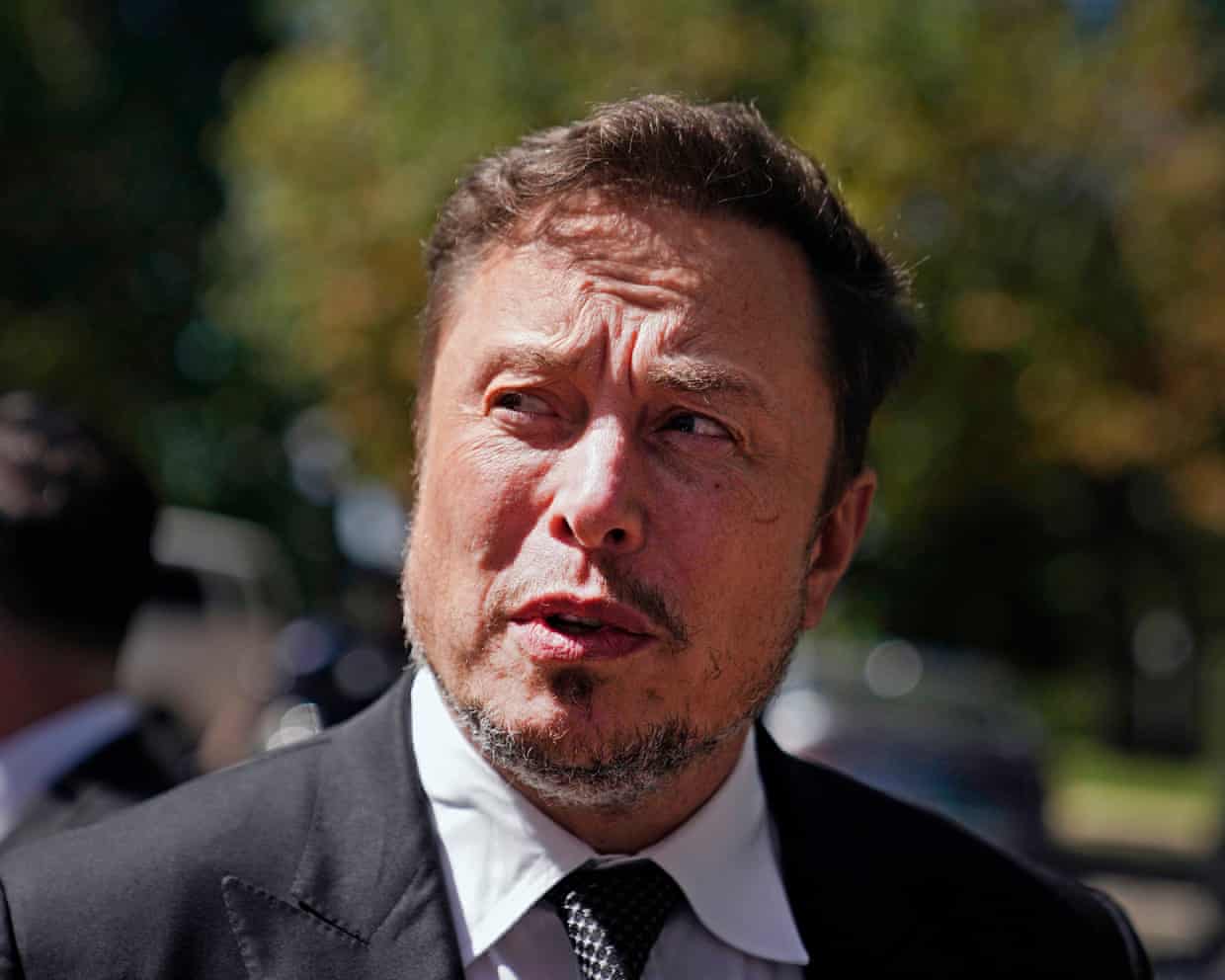
A new lawsuit accuses Elon Musk’s artificial intelligence company of illegally spewing toxic pollutants into residential neighborhoods on the border of Tennessee and Mississippi.The suit, filed on Tuesday in Mississippi federal court, alleges xAI is violating the Clean Air Act due to emissions from its makeshift power plant in Southaven, Mississippi, which powers its datacenter there. The NAACP, represented by the environmental groups Southern Environmental Law Center and Earthjustice, says xAI has been polluting areas with homes, schools and churches, including in historically Black communities, by using dozens of methane gas generators without permits.The organization is seeking to force the company to stop operating its unpermitted turbines in Southaven.“A data center should not be a potential death sentence for a community’s health,” Abre’ Conner, the director of environmental and climate justice for the NAACP, said in a statement

Tell us: have you ever been concerned about the behaviour of a child you know?

New regulator powers could stifle advocacy, UK’s largest civil society bodies warn

Future of the NHS, saviour of the high street? High hopes for health hub in a Barnsley shopping centre

Effect of ‘gamechanger’ Alzheimer’s drugs ‘trivial’, review concludes

People in north of England twice as likely to be killed in accidents as Londoners, report finds

Why we washed our hands of Izal | Brief letters