‘Tinderbox’ UK may be one shock away from food riots, experts say
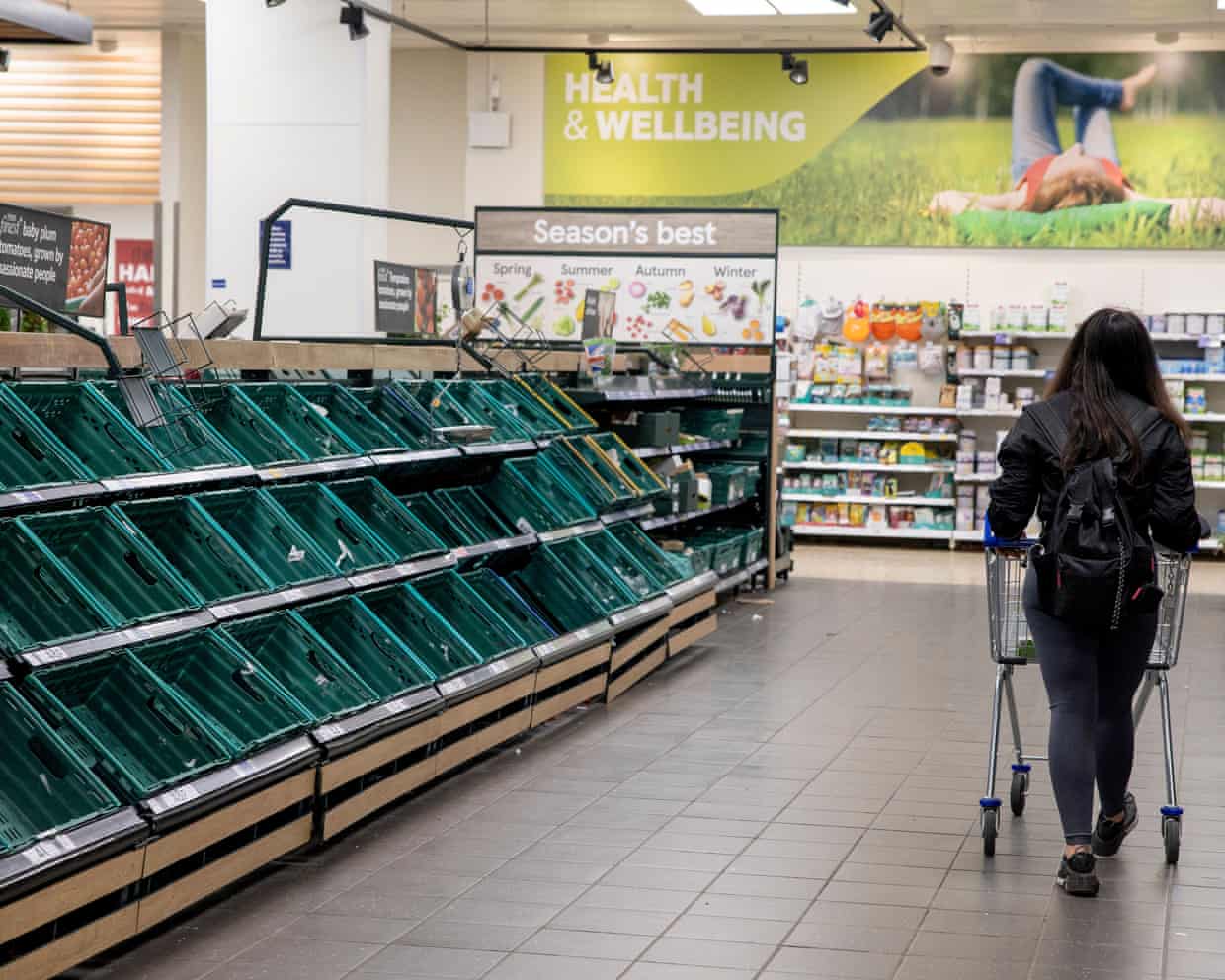
One shock could spark social unrest and even food riots in the UK, according to dozens of the country’s top food experts, because chronic issues have left the food system a “tinderbox”.The group first identified a series of issues that are making access to food vulnerable in the UK, including the climate crisis, low incomes, poor farming policy and fragile just-in-time supply chains.These have left the UK dangerously exposed, the researchers said.They then analysed the shocks that could tip this vulnerable system into a full-blown food crisis, with major extreme weather events, cyber-attacks or international conflicts ranked top.These shocks would hit supply chains and push up food prices, which could lead to increased social tension and hidden market sales of unsafe food and, in the worst-case scenario, civil unrest or riots.
A large majority of the experts – 80% – said large-scale violence caused by a food crisis was possible in the next 50 years, with 40% saying it could occur within the next decade, according to a related analysis published in 2023.The scenario considered was more than 30,000 people suffering violent injury over the course of a year owing to food protests or riots.The researchers said the shocks they considered most risky had already happened at some scale and served as wakeup calls.Both the Co-operative and Marks & Spencer supermarkets were hit by cyber-attacks in 2025 and recent overseas droughts and Russia’s invasion of Ukraine have increased food costs.Many UK families are already experiencing food insecurity, with one in seven affected in 2025, according to the Food Foundation.
Addressing the systemic vulnerabilities to a food crisis was urgent, the researchers said, including more coordinated action by government and businesses and a wider and more resilient range of food produced and eaten in the UK.The nation currently imports about 35% of its food.“The stability of the UK’s food system is a critical aspect of national security,” said Prof Sarah Bridle, at the University of York, who led the analysis.“While we can’t always prevent future shocks, we can build resilience to withstand them, and stop a bad situation from becoming a crisis.Understanding how the system might react to extreme pressure is the first step to preventing worst-case scenarios unfolding in the future.
”Prof Aled Jones, at Anglia Ruskin University and part of the group, said: “The UK is not immune to disruptions that can lead to severe consequences.Policymakers must adopt a long-term perspective to planning.”A UK government spokesperson said: “Food security is national security, and our high degree of food security is built on both strong domestic production and imports through stable trade routes.This government is investing billions in the development of new technology to increase yields or create climate-resilient crops, streamlining regulation, and helping farmers produce food for the nation.”Concerns about the impact of food crises on security exist worldwide.
“Fragile food systems pose an underestimated risk to global stability,” said Álvaro Lario, the president of the International Fund for Agricultural Development, last week.The new UK analysis, published in the journal Sustainability, was produced by consulting more than 30 food system experts from academia, government and industry.They “highlighted the many existing chronic issues creating a tinderbox for … a food crisis in the UK”.They then selected the three most dangerous shocks: extreme weather, cyber-attack and war.“Any combination of these could lead to a UK food availability and/or price shock that could result in widespread fear of unsafe or inadequate food, leading to violence,” the analysis concluded.
“Crime and violence to obtain food could [give] life to food riots.”Among the many factors considered were that much of global food production is concentrated in large “breadbasket” countries, such as the US, Brazil and Russia and that pinch-points in supply chains exist, such as the Suez canal.“This centralisation has resulted in a very vulnerable system,” the researchers said.“The digitisation of the food system also means it is more vulnerable to cybersecurity threats.”The analysis also emphasised the importance of social factors: “A UK food system crisis could arise from hunger and resulting feelings of despair when coupled with a lack of trust in government.
”Dominic Watters, a researcher with lived experience of food poverty and part of the study group, said: “Food crises and civil unrest don’t come from a lack of calories alone; they come from a lack of dignity, voice, and care.This research highlights how the stigma of food insecurity is already creating cracks in our society.[It is] important to co-design responses with communities disproportionately affected, rather than simply deciding for them.” The study said a national forum on preparedness and planning that included marginalised voices was needed.Other recommended measures to reduce the risk of a food crisis included more regenerative agriculture to reduce risk of crop failure and cash transfers to the poorest people in an emergency.
New datacentres risk doubling Great Britain’s electricity use, regulator says
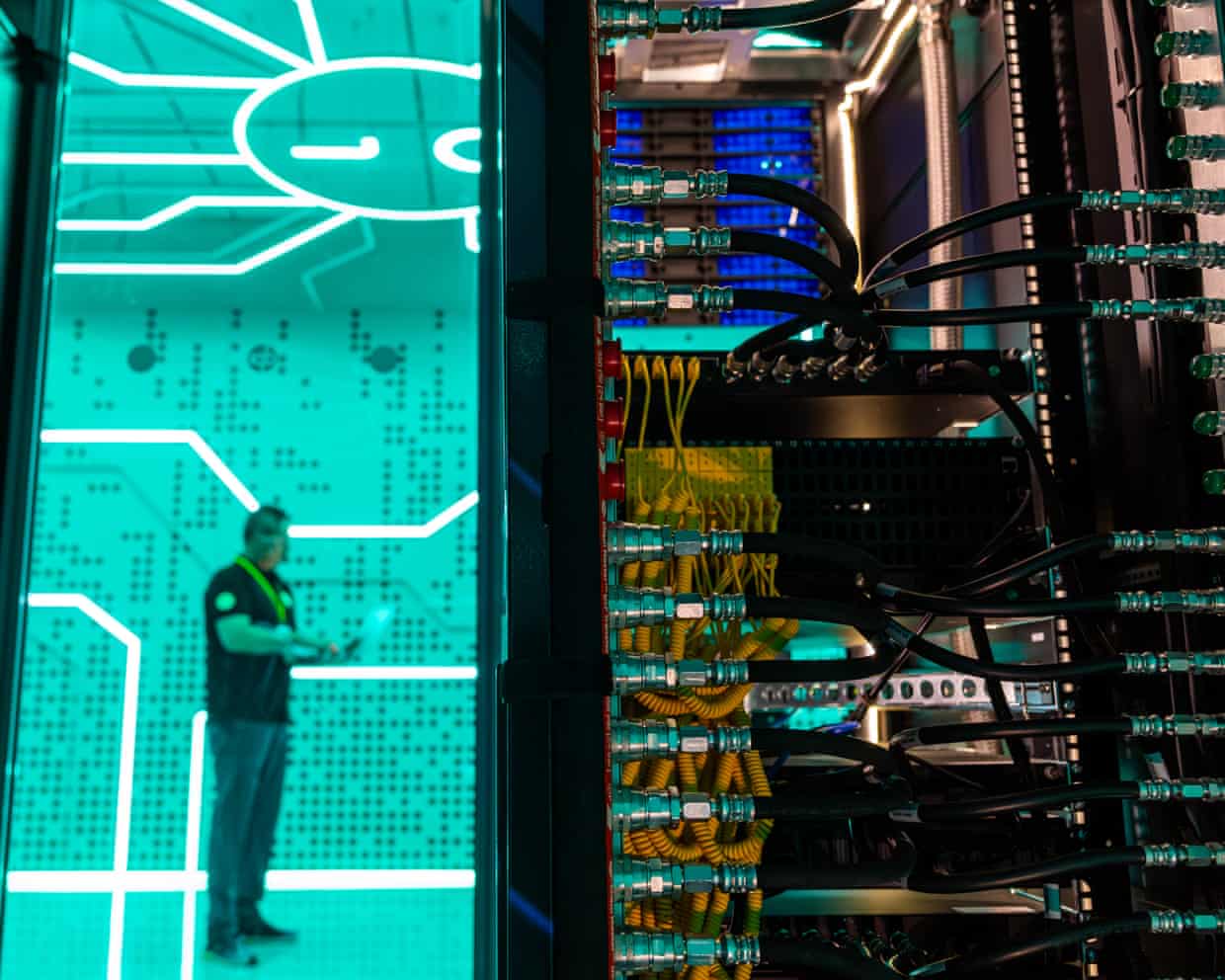
The amount of power being sought by new datacentre projects in Great Britain would exceed the national current peak electricity consumption, according to an industry watchdog.Ofgem said about 140 proposed datacentre schemes, driven by use of artificial intelligence, could require 50 gigawatts of electricity – 5GW more than the country’s current peak demand.The figure was revealed in an Ofgem consultation on demand for new connections to the power grid. It pointed to a “surge in demand” for connection applications between November 2024 and June last year, with a significant number coming from datacentres. This has exceeded even the most ambitious forecasts

Palantir deals are a threat to our data rights as UK citizens | Letters
For 100 years, the UK government has led us through existential threats, including two world wars. But instead of resisting the latest threat to democratic accountability, it has welcomed it with open arms: Palantir Technologies (NHS deal with AI firm Palantir called into question after officials’ concerns revealed, 12 February).This polarising US surveillance giant provides data-fusion and AI platforms used by by the US for immigration enforcement and by Israel in the Gaza conflict. Its software amplifies state power through militarised analytics and opaque algorithms.The current government hasn’t just surrendered citizens’ data rights to Palantir – it has paid for the privilege

Sam Altman defends AI’s energy toll by saying it also takes a lot to ‘train a human’
The OpenAI boss, Sam Altman, has tried to ease concerns about how much power is used by artificial intelligence models by comparing it to the amount of energy required by human development.“People talk about how much energy it takes to train an AI model – but it also takes a lot of energy to train a human,” Altman told the Indian Express recently while in India for the AI Impact summit. “It takes about 20 years of life – and all the food you consume during that time – before you become smart.”Despite that defense, he said that the public assessment of AI’s energy consumption was “fair”, adding: “We need to move towards nuclear or wind and solar very quickly.”Those remarks come amid growing discussion about the environmental impact of the datacenters required to power AI models – and, more generally, about technology’s possible impact on society

US farmers are rejecting multimillion-dollar datacenter bids for their land: ‘I’m not for sale’
When two men knocked on Ida Huddleston’s door last May, they carried a contract worth more than $33m in exchange for the Kentucky farm that had fed her family for centuries.According to Huddleston, the men’s client, an unnamed “Fortune 100 company”, sought her 650 acres (260 hectares) in Mason county for an unspecified industrial development. Finding out any more would require signing a non-disclosure agreement.More than a dozen of her neighbors received the same knock. Searching public records for answers, they discovered that a new customer had applied for a 2
Amazon’s cloud ‘hit by two outages caused by AI tools last year’
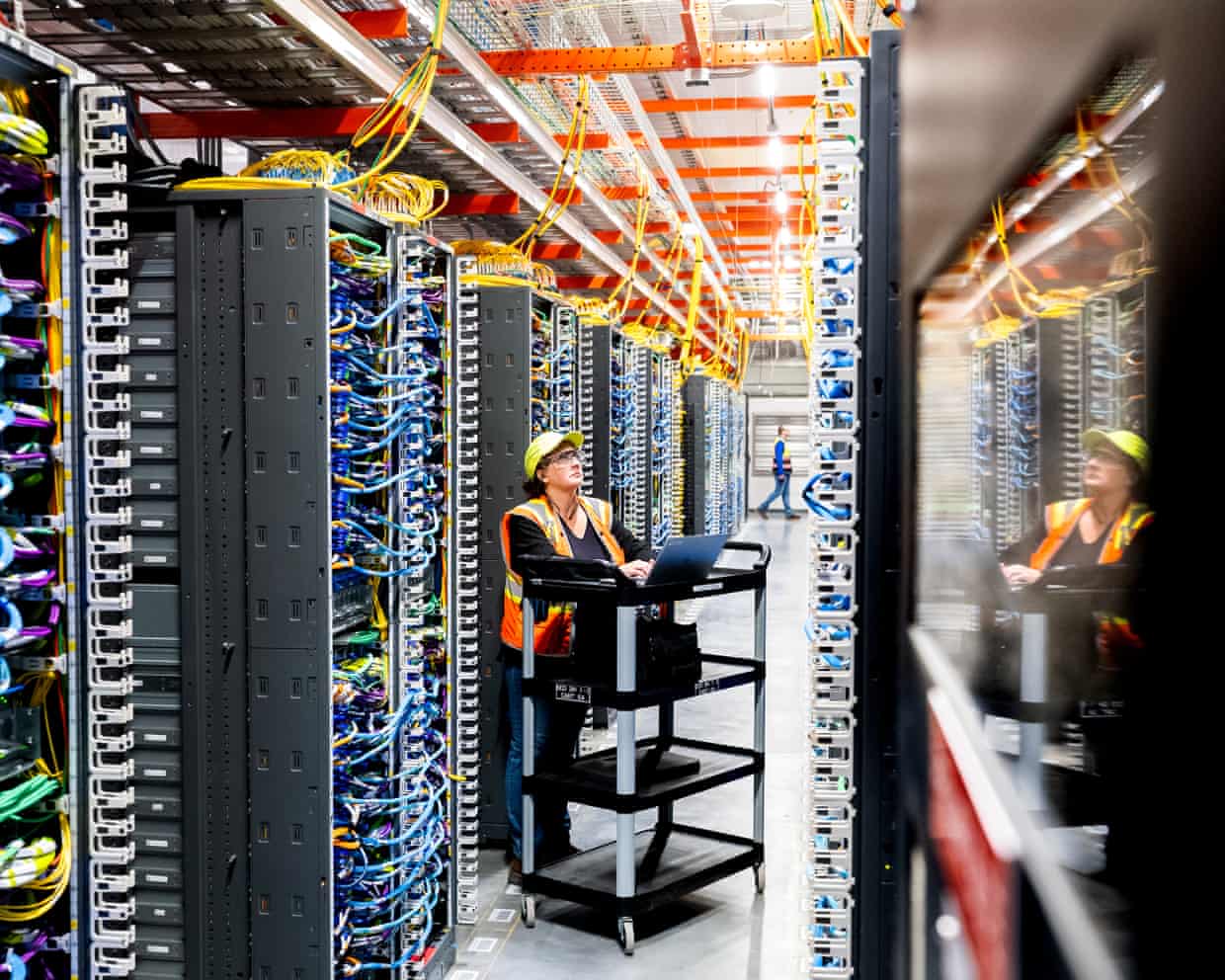
Amazon’s huge cloud computing arm reportedly experienced at least two outages caused by its own artificial intelligence tools, raising questions about the company’s embrace of AI as it lays off human employees.A 13-hour interruption to Amazon Web Services’ (AWS) operations in December was caused by an AI agent, Kiro, autonomously choosing to “delete and then recreate” a part of its environment, the Financial Times reported.AWS, which provides vital infrastructure for much of the internet, suffered several outages last year.One incident, in October, downed dozens of sites for hours and prompted discussion over the concentration of online services on infrastructure owned by a few massive companies. AWS has won 189 UK government contracts worth £1

‘It’s survival of the fittest’: the UK kebab chain seeking an edge with robot slicers
They are already packing our groceries and delivering shopping. Now robots are coming to the kebab shop, alongside self-service screens and loyalty apps, as takeaways look for ways to tackle rising costs.German Doner Kebab (GDK), a perhaps surprisingly British-owned chain that has been springing up across the country, has turned to technology to keep its fast food business buzzing in the face of rising costs and tough times on the high street.With households cooking at home more often to save money, and restaurants facing increases in energy bills, business rates, national insurance and hourly pay, profits are under pressure despite rising prices at the till.“It is survival of the fittest,” says Simon Wallis, the CEO of the brand, which operates via dozens of franchise partners running 155 outlets in the UK and nearly 40 more overseas including in the US, Dubai, Ireland and Sweden
‘Tinderbox’ UK may be one shock away from food riots, experts say
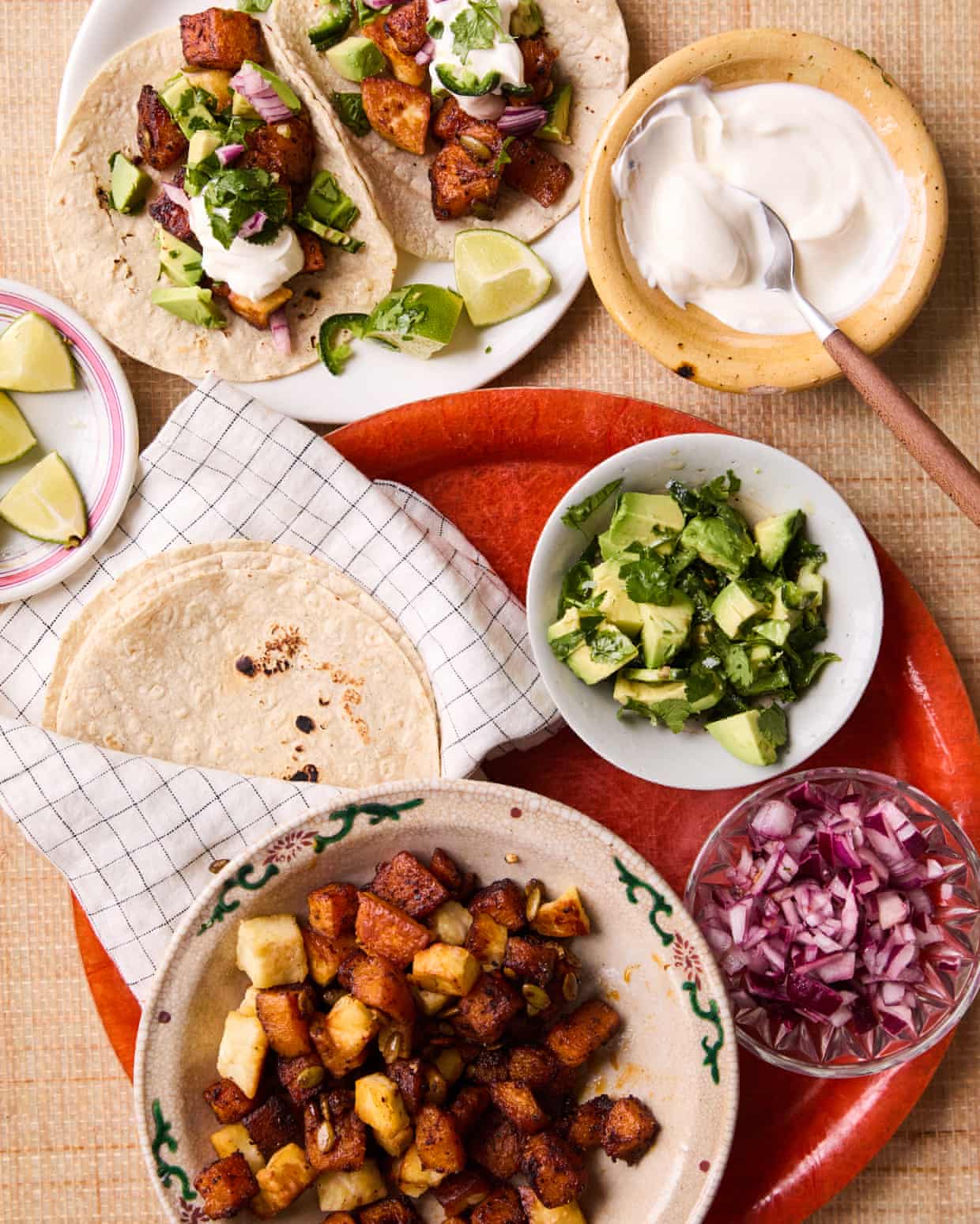
Georgina Hayden’s quick and easy recipe for roast butternut squash, halloumi and avocado tacos | Quick and easy

Nadiya Hussain’s recipes for chicken half-moons and rice paper tteokbokki

How to make proper rice pudding – recipe | Felicity Cloake's Masterclass
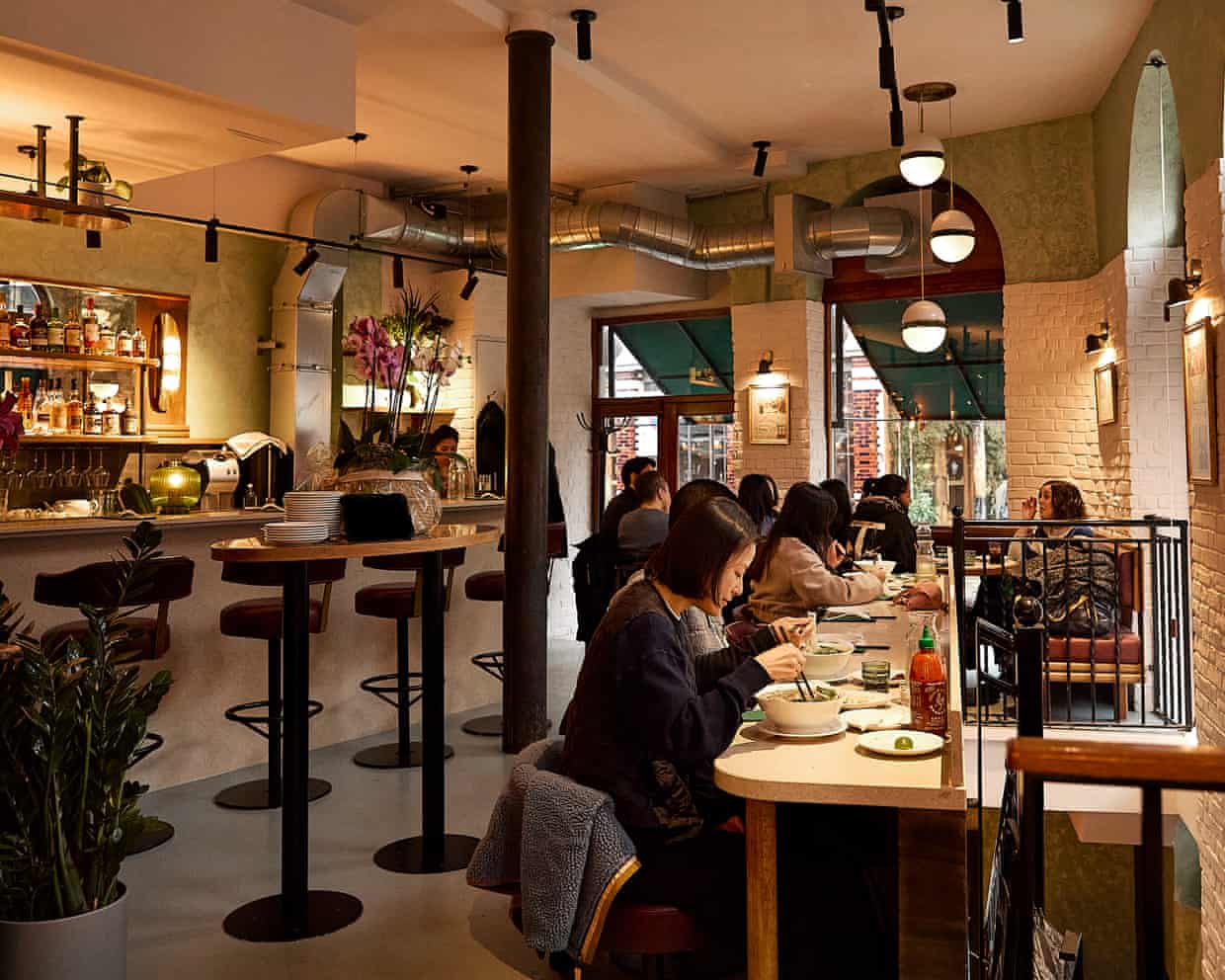
Sông Quê Phở Bar, London E1: ‘The best phở in town’ – restaurant review | Grace Dent on restaurants
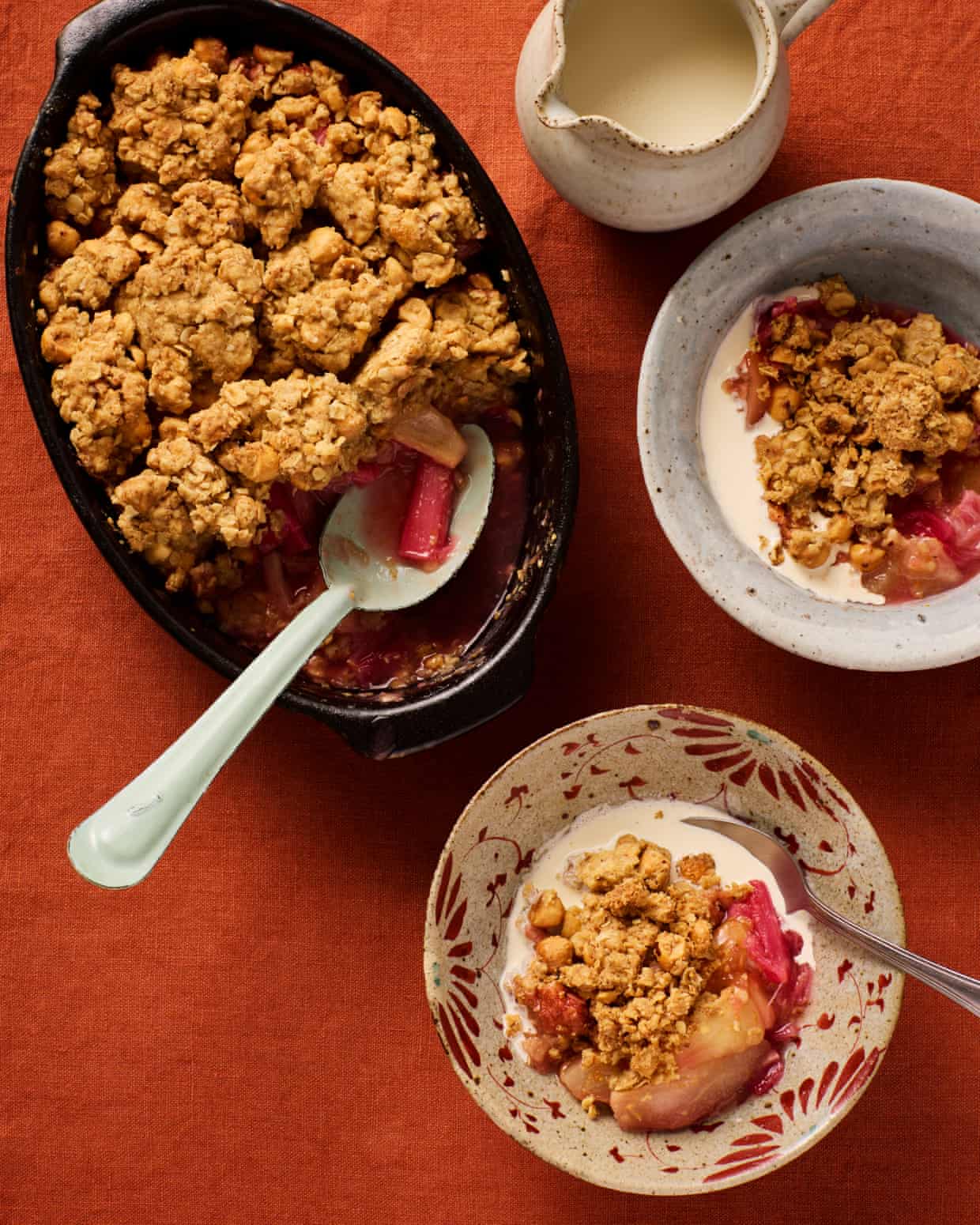
Helen Goh’s recipe for rhubarb, pear and hazelnut crumble with browned butter | The sweet spot