Rachel Roddy’s recipe for cacio e pepe, the old-fashioned way | A kitchen in Rome
Nightclubs, mechanics, restaurants, a theatre, a wholesale butcher and an Apostolic church occupy some of the network of caves and tunnels that, over the centuries, were burrowed into Monte Testaccio, an ancient rubbish dump hill in the middle of Rome that’s made entirely of broken amphorae.Some places make a feature of their situation, revealing sections of pots not dissimilar to the cross section of snapped wafer biscuits, while others have smoothed the curves with plaster.A few use the caves as originally intended – that is, as natural warehouses offering steady low temperatures and good humidity.In short: the ideal temperature for storing certain foods and wine.Most recently, Vincenzo Mancini, whose project DOL distributes artisanal products from small agricultural realities in Lazio, has taken over a deep cave behind door 93, reclaiming it as an urban ageing space for cheese and cured meat.
I visited a few months ago with the chefs from Trullo in London, to do a cheese tasting – and to eat an unexpected cacio e pepe.Cacio and formaggio: two words for cheese.The older of the two is cacio, from the Latin word caseus, which may well come from cohaesus (cohesive), describing the transformation of milk into curds.Formaggio came later, from the medieval Latin formaticum (form), which in turn comes from the Greek φόρμος, the name given to the wicker container in which curdled milk was placed in order to drain and shape.Writing in about AD50, the agronomist Columella noted: “The best cheese is the one made with the least possible amount of medicine!” No change there, then.
His treatise on agriculture, De Re Rustica, also includes detailed instructions of cheese making, and in particular how fresh sheep’s milk was heated with lamb or kid rennet until it coagulated into clotty curds and watery whey.The curds were drained in baskets, sprinkled with salt and then left in a cool, dark place.At the time, cheese was also the daily consequence of numerous flocks travelling with legions – which brings us to what the food writer Eleonora Baldwin describes as la barretta energetica (the energy bar), received daily by the marching men.That is, a stick of cheese.The name pecorino in relation to cheese came later, from the Latin pecus pecŏris (sheep).
Like cacio, pecorino was (and is) a generic term applicable to infinite forms, which historically didn’t need any qualification or geographical identity because they were the local cheese (cacio).It is only when products moved beyond where they were made that they needed to be identified, protected, marketed, which is why we have pecorino sardo, pecorino romano, pecorino siciliano, pecorino toscano, pecorino filano, pecorino crotonese … And these are just the ones with official status – there are hundreds more.While pecorino romano is far from the only pecorino in the story of the food of Rome and Lazio, it has since ancient times been the cacio.(Also important to note is that following laws created in the late 1800s and the effects of urban growth in the 1950s, more than 95% of pecorino romano has been produced on the cheesemaking island of Sardinia, the rest in Lazio and the Tuscan province of Grosseto.) Focusing on Lazio, Vincenzo works with Deroma dairy in Torrita Tiberina, taking wheels of 12-month pecorino romano, their rinds still the colour of pale straw, and ageing them.
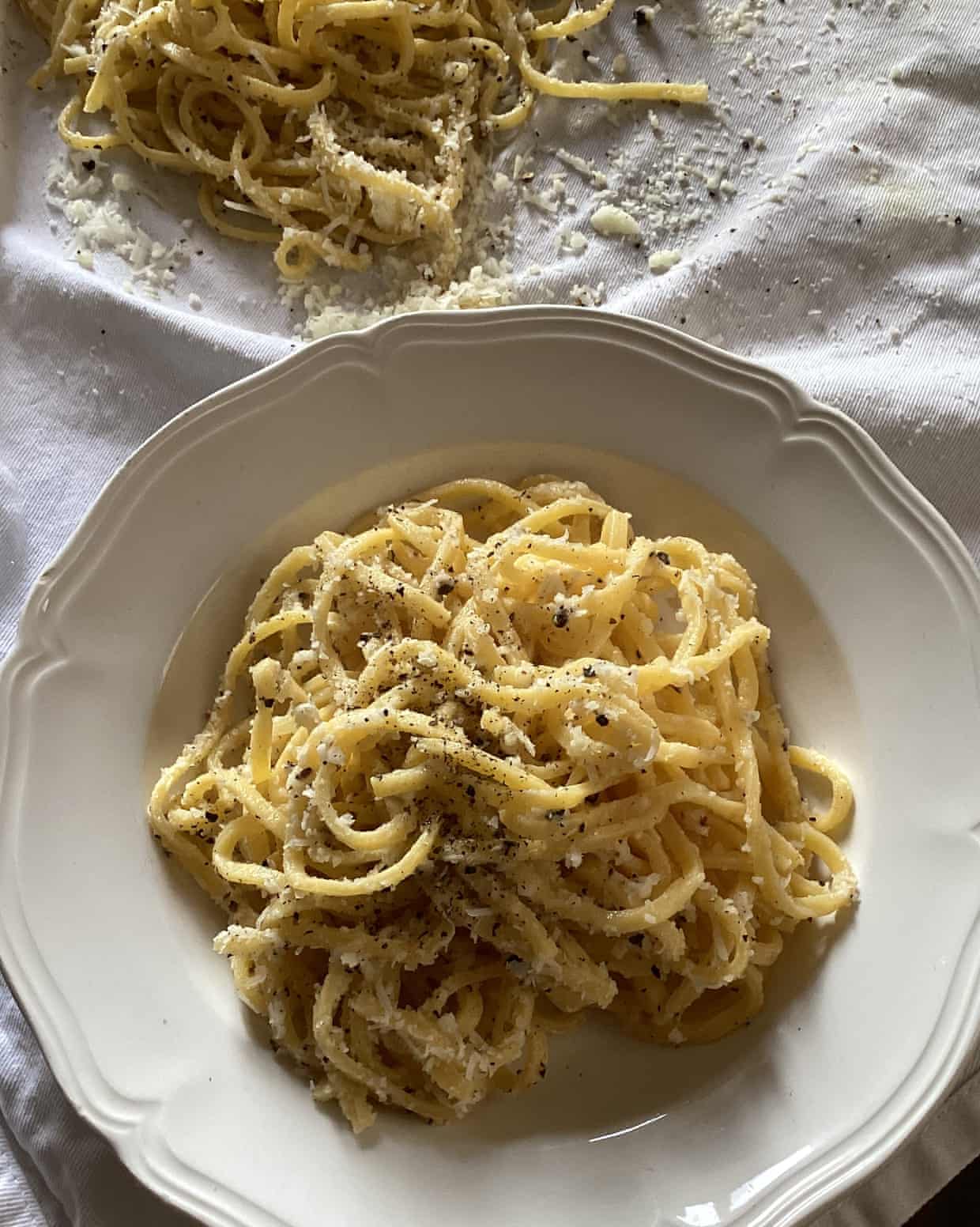
It is not just the microclimate of the cave; the bacterial microflora within the walls plays a part in the development of flavour, seeing the creamy, sheepish and sharp (salty) flavour deepening, both mellowing and becoming more opinionated at 24, 36, 48 months and beyond.The rounds themselves also develop carefully controlled mould coats, ranging from mottled clam brown to dark moss green.The next cave along is occupied by a restaurant called Flavio al Velavevodetto, so when the conversation turned to how best to transform pecorino romano (cacio) and black pepper (pepe) into the creamy sauce so fashionable today, Vincenzo went from one cave to another.He returned with a cloth full of just-cooked tonnarelli, into which he tossed many handfuls of grated 36-month pecorino and black pepper, gathered it up, shook, rubbed and served.The performance was interesting because this is likely how shepherds, with their cheese-making apparatus and daily supplies, once made the dish – also how clever innkeepers once got clients to drink more.
It was even more interesting because the soft, sandy molecules of cheese clings to the fresh pasta like sand.And it is worth trying: estimate 150g of fresh pasta, 50g of grated pecorino and a heaped teaspoon of freshly smashed pepper per person.Personally I have never enjoyed cacio e pepe more.Serves 2Salt 100g pecorino2 heaped tsp whole black peppercorns 1 very large napkin or cotton tea-towel 300g fresh tonnarelli, or tagliatelleBring a pan of well-salted water to the boil.Grate the cheese on the star side of the grater so it’s soft and sandy – avoid a microplane if possible.
Smash the peppercorns with something heavy until coarsely crushed.Prepare the cloth: it must be big enough that you can gather up the ends and form a bag to shake.Cook the pasta according to packet instructions until al dente.Use a spider slice or tongs to lift the pasta on to the cloth, spreading it out a bit so it dries a little.Sprinkle the cheese and pepper over the top, then gather up the ends of the cloth so they form a bag.
Shake and rub the fabric so the cheese distributes in an even, sandy way,Open up the cloth and, if are in a field, eat directly from the cloth, otherwise lift it on to plates,Serve with plenty of wine or water,

Paul Thwaite seals largest payout for NatWest CEO since disgraced Fred Goodwin in 2006
The NatWest boss, Paul Thwaite, has clinched the largest payout for a chief executive of the banking group since his disgraced predecessor Fred Goodwin took home £7.7m in the lead-up to the 2008 financial crisis.Thwaite, who guided the once-bailed-out lender to full private ownership last year, was given a £6.6m pay package for 2025, with the boardroom lifting his overall pay by a third.That sum surpassed the £5
Tony Blair’s oil lobbying is a misleading rehash of fossil fuel industry spin
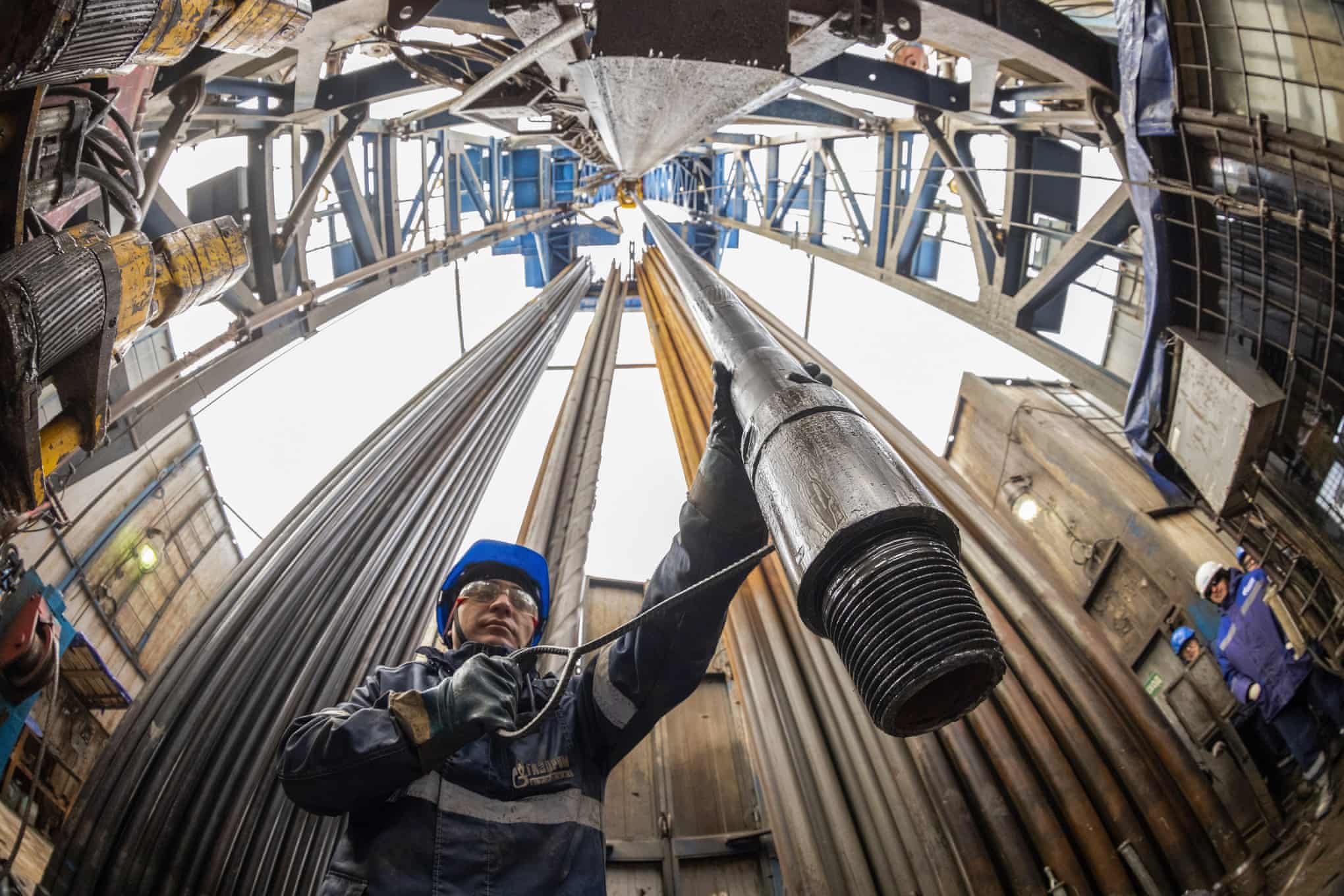
Ex-PM’s thinktank urges more drilling and fewer renewables, ignoring evidence that clean energy is cheaper and better for billsA thinktank with close ties to Saudi Arabia and substantial funding from a Donald Trump ally needs to present a particularly robust analysis to earn the right to be listened to on the climate crisis. On that measure, Tony Blair’s latest report fails on almost every point.The Tony Blair Institute for Global Change (TBI) received money from the Saudi government, has advised the United Arab Emirates petrostate, and counts as a main donor Larry Ellison, the founder of Oracle, friend of Trump and advocate of AI.The latest TBI report calls for an expansion of oil and gas production in the North Sea, despite the additional greenhouse gas emissions this would generate, and abandoning the UK government’s target to largely decarbonise the electricity sector by 2030, arguing that doing so is necessary to power AI datacentres.The report claims renewable energy is too expensive

Share values of property services firms tumble over fears of AI disruption
Shares in commercial property services companies have tumbled, in the latest sell-off driven by fears over disruption from artificial intelligence.After steep declines on Wall Street, European stocks in the sector were hit on Thursday.The estate agent Savills’ shares fell 7.5% in London, while the serviced office provider International Workplace Group, which owns the Regus brand, lost 9%.The UK’s two biggest property developers, British Land and Landsec, dropped 2

Elon Musk posted about race almost every day in January
Elon Musk’s longtime fixation on a white racial majority is intensifying. The richest man in the world posted about how the white race was under threat, made allusions to race science or promoted anti-immigrant conspiracy content on 26 out of 31 days in January, according to the Guardian’s analysis of his social media output. The posts, made on his platform X, reflect a renewed embrace of what extremism experts describe as white supremacist material.“Whites are a rapidly dying minority,” Musk said on 22 January, a short time before taking the stage at the World Economic Forum in Davos, while reposting an Irish anti-immigrant influencer’s video about demographic change.Musk’s posts included him repeatedly claiming white people face systemic discrimination, endorsing the conspiracy that there is an ongoing genocide against white people in countries around the world and promoting a claim that white people would be “slaughtered” by non-whites if they become a demographic minority

MLR leaders hail players union deal as US league heads for six-team season
Leaders on both sides of the ball hailed a new collective bargaining agreement between Major League Rugby and its players, the union chief welcoming “a new standard” for US professional men’s rugby after a traumatic off-season in which four teams exited MLR and two merged, leaving just six on the field.“We are happy with where the talks landed,” United States Rugby Players Association executive director Chris Mattina, a former US Eagles wing, told the Guardian.“It was a really good-faith negotiation with the league. We think this really sets a new standard. It increases the protections for players, but also stabilizes the league and sets it up for success

From the foul line to the fault line: Deni Avdija, Israel and the collapse of online nuance
The danger around the Portland star is that in making crucial debates into arguments about basketball, we lose sight of what is really importantThere’s a weird, psychological tension around basketball fouls. Not unlike a trial. A single rubbered heartbeat thumps in our collective throats. In basketball litigation, the verdict is televised and delivered in public by the referee’s whistle. Deni Avdija faced more trials than a career criminal in early January, when he scored 41 points in the Portland Trail Blazers’ win over the Houston Rockets
Rachel Roddy’s recipe for cacio e pepe, the old-fashioned way | A kitchen in Rome
How to use up leftover pickle brine in a tartare sauce – recipe | Waste not
Cocktails and crepes in bed? Ravinder Bhogal’s recipes for Valentine’s Day breakfast
‘Boy kibble’: why are young men turning to dog food for meal inspiration?
Frothing over: the coffee foams and ‘indulgent’ drinks keeping Australian cafes afloat
What is fibremaxxing – and how much is too much? | Kitchen aide