Tony Blair’s oil lobbying is a misleading rehash of fossil fuel industry spin
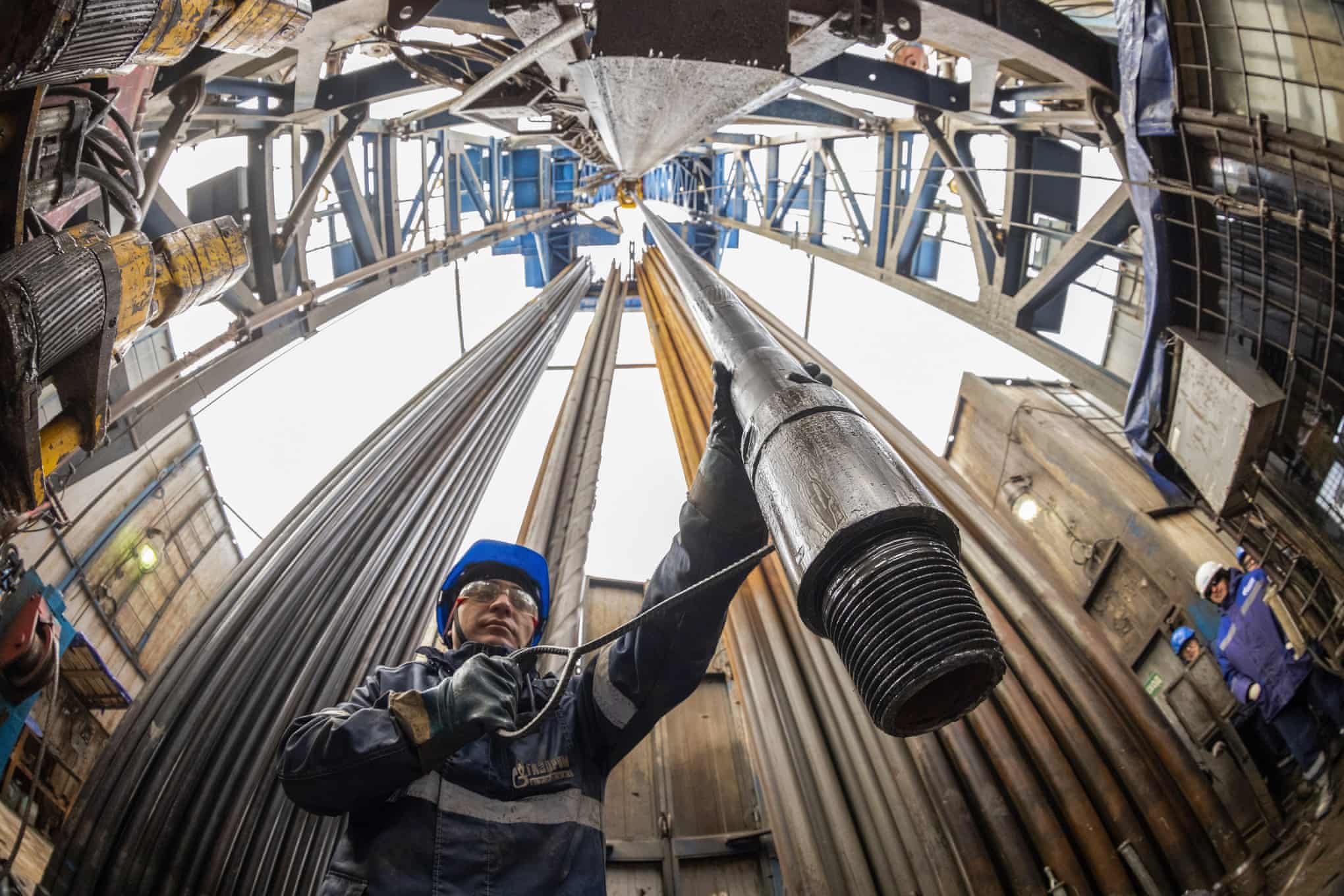
Ex-PM’s thinktank urges more drilling and fewer renewables, ignoring evidence that clean energy is cheaper and better for billsA thinktank with close ties to Saudi Arabia and substantial funding from a Donald Trump ally needs to present a particularly robust analysis to earn the right to be listened to on the climate crisis,On that measure, Tony Blair’s latest report fails on almost every point,The Tony Blair Institute for Global Change (TBI) received money from the Saudi government, has advised the United Arab Emirates petrostate, and counts as a main donor Larry Ellison, the founder of Oracle, friend of Trump and advocate of AI,The latest TBI report calls for an expansion of oil and gas production in the North Sea, despite the additional greenhouse gas emissions this would generate, and abandoning the UK government’s target to largely decarbonise the electricity sector by 2030, arguing that doing so is necessary to power AI datacentres,The report claims renewable energy is too expensive.
Yet this overlooks the fact that it is significantly cheaper than building the gas-fired power stations that would be needed instead.New onshore wind has been agreed at a price of £72/MWh and new solar at £65MWh – both less than half the £147/MWh cost of building and operating new gas power stations.New offshore wind, at £91/MWh, is about 40% cheaper than new gas.According to the analyst firm Aurora Energy Research, offshore wind priced below £94/MWh lowers consumer bills.By contrast, nuclear power – on which the TBI is keen – is likely to cost more than £133/MWh and would take many more years to build.
The report also cavils at the cost of electricity grid upgrades needed to support renewable energy, without acknowledging that grid improvements will be required in any scenario,It also ignores the conclusion of the network system operators, NESO, that a clean power system for the UK by 2030 is achievable “without increasing costs to consumers”,Draining the last drops of oil and gas from the North Sea lies at the heart of the TBI advice, projecting a £165bn industry as a result,Yet the North Sea is a rapidly declining basin where the remaining reserves are increasingly expensive to extract,Accordingly, says the TBI, oil and gas companies should receive substantial tax cuts.
Since 2020, the energy industry has made £125bn in profits in the UK, with oil and gas companies enjoying windfalls while vulnerable people struggled to heat their homes.Shell made $40bn in 2022 alone, BP $30bn the same year.Although profits have come down from their peaks, persistently high gas prices are keeping fossil fuel companies buoyant.Simon Francis, a coordinator at the End Fuel Poverty Coalition, said: “To call for the windfall tax to be scrapped, while energy giants post extraordinary profits and millions live in cold damp homes is staggering.“That tax exists because companies benefited from a crisis that devastated household finances.
Removing the windfall tax would reward profiteering and shift the burden back on to households that are still paying the price of Britain’s overreliance on gas.”Numerous analyses have shown that further North Sea production would make little difference to the UK’s energy security and would not reduce energy bills.Bob Ward, a policy director of the Grantham Research Institute at the London School of Economics and Political Science, said: “More North Sea production would have no significant impact on the wholesale price of electricity and would not reduce prices for British households and businesses.”Gas is traded on international markets, which determine the price.Even if the North Sea were drilled to exhaustion, the UK is likely to be reliant on imports for at least two-thirds of its gas within five years, and potentially all of it by 2050.
Mike Childs, the head of science at Friends of the Earth, said: “If we’re to bring down bills for good and protect people from future gas price volatility, then we must accelerate the development of renewable energy.”The report’s claim that renewable energy will be costly – despite price falls of 50-90% in recent years – also overlooks the fact that wind energy cut wholesale prices of electricity by about a third last year, with further reductions likely as new offshore windfarms come online.Shaun Spiers, the executive director of the Green Alliance thinktank, said: “We don’t need to rethink a clean power plan that’s working – the UK generated record-breaking amounts of renewable energy last year.”Consumers have yet to feel the full benefit, largely because the structure of the UK’s privatised energy market means electricity prices remain mostly dependent on the price of gas.The TBI report, Spiers added, “gives few suggestions for how to do this”.
Although TBI maintains that the UK’s target of reaching net zero greenhouse gas emissions by 2050 should remain, it does not explain how slowing the rollout of renewables is compatible with that goal.What matters to the climate is not emissions in 2050 but the accumulation of carbon dioxide in the atmosphere.Maintaining fossil fuel production, as TBI advocates, might still allow net zero to be reached by mid-century, but would result in higher emissions in the interim, undermining the purpose of the target.According to Angharad Hopkinson, a political campaigner for Greenpeace UK: “The assertion that abandoning strategies to reduce emissions will somehow reduce emissions, and choosing more expensive energy will somehow reduce costs, is ludicrous.”Elsewhere in the report, the TBI rehashes the argument that the UK is responsible for just 1% of global greenhouse gas emissions, implying that the actions of larger emitters such as China will make more of an impact.
While technically accurate, this fails to acknowledge that roughly a quarter of global greenhouse gas emissions come from countries that each account for about 1% of emissions.If all of them abandoned net zero efforts, global temperatures would rise far beyond the 1.5C limit of safe heating.

Paul Thwaite seals largest payout for NatWest CEO since disgraced Fred Goodwin in 2006
The NatWest boss, Paul Thwaite, has clinched the largest payout for a chief executive of the banking group since his disgraced predecessor Fred Goodwin took home £7.7m in the lead-up to the 2008 financial crisis.Thwaite, who guided the once-bailed-out lender to full private ownership last year, was given a £6.6m pay package for 2025, with the boardroom lifting his overall pay by a third.That sum surpassed the £5
Tony Blair’s oil lobbying is a misleading rehash of fossil fuel industry spin
Ex-PM’s thinktank urges more drilling and fewer renewables, ignoring evidence that clean energy is cheaper and better for billsA thinktank with close ties to Saudi Arabia and substantial funding from a Donald Trump ally needs to present a particularly robust analysis to earn the right to be listened to on the climate crisis. On that measure, Tony Blair’s latest report fails on almost every point.The Tony Blair Institute for Global Change (TBI) received money from the Saudi government, has advised the United Arab Emirates petrostate, and counts as a main donor Larry Ellison, the founder of Oracle, friend of Trump and advocate of AI.The latest TBI report calls for an expansion of oil and gas production in the North Sea, despite the additional greenhouse gas emissions this would generate, and abandoning the UK government’s target to largely decarbonise the electricity sector by 2030, arguing that doing so is necessary to power AI datacentres.The report claims renewable energy is too expensive

Share values of property services firms tumble over fears of AI disruption
Shares in commercial property services companies have tumbled, in the latest sell-off driven by fears over disruption from artificial intelligence.After steep declines on Wall Street, European stocks in the sector were hit on Thursday.The estate agent Savills’ shares fell 7.5% in London, while the serviced office provider International Workplace Group, which owns the Regus brand, lost 9%.The UK’s two biggest property developers, British Land and Landsec, dropped 2
Elon Musk posted about race almost every day in January
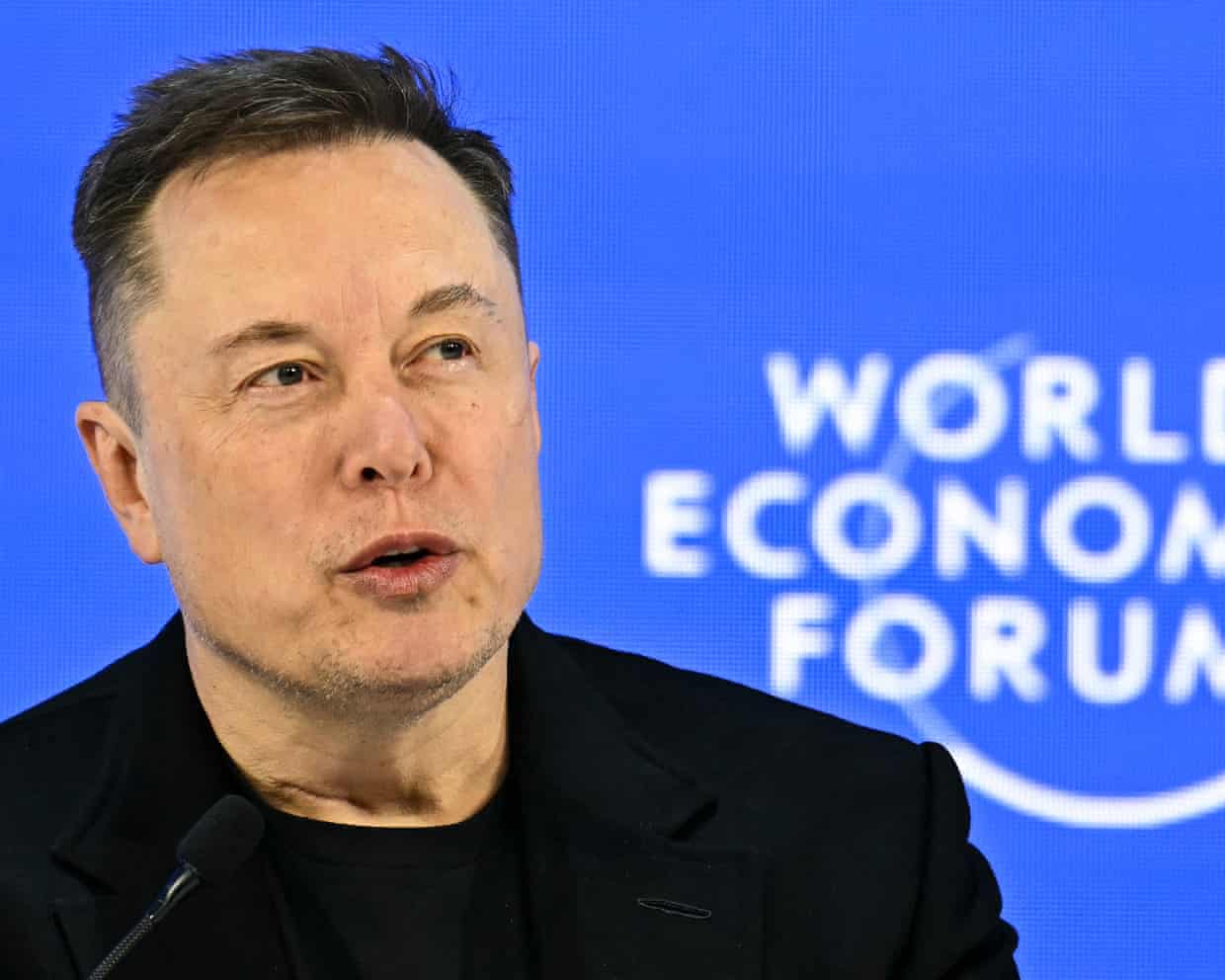
Elon Musk’s longtime fixation on a white racial majority is intensifying. The richest man in the world posted about how the white race was under threat, made allusions to race science or promoted anti-immigrant conspiracy content on 26 out of 31 days in January, according to the Guardian’s analysis of his social media output. The posts, made on his platform X, reflect a renewed embrace of what extremism experts describe as white supremacist material.“Whites are a rapidly dying minority,” Musk said on 22 January, a short time before taking the stage at the World Economic Forum in Davos, while reposting an Irish anti-immigrant influencer’s video about demographic change.Musk’s posts included him repeatedly claiming white people face systemic discrimination, endorsing the conspiracy that there is an ongoing genocide against white people in countries around the world and promoting a claim that white people would be “slaughtered” by non-whites if they become a demographic minority

MLR leaders hail players union deal as US league heads for six-team season
Leaders on both sides of the ball hailed a new collective bargaining agreement between Major League Rugby and its players, the union chief welcoming “a new standard” for US professional men’s rugby after a traumatic off-season in which four teams exited MLR and two merged, leaving just six on the field.“We are happy with where the talks landed,” United States Rugby Players Association executive director Chris Mattina, a former US Eagles wing, told the Guardian.“It was a really good-faith negotiation with the league. We think this really sets a new standard. It increases the protections for players, but also stabilizes the league and sets it up for success

From the foul line to the fault line: Deni Avdija, Israel and the collapse of online nuance
The danger around the Portland star is that in making crucial debates into arguments about basketball, we lose sight of what is really importantThere’s a weird, psychological tension around basketball fouls. Not unlike a trial. A single rubbered heartbeat thumps in our collective throats. In basketball litigation, the verdict is televised and delivered in public by the referee’s whistle. Deni Avdija faced more trials than a career criminal in early January, when he scored 41 points in the Portland Trail Blazers’ win over the Houston Rockets

Trump ‘plans to roll back’ some metal tariffs; NatWest hands bankers £495m bonus pot – business live

Shares in trucking and logistics firms plunge after AI freight tool launch

Anthropic raises $30bn in latest round, valuing Claude bot maker at $380bn

How to deal with the “Claude crash”: Relx should keep buying back shares, then buy more | Nils Pratley

Winter Olympics 2026: Klæbo seals golden treble; Italy’s Passler to compete despite positive test – live

Olympic chiefs have got it badly wrong over Heraskevych ban and owe him an apology | Lizzy Yarnold