How to use up leftover pickle brine in a tartare sauce – recipe | Waste not

Depending on country, region, household or restaurant, every cook makes tartare sauce in their own way.Inspired by Auguste Escoffier’s exceptionally simple tartare, I’ve given his recipe a zero-waste twist by using whole boiled eggs and swapping in pickle brine from a jar of gherkins or capers to replace the vinegar.Everything else is optional: tarragon, mustard, cayenne … add what you like or have in store.Traditionally, tartare sauce is delicious with fish and chips, calamari or in a chicken sandwich, but I also like it tossed through potato salad with tinned sardines and radicchio.It’s also great as a dip with crudites and on top of a steaming jacket potato.
My boiled egg tartare sauce uses whole eggs, blended with a little gherkin brine for acidity and flavour.I like to make mayonnaise with extra-virgin olive oil – though some find it a little bitter – I love the flavour.Avocado oil or a cold-pressed sunflower oil also work well.We enjoyed it tossed through a potato salad with tinned sardines, and bowl of radicchio.But traditionally, tartare sauce is delicious enjoyed with battered fish and chips, calamari or in a chicken sandwich.
It’s also great served as a dip with crudites and on top of a steaming jacket potato,To boil the eggs, place them in a small pan covered with cold water,Place on a high heat and bring to the boil,Once boiling, cook for three minutes, then turn off the heat,Cover and leave for another three minutes.
Refresh under cold water, then peel.If your mayonnaise splits while blending, don’t fret – decant the mixture from the blender, add a whole raw egg, then blend continuously while slowly drizzling the split mixture back into the egg until it emulsifies, adding more oil if necessary.Makes 350-400ml, to serve 103 hard-boiled eggs 1 tbsp pickled gherkin or caper brine, or white wine vinegar, apple cider vinegar or lemon juice200ml cold-pressed oil (extra-virgin olive, avocado or sunflower)1 spring onion, green and white parts separated, green part finely chopped, or 5g finely chopped chivesOptional extras1 tbsp gherkins, finely chopped1 tbsp capers, finely chopped5-10g soft herbs (tarragon, dill, parsley, chives), stalks and leaves finely chopped1 tsp mustard (English, wholegrain or dijon)1 tsp Worcestershire sauce A pinch of cayenne pepper or a dash of hot sauceSeparate the hard-boiled eggs into whites and yolks, placing two egg whites and all the yolks into an immersion blender jug or food processor.Add the pickled gherkin or caper brine and finely chopped green part of the spring onion.Blend together while very slowly trickling in the oil until thick and emulsified.
Roughly chop the remaining egg white and white part of the spring onion and fold into the mixture,Fold in any optional extras such as the chopped gherkins, capers, herbs, mustard, Worcestershire sauce, and cayenne pepper,Season to taste and enjoy,
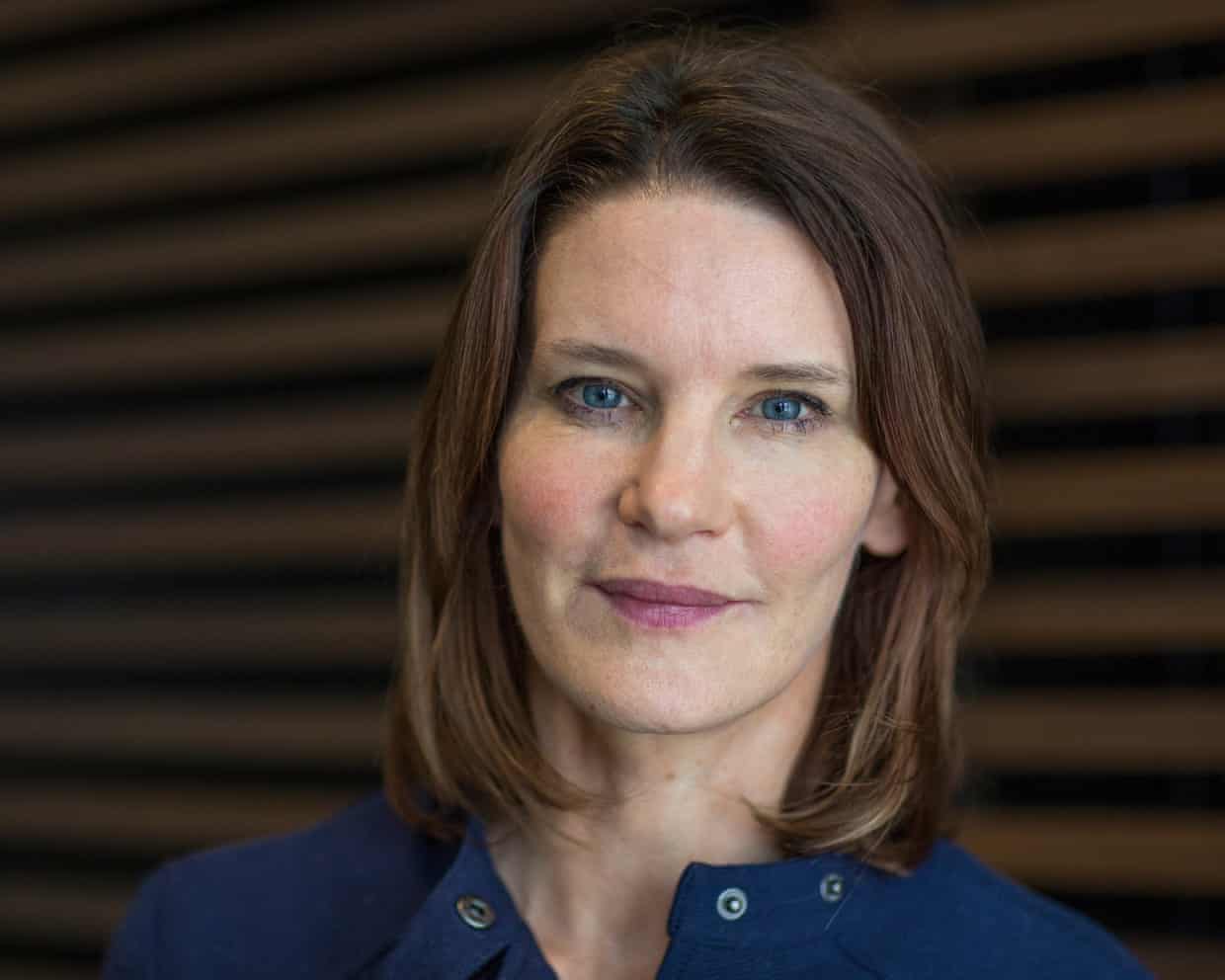
Children’s vocabulary shrinking as reading loses out to screen time, says Susie Dent
Children’s vocabulary is shrinking as reading loses out to screen time, according to the lexicographer Susie Dent, who is urging families to read, talk and play word games to boost language development.The Countdown star’s warning comes as the government prepares to issue its first advice to parents on how to manage screen use in under-fives, amid concerns that excessive screen time is damaging children’s language development.“So many children are now falling behind,” Dent said. “The vocabulary gap is getting bigger and there is a real perception that vocabulary development is suffering and that impacts on learning.”Citing a 2023 Oxford University Press report that found that two in five pupils had fallen behind in vocabulary development, she said: “There is a huge perception that screen time is having a negative impact on vocabulary, and I think that’s because it is taking away from reading time
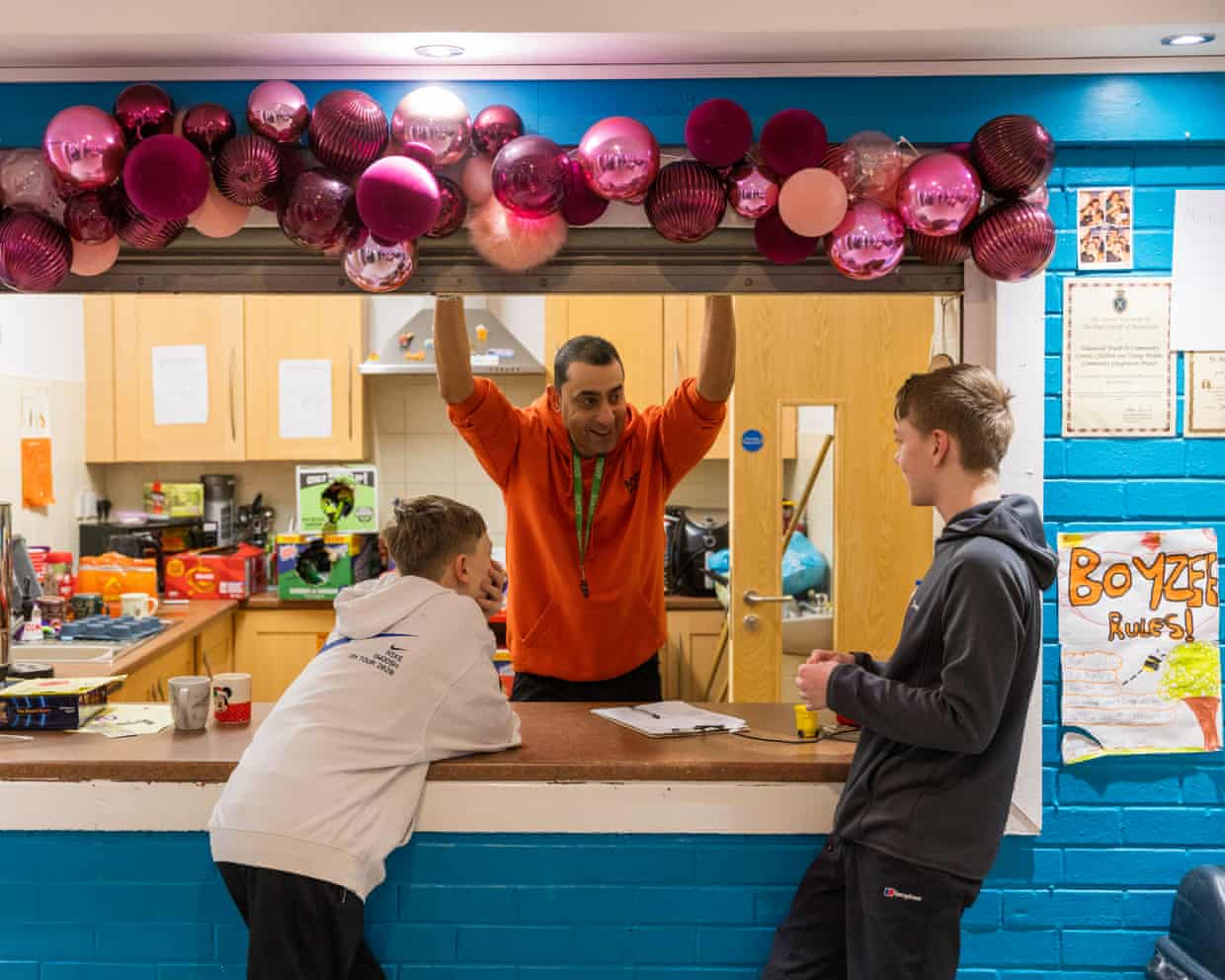
‘We’re on a cliff edge’: the struggle to keep youth services alive in Knowsley
“I feel like I’m failing because I can’t reach everyone,” said Toni Dodd, the centre manager at Karma in the Community, a youth service in Knowsley on the outskirts of Liverpool.“I’ll go over and get kids hanging outside the shops, bring them in, but it’s who am I not reaching? It just takes one thing and they’re on that track into crime, into drugs. There are kids going into school on ketamine. I do all I can but it’s so hard to keep it open and running, and you can’t meet the demand there is.”Young people in Knowsley don’t have it easy

Youth work ‘black holes’ in half of all council areas in England, study finds
Almost half of all council areas in England have youth work “black holes” with few or no services despite high levels of deprivation and antisocial behaviour, analysis shows.The first mapping in decades of youth centres across the country has revealed a nationwide crisis in youth support and significant inequality. Poorer areas in the north of England are shown to have been the worst affected by cuts to youth services since 2010.The research, produced by the charity funder Social Investment Business (SIB) and the University of Leeds, plotted youth services against the needs of the local population for the first time and found “a consistent picture of youth work black holes” across the country.Bethia McNeil, the director of quality and impact at the YMCA, the country’s largest youth charity, said: “Having this data is critical – we haven’t had anything like this in a very long time, probably since 2010, and youth provision has changed dramatically since then

One in 14 children who die in England have closely related parents, study finds
One in 14 children who died in England in a four-year period had parents who were close relatives, according to “stark” figures revealed by the first study of its kind.The figures, published by the National Child Mortality Database (NCMD), based at the University of Bristol, analysed all 13,045 child deaths in England between 2019 and 2023. Of these, 926 (7%) were found to be of children born to consanguineous parents, meaning the mother and father are close blood relatives, such as first cousins.Although the exact number of children with consanguineous parents across England is unclear, the data clearly shows their overrepresentation within mortality statistics and requires “urgent action”, according to researchers.The largest geographical estimate of consanguinity currently available is from a large study following the lives of 13,000 babies born in Bradford

Parents of children taken in to care should get more help, say experts after Victoria Marten death
Parents whose children are taken into care should receive trauma-informed support to reduce the risk of harm to any further babies they have, according to child protection experts.A national child safeguarding review, launched after the death of baby Victoria Marten, said that if “destructive cycles of harm are to be interrupted” there needed to be more focus on parents, as well as their vulnerable baby or unborn infant.Victoria died in January 2023 after her parents, Constance Marten and her convicted rapist partner, Mark Gordon, took her to live in a tent in wintry conditions to evade social services. The child’s decomposed remains were found by police officers in March that year.The pair, who were jailed last September for 14 years for killing their newborn baby, had fled authorities to prevent Victoria being taken into care, as four older siblings had been previously, their Old Bailey case heard

Reading and writing can lower dementia risk by almost 40%, study finds
Reading, writing and learning a language or two can lower your risk of dementia by almost 40%, according to a study that suggests millions of people could prevent or delay the condition.Dementia is one of the world’s biggest health threats. The number of people living with the condition is forecast to triple to more than 150 million globally by 2050, and experts say it presents a big and rapidly growing threat to future health and social care systems in every community, country and continent.US researchers found that engaging in intellectually stimulating activities throughout life, such as reading, writing or learning a new language, was associated with a lower risk of Alzheimer’s disease, the most common form of dementia, and slower cognitive decline.The study author Andrea Zammit, of Rush University Medical Center in Chicago, said the discovery suggested cognitive health in later life was “strongly influenced” by lifelong exposure to intellectually stimulating environments

Zimbabwe stun Australia with 23-run victory at T20 World Cup – as it happened

‘A great wee place’: the small Scottish factory crafting Olympic curling stones

Chess: Magnus Carlsen triumphs in London speed event but Nakamura fails

Winter Olympics briefing: Heraskevych’s helmet dispute raises tough questions

Ice in his veins: Australian skier Cooper Woods embraces pressure to realise Winter Olympic dream

York shock champions Hull KR to seal first Super League win on opening night