Investors are expecting Donald Trump to back down in the war with Iran – but what if he doesn’t?
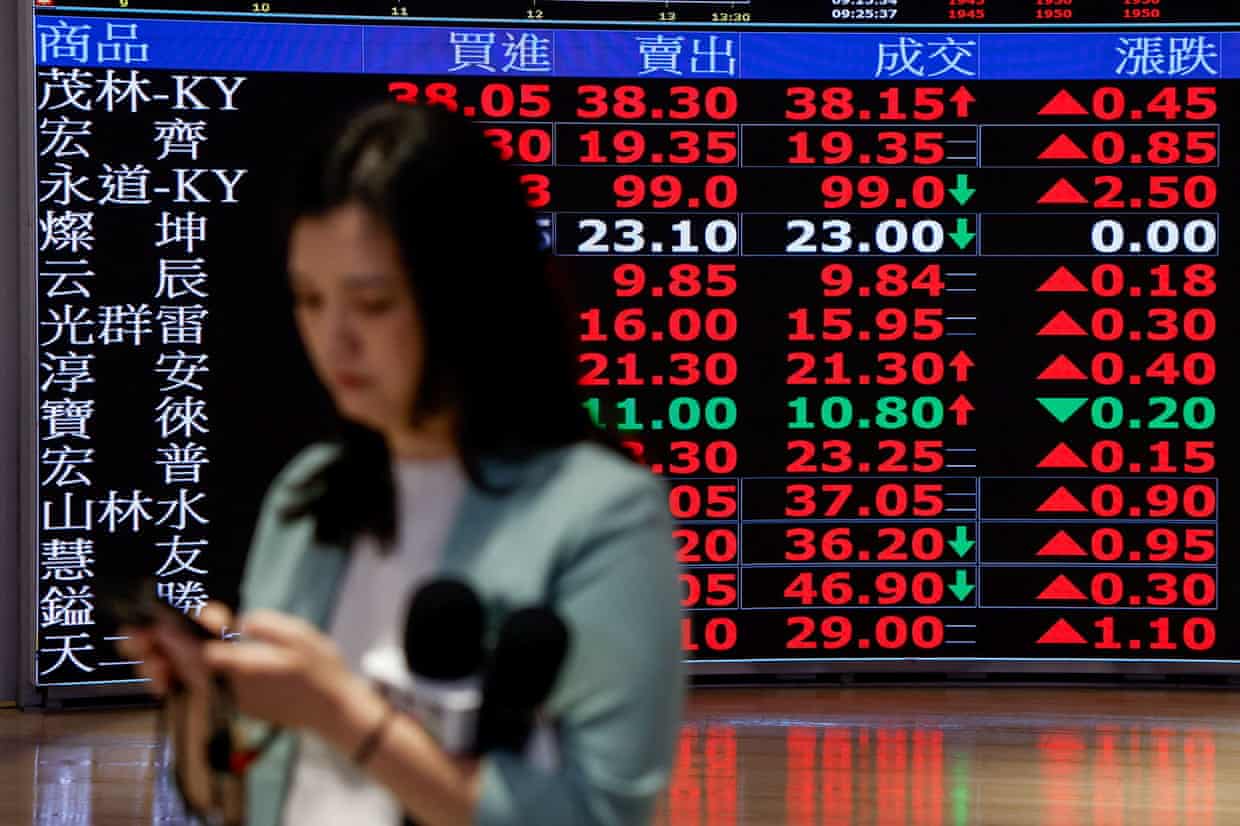
Investors over the past year have learned that Donald Trump has a boundless capacity to quickly reverse course in the face of acute political or market pressures.But a week since the United States and Israel launched missile strikes on Iran, there are fears the war could morph into a protracted conflict.In purely economic terms, the war has brought about what has long been considered a worst-case scenario from a conflict in the Middle East: the closure of the strait of Hormuz, through which travels a fifth of the world’s oil and gas supplies.Since the start of the hostilities, the global benchmark oil price has jumped by 17% to more than US$85 a barrel, triggering shock waves through financial markets.The Australian sharemarket has been relatively shielded from the worst of the fallout, but still suffered a steep 3.
8% loss for the week,Sign up: AU Breaking News emailAsian markets, many based in countries heavily reliant on imported energy, were battered,In South Korea, the stock market collapsed by 13% in a single session to record its worst day in history,But on Wall Street, the S&P 500 index had lost less than 1% leading into its final session on Friday night,As the Trump administration on Friday mulled using America’s strategic oil reserve to take some of the pressure off prices, Shane Oliver, the chief economist at AMP, said he was worried that “markets are a little bit complacent”.
“The mildness of the response has surprised me,” Oliver said.“And that partly reflects the experience of the past year or so with Trump, where there have been numerous shocks – especially around American tariff announcements – and then we get some sort of backdown.“Markets are assuming there will be some sort of backdown and this won’t be a long, drawn-out war.”The essential challenge for investors is that it’s not clear why Trump decided to launch the war, and therefore what it will take to end it.That has left markets in a holding pattern: priced for a sharp but relatively short conflict that lasts for another two to three weeks, but not for months.
It’s a high-stakes bet, but a defensible one.The fact that the Australian dollar has held above 70 US cents is testament to the relatively sanguine response to what is being referred to as the third gulf war.Ray Attrill, the head of foreign exchange strategy at National Australia Bank, said the Australian dollar’s resilience in part reflected the fact that Australia is a major energy exporter through our LNG and coal resources.“With oil prices in the 80s, the underlying assumption is that oil will start travelling through the strait of Hormuz sooner rather than later, and the big disruption will not last too long,” Attrill said.Bets placed in derivatives markets suggest oil prices will be back into the US$60s or US$70s within a month.
But a much larger and prolonged shock would send the dollar much lower, Attrill said.“If that assumption starts to get challenged, then oil at US$90 or US$100 starts to become very viable.And in that environment, there would be a much deeper sell-off.”An oil price shock is stagflationary, as higher fuel costs push inflation higher even as they hurt growth.It’s a dynamic that puts central bankers in a bind: hike rates to contain inflation, or ease monetary policy to support the economy?This is not the 1970s, when a doubling in the oil price drove inflation and unemployment in Australia into the double digits.
Which is not to say there hasn’t and won’t be any impact.Jim Chalmers this week warned of the potential for “substantial” consequences on the local and global economy as a result of the war.For now, the focus is on what higher oil prices mean for inflation, and interest rates.NAB economists estimate that inflation is now likely to peak at about 4.75% in the year to June, or half a percentage point higher than predicted before the start of the Iran war.
That’s with Brent crude prices around current levels.A sustained move towards $US100 a barrel, they calculate, could push inflation above 5% and to its highest level since late 2023.Those types of figures show why investors, central bankers, and politicians around the world are so fixated on the oil price.Michele Bullock, the Reserve Bank governor, on Tuesday made it clear she was alert to the risk that climbing petrol prices would entrench views that inflation would stay higher for longer, which can make it harder to bring price pressures back under control.The RBA typically looks past temporary price shocks, but Bullock said it was not clear that was the right approach.
“This one might be a little bit harder, because … we already have elevated inflation, and I think there is a risk that inflation expectations might become a little bit unanchored,” she said.Brett Solomon, a senior portfolio manager in QIC’s fixed income team, said investors have become accustomed to geopolitical uncertainty over recent years, but that this time could be different.“Over the last few years investors have seen geopolitical headlines only last for a week.We’ve seen that many, many times.So we’ve become accustomed to that,” Solomon said.
“What is different this time is that this could be longer lasting, and that could be a really big difference.”Solomon said that, for now, he was sticking with a view that the RBA would hike one more time in May.But he, like other investors, will be watching to see whether oil prices move high enough for long enough to trigger central bankers and investors to fundamentally reevaluate their positions.Kerry Craig, a global market strategist at JP Morgan, said the “base case for most hasn’t changed: that this won’t be something that drags on for months, and the outlook for the global economy is fairly decent”.“Really when you change that view, it’s because you think we are now heading towards recessions.
”Patrick Commins is Guardian Australia’s economics editor

Cancer death rate in Britain down by almost a third since 1980s
The rate of people dying from cancer in the UK has fallen by almost a third since the 1980s amid seismic progress in prevention, diagnosis and treatment, a report has found.About 247 in every 100,000 people die from cancer each year, a 29% drop from the peak in 1989 of about 355 per 100,000, according to an analysis by Cancer Research UK (CRUK).Cancer remains Britain’s biggest killer, causing about one in four deaths, and survival rates lag behind a number of European countries, including Romania and Poland.However, in the past decade alone, the rate of people dying from cancer has fallen by 11%. The death rate for ovarian cancer dropped by 19% between 2012-2014 and 2022-2024, stomach cancer fell by 34% and lung cancer 22%

NHS England pauses new referrals for masculinising or feminising hormone treatment in under-18s
The NHS is pausing new referrals for masculinising or feminising hormone treatment for 16 and 17-year-olds after an in-depth review found there was insufficient evidence to support its continued use.Prescriptions for hormones had been available in England for under-18s with a diagnosis of gender incongruence or dysphoria who met certain criteria.But after the Cass review, NHS England commissioned its own review of all the available clinical evidence. That review has now concluded and found the evidence did not back the continued use of the treatment for 16 and 17-year-olds.In her review of children’s gender care, Hilary Cass had recommended “extreme caution” in providing such treatment and a “clear clinical rationale for providing hormones at this stage rather than waiting until an individual reaches 18”
Recreational drugs can more than double risk of stroke, study suggests
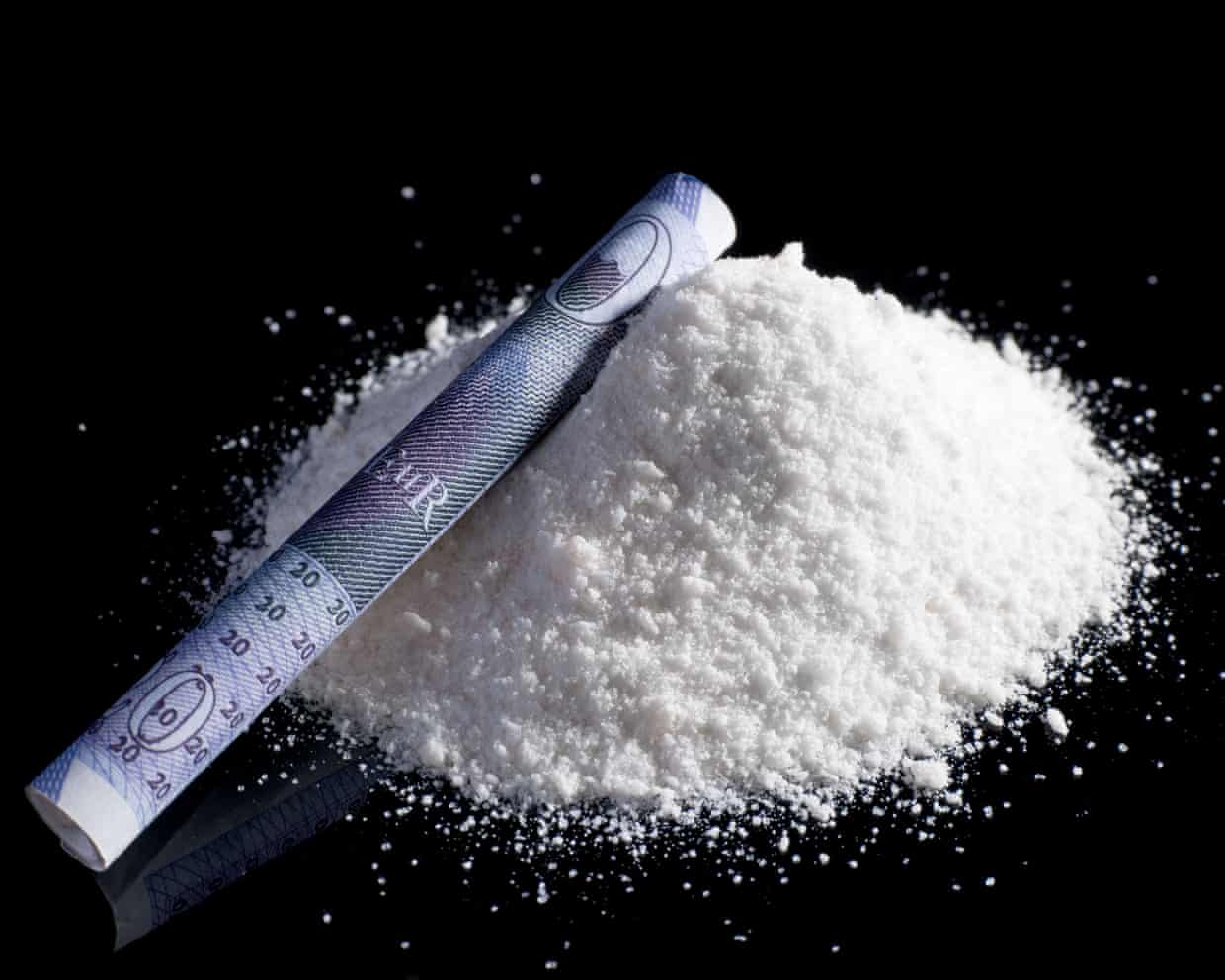
Recreational drugs can more than double the risk of stroke, with some of the most concerning impacts seen among younger people, a major review suggests.Scientists analysed medical data from more than 100 million people and found that the risk of stroke was 122% higher for amphetamine users and 96% higher for cocaine users compared with those who did not take the drugs.Cannabis users were also at greater risk, suffering 37% more strokes than non-users, the review found, though researchers saw no evidence that opioids, a highly addictive painkiller, added to a person’s risk of stroke.The rise in strokes observed in connection with some drugs was not confined to older people. When researchers focused on under-55s, they saw a near tripling in stroke risk among amphetamine users

Martha’s rule may have saved 400 lives so far in England, figures show
More than 400 lives may have been saved as a result of Martha’s rule, which lets NHS patients request a review of their care, official figures reveal.Helplines received more than 10,000 calls in the first 16 months of the scheme after its introduction in England in 2024, according to data seen by the Guardian. Thousands of patients were either moved to intensive care, received drugs they needed or benefited from other changes as a direct result of the calls.The system is named after Martha Mills, 13, who died in 2021 from sepsis after a bicycle accident. A coroner found she would probably have survived if she had been moved to the intensive care unit at King’s College hospital in London when she began deteriorating
How ADHD diagnosis helped my mental health | Letters
In suggesting there is a possibility that we all lie somewhere on an ADHD continuum, your correspondent (Letters, 27 February) is missing the point.ADHD – and autism – are neurodiversities, meaning that the brains of individuals with ADHD and/or autism are “wired” differently from those of people with “typical” brains. In other words, you either have it or you don’t. To suggest that everyone is a bit ADHD or a bit autistic is insulting to those of us who actually are ADHD/autistic, and diminishes our lived experience. Yes, self-help tools can be useful

Labour should aim to end sexual exploitation, not just curb its visibility | Letter
Your editorial on adult services websites (4 March) rightly raises urgent questions about platform harm and the government’s responsibility to act.Unseen’s modern slavery helpline indicated 799 potential victims of sexual exploitation in 2025. Reports of child sexual exploitation more than doubled in 2024 – from 53 to 110. These are not projections. They are cases reported directly to us by victims and frontline workers with nowhere else to call

Current and former Block workers say AI can’t do their jobs after Jack Dorsey’s mass layoffs: ‘You can’t really AI that’

Tech oligarchs reshape humanity while billionaires of old seem quaint

AI chatbots point vulnerable social media users to illegal online casinos, analysis shows

What does the US military’s feud with Anthropic mean for AI used in war?

The Guardian view on AI in war: the Iran conflict shows that the paradigm shift has already begun
Ben Affleck sells his AI postproduction startup to Netflix