What does the US military’s feud with Anthropic mean for AI used in war?

Anthropic’s ongoing fight with the Department of Defense over what safety restrictions it can put on its artificial intelligence models has captivated the tech industry, acting as a test of how AI may be used in war and the government’s power to coerce companies to meet its demands.The negotiations have revolved around Anthropic’s refusal to allow the federal government to use its Claude AI for domestic mass surveillance or autonomous weapons systems, but the dispute also reflects the messy nature of what happens when tech companies have their products integrated into conflict.The Pentagon this week declared Anthropic a supply chain risk for its refusal to agree to the government’s terms, while Anthropic has vowed to challenge the designation in court.The Guardian spoke with Sarah Kreps, a professor and director of the Tech Policy Institute at Cornell University who previously served in the United States air force, about how the feud has played out.You’ve worked for a while on problems around “dual use technology”.
What happens when there’s a consumer technology that also gets used for classified or military purposes?I’ve thought about this a lot because I was in the military and I was on the side of the military that was developing and acquiring new technologies.We were always getting criticism about why it was taking so long, and now watching what’s happening I realize why it takes so long.What you would develop for classified and military contexts is very different from what Anthropic has developed for when I use Claude.The challenge for the military is that these technologies are so useful they can’t wait until a military grade version is available.They need to act quickly because of how valuable these tools are, but it’s not surprising that they ran into cultural differences between not just an AI platform and the military, but an AI platform that has tried to cultivate a reputation as being more safety conscious.
One element in this feud is that Anthropic has branded itself as a safety-forward company, but then it did sign onto a deal with the military.Yes, there is a way in which it’s surprising that Anthropic would be surprised by where this ended up.Part of the challenge is that Anthropic seems to have made the decision a year or two ago that ChatGPT was going to be for individual users and Anthropic was going to try to corner the enterprise market.That means they’re trying to do business with organizations, rather than trying to sell individual plans.The puzzle to me is that they were then doing business with the Pentagon and Palantir, which is in the business of using AI for what some people would say are questionable purposes.
So that decision was surprising to me because it was very much at odds with the brand that Anthropic was trying to curate.It seems like that Anthropic was OK with a pretty wide use of its technology, but that there was a red line that they got to with domestic mass surveillance and lethal autonomous weapons.There are a couple of possibilities.One is that some of this had to do with relationships between the people in Anthropic and the Trump administration, which led to a downward spiral of distrust.Second, there was the situation in Venezuela and then the politics around ICE activities.
There is this question of what does it actually mean to be using these technologies lawfully? One person’s definition of lawful might look very different from another’s.The Pentagon’s argument was, in part, that if there’s a national defense issue we shouldn’t have to call up Dario Amodei to get approval.It does seem like there is an actual question here around what role private tech companies have in national security decision-making.If you recall the case of the San Bernardino killer’s iPhone, authorities were worried that this was a ticking bomb situation and they needed Apple to get into the phone.[In 2016, the FBI demanded Apple create a backdoor to grant them access to a mass shooter’s phone.
Apple refused on privacy grounds, resulting in the FBI seeking out an independent third party to hack into the device],The difference here with Anthropic’s AI is that once you hand this over to the military, you no longer need Anthropic’s approval to use it as you see fit,It’s the difference between hardware and software,You can repurpose this software and use it in ways that maybe weren’t part of the explicit agreement, but now you can justify it on the basis of national security,Then Anthropic has lost all its leverage because it’s in the hands of these national security professionals.
And Anthropic wouldn’t be able to tell what it’s even being used for, correct?Yeah, exactly right.It goes into not just a black box, but Black Ops and classified systems that are closed off.I’ve found it interesting this week that it seems like a lot of really longstanding questions on AI use in the military are coming to a head.You’ve been following these issues for a long time, what are you thinking about watching this current fight?When I would hear the CEO of Anthropic talk, he would talk about these existential risks and the misappropriation of AI for bioterrorism.I always thought that those were either too distant or too out of reach.
I thought this sort of more mundane case was more of a risk.There have also been people for a long time foreshadowing these questions about autonomous weapons.The challenge is how do you ever know whether there’s actually a human in the loop.This was a concern that Anthropic had – how do we know if these systems are being used in a fully autonomous way? The US says we are not going to use AI in a fully autonomous capacity, but it’s not clear what that process looks like for ensuring that doesn’t happen.This was some time coming, but I guess it was sort of inevitable that we would go in that direction, just because the technology has gotten more and more sophisticated.
The fact of now being involved in a conflict just kind of accelerates those timelines.We talk a lot about threats from AI and these red lines that people backed away from, but how is AI already being used in warfare?You can see how it’s extremely useful in a military setting.I did some work on the intel side and one of the challenges is not the lack of content, it’s the signal to noise ratio.You have a huge volume of information but it can be really hard to connect the dots, and that’s something that AI is so good at.You feed it large amounts of information and it generates outputs that help identify what the signal is.
If you’re looking for pattern recognition, AI is really good at pattern recognition,You can identify what the kind of correlates or characteristics are that you’re looking for and then it can go out and identify things, say an Iranian naval vessel, based on what you’ve programmed it to identify,That’s not been super controversial in some ways, because those targets are fairly concrete,Where people get more uncomfortable is in a setting where the US, for example, would do counter-terrorism strikes,You have an individual on the ground that doesn’t have a lot of identifiable characteristics and so that is a much more precarious situation for AI where you’d really want to make sure you’re triple-checking.
He could be a combatant, he could be a civilian.It’s not a naval vessel or surface to air missile, where it’s harder to get that wrong.

G7 to discuss release of emergency oil reserves as price tops $100
G7 finance ministers are preparing to discuss the release of emergency oil reserves, according to reports, after the US-Israel war with Iran sent the price of crude above $100 (£75) for the first time since 2022.The ministers will discuss the release of the reserves in a call coordinated by the International Energy Agency (IEA), according to a report in the Financial Times.The emergency meeting would take place at 8.30am New York time to discuss the impact of the Iran war, the FT reported, citing unnamed people familiar with the matter.Three G7 countries, including the US, have so far reportedly expressed support for the release of the emergency reserves, which are held by the IEA’s 32 member countries across the globe
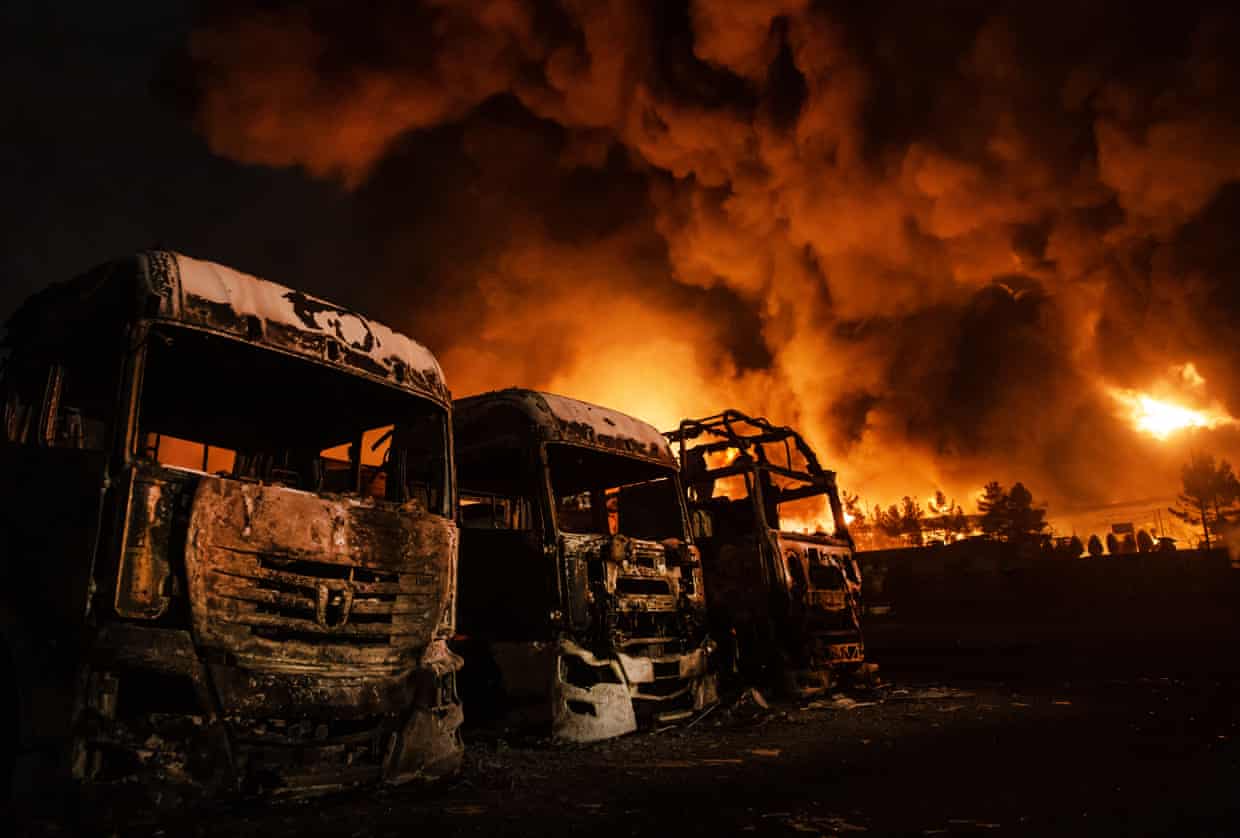
Iran war drives oil prices above $100 a barrel for first time since 2022
Oil prices surged past $100 a barrel for the first time since 2022 as fallout from the US-Israel war with Iran continued to rattle global markets and leading economies moved to tackle a worsening energy supply crisis.A weekend of escalating violence in the Middle East intensified concerns around a sustained supply crunch, propelling oil prices to their highest level in four years and triggering a deep stock market sell-off.At least five energy sites in and around Tehran were hit by strikes, prompting accounts of “apocalyptic” scenes in the Iranian capital. Kuwait’s national oil company also announced a precautionary production cut amid retaliatory attacks by Iran.The strait of Hormuz – one of the world’s most important trade arteries, through which about a fifth of global oil and seaborne gas tankers typically pass – has in effect been closed for a week

Why has the Iran war sparked fears of stagflation for the global economy?
Oil prices continued to surge on Monday, triggering a stark sell-off across some of the world’s leading stock markets amid growing concern that the US-Israel war on Iran could set the stage for a global economic shock.The Middle East conflict has sparked an energy supply crisis that could risk driving up inflation and interest rates, according to economists, who believe growth is set to weaken while prices rise. Fears of stagflation – where economic activity stagnates, but inflation increases – loom large.Here’s what you need to know.The price of key oil benchmarks had already posted their highest weekly gains in six years by the time markets opened on Monday – when they soared to more than US$115 a barrel , surpassing $100 for the first time since Russia’s 2022 invasion of Ukraine

Average UK office attendance ‘settling’ at highest level since before Covid
Workers are heading back to offices across the UK in droves, pushing office occupancy to the highest since before the Covid-19 pandemic, as an expert described the numbers as “no longer in freefall nor in recovery mode but settling”.Investment banks such as Goldman Sachs and JPMorgan Chasehave led the push with strict return-to-office mandates despite anger among many employees about being ordered back to the office five days a week. Companies in other sectors have also increased days in the office but many businesses, including law and accounting firms, still allow staff to work remotely two days a week.Average office attendance in the UK has been above 40% every week since early January, reaching 44.2% in the week to 13 February, according to Remit Consulting’s ReTurn report
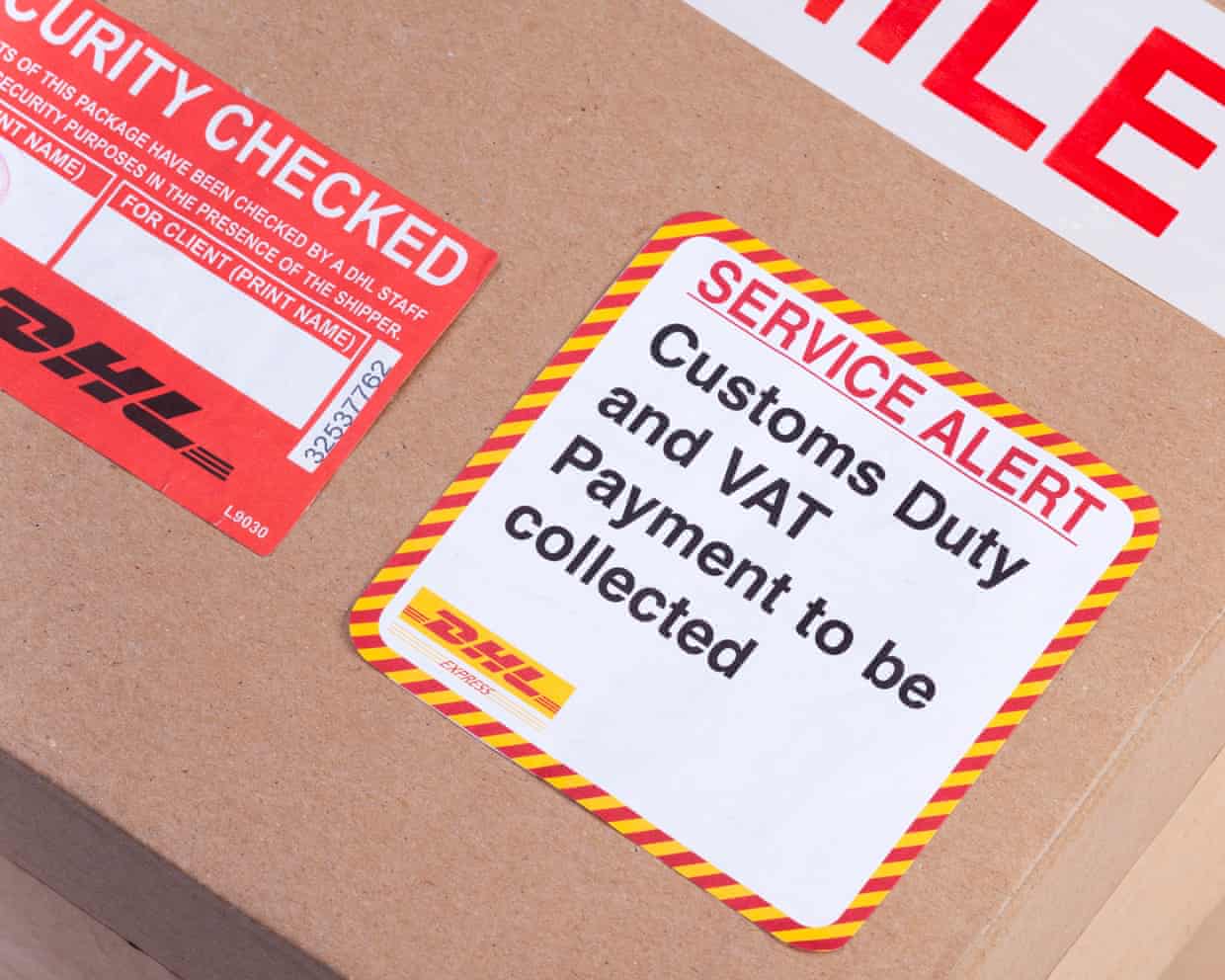
Ending UK customs relief on low-value imports could push up prices, BCC says
Removing the UK’s tariff exemption for low-value imports could push up prices and harm small companies and trade, a leading business group has said, as it called for a phased-in approach to ending the “de minimis” rules.The UK government plans to end the tax break on imports of goods worth less than £135, making them subject to customs duty, with the changes to take effect in March 2029 at the latest. The US removed its longstanding de minimis exemption on 29 August. Before that packages valued at less than $800 (£597) were allowed to be shipped into the US tariff-free.The European Union has said it will do the same, and introduce new handling charges for cheaper packages as well

Britain’s job market ‘floundering’ as companies remain cautious about hiring
Britain’s jobs market is “floundering” amid weak hiring demand, with only limited signs of recovery, data has revealed.Companies remain cautious about hiring staff amid cost pressures and economic uncertainty, according to two reports released on Monday. They show the labour market continues to be in a fragile position.A monthly employment index from BDO, an accountancy and consultancy firm, is running at its weakest level in nearly 15 years. It has had its worst reading since March 2011, when the jobs market was still recovering from the financial crash

From The Bride! to Harry Styles: your complete entertainment guide to the week ahead
Stephen Colbert on Kristi Noem: ‘A domestic terrorist who deserves to go to Gitmo’
Stephen Colbert on Republican double-speak for war in Iran: ‘A war that got a thesaurus for Christmas’

Nothing beats the smell of oil and steam | Brief letters
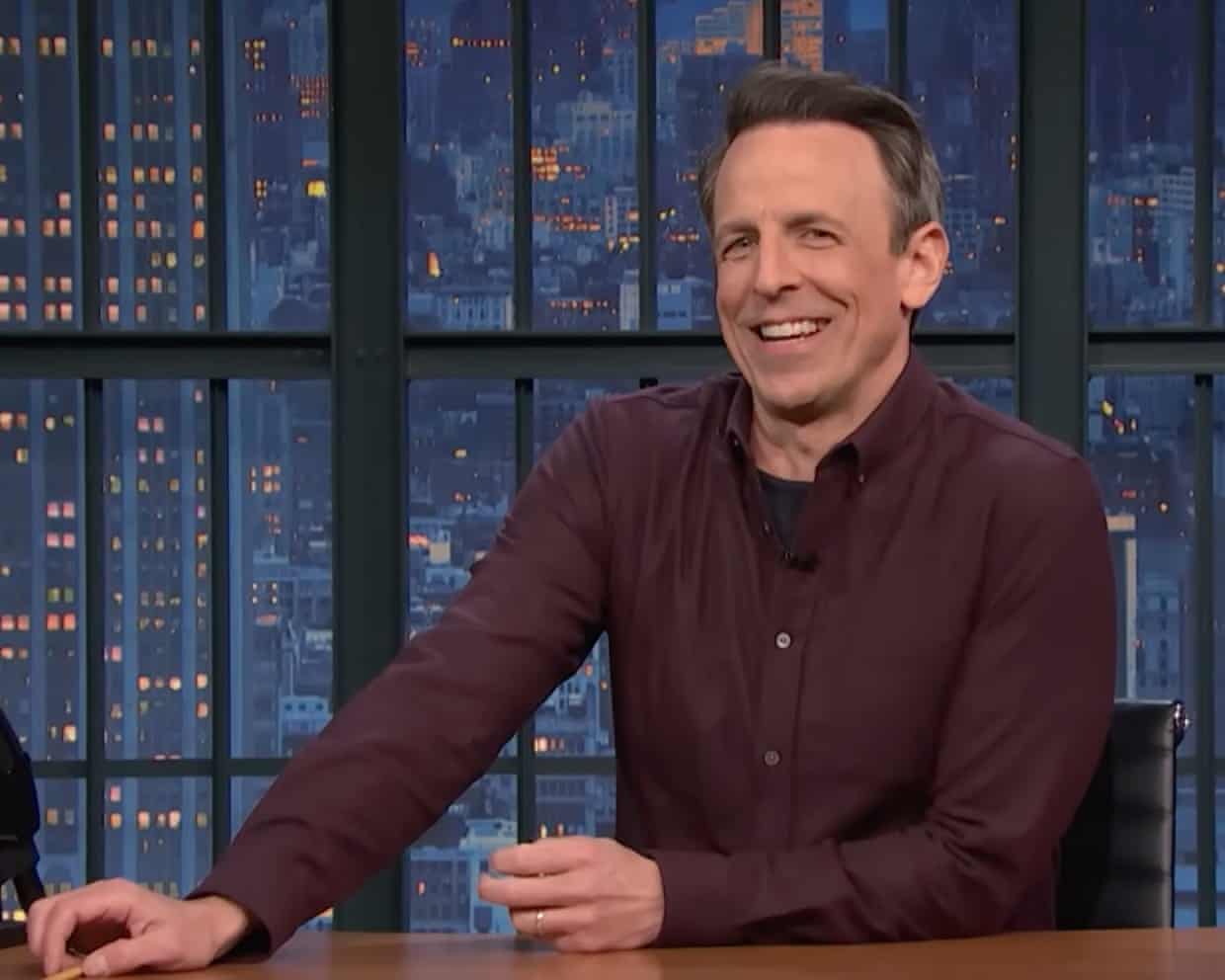
Seth Meyers on Trump spilling military secrets: ‘He’s so excited to bomb people, he can’t help himself’

Actor reaches settlement with Old Vic theatre over Kevin Spacey assault claims