The Australian dollar is (oddly) rising – what does ‘sell America’ sentiment have to do with it?

When Donald Trump threatened tariffs on European allies during the Greenland dispute, the Australian dollar increased in value against its US counterpart,The movement was odd, given the Australian currency typically falls during periods of global unease,Once Trump withdrew his tariff threat after claiming a “framework” deal had been reached, the Australian dollar increased again,The short-lived geopolitical crisis showed that bad news (Trump threatening tariffs) was good news for the Australian dollar, and good news (Trump removing that threat) was also good news for the Australian dollar,It is a theme that has been happening since Trump’s inauguration.
When Trump started his latest term one year ago, the Australian dollar was trading below US63c.It is now well above US68c, representing a strong counterintuitive rise over 12 months.At the time of the inauguration, there was much talk of the “Trump trade” that was supposed to fuel interest in the greenback through a high-growth economic agenda.Sign up: AU Breaking News emailThat has been replaced by the “sell America trade” whereby investors move money out of US assets, including its currency, due to heightened economic and policy risk linked to the Trump administration.This point was made by the Danish pension fund AkademikerPension during the week when it announced it would sell its holding of US Treasuries, worth some US$100m, blaming weak US government finances.
The notable exception to criticism of the US economy is the booming artificial intelligence-led technology sector, which has helped underpin growth in equities and its broader economy.The “sell America” sentiment has gained momentum in recent weeks due to the Greenland tariff dispute, the US government’s attack on the independence of the Federal Reserve and enduring concerns over government debt levels.Against that backdrop the Australian dollar has prospered.AMP’s head of investment strategy and chief economist, Shane Oliver, says in a “normal crisis” the US dollar would go up due to being a traditional safe haven.“The difference is that this period of uncertainty was at its core seen as negative for the US,” says Oliver.
“Each time Trump does one of these erratic things, starting with the tariffs last year, attack on the Fed, attack on universities, attack on immigrants, attack on the rule of law and attack on global institutions, US exceptionalism is eroded and investors demand a risk premium to invest in the US.“This puts downward pressure on the US dollar.”The “sell America trade” has strong crossover with another strategy called the “debasement trade”, which is based on the belief the US currency is losing its status as a trusted safe haven due to massive government debt and persistent inflation.One of the popular responses to this debasement is to buy gold, which is on a record price run.Australia’s mineral-tinged currency is a way for investors to get exposure to gold and silver, which is another in-demand precious metal.
Australia also has a massive iron ore sector, where prices have proven resilient.The Sydney-based financial markets commentator Michael McCarthy says commodity prices are much higher than forecasters expected when making predictions a year ago.“All of those commodities are trading at much higher levels than what was forecast and that’s feeding into investment markets,” says McCarthy, from online trading platform Moomoo.“It’s one of the reasons why the Aussie dollar is strong because we’re a big commodity exporter.”Australia’s robust jobs market is also pushing the Australian dollar higher as it has fuelled concerns the economy is too hot and the Reserve Bank may need to raise interest rates as early as next month.
In general, an interest rate rise increases the value of a currency.Meanwhile, the Federal Reserve is expected to lower rates, creating a divergence in the outlook of the US and Australian central banks.All of these factors have made the Australian dollar a standout performer since Trump’s inauguration, and plenty of analysts expect it to rise further, albeit not in a straight line as it has over the past week.But the outlook can change quickly, especially when it comes to interest rates.If any global skirmishes turn into a major economic event, the Australian dollar could be sold off heavily, as it was in the global financial crisis.
In such a scenario, demand for commodities would fall, which would severely dent exports and the value of the Australian dollar.Jonathan Barrett is Guardian Australia’s business editor

‘Manosphere’ influencers pushing testosterone tests are convincing healthy young men there is something wrong with them, study finds
“If you’re not waking up in the morning with a boner, there’s a large possibility that you have low testosterone levels,” an influencer on TikTok with more than 100,000 followers warns his viewers.Despite screening for low testosterone being medically unwarranted in most young men, this group is being aggressively targeted online by influencers and wellness companies promoting hormone tests and treatments as essential to being a “real man”, a study published in the journal Social Science and Medicine has found.Researchers analysed 46 high-impact posts about low testosterone and testing made by TikTok and Instagram accounts with a combined following of more than 6.8 million, to examine how masculinity and men’s health are being depicted and monetised online.The lead author of the study, Emma Grundtvig Gram, a public health researcher at the University of Copenhagen, said influencers promoting routine testosterone screening often framed normal variations in energy, mood, libido or ageing “as signs of pathology”
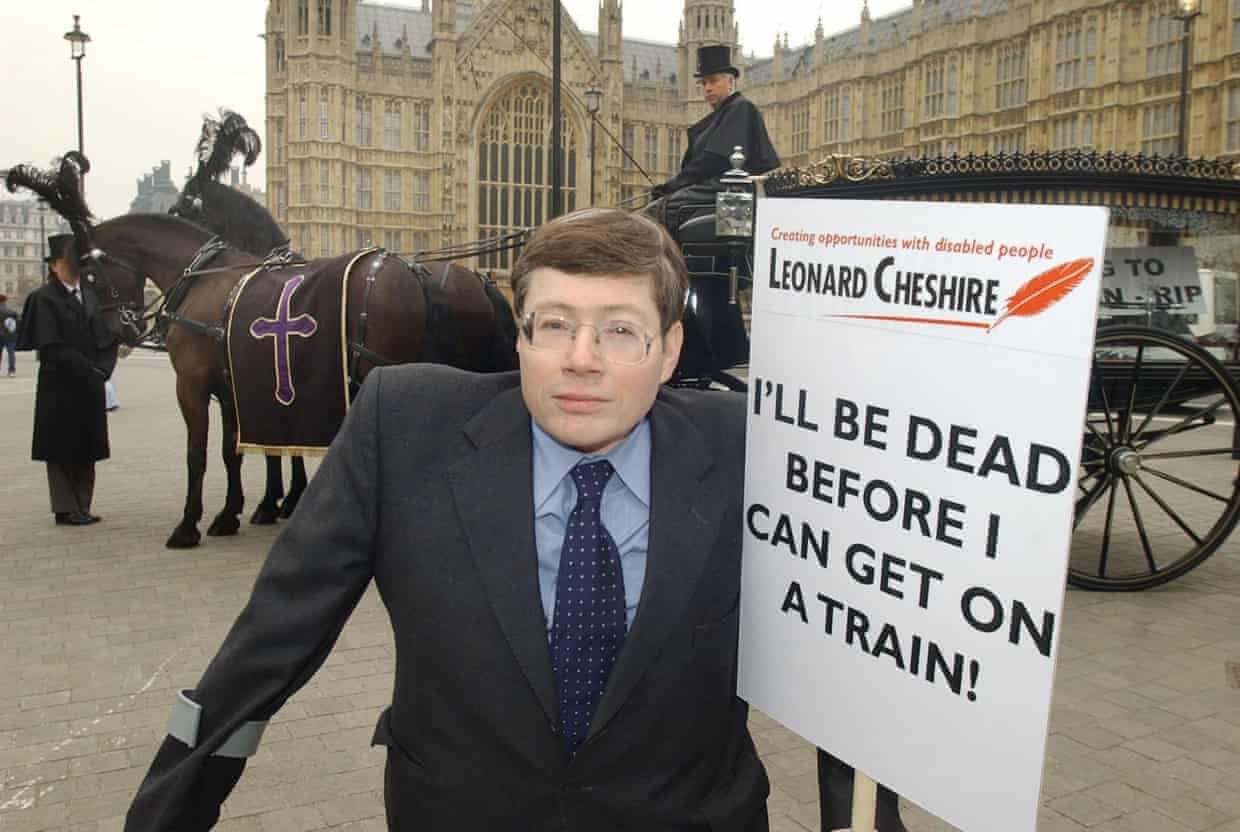
John Knight obituary
Disabled people might still be waiting for all UK trains to be accessible were it not for the success of a high-profile campaign led by John Knight, who has died of sepsis aged 67, after himself overcoming profound disabilities from birth and becoming a leading figure in the charity and public sectors.Knight was responsible for policy and campaigns at the disability charity Leonard Cheshire during passage of the Disability Discrimination Act 2005, which was to set a deadline for railway carriages to be accessible. Train companies were pressing for a date of 2035, to maximise the life of inaccessible rolling stock, but the campaign persuaded the House of Lords to back an amendment to the legislation with a time limit of 2020. The change was then accepted by the Labour government.At the climax of the All Aboard campaign, Knight arranged for a horse-drawn hearse to deliver to MPs and peers thousands of postcards on which disabled people had written what age they would need to live to in order to benefit from a 2035 deadline
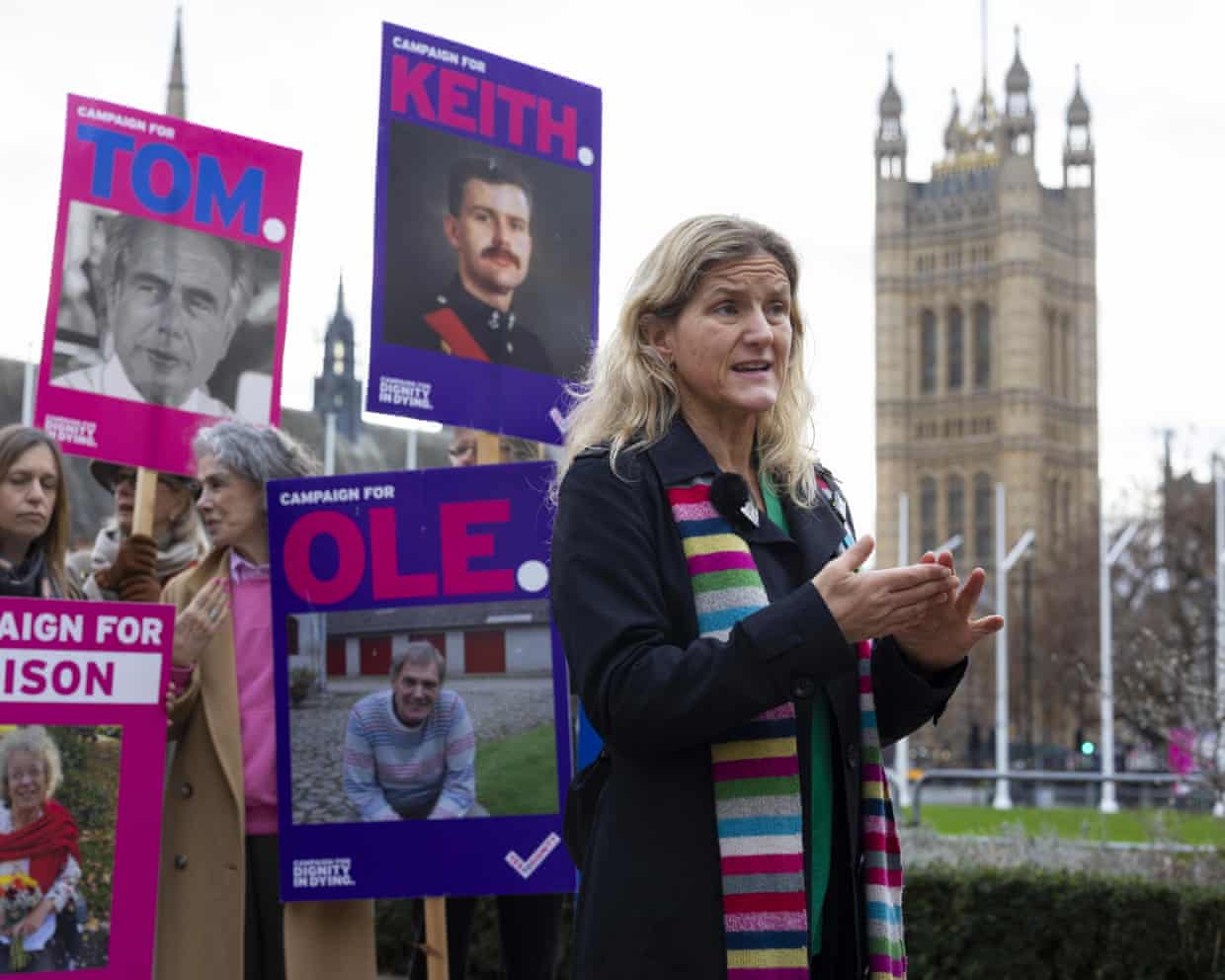
Assisted dying bill backers say it is ‘near impossible’ it will pass House of Lords
MPs and peers who backed the assisted dying bill now believe it is “near impossible” for it to pass the House of Lords in time because of procedural obstacles used by opponents.Supporters of the bill, including its sponsor, Kim Leadbeater, have been in intense discussions with the government to find ways to move it to a vote in the Lords. With progress so slow, experts and MPs believe it is unlikely the legislation will even be put to a vote before the end of the session in May, after which it will automatically fall.MPs told the Guardian they were in “blind fury” about the apparent inevitability of the billing falling in the Lords despite passing the Commons. “It is our system at its absolute most dysfunctional,” one MP said

Residents in legal fight to halt demolition of Clockwork Orange estate
A legal challenge has been launched in an effort to halt the demolition of a 1960s Brutalist estate in south-east London that featured in Stanley Kubrick’s dystopian film A Clockwork Orange.The challenge against Bexley council and Peabody housing association, which will be carrying out the redevelopment, has been launched by the Lesnes estate resident Adam Turk.He and others living there believe the estate could be refurbished rather than demolished and rebuilt under plans for the construction of up to 1,950 homes, which the council approved on 23 December.Residents fear the redevelopment would cause environmental damage and undermine the UK’s legal obligation to reach net zero by 2050.The dispute highlights a wider tension between environmental protection and initiatives to demolish and rebuild estates

How screen time affects toddlers: ‘We’re losing a big part of being human’
In the UK, 98% of two-year-olds watch screens on a typical day, on average for more than two hours – and almost 40% of three- to five-year-olds use social media. Could this lead to alarming outcomes?At Stoke primary school in Coventry, there are many four-year-olds among those starting in reception class who can’t sit still, hold a pencil or speak more than a four-word sentence. Lucy Fox, the assistant headteacher and head of foundations, is in no doubt what is causing this: their early exposure to screens, and a lot of it. When the children experiment with materials and creativity, and make things in the classroom, she says, “We notice a lot of children will cut pieces of cardboard out and make a mobile phone or tablet, or an Xbox controller. That’s what they know
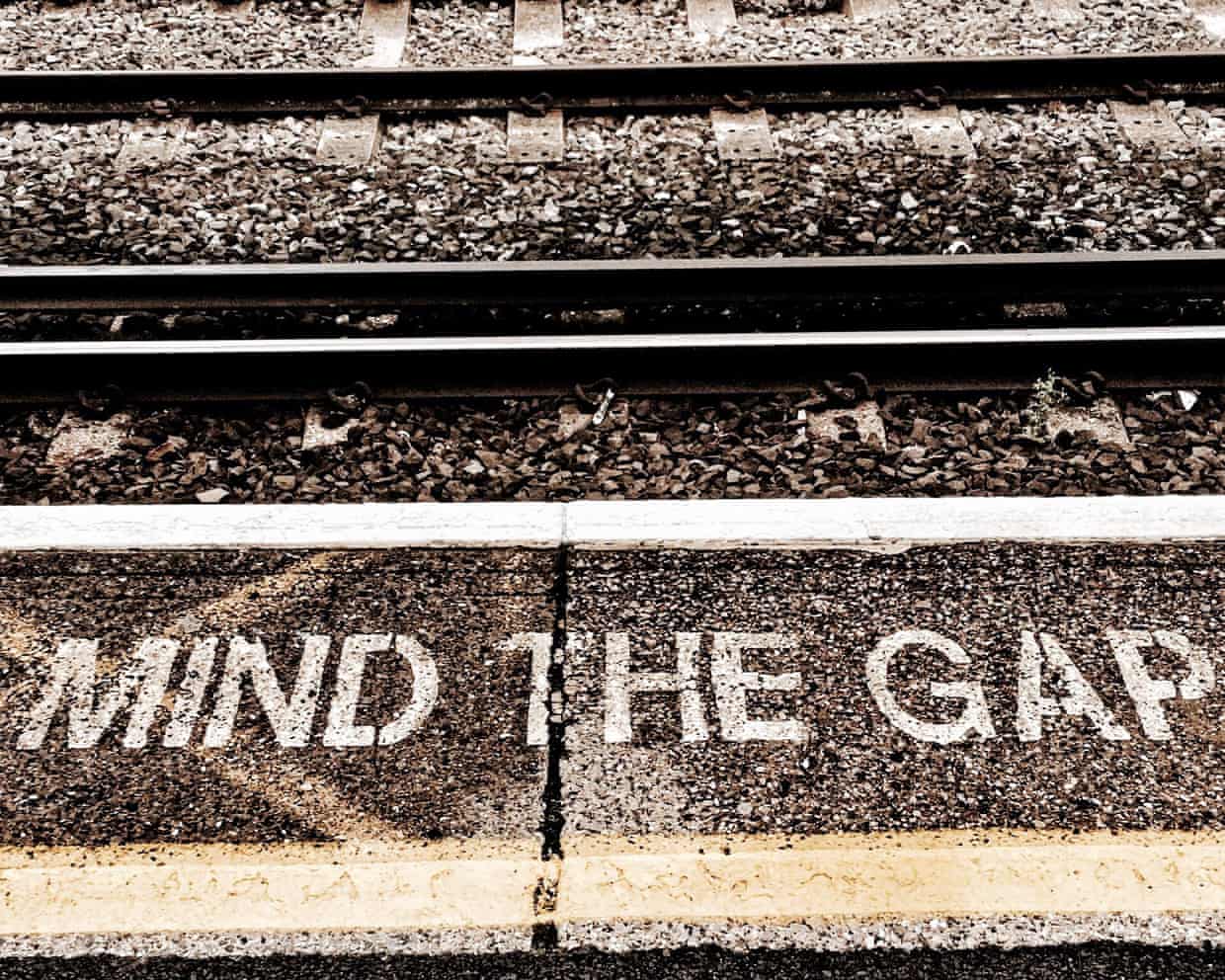
Four in five blind people struggle with gap at UK train stations, survey finds
Four in five blind and partially sighted people in the UK have struggled to cross the gap between trains and station platforms, according to a survey, with some falling and injuring themselves.Many blind and partially sighted people avoid taking train journeys owing to anxieties around whether they will be properly supported after having had inconsistent experiences, according to research from the Royal National Institute of Blind People (RNIB).It found that more than one-third (37%) of blind and partially sighted people felt unable to take all the train journeys they wanted and needed. The gap between the platform and trains was a “significant source of fear”, with some people being struck by a train or coming into contact with an electric rail, or trapped in train doors and dragged as the train departed, the RNIB found.This is partly because tactile wayfinding, which uses raised bumps and colours to help blind and visually impaired people navigate, is less common in British train stations than in many comparable countries such as European nations and Japan, with just one-fifth of blind and visually impaired people surveyed by the RNIB saying they had encountered it at a station

Experts warn of threat to democracy from ‘AI bot swarms’ infesting social media
Grok AI generated about 3m sexualised images in 11 days, study finds

Scarlett Johansson and Cate Blanchett back campaign accusing AI firms of theft

Why Trump is worried datacenters might cost his party an election

My analogue month: would ditching my smartphone make me healthier, happier – or more stressed?
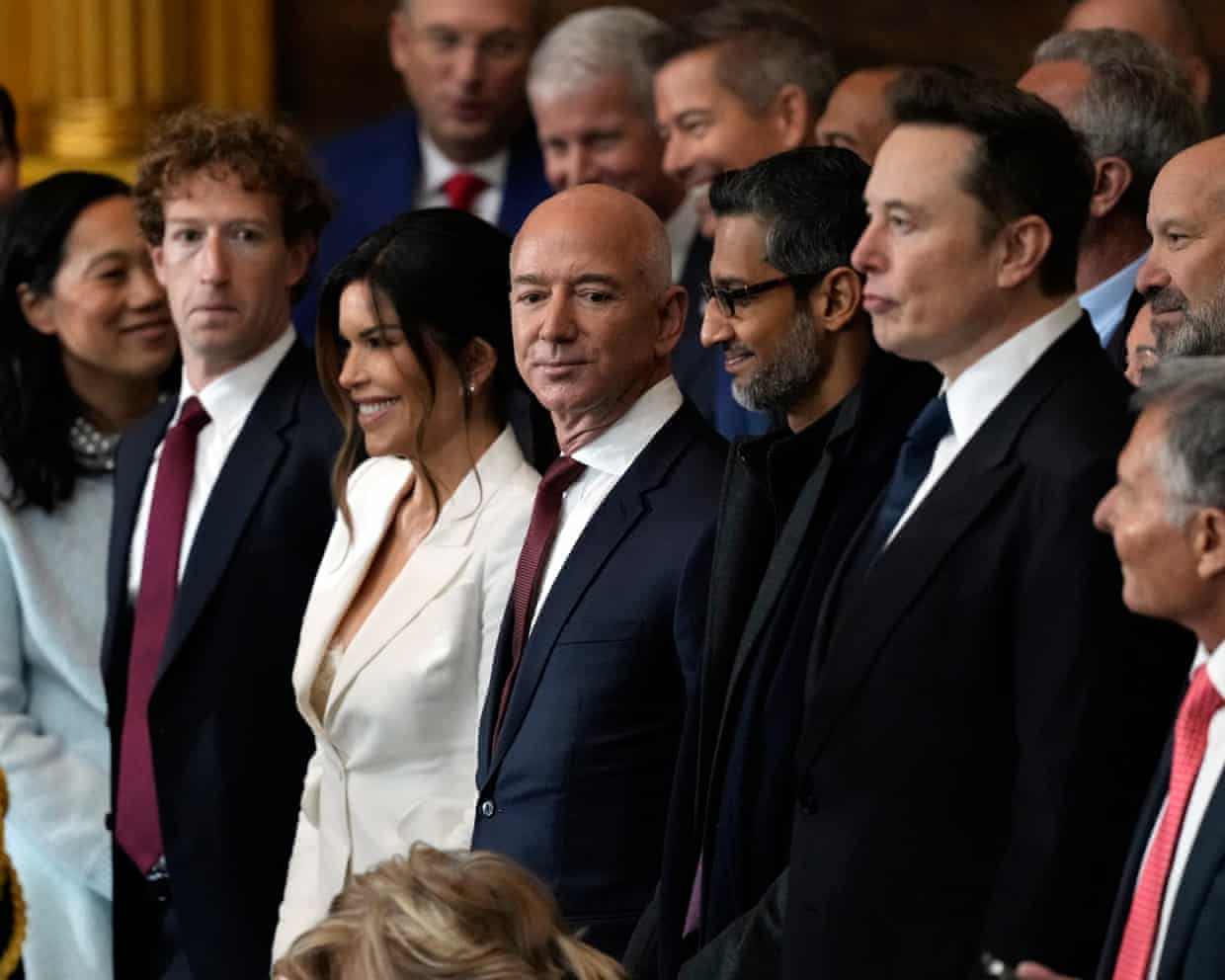
Big tech continues to bend the knee to Trump a year after his inauguration