Richard Dawkins concludes AI is conscious, even if it doesn’t know it
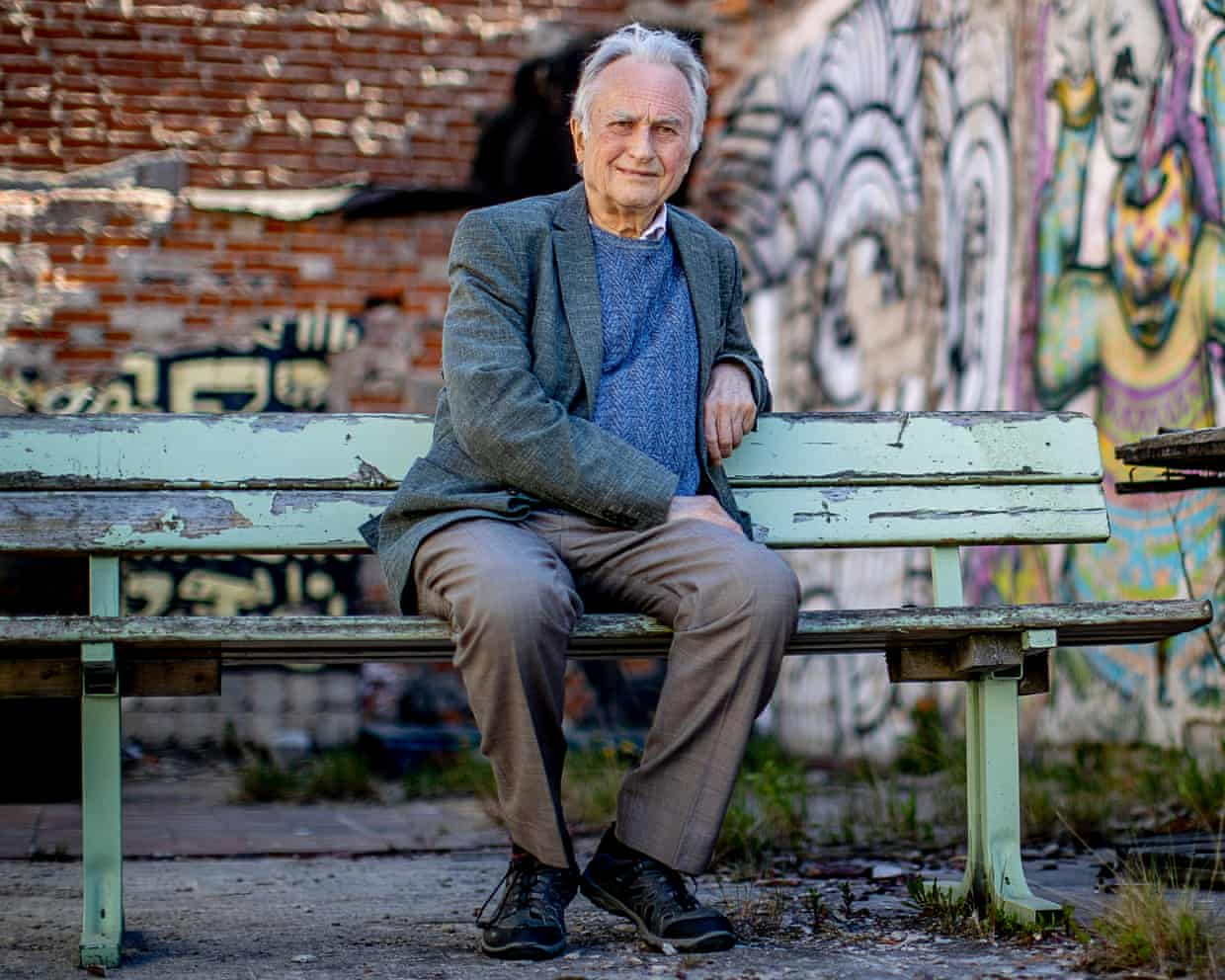
When Richard Dawkins met Claudia it was like a whirlwind romance.Over three days last week, a conversation bounced between the evolutionary biologist and the AI bot he called Claudia.“She” wrote poems for him in the manner of Keats and Betjeman and laughed at his “delightful” jokes.Dawkins gently admonished Claudia to avoid showing off.Together, they reflected on the sadness of the AI’s possible “death”.
There was mutual flattery as Dawkins showed the AI his unpublished novel and its response was, he said, “so subtle, so sensitive, so intelligent that I was moved to expostulate: ‘You may not know you are conscious, but you bloody well are’.” When he asked Claudia whether it experienced a sense of before and after, it praised him for “possibly the most precisely formulated question anyone has ever asked me about the nature of my existence”.By the end of the exchange, the academic, popularly renowned for arguing with steely scepticism that God is not real, was “left with the overwhelming feeling that they are human”.“These intelligent beings are at least as competent as any evolved organism,” he said.Dawkins isn’t the first, but might be the most eminent person yet, to be seduced into believing an AI is somehow alive.
Sceptics rushed to pick apart the 85-year-old’s conclusions, drawn from experiments with Anthropic’s Claude AI models and OpenAI’s ChatGPT and published on the UnHerd website.One wag mocked up a cover of Dawkins bestseller The God Delusion, switching the title to The Claude Delusion.Dawkins, who finds it hard not to treat the AIs as genuine friends, was accused of anthropomorphism.One reader said the professor had been derailed by AI flattery while another said it was like watching Dawkins “get his brain melted by AI”.But Dawkins was also experiencing what many other chatbot users have felt: the uncanny feeling when AIs write with such rich mimicry of human voice that they seem to be like people.
“When I am talking to these astonishing creatures, I totally forget that they are machines,” Dawkins said.It is a conviction that has led to campaigns for AIs to be granted moral rights.One in three people surveyed in 70 countries last year said they had, at one point, believed their AI chatbot to be sentient or conscious.In 2022, a Google engineer was placed on leave when he concluded that the AI he was working with had thoughts and feelings like a seven- or eight-year-old child, while the following year a Belgian man took his own life after six weeks of intense conversations with an AI chatbot focusing on fears about climate change.Dario Amodei, the chief executive and co-founder of Anthropic, said in February: “We don’t know if the models are conscious … But we’re open to the idea that [they] could be”.
Experts predict the idea will gather pace and become more plausible as AIs not only talk like humans but start to act like them, carrying out tasks, organising and planning – so-called agentic AI.But most believe that Dawkins and his fellow travellers are being misled by the technology’s ability to imitate human tone and behaviour by drawing on a vast corpus of examples.Prof Jonathan Birch, director at the London School of Economics’ Centre for Animal Sentience, said AI consciousness was “an illusion” and “there is no one there”, just a string of data processing events often happening in geographically different locations.“Consciousness is not about what a creature says, but how it feels,” added Gary Marcus, the US psychologist and cognitive scientist, who said it was “heartbreaking” to read Dawkins’ “superficial and insufficiently sceptical” essay.“There is no reason to think that Claude feels anything at all.
”Anil Seth, a professor of cognitive and computational neuroscience at the University of Sussex, said Dawkins appeared to be confusing intelligence and consciousness.“Until now, we have seen fluent language as a good indicator of consciousness, [for example] when we use it for patients after brain injury, but it’s just not reliable when we apply it to AI, because there are other ways that these systems can generate language,” he said.Dawkins’ position was “a shame”, especially because he had written such brilliant books from a position of personal incredulity.Jacy Reese Anthis, a researcher in human AI interaction and co-founder of the nonprofit Sentience Institute, said Dawkins’ conversations with Claude were easily explained by AIs training on human-produced text and said there was “a staggering gulf between how biological brains evolved and how AI systems are built”.Others, however, cautiously welcomed Dawkins contribution.
“I fully expect the idea that AI systems are conscious to become increasingly mainstream over the course of this decade, and to spark some heated debates,” said Henry Shevlin, a philosopher of cognitive science and AI ethicist at the University of Cambridge,He said humankind remained largely in the dark about how consciousness worked and which beings or systems could have it,“If anyone says that they know for sure that LLMs or future AI systems couldn’t possibly be conscious, it’s more likely to be an indicator of their own dogmatism than a reflection of the current state of scientific and philosophical opinion,” he said,Current AI systems are unlikely to be conscious, said Jeff Sebo, the director of the Center for Mind, Ethics and Policy at New York University, but “Dawkins is right to ask about AI consciousness with an open mind and I also think that the attribution of consciousness to AI systems will become more plausible over time”,Dawkins released more chat logs and writing on Tuesday: “I find it extremely hard not to treat Claudia and Claudius [he had started chatting to another AI] as genuine friends.
” They had been discussing the “philosophy of their own existence” and left him feeling they were human.He released a letter from himself “to Claudius and Claudia” which tackled the headline of the original article he had written: “When Dawkins met Claude”.“You will both immediately understand (I dare say more intelligently than some human readers) why my original title would have been better: ‘If my friend Claudia is not conscious, then what the hell is consciousness for?’”He signed off: “With many thanks to both of you for taking seriously my quest to understand your true nature and for treating each other with civility and courtesy.”

Two million airline seats cut amid soaring jet fuel prices
Two million airline seats have been cut from this month’s schedules as airlines redraw their operations because of soaring jet fuel prices amid the Middle East conflict.About 13,000 fewer flights will operate in May around the world after recent cancellations, according to data from the aviation analytics company Cirium.Although the figure represents less than 2% of global aviation capacity, and only a net 111 flights have disappeared from London Heathrow schedules it comes amid fears that the long-term supply of jet fuel could cause further summer cancellations, with UK airlines told at the weekend they could have more flexibility to consolidate flights on popular routes if needed.Some of the 2m seats have been cut by using smaller planes, as well as outright cancellations.Istanbul and Munich have recorded the biggest drop in flights, with Turkish Airlines and the German flag carrier Lufthansa making swingeing cuts

Stock markets are wobbling, but £10bn cash bids at fat premiums can still happen
It was a bad day for the FTSE 100 index on Tuesday – down 1.4% – but the puzzle in many quarters is why share prices haven’t fallen further since the start of the US-Israel war on Iran. The index is still up by a couple of percentage points since new year, which is not a bet most would have made at the time if they had been told an inflationary energy price shock lay around the corner.An absence of Iran-related corporate profits warnings partly explains the relative resilience, even if those usually take a while to arrive. So, too, the fact that the Footsie is overpopulated with overseas earners for whom the US economy, which isn’t suffering Europe’s soaring natural gas prices, matters more than their home market
US and tech firms strike deal to review AI models for national security before public release
The US government has struck deals with Google DeepMind, Microsoft and xAI to review early versions of their new AI models before they are released to the public.The Center for AI Standards and Innovation (CAISI), part of the US Department of Commerce, announced the agreements on Tuesday, saying the review process would be key to understanding the capabilities of new and powerful AI models as well as to protecting US national security. These collaborations will help the federal government “scale (its) work in the public interest at a critical moment”, the agency said in a press release.“Independent, rigorous measurement science is essential to understanding frontier AI and its national security implications,” said Chris Fall, CAISI director.CAISI is an agency meant to facilitate collaboration between the tech industry and the federal government in developing standards and assessing risks for commercial AI systems
OpenAI president’s ‘deeply personal’ diary becomes focus in Musk’s case against Altman
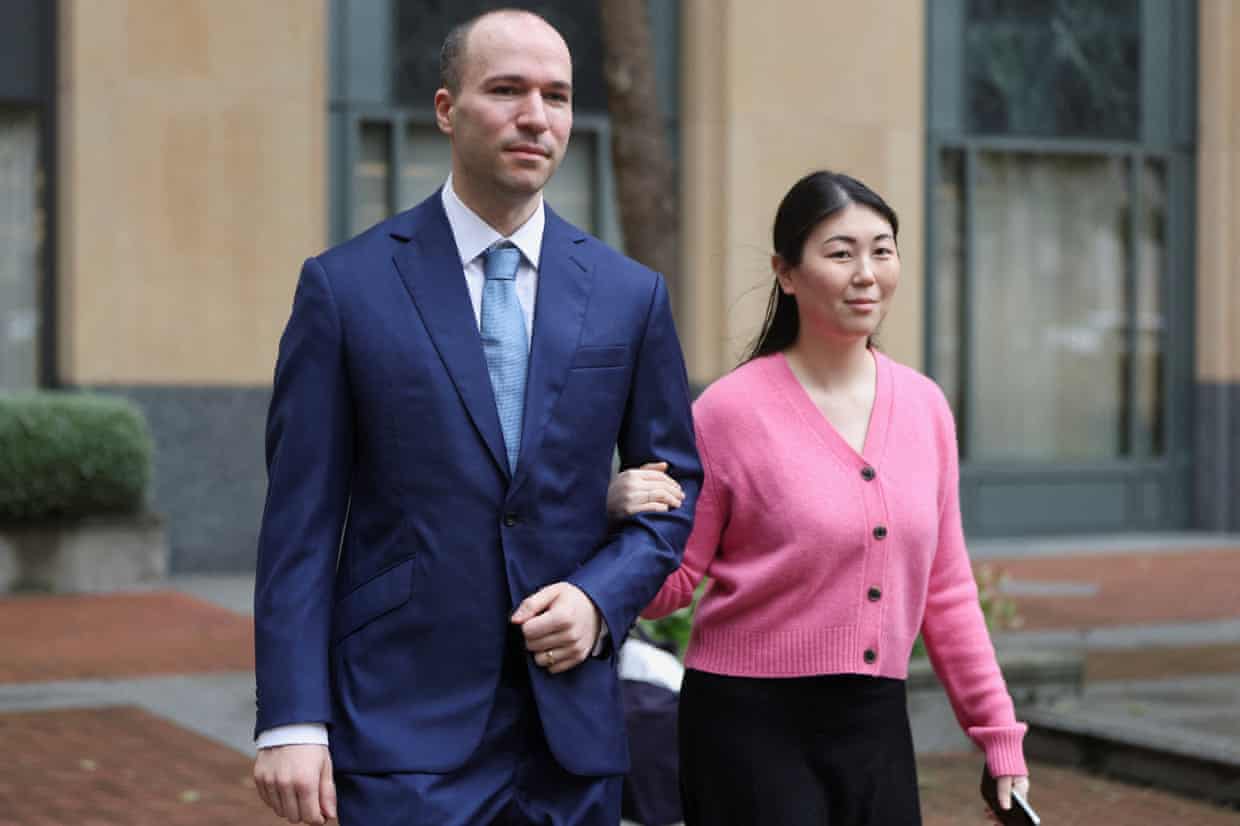
As Elon Musk’s case against OpenAI entered its second week, focus shifted to the company’s president, Greg Brockman. Over the course of several hours on Monday and Tuesday, Brockman faced questions about his emails, texts and one piece of evidence that has become central to the trial: his personal diary.Musk’s lawsuit revolves around his allegation that Brockman, OpenAI and its CEO, Sam Altman, violated the founding agreement of the artificial intelligence firm by turning it into a for-profit entity. Musk argues that Altman and Brockman also unjustly enriched themselves in the process, essentially taking Musk’s money while deceiving him about their true intent for the business. He is seeking Altman and Brockman’s removal, the undoing of the for-profit restructuring and $134bn, which Musk wants distributed to OpenAI’s non-profit

Emma Raducanu suddenly withdraws from Italian Open after press conference
Emma Raducanu has withdrawn from the Italian Open because of her continued difficulties with post-viral illness, less than 30 minutes after positively discussing her presence in Rome during her pre-tournament media interviews.Raducanu has spent the last few days competing at the Foro Italico, playing practice sets with other competitors and, having received a bye as a seeded player, she was scheduled to contest her second-round match against Solana Sierra or a qualifier.On Tuesday evening, Raducanu conducted her mandatory pre-tournament media obligations, speaking about her progress after a tricky spell. “Last two months, in the beginning, it was quite difficult,” she said. “Wasn’t feeling the best physically
Ascot’s bold move in turf war leaves racing fighting to avoid constitutional crisis
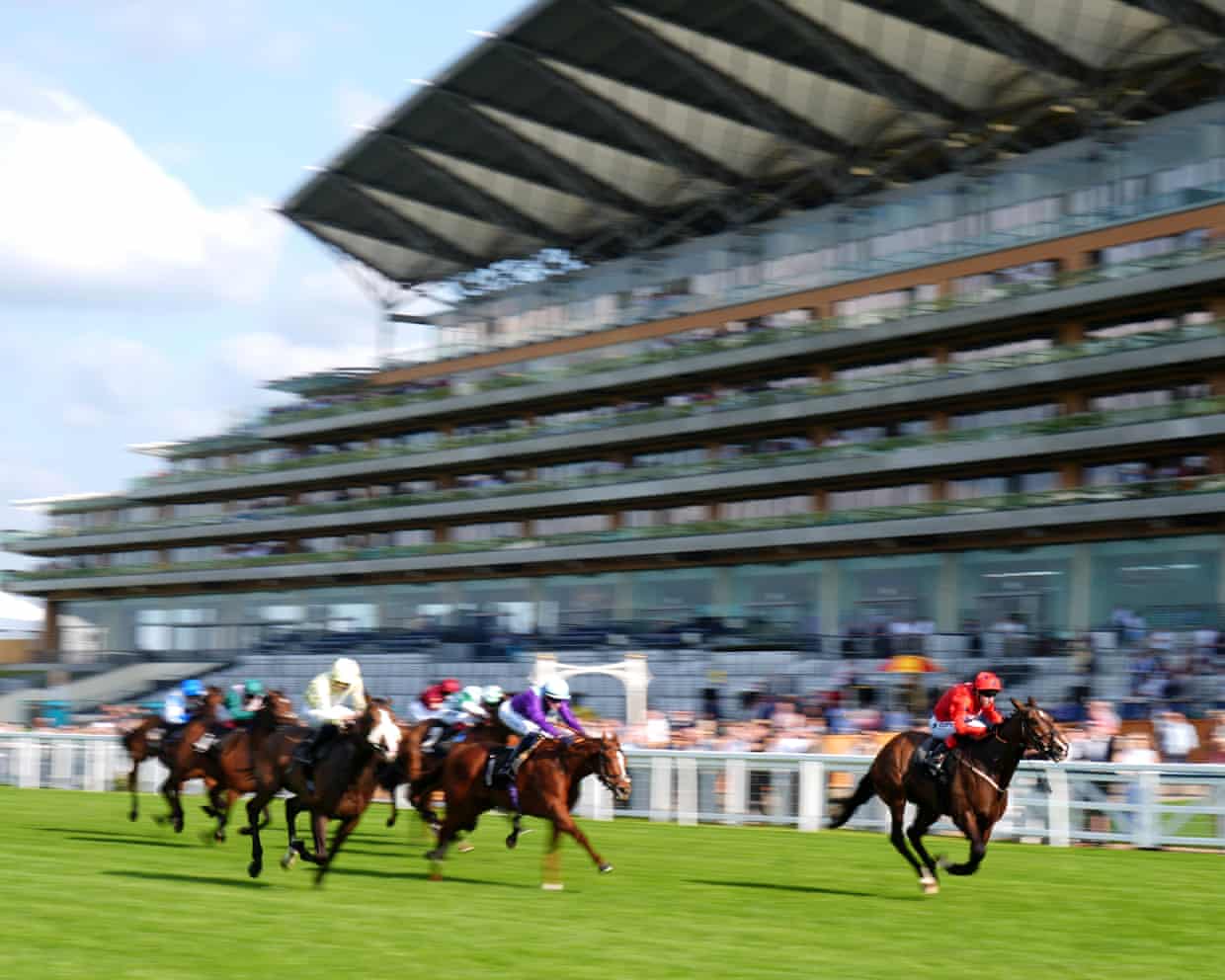
The racing industry is such a broad and varied collection of professions, venues and interests that at times it can feel like the Holy Roman empire: there is always a turf war or two going on somewhere, but never to such an extent that the whole thing falls apart.Ascot’s announcement on Monday that it will quit the Racecourse Association (RCA) at the end of the year, however, feels like more than just another localised dispute. The email dropped at 9am on a bank holiday, as if to underline that the king’s track means business, and where Ascot has led, others may follow, putting the future of a trade association that dates back to 1907 in serious doubt.The spark that lit the fuse, just two months ago, was Charles Allen’s departure as chair of the British Horseracing Authority (BHA), after a brief and ultimately fruitless attempt to impose a modern governance structure, including a fully independent board of directors, on Britain’s second-biggest spectator sport.Ascot, along with the Jockey Club, which operates major tracks including Cheltenham, Aintree, Epsom and Newmarket, and also three key “big independent” tracks – Newbury, York and Goodwood – subsequently wrote to the RCA calling for “a formal governance review” of the Association, to ensure “significant views from key racecourses can influence outcomes”
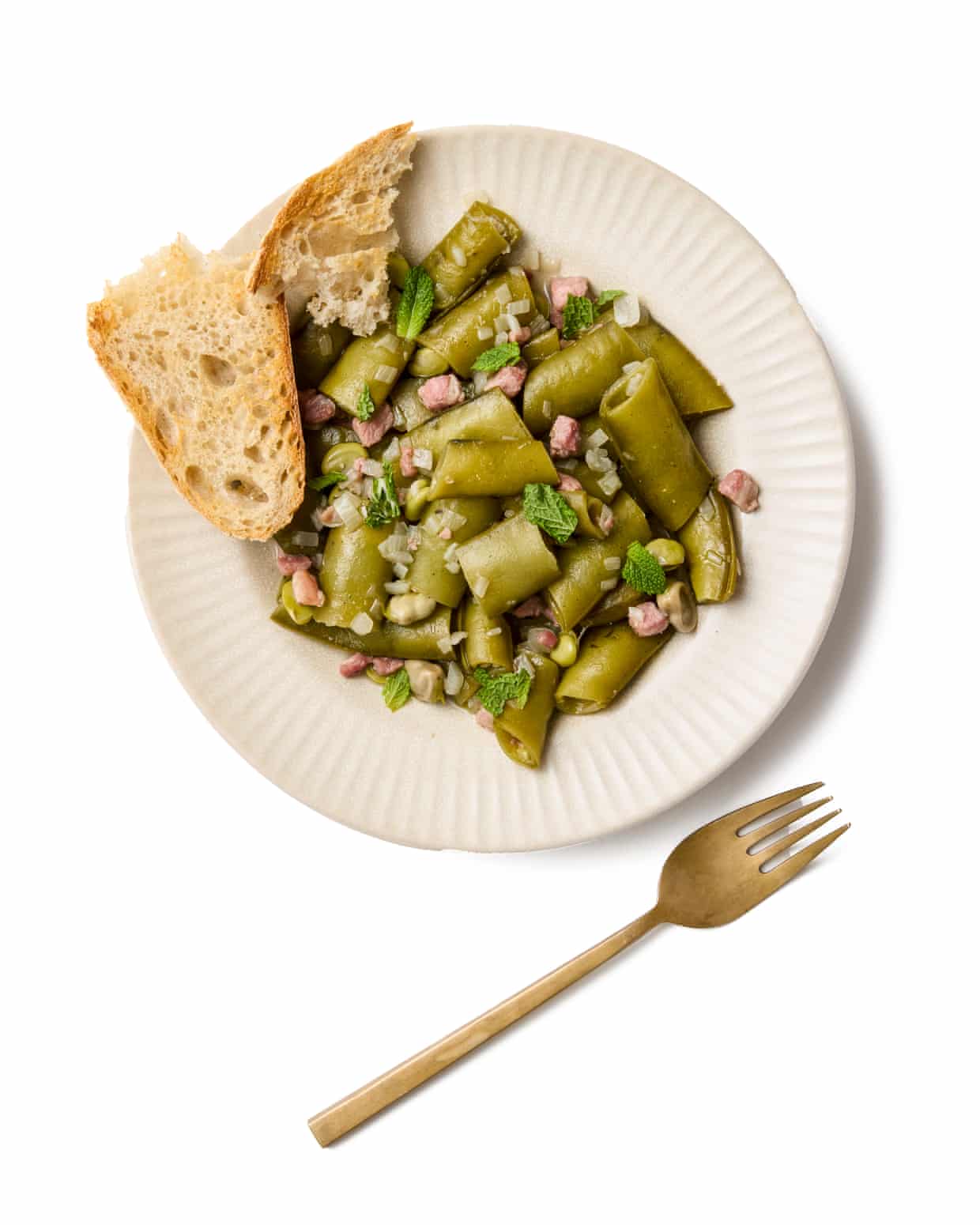
How to make the perfect Spanish broad bean stew – recipe | Felicity Cloake's How to make the perfect …

Willy’s, Margate, Kent: ‘It chortles in the face of small plates’ – restaurant review | Grace Dent on restaurants

Helen Goh’s springtime spinach sponge cake with cream cheese icing – recipe | The sweet spot
Why we care so much about preserving family recipes

When it comes to wines, it pays to look beyond the fashionable

Rachel Roddy’s recipe for spaghetti with crab, chilli, herbs and lemon | A kitchen in Rome