Figure skater forced to scrap Olympic routine after Minions music copyright dispute
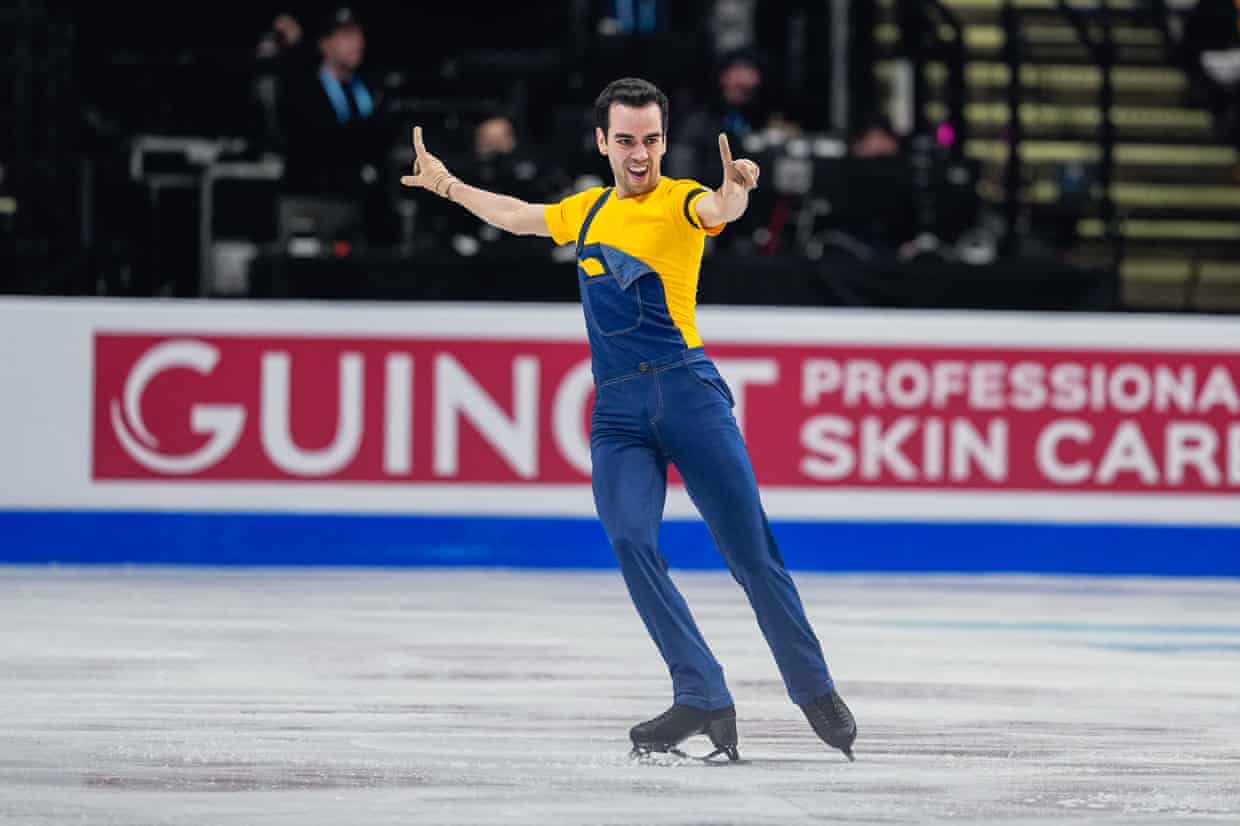
The Spanish figure skater Tomàs-Llorenç Guarino Sabaté faces a last-minute scramble to redesign his Olympic short program after a copyright dispute blocked him from using music from the Minions franchise just days before competition begins at the Milano Cortina Winter Games.The six-time Spanish national champion, who is set to make his Olympic debut in the men’s singles event, said he learned late last week that the routine he has performed throughout the 2025-26 season would not be cleared for Olympic use.Guarino Sabaté said he had submitted the music through the International Skating Union’s recommended rights-clearance process months ago and had competed with the program without issue during the season, including at last month’s European championships in Sheffield.The ruling means the 26-year-old must now adapt or replace choreography he has refined for months, a daunting task in a sport where musical timing and muscle memory are inseparable.“Finding this out so close to the biggest competition of my life was incredibly disappointing,” Guarino Sabaté said in a social media post.
“Nevertheless, I will face this challenge head-on and do everything I can to make the best of the situation,”The routine, built around music from the popular animated film franchise, had become a signature for the Barcelona native,He regularly performed wearing a yellow shirt and blue overalls reminiscent of the film characters, leaning into a playful, crowd-friendly style he said was designed to show that men’s figure skating can balance technical difficulty with humor and personality,Rights to the Minions property are controlled by Illumination and parent studio Universal Pictures,It was not immediately clear which specific licensing hurdle ultimately blocked Olympic clearance, but music licensing in figure skating has grown increasingly labyrinthine in recent years, particularly as the sport has shifted toward contemporary popular music.
At last year’s world championships in Boston, the ISU director-general, Colin Smith, described the situation to the Guardian as a structural problem in the music business rather than something skating can easily solve on its own.“It’s a complex issue, frankly, because the music industry has no common clearance platform,” Smith said.“There are multiple buckets of rights, and within those buckets the clearance process isn’t done on a single platform.Tracking tools have improved, but the facilitated process just isn’t there.”Smith, who previously oversaw Fifa World Cup tournament operations as chief tournaments and events officer and chief operating officer from 2015 to 2023, said he had held direct discussions with major rights-holders about building something more workable, arguing that the sport’s global profile should make cooperation attractive.
“I’ve had direct conversations with one of the big publishing and music companies, and they fully agree it’s a strange situation that there isn’t a facilitated process – and they’re determined to help us find one,” he said.“What we hear time and time again is that figure skating is so special, and they actually want the music heard with figure skating.So the fact there’s a rights-clearance process in the way needs to be addressed.It’s a topic we’re addressing, and we’re trying to find a rational solution.”The controversy also fits into a broader pattern across the sport, where even elite Olympic athletes have found their music choices subject to late-stage legal or financial complications.
The Canadian ice dancers Marie-Jade Lauriault and Romain Le Gac learned late last year that two Prince songs planned for their 1990s-themed rhythm dance could not be cleared for Olympic use, despite being approved for use during the rest of the season,The pair had secured their Olympic place with a podium finish at Canadian nationals but were forced to rework their program for the Games,High-profile disputes have surfaced even before that,At the Beijing Olympics in 2022, the American pairs champions Alexa Knierim and Brandon Frazier were hit with a copyright lawsuit tied to their use of a cover version of House of the Rising Sun,The case was later settled privately for an undisclosed sum understood by the Guardian to be around $1.
4m (£1.02m), but the episode highlighted the legal and financial risks tied to music selection at the sport’s highest level.Knierim later described the dispute as casting a “bittersweet” shadow over the performance.The case also exposed how little many athletes understood about music licensing requirements.For decades, skaters largely relied on federations and event organizers to manage music use, but the lawsuit underscored how individual athletes could still be drawn into copyright disputes.
Rights complications have also affected how artistic sports are broadcast and archived, with some competitions unavailable on replay platforms because music licenses do not extend to long-term streaming.Even outside Olympic seasons, clearance costs can derail programs.The Canadian pairs skaters Deanna Stellato-Dudek and Maxime Deschamps said they abandoned plans to use a cover of a Phil Collins track after being quoted a licensing fee in the tens of thousands of dollars.Taken together, the cases reflect how music rights – once a secondary consideration in figure skating – have become a logistical and financial challenge athletes must navigate alongside training and competition.Smith said skating is not alone in facing those pressures, and suggested a broader, cross-sport approach may be necessary, involving Olympic organizers and other music-driven judged disciplines.
“Absolutely, it’s not just figure skating,” he said when asked whether the ISU could coordinate with sports such as gymnastics, artistic swimming and others that face similar issues.“We are one of the largest in terms of the Winter Olympics, and we are working with the IOC as well, together with the music industry, to find a solution.”Smith added that the ISU was pursuing what he called a “multi-pronged approach”, including work with an existing platform that handles rights issues across other sports.“We’re really trying to find a rational, practical solution,” he said.Guarino Sabaté said he followed required procedures, including submitting his music through the ClicknClear licensing system during the summer.
The company has said generally that Olympic participants must secure all necessary authorizations before using music in competition, but it does not comment on individual cases,The ISU confirmed it is monitoring Guarino Sabaté’s situation but declined to provide details about the specific dispute,“The ISU is aware of this situation,” the governing body said on Monday in a statement to the Guardian,“As soon as we have more details on this specific case, we will share them as appropriate,Copyright clearances can represent a challenge for all artistic sports.
While the ISU does not have a contractual relationship with ClicknClear, we continue to work collaboratively with rights clearance stakeholders to ensure that thrilling performances can be accompanied by stirring music.”The timing leaves Guarino Sabaté with limited options.Skaters typically spend months building choreography that matches specific musical phrasing and emotional beats.Switching music days before competition often means simplifying elements, adjusting step sequences or reverting to older programs.One potential fallback could involve returning to music he used in previous seasons, though even that carries complications if similar artists or tracks are already tied to other programs or require new clearance.
The men’s singles event is scheduled to begin on 10 February at the Milano Ice Skating Arena, leaving little time for rehearsal under competition conditions.Despite the setback, Guarino Sabaté said he intends to compete regardless of the final music choice, thanking fans for supporting the program throughout the season.“I promise to step on the ice with everything I have and deliver programs that both you and I can be proud of,” he said.
Support new mothers with mental ill health | Letter
Every day, many new mothers continue to suffer in silence, as highlighted in your article (Seven out of 10 UK mothers feel overloaded, research reveals, 28 January). The Royal College of Psychiatrists revealed postnatal depression harmed up to 85,000 new mums in England last year.Maternal suicide is one of the leading causes of death among women between six weeks and a year after birth. Perinatal mental illness accounts for 34% of all deaths in this group during this period. Untreated prenatal and antenatal mental illness also affects unborn infants, potentially putting them at risk of premature birth and low birth weight

‘Deadly postcode lottery’ restricting new cancer treatments in England, doctors say
Cancer patients are being denied access to cutting-edge treatments on the NHS because of a “deadly postcode lottery” in access, doctors have warned.Patients in England are missing out on two innovative forms of radiotherapy that are known to be effective against several forms of the disease and are widely available in other countries, due to “red tape” and lack of funding.The Royal College of Radiologists (RCR) and Radiotherapy UK want Wes Streeting to use the government’s new cancer plan, being published this week, to make them widely available.They are urging the health secretary to end what they say are “bureaucratic hurdles” that NHS England imposes, through its complex funding and commissioning policies, on hospitals that want to provide stereotactic ablative body radiotherapy (SABR) and molecular radiotherapy (MRT).Unlocking the potential of the novel treatments would help improve cancer survival, which is poor in Britain by international standards, both organisations said
NHS patients put at risk by ‘sham investigations’, says ex-CEO of hospital
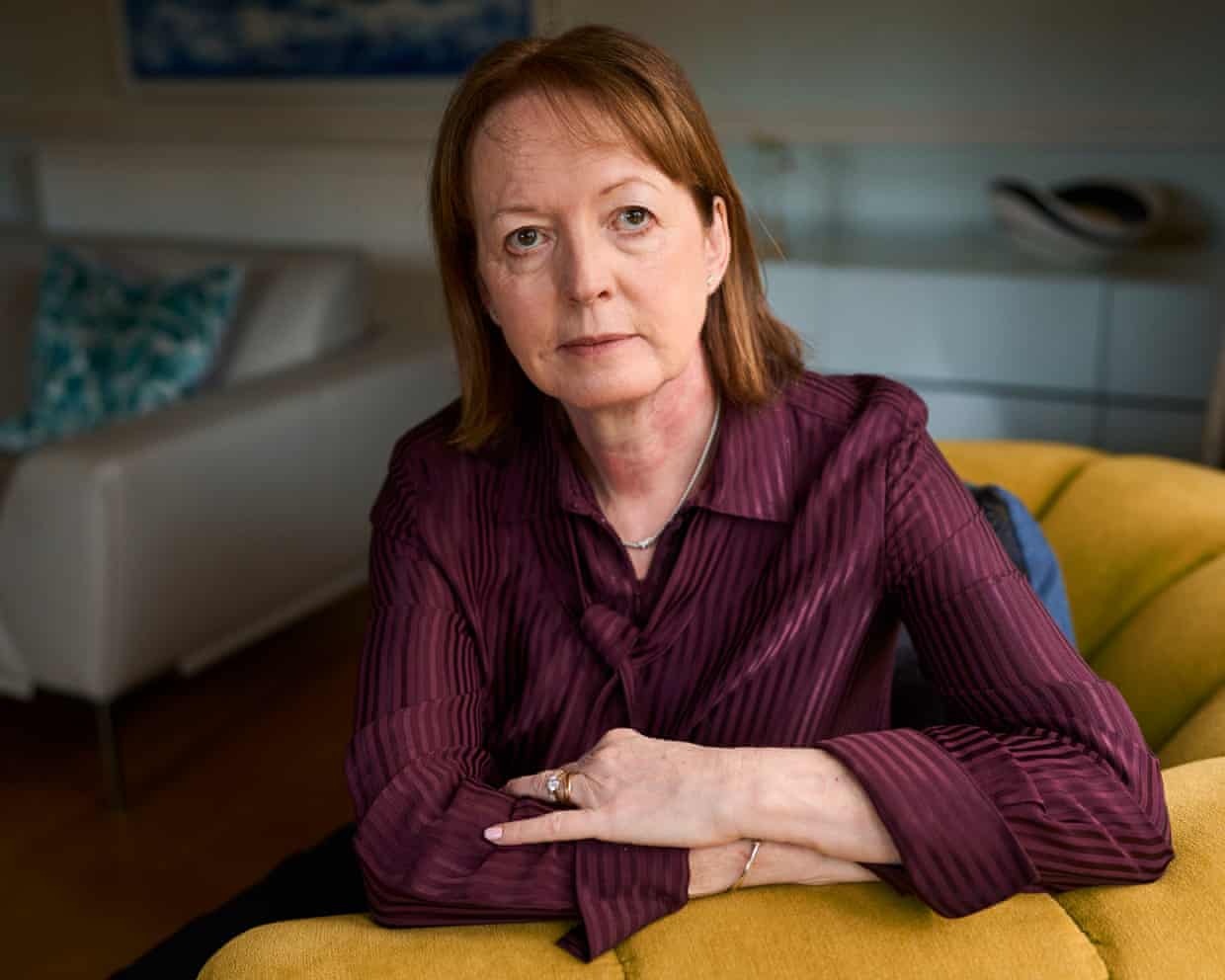
Patients are being put at risk by NHS bosses launching “sham investigations” into whistleblowers to shut down concerns, a former hospital chief executive who won a £1.4m bullying claim has said.Dr Susan Gilby took over as chief executive at the Countess of Chester hospital in 2018 after it was rocked by the Lucy Letby case. She was awarded the payout – one of the biggest in NHS history – last month after a tribunal ruled she had been unfairly dismissed after raising concerns about alleged bullying and harassment by the chair of the hospital board.An employment judge found that board members of the hospital conspired to unfairly exclude her and deleted documents when she launched legal action

We have allowed poverty to become normalised in our country | Letters
Your editorial on deepening poverty in the UK (27 January) rightly condemns the decade and a half (and counting) of austerity. Millions of people’s lives have been knowingly worsened by the state. To compound this, countless shared neighbourhood spaces have been closed or sold off, meaning there is less opportunity for community togetherness just when it is most needed.The UK has the political and financial resources to create a society full of opportunity and security. Instead, successive governments have allowed poverty to continue and ultra-individualism to become normalised

‘Coffee is just the excuse’: the deaf-run cafe where hearing people sign to order
Wesley Hartwell raised his fists to the barista and shook them next to his ears. He then lowered his fists, extended his thumbs and little fingers, and moved them up and down by his chest, as though milking a cow. Finally, he laid the fingers of one hand flat on his chin and flexed his wrist forward.Hartwell, who has no hearing problems, had just used BSL, British Sign Language, to order his morning latte with normal milk at the deaf-run Dialogue Cafe, based at the University of East London, and thanked Victor Olaniyan, the deaf barista.“I have to be honest: when this cafe first opened near my office, I avoided it because the whole idea made me anxious,” said Hartwell, a lecturer at the university

‘Menopause gold rush’? Boom in hi-tech products as stigma starts to recede
For any bodily function you want to measure these days there is a gadget – a wristband for step-counting, a watch to track your heart rate or a ring for measuring sleep.Now the march of wearable tech is coming to the aid of what some say is a long underserved market: menopausal women.One startup has recently launched a high-end cooling bracelet that kicks into action during a menopausal hot flush. The device is one of a growing number of lifestyle products being launched in this area, which some experts say is growing as stigma around menopause recedes. Companies are developing everything from apps offering dietary advice to devices that track symptoms, hormones and body temperature

Guinness Open Gate Brewery, London WC2: ‘Absolute “will-this-do?” nonsense’ – restaurant review | Grace Dent on restaurants

The rise of ‘beef days’: why even meat lovers are cutting back

New type of Bordeaux wine to gain official status as result of climate pressure

Benjamina Ebuehi’s recipe for citrus and almond cake | The sweet spot

‘It’s still a family favourite’: your heirloom recipes – and the stories behind them

Rachel Roddy’s puntarelle, radicchio, celery, apple and cheese salad recipe