Drone racing to drone strikes: have war and sport become indistinguishable?

The Trump administration’s pushing of the war in Iran reflects a sporting culture driven by clipped-up content, shameless tribalism and a lust for escalation Among the more surprising continuities of 2026 has been the visual kinship between the Winter Olympics and the US’s illegal and unprovoked war in Iran,High-speed camera drones were a highlight of TV coverage of the recent Games in Milano Cortina, bringing viewers within kissing distance of the action as Olympic athletes hurtled down the slopes and around the tracks in the skiing and sliding events,The incessant screech of the drones aside, the introduction of quadcopter-borne cameras felt like a real step forward in coverage of the winter sports, bringing a (literal) new perspective to events that had become, over recent decades, fairly static as a viewing experience,No sooner had the Olympics finished than aerial video was back on our screens – only the footage, in this case, was of a far darker variety,In place of the ludicrous hip flexibility of the slaloming skiers and the high-speed cornering of the monobobbers, for the past month our feeds have been flooded with satellite and drone imagery of the US military blowing Iranian aircraft, ships, vehicles, munitions buildings, and citizens to smithereens.
The aerial perspective that brought the strength and speed and elasticity and joy of Olympic competition to our screens now transmits the daily horrors of war in easily snackable, two-minute clips on to our phones.In the era of the milkshake duck, it’s almost expected that anything positive in our culture will eventually turn sour – and technology, of course, is ethically agnostic, a tool that can be used for both good and evil ends.But even in a culture as depraved and hypocritical as ours, the seamless transition from drone-supplied footage of Olympic excellence to drone-supplied footage of war crimes has felt genuinely jarring.There’s been a lot of discussion in recent weeks about the “memeification” of war, expressed most clearly in the Trump administration’s appropriation of Hollywood and gaming imagery in its videos about US military activities in Iran.Less remarked upon has been the degree to which war, in the US at least, is increasingly communicated to the public and – most disturbingly of all – conducted through the visual and behavioral prism of sports fandom.
The drone’s status as a hinge technology connecting sport to war should not, perhaps, come as a huge surprise.Professional drone racing emerged at the advent of the niche sports boom around a decade ago.The Drone Racing League, the biggest and most popular competition in this exhilaratingly noisy and fast new sport, involved goggles-clad pilots guiding lightweight, first-person view drones at speeds up to 90mph around neon-lit temporary obstacle courses built in the stadiums of existing professional sports franchises.Many drone racing courses extended into the stands of the stadiums themselves, meaning the presence of live spectators was always secondary to the action: this was a sport designed to be consumed above all on a screen, through highlights reels set to up-tempo electronic beats.The military played a role in drone racing almost from the league’s inception in 2015.
The US air force was a longtime sponsor of the Drone Racing League, using the competition as a scouting ground to recruit new pilots, while the league gave birth to spin-off companies like Performance Drone Works, now one of the US military’s leading suppliers of uncrewed aerial systems.The league continued for a few years after PDW broke off into a separate military contractor, before its acquisition in 2024 by metaverse startup Infinite Reality.Since then, the Drone Racing League, like Infinite Reality itself, seems to have gone dark; the league hasn’t held events or posted on social media in almost a year, and its website is broken.Perhaps that’s by design: the drone has outlived its origins as a vehicle for sporting competition and is now a pure instrument of warfare.(Though they’re far larger than the first-person view drones used for racing, surveillance and image capture, the Iranian Shahed drones and copycat American Lucas drones are the defining weapons of the current war.
) But the marriage of military and sporting spirit that gave rise to drone racing survives in other dimensions of this conflict,In a sporting culture that wants to do away with live spectators (or at least make attending live sport so prohibitively expensive that it becomes the privilege of a wealthy few) and mediate all consumption of sports through a screen, there’s a grim evolutionary logic to the replacement of professional drone racing and gate-clipping Olympic skiers with drone-borne footage of the US military obliterating targets in the Middle East,These clips sanitize the conflict, scrubbing it of its very real material and human costs: all the terror and destruction of war as it is experienced by those in the strike zone is stripped away into a series of maximally eventful kill shots,This is war as sport: action without live witnesses, qualms or consequences, pure kinesis uncluttered by the messy business of context,The Trump administration made no foundational attempt to justify the war to the American people or seek congressional authorization for attacking Iran.
Instead the goal seems to be to legitimize the war as entertainment.The White House wants the public to “consume” this war the same way it might experience March Madness or Major League Baseball: passively, as a series of brief distractions to idly scroll through on our phones.Indeed, this is close to the way the president himself absorbs information about the conflict.According to a recent report, Donald Trump’s daily briefings about the progress of the war from military officials mostly take the form of two-minute video montages of “stuff blowing up”.Each day, a team of social media managers is scouring the raw drone and missile footage to “clip up” the conflict with the same eye for excitement that the NBA might use to put together a package of Wemby dunks.
The marketing of the war is as callous as the war itself.If drone racing helped the US military state imagine the future of warfare, the war in Iran helps us imagine the future of sports – as a deterritorialized, highlights-friendly entertainment consumable anywhere, on any device, in which the fate of those on the ground is incidental to the interests of those with power.Not only does this war reflect the cultural supremacy of sports-derived clips culture, it also illustrates the degree to which Trumpian trash talk has degraded the language of global diplomacy.As thousands die in Iran, Lebanon, the Gulf and beyond, the commander-in-chief’s tweets about the war have been even more boorish and imbecilic than usual: “Open the Fuckin’ Strait, you crazy bastards,” Trump posted on Sunday.US foreign policy is now being run by the most obnoxious member of your sports group chat.
With the world teetering on the edge of a military and economic catastrophe, the president is glued to his phone, letting fly with all the finesse of Philip Seymour Hoffman in Along Came Polly.Even Trump’s arbitrary deadlines and ultimatums to Iran’s leadership are programmed like major sporting events, to coincide with prime time on the US east coast.The compulsion to see everything in this war through the framework of sports is not limited to the president.Marco Rubio, the secretary of state, recently claimed the US can see “the finish line” in Iran.The bullying and machismo of the sports jock breathe in every puffed-up utterance from defense secretary Pete Hegseth about the US military’s “dominance”, “lethality”, and “unbreakable resolve”.
Untroubled by the pangs of consciousness, the political class is left free to experience the war as a game, hollering for “more bombs” that will send Iran “back to the stone age” in the same voice and with the same tribal and riskless intensity with which they cheer on their favorite college football team.In some sense, the administration’s constant trumpeting of American advances and victories in the face of Iranian resistance that is stiffer and more skilled than expected also represents a rough borrowing from the language of modern sports, with its dogma of delusional self-belief and insistence on ignoring competitive setbacks to “trust the process”.Even those outside the Situation Room are doing their bit to deepen the connections between sport and the Trumpian state.Kash Patel, a man whose experience of political office is so indistinguishable from merch-thirsty fandom he’s had a pair of customized FBI-branded Nikes made for himself, hosted an event last month to get UFC fighters to help train FBI agents.(Patel, readers may recall, has a history of appearing for political duties in a Liverpool tie.
) Then there’s all the questionable activity throughout the war in the investment and prediction markets: the sickness of sports betting has so thoroughly infected the Magaverse that it’s not hard to imagine the conduct of this war is being timed to maximize opportunities for speculation among members of Trump’s inner circle,Are war and sport becoming indistinguishable? Perhaps that’s overselling it, but it seems increasingly clear that the culture of sports is central to the chaos unfolding across the Middle East,The Spanish writer José Ortega y Gasset once argued that the modern state emerged from sport – that the desire of young athletes to go out into the world to hunt, wage war and feast compelled the first organization of society into a political form with settled rituals, laws, and institutions,Eventually, in Ortega y Gasset’s idiosyncratic history of civilization, mature men came to dominate public affairs and the vigor of the young and athletic was replaced with the equanimity of the middle-aged and sensible,To that history modern America is now adding a discomfiting coda: under the guidance of the nominally mature men who rule it, the US today is devolving back into a state of primitive sporting consciousness.
The difference, of course, is that the rulers of this revived state exhibit none of the energy or bravery that come with actual participation in athletic competition.America’s leaders behave not as actors in the arena but as spectators: they consume the war as fans, comment on it as fans, conduct it as fans, and their lust for escalation displays all the irresponsibility of the worst type of sideline incitement.The terminus of the sporting state is not graduation beyond sport but a return to sport, not maturity, wisdom, tolerance, or grace, but the decay of executive will into impulsive and shameless fanaticism.
Hedge fund borrowing exposes emerging markets to greater Iran war risk, says IMF
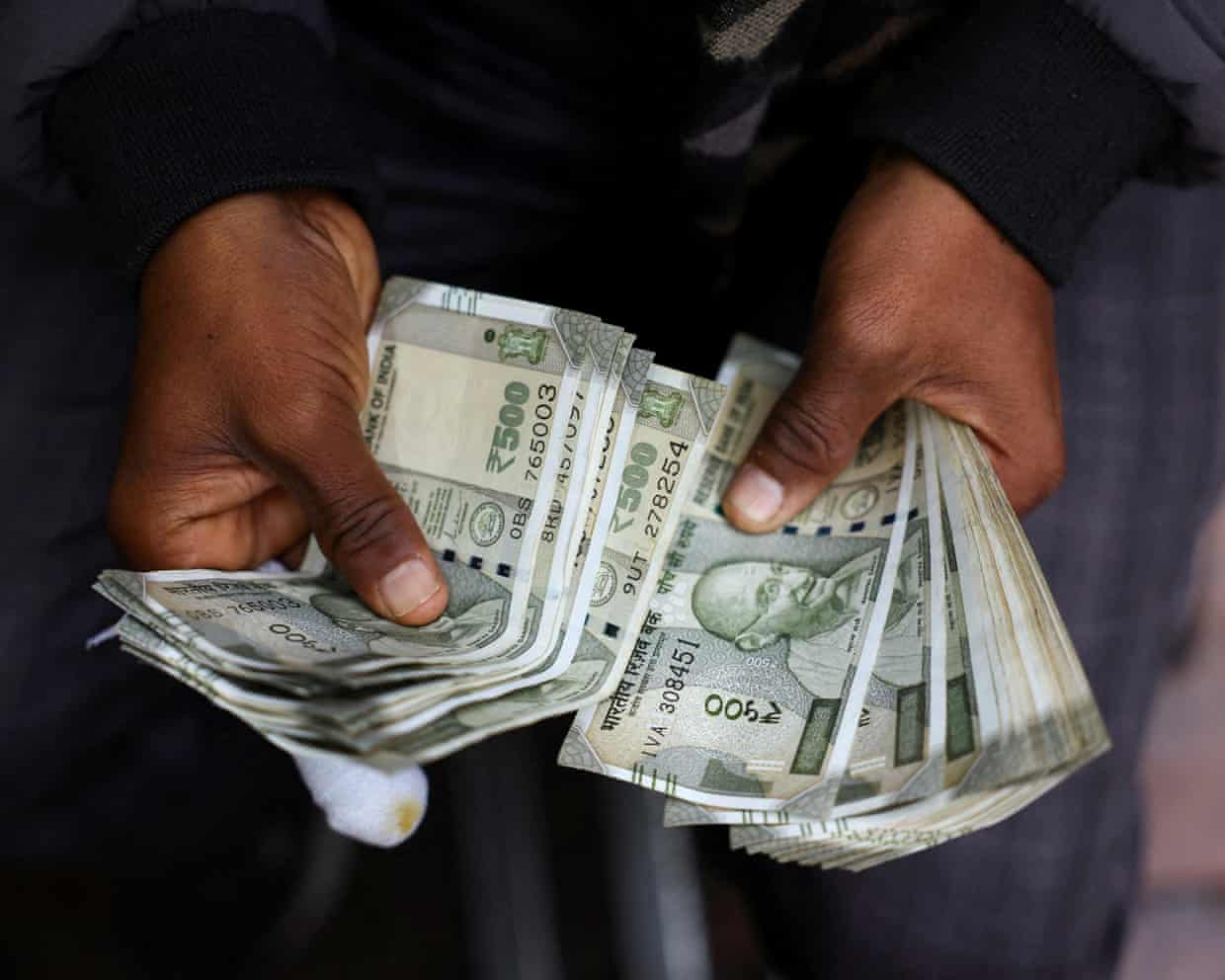
Emerging economies are at greater risk of higher interest rates and currency shocks resulting from the Iran war because of increased reliance on market investors such as hedge funds, the International Monetary Fund has warned.The IMF’s analysis shows that a cumulative $4tn flowed into emerging markets last year from outside the formal banking sector – including from hedge funds and investment funds.In a blogpost, IMF economists argue that this can bring benefits, but also risks, as these funds are more likely than traditional bank financing to be withdrawn suddenly in times of financial stress.“Market-based finance can help firms integrate into global value chains, a key driver of exports, by easing access to funding for trade, working capital, and other needs that increase their productive capacity,” it says.But it warns that these investments “tend to be more volatile than bank flows and are increasingly sensitive to global risk conditions”
Oil and gas crisis from Iran war worse than 1973, 1979 and 2022 together, says IEA
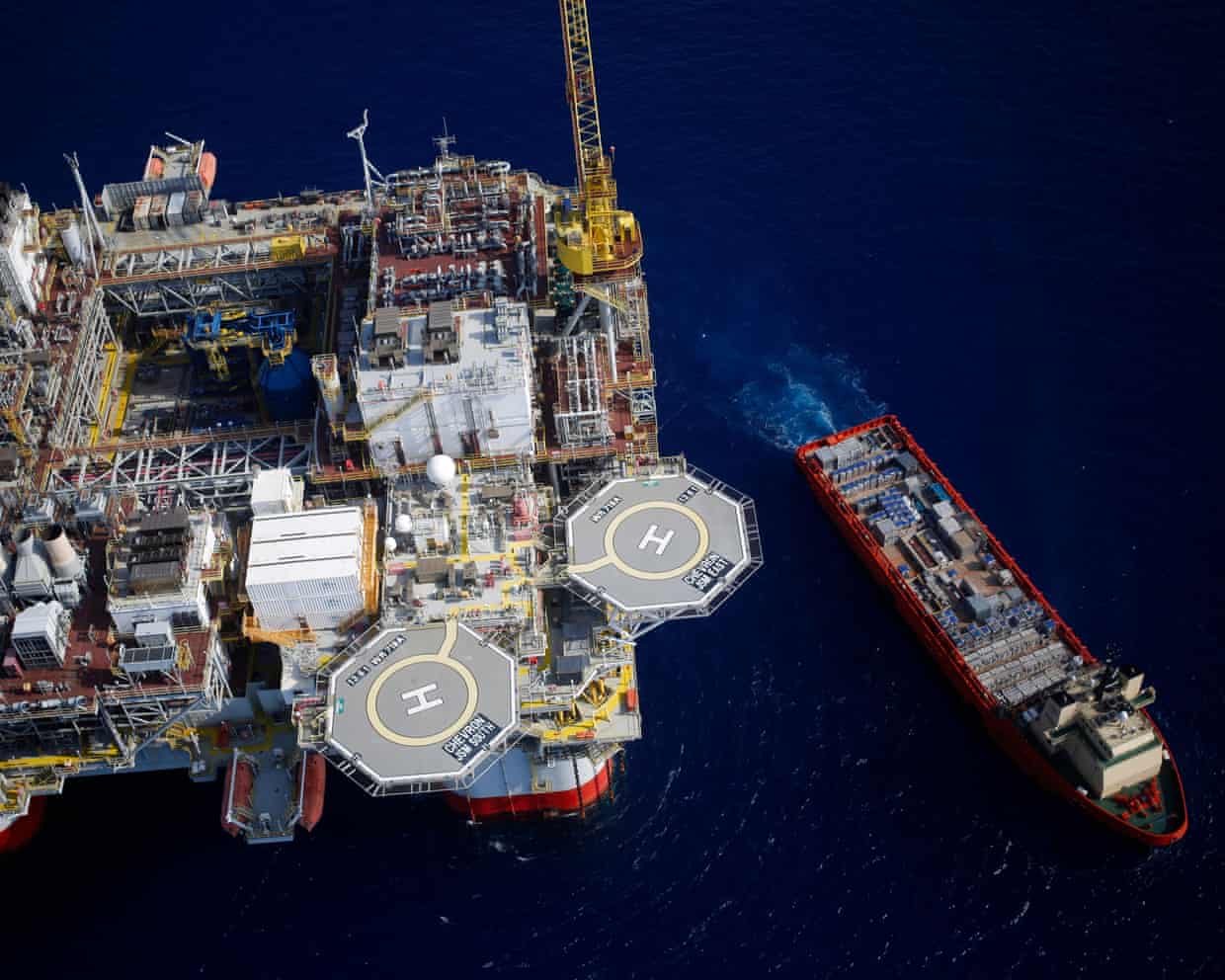
The oil and gas crisis triggered by the blockade of the strait of Hormuz is “more serious than the ones in 1973, 1979 and 2022 together”, the head of the International Energy Agency (IEA) has said, as Donald Trump’s deadline for Iran to reopen the waterway approached on Tuesday.Fatih Birol, the executive director of the IEA, told Le Figaro newspaper that the impact of the Middle East conflict on the oil market was larger than the combined force of the twin shocks of the 1970s and the fallout from Russia’s invasion of Ukraine.He also said the countries most at risk were developing nations, which would suffer from higher oil and gas prices, higher food prices and a general acceleration of inflation, while European countries, Japan and Australia would also feel an impact.Oil traded at more than $110 (£83) a barrel on Tuesday after Trump warned that a “whole civilization will die tonight” unless Iran made a deal.Brent crude, the international benchmark for oil prices, was up 0

‘There’s a lot of desperation’: skilled older workers turn to AI training to stay afloat
When Patrick Ciriello lost his job and couldn’t find work for nearly a year, his family’s foundation crumbled.“You hear about people who hit rock bottom,” Ciriello told the Guardian. “Well, I was there.”For most of his career, the 60-year-old with a master’s degree in information management designed software systems for banks, universities and pharmaceutical companies. But a series of economic shocks – the dot

Tech companies are cutting jobs and betting on AI. The payoff is far from guaranteed
AI experts say we’re living in an experiment that may fundamentally change the model of workSign up for the Breaking News US email to get newsletter alerts in your inboxHundreds of thousands of tech workers are facing a harsh reality. Their well-paying jobs are no longer safe. Now that artificial intelligence (AI) is here, their futures don’t look as bright as they did a decade ago.As US tech companies have ramped up investments in AI, they’ve slashed a staggering number of jobs. Microsoft cut 15,000 workers last year
Drone racing to drone strikes: have war and sport become indistinguishable?
The Trump administration’s pushing of the war in Iran reflects a sporting culture driven by clipped-up content, shameless tribalism and a lust for escalation Among the more surprising continuities of 2026 has been the visual kinship between the Winter Olympics and the US’s illegal and unprovoked war in Iran. High-speed camera drones were a highlight of TV coverage of the recent Games in Milano Cortina, bringing viewers within kissing distance of the action as Olympic athletes hurtled down the slopes and around the tracks in the skiing and sliding events. The incessant screech of the drones aside, the introduction of quadcopter-borne cameras felt like a real step forward in coverage of the winter sports, bringing a (literal) new perspective to events that had become, over recent decades, fairly static as a viewing experience.No sooner had the Olympics finished than aerial video was back on our screens – only the footage, in this case, was of a far darker variety. In place of the ludicrous hip flexibility of the slaloming skiers and the high-speed cornering of the monobobbers, for the past month our feeds have been flooded with satellite and drone imagery of the US military blowing Iranian aircraft, ships, vehicles, munitions buildings, and citizens to smithereens

The Breakdown | Mitchell’s Six Nations conundrum: who will be Red Roses’ next Abby Dow?
How do you solve a problem like replacing Abby Dow? Yes, it is a different take on the Sound of Music song but it is a fiendish question to answer. The Red Roses winger retired after the Rugby World Cup, leaving a try-scoring hole in the world champions’ squad, whose next task is to try to win their eighth straight Women’s Six Nations title. And so while Julie Andrews’ character realised she was not a problem after all, the England head coach, John Mitchell, is left with a selection headache before his team start their campaign against Ireland on Saturday.Dow scored 50 tries in 59 caps, with her lightning pace a key characteristic to her game. She retired to pursue a career in engineering and her boots are large ones to fill

NHS urges patients not to put off care as doctors in England prepare for strike

Say it right! The trouble with unfamiliar names | Letters

A striking exchange between nurse and doctor | Brief letters

Medicines watchdog to investigate UK peptide clinics over health claims

‘Young people want to come together’: experts respond to mass teen meet-ups in Clapham

Dorothy Logie obituary