Yann Martel: ‘I hate the rich people of this world – of which I’m one, because of Life of Pi’
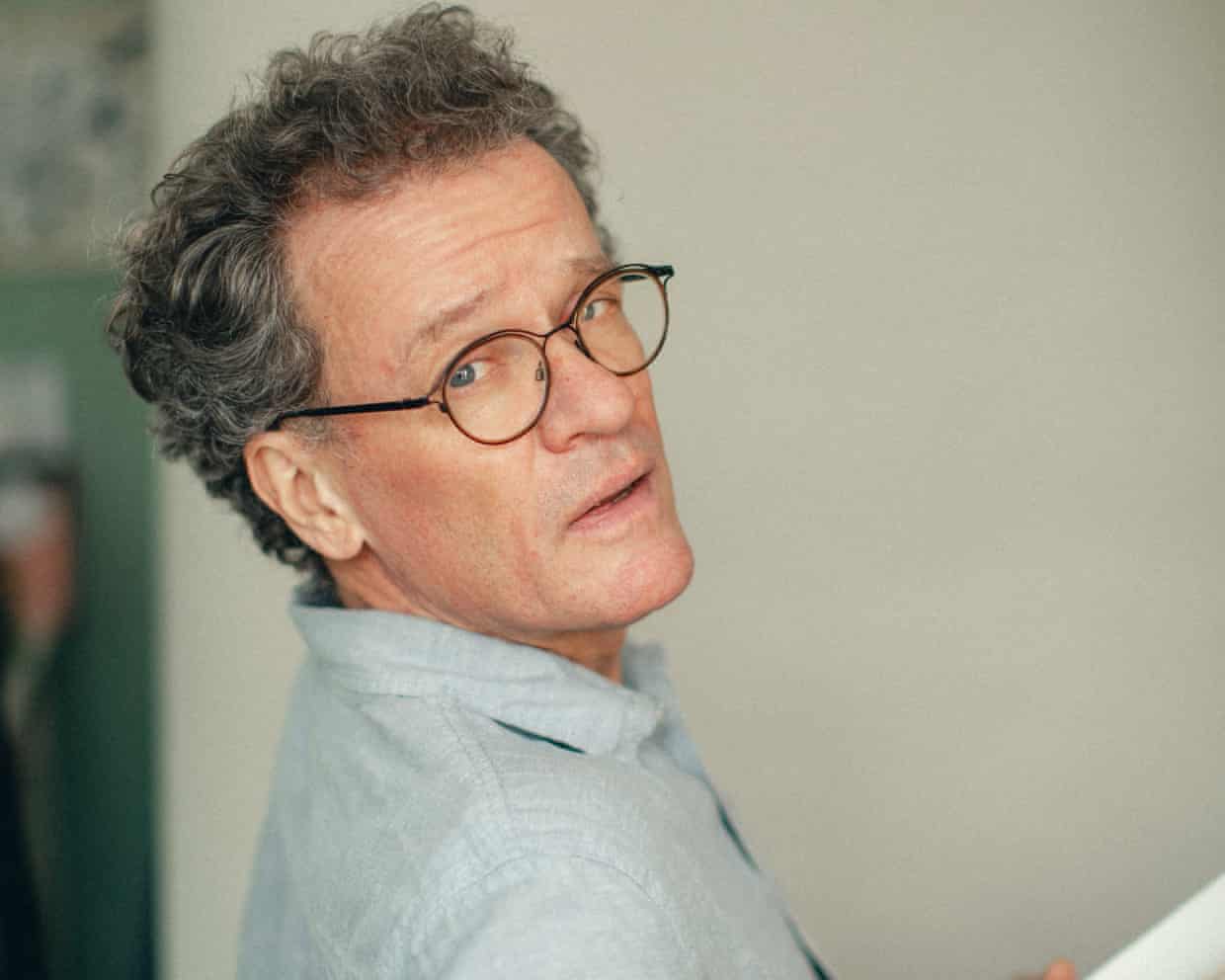
Your novels Life of Pi, Beatrice and Virgil, and The High Mountains of Portugal all feature animals in starring roles.If you could be any animal, which would it be, and why?A sloth, because it has a peaceful, long life.Or maybe a koala.They both look like stoners.A sloth just hangs there in its tree, it sleeps 22 hours a day – or maybe it’s meditating.
Most creatures take the strategies of overt camouflage or speed to stay alive, whereas the sloth’s like, “I’ll be so slow that no one will notice me,” It grows a kind of algae on its fur, which makes it hard to see in the South American jungles,So it’s kind of hiding and being at one with the universe,In the 25 years since it was published, what’s the most surprising theory you’ve heard about Life of Pi?Once at a reading, a woman said to me, “Pi lives with this tiger, and he cleans up after the tiger, feeds the tiger, endures the tiger, and at the end, the tiger leaves without saying goodbye,Is this a metaphor for marriage?” And there was a man sitting right next to her, so I said, “Is that your husband?” She said, “Yes, he is.
” That was funny,What’s been your most memorable interaction with a fan?Out of the blue one day I got a letter from Barack Obama, when he was president,One of his daughters had read Life of Pi – they’d read it together,And he bothered to write to me – I’m not even American, I’m just Canadian,It was a very nice card, very elegantly written, saying he and his daughter had liked the book, and his nice little summary of the novel.
I was blown away.I had a number of letters about Life of Pi from readers, where they took on the metaphor of Richard Parker [the Bengal tiger] as applying to their life.A great number of letters from people who had cancer and the tumour was Richard Parker, and they had to survive with Richard Parker.One woman who was kidnapped by a taxi driver in a Central American country – in her mind, he was Richard Parker.Harrowing tales of people surviving and using the metaphor of this tiger and how they had to cohabitate with it.
Your new novel, Son of Nobody, plays with the history and mythology around Troy and the Iliad.What’s your favourite fact you learned during research?When you visit the historical site of Troy – in the province of Çanakkale, just south of Istanbul – this unbelievable, mythical city is just a little accumulation of bricks.Even people who’ve never read The Iliad, most of them will have heard of Achilles and Agamemnon, Menelaus, Helen and Paris.They’ll know what it’s about.They’ll know the Trojan horse.
But when you go to the actual place, it is such a disappointment.What book, film or album do you always return to, and why?I’ll pick music, because in some ways I’m so unmusical.In my 20s, I was living in Mexico with – or off – my parents; they were diplomats, and that’s where they were posted.That’s when I started writing, and a colleague of my parents said, “Hey, here’s some music I think you’ll like since you’re starting to write” – and he gave me a cassette of Brian Eno’s Music for Airports.I’ve literally listened to that album hundreds and hundreds of times.
When I want to write and I don’t want silence, I’ll listen to that.It’s this mesmerising music that my thoughts float on, like a raft on the ocean.It’s sort of like Pavlov’s dog: I’ve been trained to focus when I hear that music.What’s the best piece of advice you have ever received?As a writer: Martin Amis once said something at a festival that stayed with me.He said, “When I was a younger writer and I was stuck at something in my writing, I would stay at my desk and I work through it.
” Whereas as an older writer, as soon as he had a problem, he would walk away and take a break,And eventually, when he came back to it, it somehow resolved itself,The problem percolates in the back of your mind – and you resolve it,I can relate to that; I go to the gym a lot to balance my cerebral life, and I always come away refreshed,In terms of life, the great lesson is letting go.
Life is an exercise, ultimately, in letting go,You don’t notice that when you’re young but at some point things are slowly taken away from you,We’re not good at letting go,People want to look as if they’re 30 when they’re 70,Pop stars are still trying to churn out three-minute pop songs when they’re 78 years old.
Writers churn out worse and worse books when most people don’t read them any more.What are you secretly passionate about?This is humourless, but: egalitarianism.I hate the rich people of this world – of which I’m one, because of Life of Pi.Our world is being destroyed by greed and wealth.You have all these oil companies defending fossil fuels, forgetting about the children because they want the money.
There’s all these people with money and a complete disregard for others.I don’t think we should tolerate wealth beyond a certain point; who actually needs a billion dollars? We should impoverish the super-wealthy and raise everyone; give everyone a fair chance right from the start, and nurture them.Then we’ll all be better off.You ran a one-sided book club with the Canadian prime minister Stephen Harper for almost four years.What’s one book you think every political leader should read?The Death of Ivan Ilyich by Leo Tolstoy.
It’s short – maybe 80 pages – and it is a perfect example of what literature can do.Stories have to be entertaining, but they can’t only be that – otherwise it’s like a chocolate bar: it tastes good but it has no nutrition.It can’t be purely nutrition either: you don’t want to always be eating kale, because that’s really boring.You want kale and chocolate, and I think this is the book that does that the best.It’s the first one I sent to Stephen Harper.
And anyone intelligent who doesn’t like reading, I say, “Read this,”Ivan Ilyich is a minor judge somewhere in the provinces of Russia, and it’s all about his [encroaching] death and the unbelievable callousness of people around him, including his wife and friends,No one really cares except for Gerasim, a servant boy,He’s the only one who opens his heart and sees Ivan’s suffering,He’s very much a stand-in for Jesus.
It’s a delightful story, funny and insightful – and you cannot read it and not in some way be wiser,What’s the strangest job you’ve ever had?I was a dishwasher in a tree-planting camp in northern Ontario and one of the things I had take care of was the latrines,I discovered I love digging holes – I dug these enormously deep latrines, the deepest latrines they ever had,What’s your favourite place to visit, and why?I love travelling, and I’m really looking forward to Australia,I’m not sucking up here – you’re a really racist society, your feminism is behind the times and you’re really backwards in some ways.
But you’ve got those marsupials! I cannot wait to meet more of your stoned koalas and your bouncing kangaroos.One thing I’d like to see this time is a platypus.In Son of Nobody, there’s mention of a platypus! I should have said that – I would be a platypus, an egg-laying mammal, instead of a sloth.A weird creature that is surprising – like a writer wants to be.Son of Nobody is out now (Text Publishing).
Yann Martel is at Melbourne writers’ festival, 7-10 May; and Sydney writers’ festival, 17-24 May

‘Labels protect us’: Olivia Nervo wants reproductive coercion to be a standalone offence – she is not alone
When the Grammy award winning songwriter, Olivia Nervo, agreed to start a family with her partner she believed she was in “a monogamous, committed relationship leading to a future”, and had never heard of reproductive coercion.Her world came crashing down when she was six months pregnant and she found out that her partner was in a relationship with another woman who was also pregnant, and with whom he already had a child.It was a discovery that led her to learn about reproductive coercion, a form of controlling behaviour in which someone interferes with an individual’s ability to make decisions about their own body. The Labour MP, Natalie Fleet, led a debate in parliament on the issue last month in which she said it was “so important – in the public interest, even – that the story of Olivia Nervo is heard”.The court declined to make any finding as to whether there had been reproductive coercion in Nervo’s case, with Fleet describing the doctrine as something the legal system in England and Wales “still struggles to recognise”
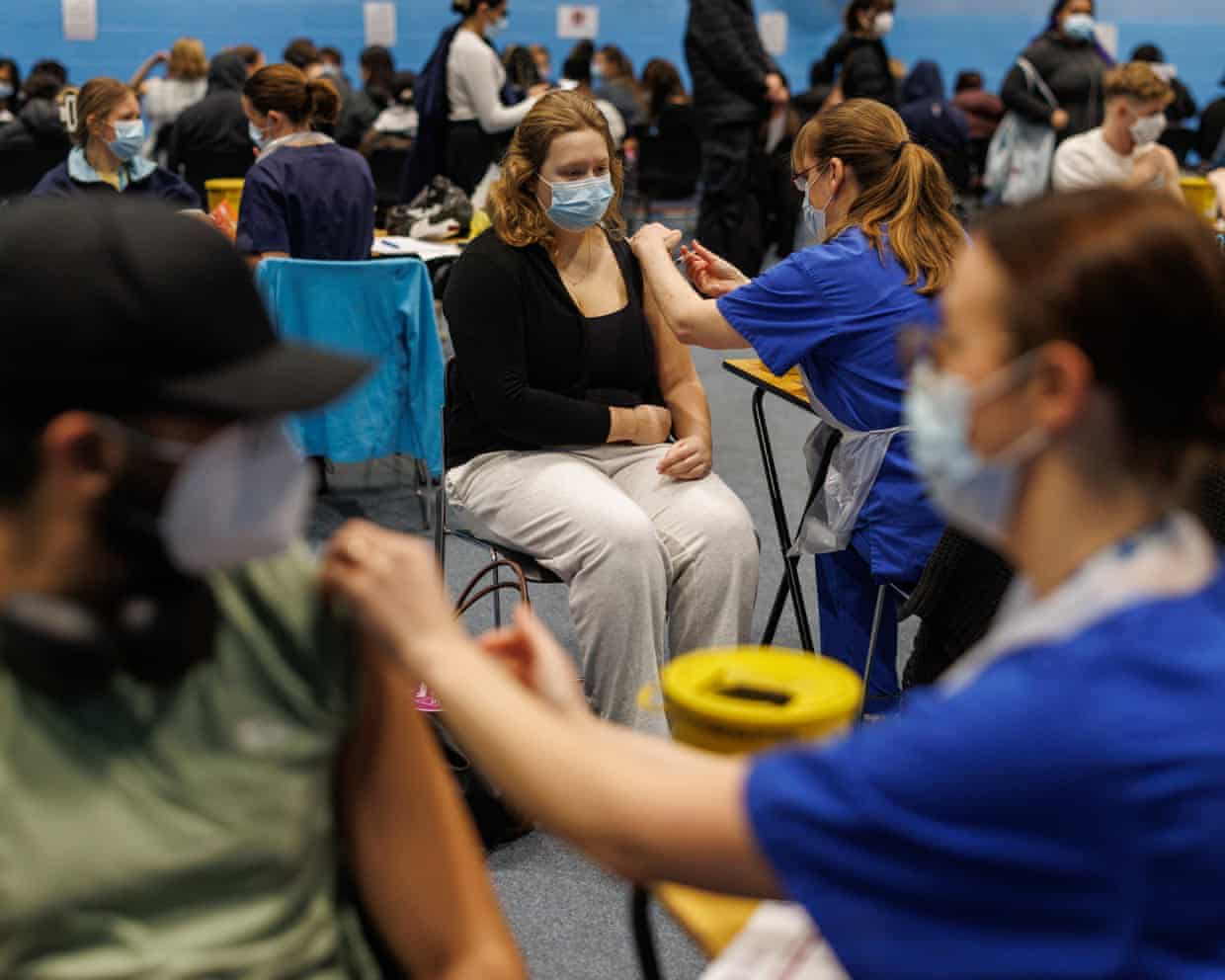
Three meningitis B cases confirmed in Dorset as young people offered vaccines
Three cases of meningitis B have been confirmed in the south-west of England, according to the UK Health Security Agency (UKHSA), and young people in the area have been offered vaccinations against the disease.The cases, which have all been confirmed to have occurred between the 20 March and 15 April in Dorset, have been treated. Those affected are said to be recovering well, according to the UKHSA.Two of the cases were in students at Budmouth academy in Dorset who are contacts of each other, while the other young person attends Wey Valley academy.However, no link has been made between these cases, which may suggest this particular strain of MenB bacteria is transmitting more widely among young people in the area

Centrepoint to cut ties with Sharon Osbourne after she backs Tommy Robinson rally
The homelessness charity Centrepoint has said it will cut ties with its celebrity ambassador Sharon Osbourne after she expressed support for a far-right rally being organised by Tommy Robinson.The charity, of which the Prince of Wales is patron, has been moved to distance itself from comments made by Osbourne. The TV personality indicated this week that she would be attending an event organised in London by Robinson, whose real name is Stephen Yaxley-Lennon.On an Instagram post about the “unite the kingdom” rally, Osbourne’s official account left a comment saying: “See you at the march.”In response, Centrepoint, which had recently engaged Osbourne as an ambassador for a campaign, said: “This sort of event does not align with our values

Aysha Raza obituary
My friend Aysha Raza, who has died of a stroke aged 52, was a neuroscientist and naturalist, and a Labour councillor for the London borough of Ealing.Representing the Central Greenford ward from 2014 until her death, Aysha was the first Muslim woman to serve on the cabinet of Ealing council, with a focus on tackling crime and inequality.She was also an active member of the Ealing Wildlife Group (EWG), a community-led conservation and rewilding organisation. The group is one of the partners in the Ealing Beaver Project, which was set up to establish a beaver colony in Paradise Fields, a nature reserve in Aysha’s ward. As well as being involved as a volunteer in the project, Aysha liaised with Ealing council to select a suitable site and get permission to establish the colony there

Tell us: have you ever been concerned about the behaviour of a child you know?
Has a child you know displayed behaviour or done things that have made you consider going to the authorities?We would like to speak to people who have faced this very difficult dilemma.Why did you to consider this course of action? How did you deal with the situation? Did you go to the authorities or decide against? What was the outcome? How did you cope? Perhaps you were able to work through the problems with support. Tell us.Your can get in touch with us confidentially by using the form below. We will not use your submission without contacting you first

Future of the NHS, saviour of the high street? High hopes for health hub in a Barnsley shopping centre
It is a revolution that might just save the NHS – and the high street. Imagine being able to have your eyes tested, mole examined or get an appointment with a consultant without going to your local hospital – and maybe fit in some shopping or a cinema visit afterwards.That, increasingly, is what people in Barnsley are doing after an unprecedented relocation of medical services from the district general hospital into a purpose-built outpatients centre in the Alhambra shopping centre, which is getting a new lease of life thanks to the experiment.Those involved say the initiative – the first of its kind in the NHS – is trailblazing and revolutionary. After a recent visit, Wes Streeting, the health secretary, described it as “really inspiring”

Bank bosses called to meeting with Reeves over impact of Iran war on UK economy

Falling fertility, debt and AI: is the US headed toward a population crisis?

UK’s OnlyFans tops $3bn valuation amid talks to sell stake to US investor
Finance leaders warn over Mythos as UK banks prepare to use powerful Anthropic AI tool

How was Elijah Hollands allowed to keep playing during a ‘mental health episode’? | Jonathan Horn

Raducanu withdraws from Madrid Open as illness absence nears two months