Falling fertility, debt and AI: is the US headed toward a population crisis?
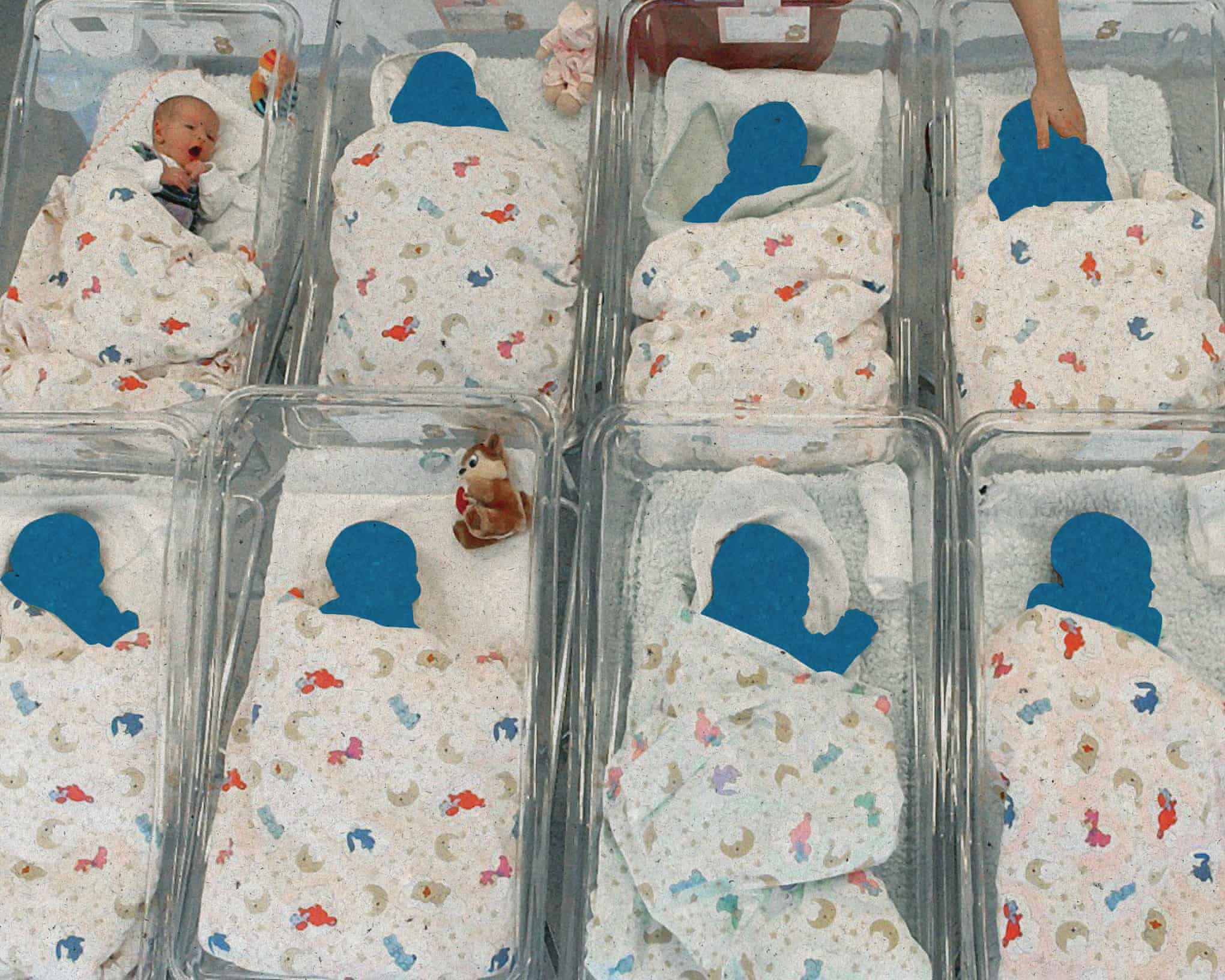
Americans having fewer kids plus an ageing population could be a recipe for disaster that further erodes social stabilityRemember environmentalist Paul Ehrlich’s 1960s-vintage prediction about how overpopulation would deplete the Earth’s resources and condemn millions to starvation? His Malthusian condemnation of humanity’s voracious appetite has kept a grip on the debate over the future of the planet, even scaring the young out of having children.Ehrlich was wrong.Yet as we have come around to the thought that overpopulation won’t kill us all, we are being walloped by another demographic emergency: we are not having too many kids, we are having too few.This problem is real.The most recent scare came from government figures released last week suggesting the fall in US fertility – the number of children a woman will have over her lifetime – may be speeding up, hitting a record low of 1.
57 in 2025, below the 1,62 projected by the Congressional Budget Office (CBO) in January last year,This is well below the 2,1 children per woman needed to maintain a stable population, a rate we haven’t hit since the Great Recession of 2008,The population hasn’t started shrinking, but it is getting older fast.
While this won’t starve us, it will further erode the rickety foundation of US social stability.In 2000, there were about 24 Americans aged 65 and older for every 100 working-age adults.By mid-century, there will be 43, according to the CBO.Taxes levied on narrower cohorts of working Americans are being called on to finance Medicare and social security for a growing cohort of pensioners, straining deficits and increasing debt.Spending on old age entitlements will grow from 6% of GDP at the turn of the century to 12.
7% in 2055, largely due to ageing, according to CBO projections.The CBO projects that the fiscal deficit excluding interest on the debt will reach about 2% of GDP by the 2040s.Economists at the Fed and the Aspen Economic Strategy Group estimated that it would be in surplus if only the ratio between elderly and working-age Americans stabilized in 2025.This is not an exclusively American problem.Fertility is falling everywhere, in rich countries with low fertility rates and poor countries where it is comparatively high.
Two-thirds of the global population lives in countries where fertility is below the replacement rate.This is contributing to rising public debt, which almost reached 94% of world GDP in 2025, according to projections by the International Monetary Fund, and is set to reach 100% by 2029, one year earlier than projected in April 2025.In China, where a decades-long policy limiting families to only one child produced one of the lowest fertility rates in the world, the IMF foresees that ageing will slow annual GDP growth by nearly two percentage points between 2024 and 2050, and boost pension spending by nearly 10% of GDP.Among the industrialized nations of the OECD, ageing is expected to push pension and health spending up by 3% of GDP.This may not sound particularly alarming for the diehard Ehrlichians that still lurk in the environmental movement, hoping the battle against environmental strains can be advanced by controlling the population.
The Silicon Valley elite probably also welcomes the happy coincidence of having the working-age population stall just as AI is about to destroy human work.But falling fertility won’t save the planet.Carbon emissions must fall sharply over the next two or three decades.Populations don’t change that fast.One study found that even if fertility around the world were bumped up to the replacement rate of just above two children per woman, the global temperature in 2200 would be less than 0.
1C hotter.Fans of depopulation misunderstand how humanity prospered despite environmental constraints: through innovation.Just as agricultural innovations fed a growing population on limited land, the path to decarbonization requires zero-carbon energy production on a vast scale.Innovation needs people, though.Smaller populations will have fewer innovators.
Smaller economies will have fewer resources to pay for innovation with large upfront costs, and smaller markets to justify these investments.It is not a coincidence that the population lump created by the baby boom was accompanied by a jump in pharmaceutical innovation targeted at the ailments of boomers as they aged.Hopeful scholars want to believe it is only a matter of spending money to get more children.Falling fertility in advanced nations is largely driven by the rising opportunity cost of child-bearing for women who must interrupt their education or career to have children.But much evidence suggests that even societies that spend generously on public childcare and family support to reduce the burden have not raised fertility consistently.
Trump’s White House has some ideas.There’s a plan to deposit $1,000 into an account bearing Trump’s name for every child born during his presidency.It has floated teaching women about their menstrual cycle so they target their lovemaking.It proposed a National Medal of Motherhood to encourage patriotic women to get on with it.But even if this produced a baby boom tomorrow, it would not fix the world’s fiscal dilemma.
It takes 20 years or more for kids to start contributing economically.Over the next couple of decades, more of them would increase the strain on countries’ budgets.What’s to be done? AI could bolster the social contract, if a stupendous productivity leap raises economic growth so it can support the jobless, whether young or old.We shouldn’t count on it, though.Getting tech oligarchs to share the spoils of their revolution may not be easy, considering plutocrats’ longstanding hostility towards redistribution.
Despair is kindling a fear that our demographic conundrum will inspire a darker response.In Children of Men, PD James’s zero-birthrate dystopia, the challenge of supporting elderly people is dealt with by facilitating their suicide.We know how to encourage the old to take the deal: make their life miserable by depriving them of social security and Medicare.

‘Last year is over’: Oklahoma City launch title defense as NBA’s parity era faces test
The league hasn’t had a repeat champion since the 2017-18 Warriors. The level-headed, consistent Thunder may be the ones to change thatThe NBA has not seen a reigning champion take its title defense as far as the conference finals, let alone hoist a second consecutive Larry O’Brien trophy, since the Golden State Warriors were cut off at the ankle and calf by the Toronto Raptors in the 2019 Finals. That’s seven straight seasons in which parity has ruled supreme, for better or for worse, and dynastic runs seem fated to be a thing of the past.Not if one team in America’s heartland has anything to say about it. The Oklahoma City Thunder embark on these 2026 playoffs in search of historic greatness, trends be damned

The Crucible holds tribute to former player and commentator John Virgo
A minute’s applause was paid in tribute to John Virgo, who died in February aged 79, as the World Snooker Championship got under way at the Crucible in Sheffield.Virgo, who won the UK Championship in 1979, enjoyed a successful playing career but was best known for his broadcasting. During his 18 years as a professional, he reached the World Championship semi-finals in 1979. He went on to work for the BBC in 1994 and his voice became a distinctive feature of the national broadcaster’s snooker coverage for three decades.This article includes content hosted on embed

‘That’s a guppy’: Baumgardner swats aside Britain’s Dubois as feud escalates
A dismissive Alycia Baumgardner said Britain’s Caroline Dubois still has more to prove before the American will entertain a fight between the two unified champions.That was the curt assessment from Baumgardner early Saturday morning after she retained her WBA, WBO and IBF junior lightweight world titles with a controlled, at times punishing display across 10 three-minute rounds against Bo Mi Re Shin in a main event that started well past midnight at Madison Square Garden.“Like I said, I’m a piranha,” said Baumgardner, a world champion at 130lb since 2021. “That’s a guppy. Get her out of here

AFC Bournemouth’s owner Bill Foley behind US takeover of Exeter Chiefs
Bill Foley, owner of AFC Bournemouth, is poised to take control of Exeter Chiefs in a multimillion-pound deal that will bring Premier League and Hollywood glamour to English club rugby.The Guardian revealed this week that Exeter’s chair, Tony Rowe, had agreed to sell the club to a wealthy American investor, and can now disclose the club’s new owner will be Foley’s multisport investment company, Black Knight Sports and Entertainment.The Black Knight Football Club that owns Bournemouth includes the Hollywood actor Michael B Jordan, who won this year’s best actor Oscar for his role in Sinners, as a minority shareholder.Foley’s investment vehicle, Cannae Holdings, provides most of the multi-club group’s funding, however, and is understood to be behind the bid for Exeter. Cannae’s chief executive, Ryan Caswell, was captured by TNT Sport’s cameras sitting next to Rowe at Sandy Park during Saturday’s 35-28 home defeat by Northampton

‘I’m extremely lucky to be here’: Jelena Dokic on childhood dreams and talking tennis
Australia’s former world No 4 player and now respected pundit speaks about highs and lows in her life, and the importance of family on successAll sports stars know that dealing with highs and lows comes with the territory, as part of the job. But few have been through such extremes as Jelena Dokic, who spent her whole career – and much of her life –navigating painful moments. Abused, physically and psychologically, by her father, Dokic suffered from depression and an eating disorder and, at her very lowest moments, contemplated suicide.But Dokic never gave up, showing rare resilience, built from her experience growing up in a war-torn country and being a refugee twice. (Dokic was born in Croatia – part of the former Yugoslavia – and moved to Serbia, before settling in Australia

Hampshire v Somerset, Warwickshire v Essex, and more: county cricket – as it happened
Hampshire were frustrated by Somerset’s wagging tail, but wiped out the deficit before bad light stopped play at Southampton. There was no century for James Rew, caught uncharacteristically skewing a half-volley for 86, one of three wickets for Codi Yusuf.Tom Abell made 49, Lewis Gregory was out to Kyle Abbot for the ninth time in 13 matches, but it was 22-year-old Alfie Ogborne who caused Hampshire the most pain, whooping three sixes in an enterprising last-wicket stand. Hampshire lost Toby Albert to a leg injury early on, but Nick Gubbins’ undefeated 70 helped them to a 96-run lead.After play, Somerset’s head coach, Jason Kerr, was asked about Rew’s chances of playing for England: “He is a good enough player to play international cricket … he’s an incredible talent and one that should get international recognition
Bank bosses called to meeting with Reeves over impact of Iran war on UK economy
Falling fertility, debt and AI: is the US headed toward a population crisis?

UK’s OnlyFans tops $3bn valuation amid talks to sell stake to US investor

Finance leaders warn over Mythos as UK banks prepare to use powerful Anthropic AI tool

How was Elijah Hollands allowed to keep playing during a ‘mental health episode’? | Jonathan Horn

Raducanu withdraws from Madrid Open as illness absence nears two months