UK government borrowing costs rise as Starmer ‘fails to reassure bond markets’ – as it happened

UK government borrowing costs are creeping a little higher after a morning of rising political jitters,The yield, or interest rate, on UK 30-year bonds is now up 8 basis points (0,08 of a percentage point) at 5,65%, up from 5,57% on Friday night.
That’s higher than just before Keir Starmer’s speech this morning, when they were up about 5bps.Benchmark 10-year bond yields have risen higher too – now up 6bps, having been 4bps higher earlier in the morning.Rising bond yields indicate that bond prices have dropped, suggesting less appetite for UK debt and pushing up the cost of borrowing.These increases comes as Labour MP, David Smith, has said Starmer should set a timetable for his departure and that the government neeed “to act faster, and be more radical”.Update: Labour MP Catherine West, who announced a challenge to Starmer over the weekend, has now said she wants the prime minister to set a timetable of September for an orderly departure.
Susannah Streeter, chief investment strategist at Wealth Club, says there are concerns in the bond markets that a change of Prime Minister would prompt wider turmoil at the top of government, and less focus on fiscal rules.Streeter writes:double quotation mark“Keir Starmer’s address to the nation hasn’t done the trick of calming bond markets.There is still a sense of jitters playing out as concerns about political instability collide with inflationary fears prompted by the ongoing conflict in the Middle East.His speech was designed to project a ‘keep calm and carry on’ message, but the worry is that it lacks the real substance needed to keep Labour MPs on side.Ten-year gilt yields have crept higher, nudging 5% once more, while longer-dated government debt remains hovering above 5.
6%.They have not been at this level for a sustained period since the late 1990s.Time to recap….The cost of UK government borrowing has risen as Keir Starmer’s crucial speech failed to dispel investor “jitters” in the bond markets over political instability combined with fears of rising inflation.The yield, effectively the interest rate, on the benchmark 10-year UK government bonds (known as gilts) rose by just over eight basis points (or 0.
08 of a percentage point) to 5% today,The yield on 30-year gilts rose over 10 basis points to 5,68%, edging closer to the 28-year high of 5,78% last week when uncertainty about Starmer’s future as prime minister was intensifying,In his speech, Starmer said he would fight any leadership challenge and would not walk away from his responsibilities after Labour’s drubbing in local elections in England and parliamentary contests in Scotland and Wales last week.
Analysts said that Keir Starmer’s speech had failed to reassure bond markets,The Item Club have estimated the UK economy will shed 163,000 jobs this year, as the Iran war drive up energy costs and hits household disposable income,Heathrow has reported a drop in passenger numbers in April, as the Middle East conflict hit flights,Factory gate inflation in China has hit its highest in almost four years,The German energy group E.
ON has agreed to buy struggling UK rival Ovo in a deal that would create Britain’s biggest gas and electricity supplier by number of households served.Bank of England deputy governor Sam Woods has warned of “significant disruption to come” for banking customers due to rapid developments in AI.Speaking during a fireside chat at the UK Finance Growth Delivery Summit at Drapers Hall in London, Woods said the advent of AI models like Anthropic’s Mythos have notably increased the ability to find weaknesses in bank’s tech systems.He said that would result in banks ramping up efforts to get ahead of bad actors, by “patching” their IT infrastructure more often.While that may sound like positive news, patching is one of the most common causes of banking outages, leading Woods to warn of “significant disruption to come.
” (A reminder that customers of the UK’s nine largest banks and building societies suffered the equivalent of 33 days of outages - around 803 hours - between January 2023 and February 2025, according to the Treasury Committee.)Political uncertainty hasn’t stopped London’s blue-chip share index gaining ground today.The FTSE 100 share index has closed 36 points higher, or +0.36%, at 10,269 points.In truth, the Footsie is a better gauge of the global economy than the domestic one.
Top riser was Airtel Africa, up 15% after Indian parent Bharti revealed it is considering increasing its stake in the business,Mining companies also rallied,The pound is now very slightly HIGHER against the US dollar,Sterling has gained 0,1% to $1.
3645, despite the political drama swirling in Westminster…,With UK bond yields still higher as trading draws towards a close, Professor Costas Milas of the University of Liverpool tells us:double quotation markThere is no doubt that most of the latest rise in UK yields is due to higher, and sticky, inflation compared to other EU countries and/or the US,Nevertheless, the ongoing political instability, which raises the issue of how well the country can be governed, adds significantly to our cost of borrowing,Recall that the Bank of England currently pursues active Quantitative Tightening policies (I,e.
it sells UK bonds; the reversal of QE) which also contribute to higher yields,It would be wrong for analysts/commentators/experts to call for a QT halt for two reasons,First, the BoE would then be accused of interfering with political issues,Second, abandoning (albeit temporarily) QT, would add further to inflation pressures at the very time the BoE is trying to find a way of dealing with them,.
,US home sales rose by less than expected last month, as higher interest rates hit demand,Sales of existing homes rose by 0,2% last month to a seasonally adjusted annual rate of 4,02m units, the National Association of Realtors has reported, below forecasts of a rise to 4.
05m units.Lawrence Yun, the NAR’s chief economist, says:double quotation mark“Despite mixed macroeconomic signals, including a record-high stock market and historically low consumer confidence, home sales were modestly boosted by the continued improvement in housing affordability.”Wall Street’s main indexes have opened cautiously, as fears over the Iran war talks lifted oil prices.The Dow Jones Industrial Average has dropped by 0.05%, or 35 points, at 49,574 points.
The broader S&P 500 index is up 0.15%, and the Nasdaq Composite is 0.1% higher.Investors are on edge after Donald Trump called Iran’s response to a US peace proposal ‘totally unacceptable’, and Tehran said it will retaliate against any new US strikes or foreign warships in the strait of Hormuz.At least one in seven UK workers had their employment rights violated between 2023 and 2025, a report by University College London suggests.
Researchers from UCL found that at least 5.4 million workers had faced clear violations of UK employment law, including being paid below the national minimum wage, charged work-finding fees, and not receiving payslips or contracts.The team spoke to representative sample of more than 4,000 UK workers about their experiences at work over the two year period.They found that 6.1% were paid below the national minimum wage, a rate four times higher than the previous estimate of 1.
6% published by the Office for National Statistics,Low-income workers were found to be particularly vulnerable, with the rate of violations rising to more than one in four (25,6%) for employees from minority-ethnic backgrounds or in non-traditional jobs,Approximately 26 to 28 million people, or 70% of the workforce, have experienced at least one of a broader range of harms, also including potentially illegal or otherwise damaging work practices, according to the researchers,These other negative impacts included working extra hours unpaid, physical injuries in the workplace, and bullying or harassment.
“Not all breaches of the law are deliberate and not all harmful behaviour is illegal,” said UCL professor Ella Cockbain, who co-led the project,“But the sheer scale of problems identified suggests widespread non-compliance and other harms at work,”The report recommended the government improve communications about workers’ rights, and create easier and safer methods for reporting abuses, including multi-lingual communications and safeguards for migrant workers,Cockbain added:double quotation mark“The received wisdom that there are a few ‘bad apples’ among employers is simply not tenable anymore,We found problems across the system, and rights on paper did not necessarily translate into rights in practice.
The results call for concerted action to improve worker protections and their enforcement.”Since the research period, new legislation under the Employment Rights Act, which came into force last month has improved a number of conditions for employees and workers, including guaranteed hours and payment for short-notice cancellation of shifts, a ban on fire-and-rehire in most cases, paternity and parental leave from day one and stronger trade union rights.The research was conducted by UCL in collaboration with the University of Gloucester, and co-funded by the Department for Business and Trade and the Economic and Social Research Council.It was published by the newly established Fair Work Agency.Elsewhere in the markets, India’s stock market fell sharply today after the country’s prime minister called on citizens to conserve fuel, work from home where possible and cut back on travel and imports.
Narendra Modi made the call to ease pressure on the country’s foreign exchange reserves, as the Iran war causes economic turbulence.Investors took it badly, though, with India’s Sensex falling by 1.7% today.Shumita Deveshwar of City consultancy TS Lombard say the comments are “a stark reminder of the macro risks India faces from a prolonged conflict”.A shift to the left for the Labour party would trigger “at least a temporary period of pound selling”, predicts Lee Hardman, currency expert at Japanese bank MUFG.
So far today, though, the pound is flat against the euro at €1,156, and down just 0,15% against the US dollar at $1,361,UK 10-year bond yields have just hit the 5% milestone.
That’s a jump of eight basis points (0,08 of a percentage point), to the highest level since last Wednesday, approaching their highest level since the 2008 financial crisis,Enrique Díaz-Alvarez, chief economist at global financial services firm Ebury, argues that the pound has weathered the results of the May local elections in the UK remarkably well,With sterling down just 0,2% so far today, Díaz-Alvarez argues that the Labour bloodbath was roundly expected and priced in by markets, adding:double quotation mark“Investors are betting that Labour’s overwhelming defeat will not end Starmer’s premiership just yet, but pressure on the prime minister looks set to intensify in the coming days, with a number of backbenchers already calling for his resignation.
“As this is written, no potential rivals on his left have launched a formal bid to replace him, although there are murmurs that the likes of Rayner and Streeting are privately weighing their options,“A potential lurch to the left is what markets fear most, as this could mean higher taxes, heavier gilt issuance and a broader fiscal risk premium baked into UK assets,Shorter-dated UK government bonds, which are more sensitive to short-term inflation risks, are also weakening today,This has pushed up the yields on two-year, and five-year, gilts by around 8bps today – bigger rises than for US shorter-dated bonds,And still UK bond yields creep higher.
The 30-year bond yield is now up 9,3 basis points (0,093 of a percentage point), to 5,67%,That takes it nearer to the 28-year high of 5.
78% hit last week, amid uncertainty about the future of Keir Starmer’s government.
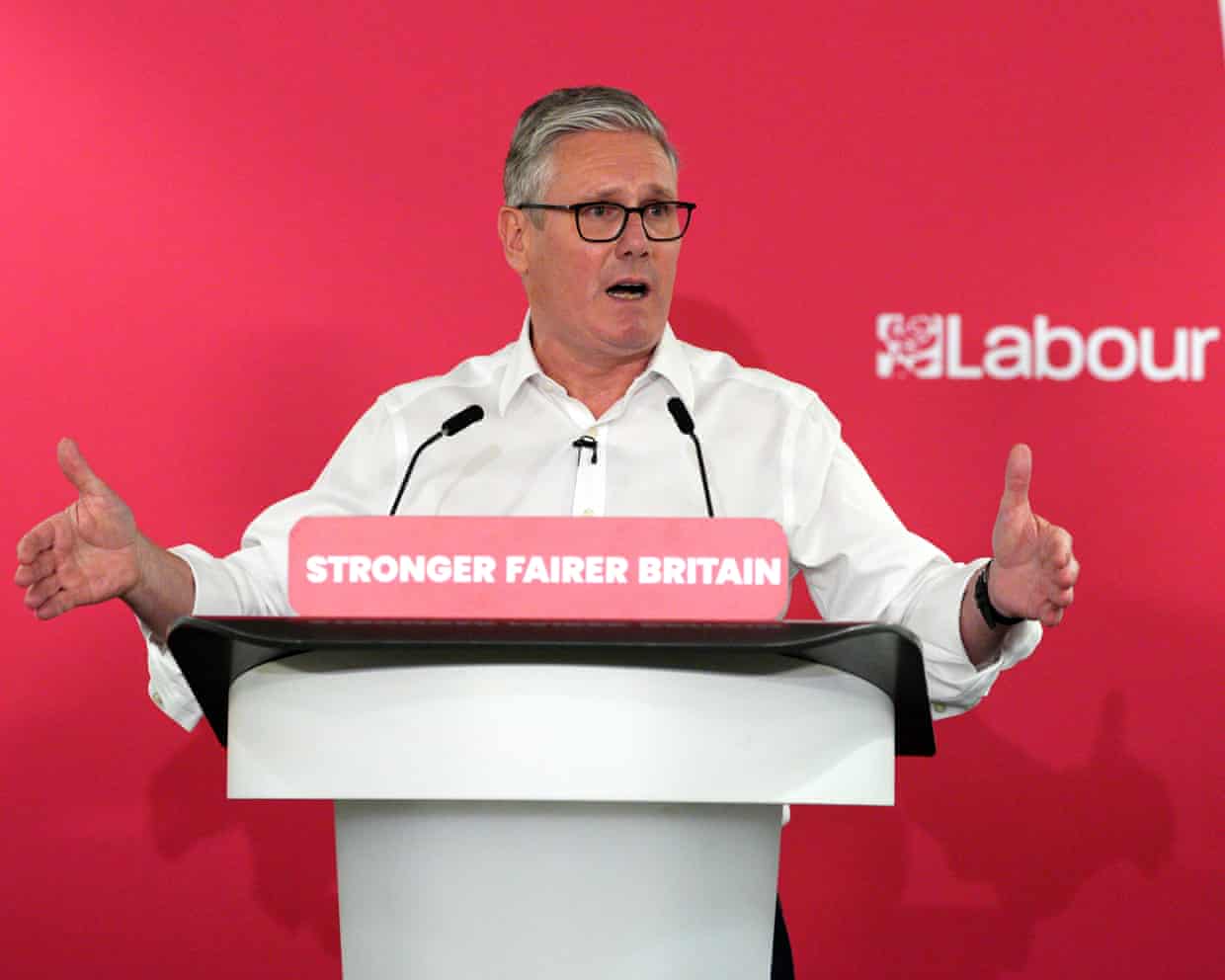
UK borrowing costs rise as Starmer speech fails to dispel investor ‘jitters’
The cost of government borrowing has crept higher as Keir Starmer’s crucial speech failed to dispel investor “jitters” in the bond markets over political instability combined with fears of rising inflation.The yield, effectively the interest rate, on the benchmark 10-year UK government bonds (known as gilts) rose eight basis points (or 0.08 of a percentage point) to 5% on Monday.The yield on 30-year gilts rose 9.3 basis points to 5
E.ON agrees to buy Ovo in deal to create UK’s biggest energy supplier
The German energy group E.ON has agreed to buy struggling UK rival Ovo in a deal that would create Britain’s biggest gas and electricity supplier by number of households served.The combined company will supply about 9.6 million customers, overtaking the market leader, Octopus, which serves almost 8m homes in the UK.The value of the deal was not disclosed, but reports have estimated it at £600m

Thinktank calls for ‘double lock’ England private rent cap to ease living costs
One of the thinktanks closest to the Labour government is urging ministers to introduce private sector rent controls in England, as the chancellor weighs up how to ease a surge in living costs caused by the Iran war.The Institute for Public Policy Research (IPPR) has published a paper calling for a rent “double lock”, which would link rent increases to either wages or inflation, depending on which was lower.While others on the left have previously called for rent controls, the IPPR’s extensive links inside government will increase pressure on ministers to include the idea in a cost of living package to be announced by Rachel Reeves later in May.The Guardian revealed last month that Reeves had been considering a one-year rent freeze to deal with a rise in inflation which economists say is now inevitable, but the idea was quickly dismissed by Downing Street.Maya Singer Hobbs, the author of the paper, said: “There are millions of people living with unaffordable housing costs, and if you want to bring those down quickly there are not many options
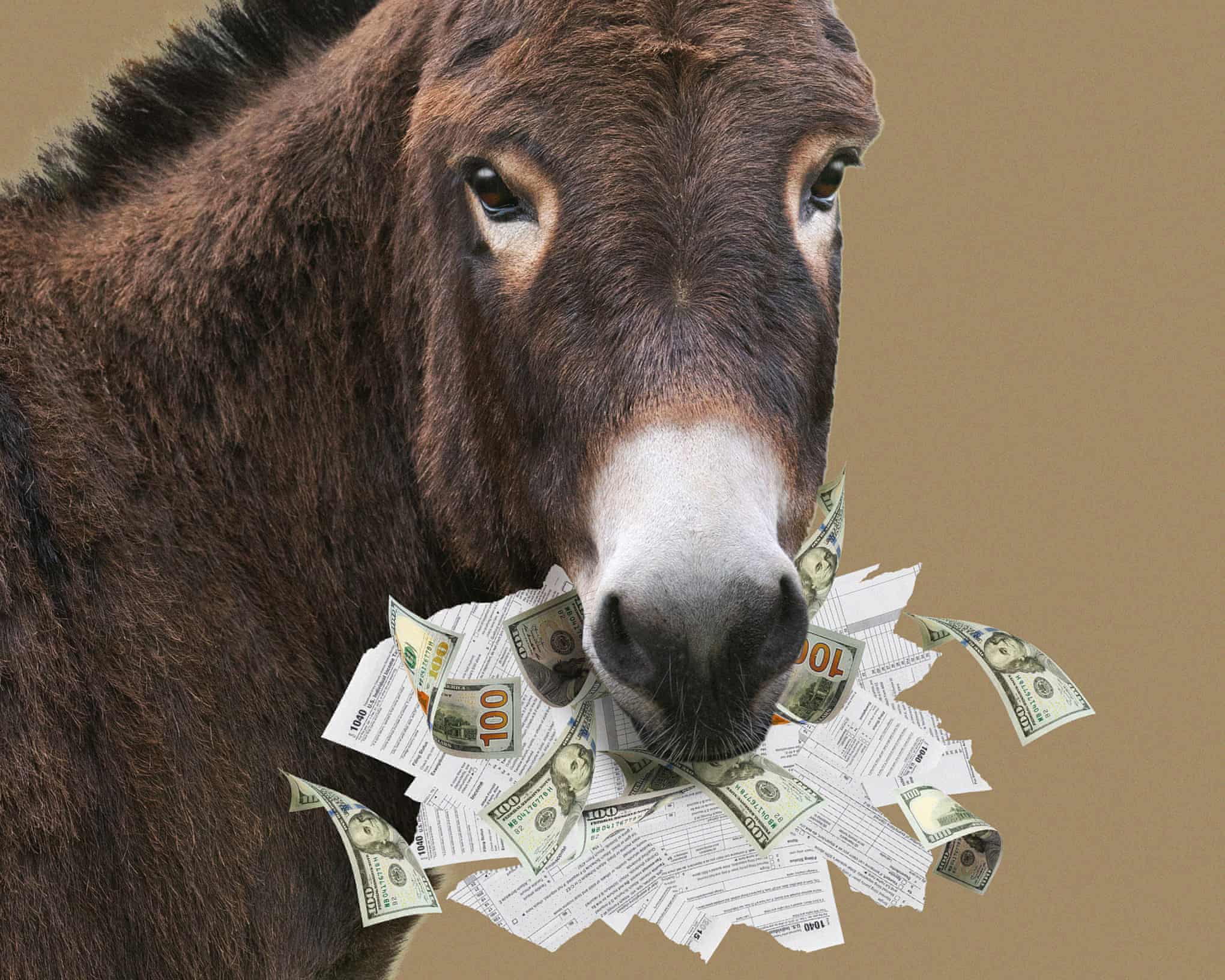
Democrats are playing with fire in trying to reclaim tax cuts from Republicans
Senator Chris Van Hollen and other Democratic lawmakers are embracing a policy that hardly benefits the middle classSoul-searching within the Democratic party is to be expected after its loss in the 2024 election. Donald Trump’s edge over Kamala Harris in voters’ perceptions of economic competence (perplexing though it now appears following a year of erratic policymaking) was bound to inspire a call to rethink the party platform.Yet the second-guessing is steering the Democrats down a dangerous path to embracing a tax-cutting strategy that risks defeating the project to enable a healthier, more equitable society.The most prominent proposal bouncing around Democratic circles comes in a bill from Chris Van Hollen, a Maryland senator. In a nutshell, it proposes cutting taxes for Americans earning up to $80,500 ($161,000 for married couples) and funding the $1

Oil prices climb after Trump dismisses Iran’s response to peace plan
Oil prices have climbed after Donald Trump condemned Iran’s response to US proposals to end the war as “totally unacceptable”.The president’s rejection of Tehran’s overture in a post on his Truth Social platform triggered a jump in Brent crude, the international benchmark for oil prices, by as much as 4% on Monday to $105.50 a barrel, before easing back to settle at $103.50.The US had presented a peace proposal a week ago, said to consist of a 14-point memorandum of understanding that would reopen the strait of Hormuz, while setting a framework for further talks on Iran’s nuclear programme
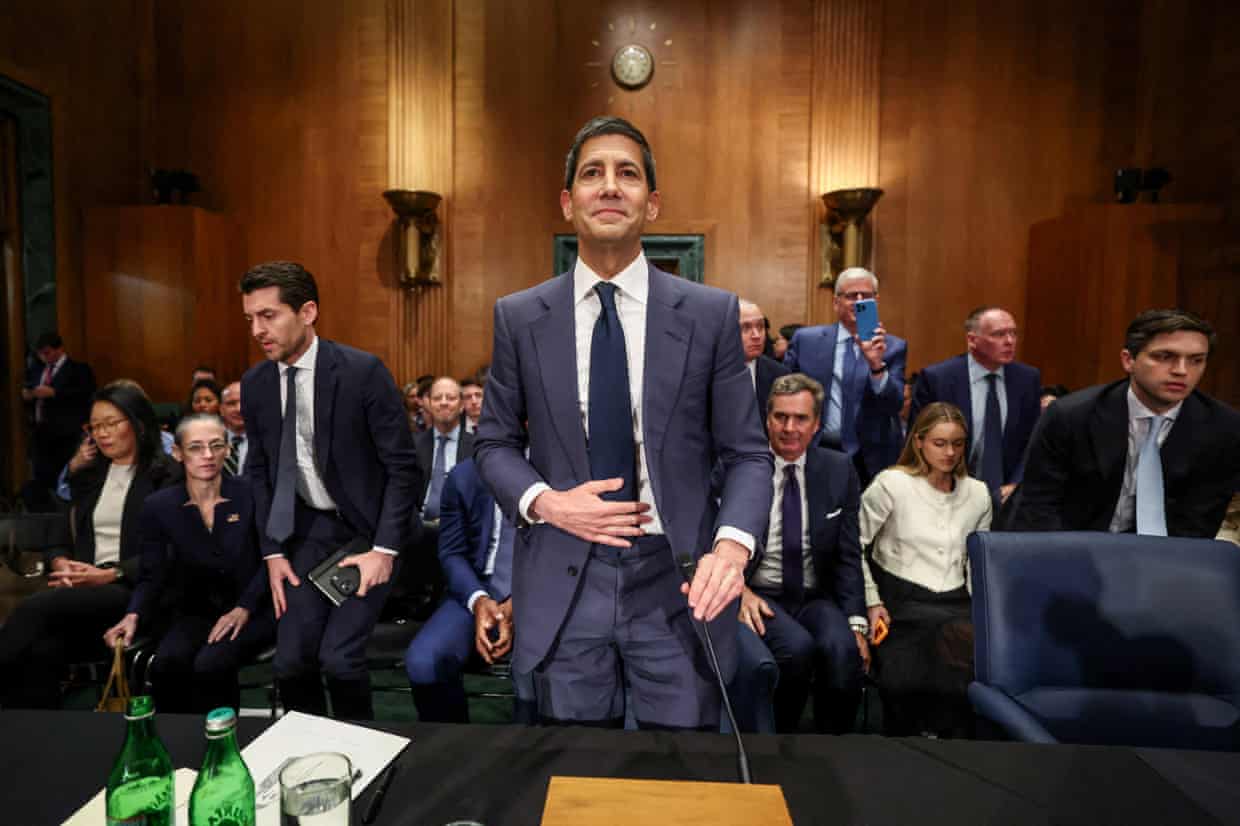
US Senate expected to confirm Kevin Warsh as next Federal Reserve chair
The US Senate is expected to confirm Kevin Warsh this week as chair of the Federal Reserve, as Donald Trump continues his campaign to influence the world’s most important central bank.The Fed’s influence over the economy spans from the job market to mortgage rates, and its every move is carefully scrutinized by investors on Wall Street. Warsh’s confirmation comes at a turbulent time for the central bank, which has fallen under intense scrutiny from Trump for not lowering interest rates.The vote is expected to be split along party lines. Democrats criticize Warsh for being Trump’s “sock puppet” at a time when the president has pushed past the typical boundaries between the White House and the nonpartisan Fed

How to match wine with vegetables

‘Restaurants won’t survive’: Michelin chef opens venues abroad to withstand UK taxes

Rachel Roddy’s recipe for spring chicken thighs with spring onions, mint and peas | A kitchen in Rome

Navel gazing: oranges, mandarins and persimmons top Australia’s best-value fruit and veg for May

How to save asparagus trimmings from the food-waste bin – recipe | Waste not

Thoran and chaat: Romy Gill’s Indian-style asparagus recipes