Dynamic pay on platforms such as Uber should be banned, says TUC

The practice of using “dynamic pricing” to set pay on gig economy platforms including Uber should be banned because it leaves workers at the mercy of shadowy algorithms with no certainty over their earnings, trade union leaders have urged,In a report exposing the human cost of the gig economy practice, the Trades Union Congress said pay was becoming decoupled from time, skill or effort,Instead, work had become a speculative practice with the rewards determined by an algorithmic process with little transparency,Under dynamic pricing, computer-driven algorithms set variable prices on a gig economy platform for customers and rates of commission for workers to match real-time supply and demand in a market,However, union leaders say the practice replaces fixed rates or transparent tariffs with opaque, constantly shifting pricing mechanisms, where the data used to determine the rewards and decision-making process are largely obscured.
Having initially taken a fixed 20% cut of the UK fares charged, which subsequently rose to 25%, Uber introduced dynamic pricing in 2023, an algorithm that variably sets pay for drivers and fares for passengers.Publishing the testimonies of almost a dozen workers, the TUC found workers describing themselves as “gambling”, “leaving it to fate,” or “waiting for the jackpot,” because pay felt like the outcome of chance rather than work.Compiled alongside the non-profit campaign group Worker Info Exchange (WIE) and academics from Nottingham Trent’s Work Futures Observatory, the report called on the UK government to take action to “end” the practice of dynamic pay.It also called on ministers to push ahead with reforms to further strengthen employment rights in the UK and to give workers and trade unions the right to access data collected by employers for artificial intelligence decision-making.Among the case studies in the TUC report, several Uber drivers said that dynamic pricing was negatively affecting their incomes, family life and health.
They also said that passenger safety could be compromised because they felt the intense competition was forcing them to drive even when they were tired,Several said they felt their earnings were equivalent to being paid below the minimum wage,Vladimir, a London based-driver who has worked for Uber since 2016, said: “It’s too unfair,I want to smash my screen,It feels miserable.
”He said he believed his income had fallen as a result of dynamic pricing,“Uber went from 100% transparency … to 0% transparency,Everything is ‘flexible’,The fare is flexible,The commission is flexible.
What the driver gets is flexible.No one knows.”It comes after a University of Oxford study last year showed that many Uber drivers were earning “substantially less” an hour since the ride hailing app introduced dynamic pricing in 2023.Published in partnership with WIE, the Oxford researchers also found the introduction of algorithmically determined fees for passengers and pay for drivers coincided with the company taking a higher share of fares.Paul Nowak, the TUC general secretary, said an urgent crackdown on dynamic pricing was required.
“Two drivers doing practically the same job at the same time could be paid wildly different sums determined by an algorithm.And when taking a job, they have seconds to decide whether it will be worth their time with patchy information,” he said.“That’s plainly unfair.This is a rigged system which overwhelmingly tilts the balance of power to platform company bosses over workers.”He added: “Let’s call this out for what it is: exploitation by the algorithm.
”Uber has faced legal demands to stop using AI-driven pay systems in a case orchestrated by WIE, challenging its use of dynamic pay on behalf of drivers in the UK, the Netherlands and elsewhere in Europe.Cansu Safak, the research lead at WIE, said: “The absence of basic worker rights has allowed dynamic pay to thrive.With no transparency over the conditions they work under, drivers have been forced to turn to data protection law as the only remaining route to assert their rights.“And in the absence of meaningful regulatory response, they are once again turning to the courts to seek justice through the collective legal action we have launched.”An Uber spokesperson said drivers told them they choose the company because it offers flexibility, good earnings and benefits.
“Uber has always priced trips based on a range of factors, including time, distance and demand, and drivers always see the destination, and how much they will earn from the trip, before they decide whether to accept.“All drivers receive a weekly summary of their earnings, showing how much passengers paid and exactly what Uber and the driver received.The vast majority of total fares continue to go where they belong: into drivers’ pockets, and the amount Uber keeps from fares has remained relatively flat.”The UK government have been approached for comment.
Investment or waste? How the M4 relief road plan for Newport sums up Wales’s economic quandary
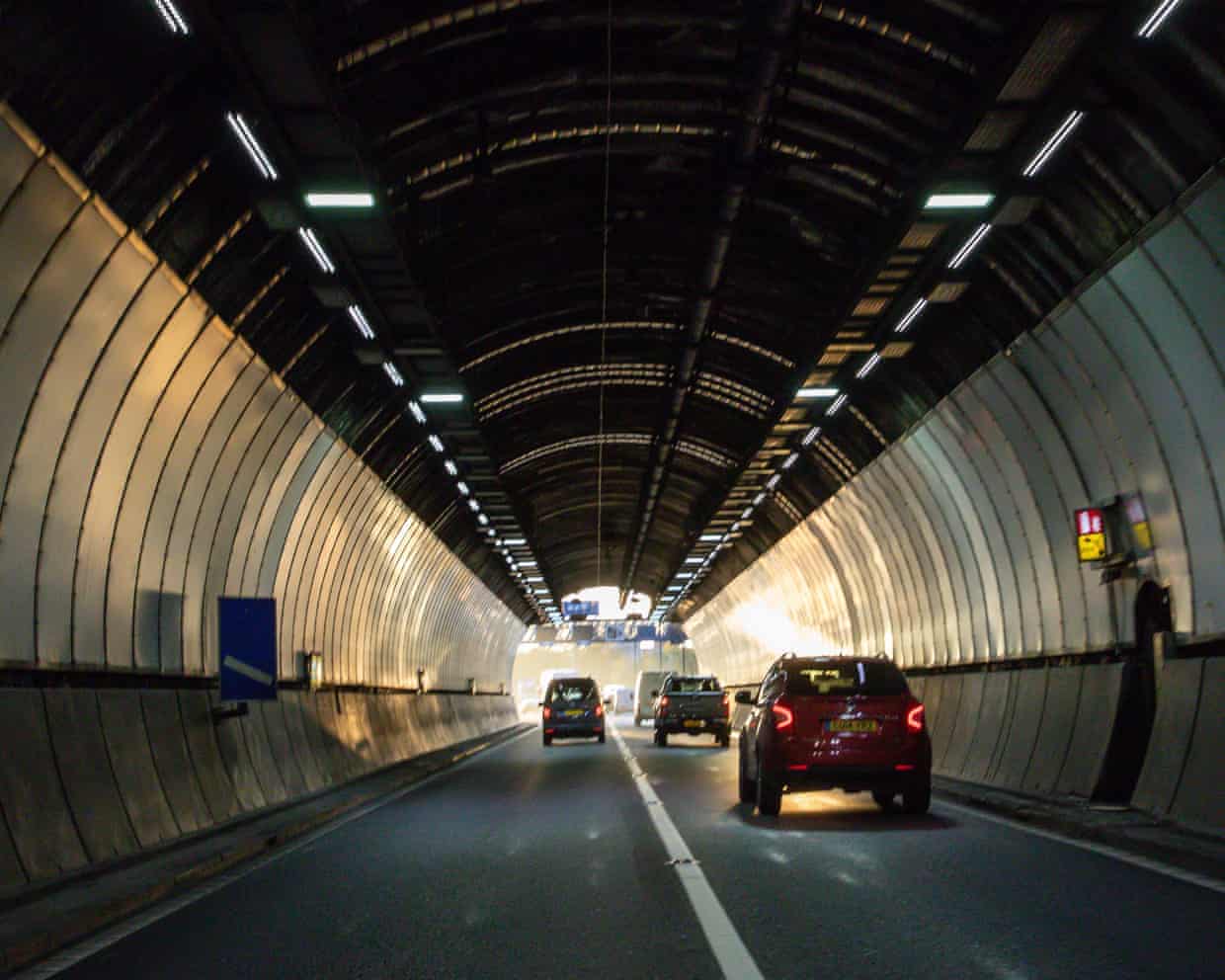
It is afternoon rush hour on the M4 and drivers are yet again making slow progress around the city of Newport, often seen as the gateway to south Wales given its location between Cardiff and Bristol.Cars and lorries are stuck in gridlocked traffic in both directions on the approach to the Brynglas tunnels, where the road narrows to two lanes in each direction, while flashing lights warn motorists in Welsh and English of a ciw (queue).Traffic jams may be an everyday reality for commuters and businesses trying to move goods around, but they have also become a hotly debated topic before the Senedd elections on 7 May, in a vote predicted to bring sweeping political change to the principality, and send Labour into opposition for the first time since devolution in 1999.Congestion on this part of the M4 – the main route linking south Wales with England – has been complained about by businesses and commuters for decades, while a relief road around Newport has been proposed for almost as long. Motorists say tailbacks cost time and money, and make the country less attractive to potential investors

Trump may not be a fan of clean energy but Iran war is accelerating global shift from oil and gas | Heather Stewart
Operation Epic Fury has thus far achieved none of Donald Trump’s war aims, but it may well accelerate the global transition towards the clean energy he loves to hate.Last week brought the latest exchange of verbal blows in the standoff over the strait of Hormuz. Iran was “choking like a stuffed pig” on the oil it was unable to export because of the US blockade, Trump claimed.From Tehran, the supreme leader shot back that foreigners who “maliciously covet” the waterway “have no place there except at the bottom of its waters”. To the rest of the world, the exchange raised the spectre of a prolonged impasse

UK ‘invention agency’ grants £50m of public money to US tech and venture capital firms
Britain’s “invention agency” has pledged £50m of UK taxpayer money to US tech companies and venture capital projects.Dreamed up by Dominic Cummings to fund “crazy” ideas, the Advanced Research and Invention Agency (Aria) is meant to “restore Britain’s place as a scientific superpower”.But a joint investigation by the Guardian and Democracy for Sale, an investigative website, has established that more than an eighth of the agency’s £400m in research and development funding over the past two years has gone to 14 US tech companies and venture capital groups, in some cases, with no clear return for the UK or Aria.One of these companies, Rain Neuromorphics, is also backed by the OpenAI chief executive, Sam Altman, and was reported to be near collapse last year, shortly after winning Aria money. It did not respond to a request for comment; two of its founders appear to have left the company

Under a cloud: the growing resentment against the massive datacentres sprouting across Australian cities
Residents say AI factories with unknown environmental impacts are being rushed into development as proponents argue Australia must ride the data boom or be left behindFollow our Australia news live blog for latest updatesGet our breaking news email, free app or daily news podcastWhen West Footscray resident Sean Brown takes his 19-month-old boy to the park, their walk passes an imposing new building cheerily spruiked as “Australia’s largest hyperscale AI factory”, a datacentre called M3.He hates it: the construction noise from its constant expansion, the looming towers and the insistent background hum, the exhaust from the growing array of diesel generators that can help power the ranks of servers inside.And he worries what it represents for his young child’s future.“He is growing – neurologically, pulmonarily, physically – in the shadow of a facility whose cumulative environmental impact … has never been assessed,” Brown says.“They’re building something which is, frankly, terrible for the community

Shaun Murphy v Wu Yize: World Snooker Championship final day one – live
As for Wu, I’d be staggered if he ends his career without winning this event more than once. I’d be lying if I said he isn’t my favourite – the way he plays, it’s impossible to take your eyes off him. He attacks the game in the way we should all attack life, however trepidatious we feel, and if it doesn’t work out, he quickly gets over himself, heals, then has at it again. Mates: if ever you’re stuck, think Wu.Shaun, of course, won this title unseeded, aged just 22, in 2005

Somerset v Yorkshire, Leicestershire v Nottinghamshire, and more: county cricket, day three – live
With Eskinazi on 99, Hull defends with spagetti arms five balls of a James over, edging the last just short of third slip. Leics are also just 34 short of avoiding the follow on…After playing out five dot balls from a TRJ over, Gay guides the last for four down to third man to collect his 13th f-c century. Could be a career-defining one, with the Test team soon to be picked. He takes off his helmet and raises his bat, grins, gets a warm round of applause around the ground and from his teammates on the pavilion balcony. His third century of the season – one came against Kent, but two against the more challenging Lancs and Durham attacks

Tim Cook takes victory lap as Apple’s financial results soar past Wall Street expectations
Meta threatens to shut down social networks in New Mexico over child safety court case
Judge cuts off Musk’s AI doomsday talk as his testimony ends in OpenAI case

AI outperforms doctors in Harvard trial of emergency triage diagnoses
Calls grow to ban Palantir in Australia after manifesto described by UK MP as ‘ramblings of a supervillain’

Galaxy S26 review: Samsung’s still-compact flagship Android