Under a cloud: the growing resentment against the massive datacentres sprouting across Australian cities
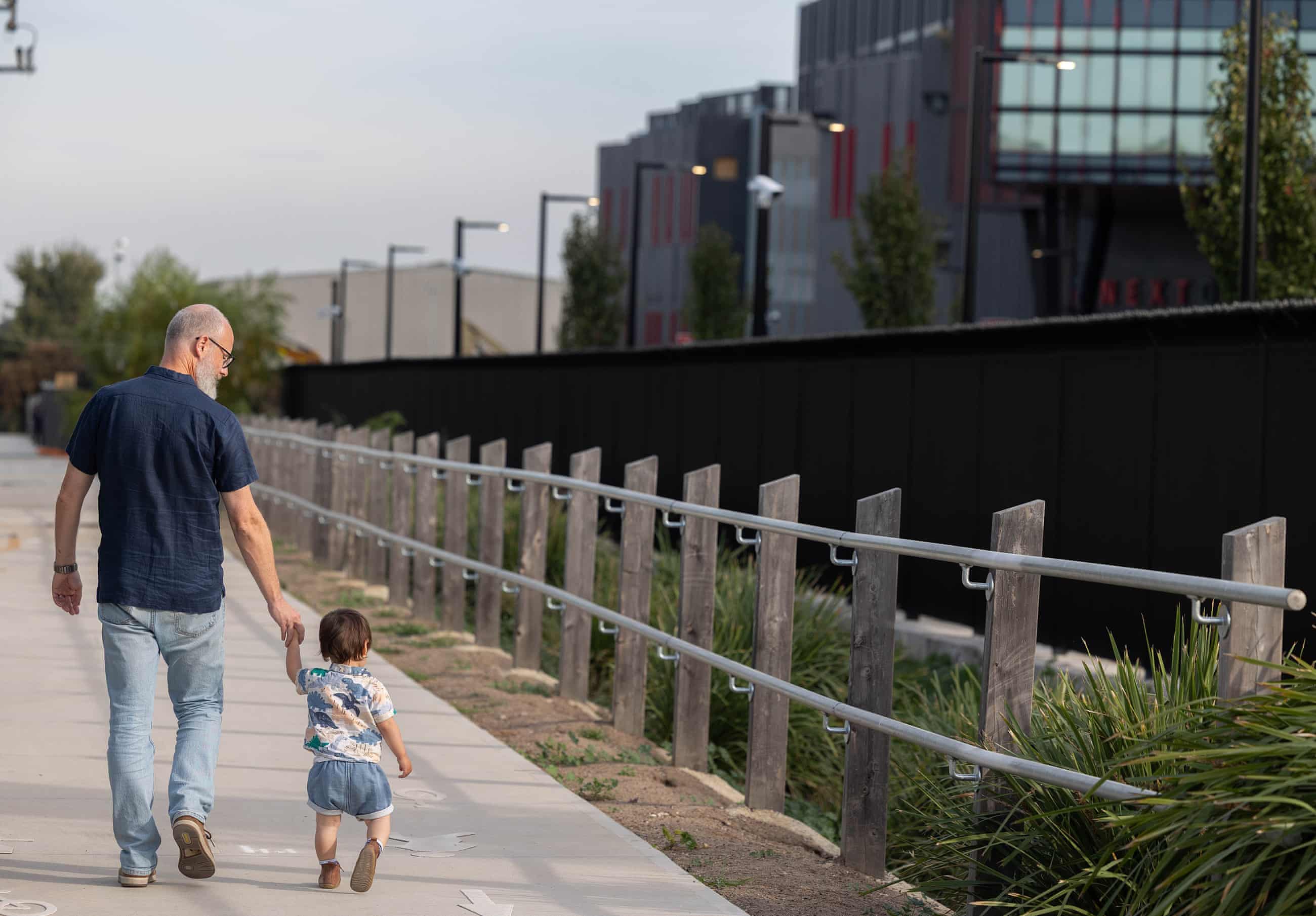
Residents say AI factories with unknown environmental impacts are being rushed into development as proponents argue Australia must ride the data boom or be left behindFollow our Australia news live blog for latest updatesGet our breaking news email, free app or daily news podcastWhen West Footscray resident Sean Brown takes his 19-month-old boy to the park, their walk passes an imposing new building cheerily spruiked as “Australia’s largest hyperscale AI factory”, a datacentre called M3,He hates it: the construction noise from its constant expansion, the looming towers and the insistent background hum, the exhaust from the growing array of diesel generators that can help power the ranks of servers inside,And he worries what it represents for his young child’s future,“He is growing – neurologically, pulmonarily, physically – in the shadow of a facility whose cumulative environmental impact … has never been assessed,” Brown says,“They’re building something which is, frankly, terrible for the community.
There’s no upside to it and it’s just getting worse.”The centre has already grown several times, fuelling the endless appetite of this age of digital services and generative AI.By the end of 2027, should fast-track planning approval be granted by the Victorian government, this datacentre less than 10km from the Melbourne CBD will have doubled in size again to cover 10 hectares, drawing 225MW of power and running 24/7.Diesel generators on the site are reportedly expanding from 40 today to 100 at completion.Eight months ago, NextDC’s chief executive, Craig Scroggie, posted a video of the M3 site on LinkedIn and said the speed and the scale of its expansion were “stunning”.
“We’re building Australia’s largest hyperscale AI factory purpose-built for the new AI era of accelerated computing,” he wrote.“This is how we build Australia’s digital future: speed, scale, sovereign, sustainable & secure.”Australia is under pressure to compete in the growing datacentre industry amid the promises of an AI boom.New investments are hailed as vital downpayments on the country’s economic future.But those living closest to these massive new data halls feel that their neighbourhood peace is being sacrificed on the altar of progress.
Guardian Australia spoke to residents in three states about their concerns, which are emblematic of the growing opposition to these developments across the country.Those living closest to datacentres argue they should be moved further away from residential areas in the country’s biggest cities.The M3 datacentre is “just a really inappropriate location for what is pretty much [an] intensive industrial building,” Brown says.“It’s right next to people’s houses.”Brown says the original zoning decisions did not take into account the sheer scale of the datacentres.
He works in the tech sector, and understands the need for datacentres,But he argues the datacentre boom needs to be planned better,“It’s like they’ve just gone: ‘Let’s just maximise this and don’t even consider the impact,” he said,A spokesperson for NextDC says the project is being delivered in accordance with local and state government processes and regulatory requirements, and it has processes in place to “manage and respond to feedback”,The Maribyrnong local council has expressed its opposition to the expansion, but it is now awaiting planning approval from the Victorian government.
A spokesperson for the Victorian planning minister, Sonia Kilkenny, said the proposal to expand the datacentre was under consideration and it would be inappropriate to comment further.Near Lane Cove River, 9km from the Sydney CBD, a proposal for a new 90MW datacentre named Project Mars is now being considered by the NSW government.It would be the fourth in the area: datacentres take up 40% of local industrial zones.The council argues the nearly 22,000sqm, three-storey centre exceeds height limitations and would be visually prominent next to bushland and residential zones.Local resident Daniel Bolger says it will sit next to what he calls “the lungs of Lane Cove: Blackman Park.
It used to be a tip, but was turned into a park and sporting hub “used by 50% of the suburb” each weekend, he says.“[Now] they’re going to put datacentres right next to it.”He says the council has been sidelined, and there are community concerns over the proximity to schools of the centres being developed, and the pure power draw.“This is the cluster issue,” Bolger says.The NSW planning minister, Paul Scully, says the public are encouraged to have their say during the consultation and a full merit-based assessment, including an assessment of energy needs, will be conducted before a decision is made.
“Datacentres are an important part of the infrastructure and digital architecture of modern economies,” he says.The developer, Goodman Property, did not respond to a request for comment.In Hazelmere, 15km east of Perth in Western Australia, community opposition is growing to a planned 15,000sqm, three-storey, up-to 120MW datacentre.“It’s huge.Bigger than a Bunnings warehouse,” Kate Herren, a local resident and a fundraising coordinator for the environmental group Trillion Trees Australia, says.
“The location we feel is wholly unsuitable for a proposal of [this] size and scale.”Walter McGuire, chair of the Bibbul Ngarma Aboriginal Association, says the Noongar people have a role and responsibility to care for the Mandoon Bilya (Helena River).“Giant datacentres belong in industrial areas, not on the banks of our rivers and wetlands,” he says.“[It] is a culturally significant river, and the wetlands that surround it … So we have grave concerns about its impact on the river and the surrounding ecosystem.”The proposal is now before the council.
A spokesperson for the City of Swan said it was unable to comment.A spokesperson for GreenSquareDC, the company behind the project, said it was in an established industrial area with major transport and power infrastructure.“We clearly understand there is interest in this proposal given its proximity to existing businesses and the local school,” the spokesperson says.“These considerations are taken seriously, and GreenSquare is committed to engaging constructively throughout the planning process.”Data Centres Australia’s chief executive, Belinda Dennett, says the industry is aware that construction of these centres can be confronting “particularly where industrial zoned land meets with residential areas”, but maintains developers meet strict environmental and building standards, and were seeking to minimise disruption.
She says Australia has a “significant opportunity” to benefit from datacentre investment, through new businesses and jobs.“These benefits will flow to the local communities that neighbour datacentres too.”On Friday, she told a NSW parliamentary inquiry into the sector that if Australia does not develop its own AI infrastructure, it will become “an importer of someone else’s technology, that has no Australian culture, values or laws built into that”.The alternative, she said: “we build that here and we have some say [and] control over what that looks like”.This article was updated on 3 May 2026.
An earlier version of the story included a caption which incorrectly stated that a NextDC datacentre development proposal would put a campus next to the Blackman Park oval,

Solicitors report late flood of no-fault evictions before ban in England
Solicitors say they have been inundated with requests to serve last-minute section 21 no-fault eviction notices before they are banned when the Renters’ Rights Act comes into force in England on Friday.The legislation, which has been hailed as the biggest change to renting in a generation, bans no-fault evictions, limits rent increases and abolishes fixed-term tenancies.On the eve of the new rules, solicitors said they were working long hours to keep up with the sudden demand for eviction notices, while Citizens Advice said thousands of people facing a no-fault eviction had approached it for help in the last month.In March, the service helped 2,335 people dealing with a no-fault eviction, up 16% on the same time last year, as well as more than 1,800 people dealing with disrepair such as damp and mould, and more than 1,000 with rent increases.Thackray Williams, a London- and Kent-based law firm, said it had received a wave of last-minute instructions from landlords looking to evict their tenants and sell their properties because of the legislation

Austerity to blame for the fall in healthy life expectancy | Letters
A major cause of the fall in healthy life expectancy (People in UK spend fewer years in good health than a decade ago, study finds, 27 April) is austerity and the continued cuts to social and health spending. In our report Still Digging Deeper: The Impact of Austerity on Inequalities and Deprivation in the Coalfield Areas, which covers Scotland, England and Wales for the period 1984-2024, we highlight how public expenditure cuts since 1984 have disproportionately impacted coalfield areas of the UK.Since 2010, austerity has been stepped up, and we have calculated that welfare reforms and benefit cuts amounted to £32.6bn over the period of 2010-21. Furthermore, in 2025-26 coalfield local authorities had a combined funding gap of £447m

UK researchers develop tool to identify people most at risk of obesity-related diseases
A new tool that can shed light on who is most at risk of obesity-related diseases could help identify people who would benefit most from weight-loss medications, researchers have said.Recent data suggests about two-thirds of adults in England are overweight or obese – a situation that has caused concern among health experts.Now researchers have developed a tool that, they say, offers an accurate and personalised approach to identifying those at risk of obesity-related conditions.They add it could be useful for prioritising who should receive interventions, such as weight-loss jabs, given that access on the NHS is limited and currently based simply on having a high body mass index (BMI) and particular obesity-related health problems.Prof Nick Wareham, of the University of Cambridge, a co-author of the study, said the measure was not about extending the use of particular therapies

Violence against women is at ‘breaking point’, says writer of John Worboys drama
Violence against women is “at breaking point” and the justice system needs to change, according to the writer of new ITV drama Believe Me about the survivors of “black-cab rapist” John Worboys.Jeff Pope, who is also writing a BBC drama about the murder of Sarah Everard, said he wanted to tell these stories because “something needs to happen” and the “police just won’t seem to me to change”.Believe Me tells the true story of how the women who were attacked by Worboys were failed and doubted by the Metropolitan police. He was eventually jailed in 2019, with the help of evidence from Carrie Symonds (now married to Boris Johnson) who was drugged, but escaped being raped. Symonds is portrayed in Believe Me by Industry actor Miriam Petche

Raise tax on alcohol and junk food to cut deaths from liver disease, experts say
Governments in Europe should impose much higher taxes on alcohol and unhealthy food to tackle the continent’s 284,000 deaths a year from liver disease, experts say.Taxes on those products should rise sharply enough for the money raised to cover the huge costs they place on health services, the criminal justice system and social services.The call for tough action on common causes of serious liver disease comes from a commission of experts from the European Association for the Study of the Liver and the Lancet medical journal.They are urging governments in Europe to ensure all alcoholic products carry health warnings and stop under-18s being targeted with online advertisements for alcoholic drinks and junk food.Bold steps are needed to combat “an escalating and unsustainable burden of liver disease”, the commission says in a report published on Wednesday in the Lancet

Leasehold ban in England and Wales unlikely before next general election, minister says
A ban on new leasehold properties in England and Wales is unlikely to come into force until after the next election, the housing minister has said, as he defended the government’s piecemeal attempts to dismantle the system.The long-promised end would take years to “switch on”, Matthew Pennycook said, even though the ban of leaseholds on new houses was passed in 2024 and the government intends to pass one on new flats soon.Pennycook was giving a speech defending the government’s approach to bringing a de facto end to the feudal-era system after years of complaints from leaseholders about crippling service charges and crumbling buildings. He said the process needed to be rolled out slowly to avoid undermining housing supply and falling into legal pitfalls.“I think it’s highly likely that we don’t switch on the ban in this parliament,” he told reporters afterwards
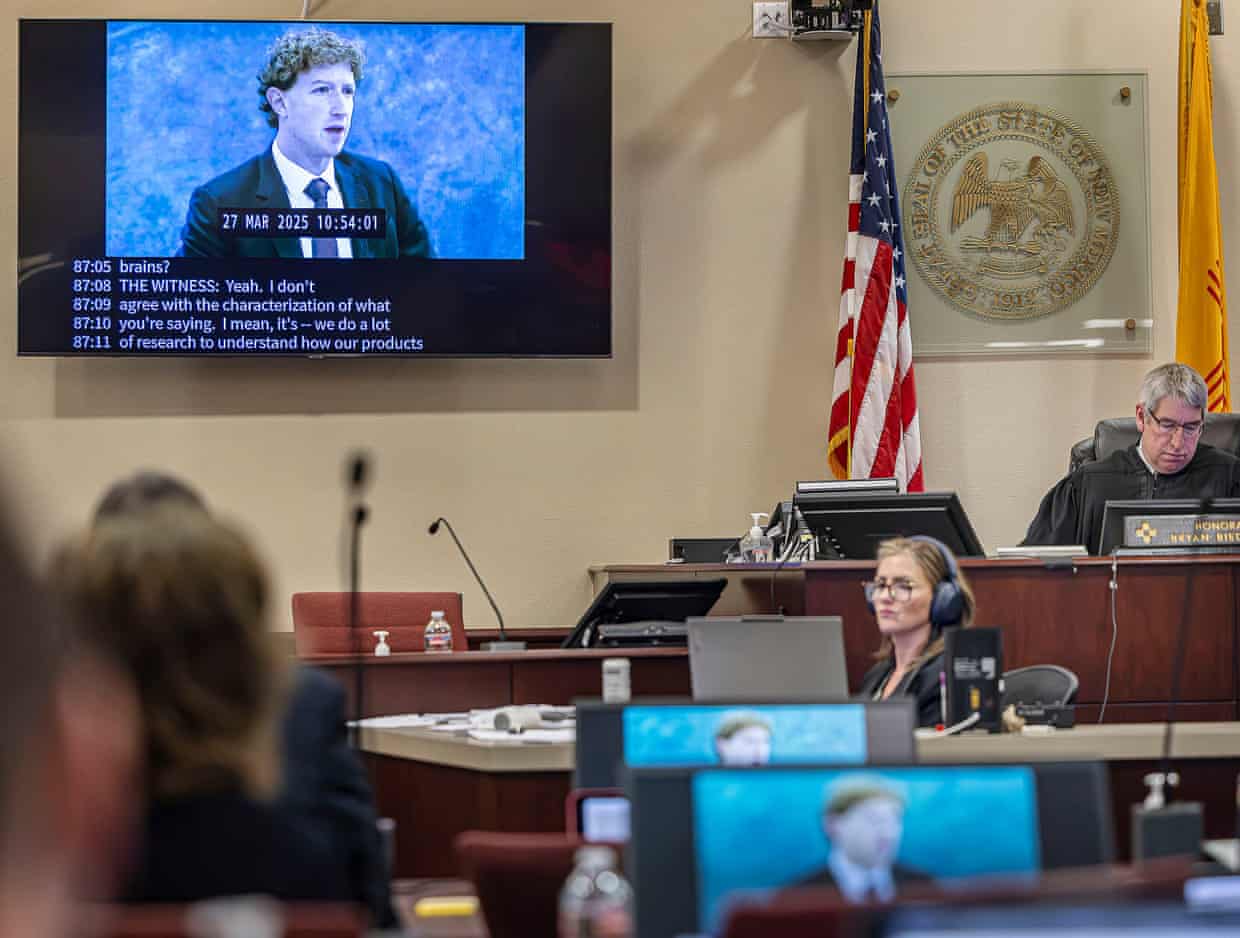
Meta threatens to shut down social networks in New Mexico over child safety court case

Judge cuts off Musk’s AI doomsday talk as his testimony ends in OpenAI case

AI outperforms doctors in Harvard trial of emergency triage diagnoses

Calls grow to ban Palantir in Australia after manifesto described by UK MP as ‘ramblings of a supervillain’

Galaxy S26 review: Samsung’s still-compact flagship Android

‘Your questions are designed to trick me’: combative Musk grilled over battle with Sam Altman