UK hospitality firms demand more help with business rates amid questions over Heathrow discount

Struggling hotels, restaurants and nightclubs are calling for more financial help with business rates after it emerged that Heathrow is among the biggest beneficiaries of a multibillion-pound package of state support.The UK’s biggest airport is in line for a discount of nearly £900m on its rates bill over the next three years.That is a fifth of the total £4.3bn “transitional relief” fund announced by the chancellor in the budget for all businesses facing big bill increases.Heathrow’s rates bill will still rise by £50m to £171m this year, according to figures compiled by the property firm Avison Young and first reported by the Sunday Times.
The airport has one of the highest rateable values in the country.Had the government not stepped in, Heathrow’s business rates bill would have leapt to £512m in the upcoming fiscal year, £514m the year after and £523m the year after that, taking the total over the next three years to £1.5bn.Reliefs over this period will take the aggregate to £650m, thanks to transitional relief of £898m.While Heathrow, which is owned by a collection of overseas sovereign wealth and pension funds, is getting less support in percentage terms than a local pub, the total value of its package dwarfs the £80m in additional discounts offered to pubs and live music venues in England this year.
Hotels, restaurants, nightclubs and cafes did not get any additional support on top of transitional relief that capped rises in business rate bills at 15% for most companies this year – or £800 for the smallest – as pandemic-era reliefs come to an end and property revaluations take effect.That relief gradually reduces over the following two years.The Night Times Industries Association (NTIA) has complained that the government is “explicitly excluding” nightclubs, grassroots electronic music and recorded music venues from additional help on business rates offered to pubs and live music venues last month.Michael Kill, the chief executive of the NTIA, which represents thousands of bars, nightclubs and pubs, said the bill increases could lead to more closures.“We have already lost over a third of the UK’s nightclubs, yet the venues that remain are being charged higher business rates than ever, with fewer businesses left to carry the burden and no access to relief,” he said.
“This is not targeted support, it is policy that actively accelerates decline,”Kate Nicholls, the chair of UKHospitality, which represents thousands of restaurants, hotels and pubs, said: “These figures are damning in showing how crazy, distorting and broken business rates is,Successive governments have promised root and branch reform – these figures show it is time to deliver,”The NTIA said the number of nightclubs had fallen by a third since 2017 but the value of their properties had risen, so that the industry as a whole would pay more in business rates,The industry said it was already under pressure from cost increases including the rise in the minimum wage, the rise in energy costs and higher duty on alcohol, which it said was likely to push up drinks prices.
“With alcohol duty rising in line with inflation and supplier costs continuing to increase, many businesses have little choice but to pass these costs on to consumers – despite already fragile trading condition,” Kill said.While airports will get a chunky share of transitional relief, Karen Dee, the chief executive of AirportsUK, the trade association for UK airports, said business rates increases were likely to mean price rises for flyers and less investment in airports.Dee said: “The chancellor has staked the UK’s growth on airports, and while the changes to transitional relief are very welcome, the sector’s business rates will still increase by over 100% and could force some to review billions of pounds of transformational investments across the UK and potentially puts thousands of jobs at risk in the longer term.”

Benjamina Ebuehi’s recipe for citrus and almond cake | The sweet spot
Anything bright and zingy is particularly welcome in January, even more so when it’s in the form of cake. I always have an odd end of marzipan after the festive season, and this is a great way to use it up and bring that cosy almond flavour. The marzipan gets blitzed into the butter for a plush-textured loaf cake, and comes together in minutes thanks to simply putting everything in a food processor.Prep 10 min Cook 1 hr 10 min, plus cooling Serves 8-10200g unsalted butter, softened125g marzipan 150g caster sugar Finely grated zest and juice of 1 orange, plus 2 tbsp extra juice for the icingFinely grated zest and juice of 1 lemon3 large eggs 220g plain flour 50g ground almonds ¼ tsp fine sea salt 2 tsp baking powder 50g plain yoghurtTo finish100g icing sugar 40g toasted flaked almondsHeat the oven to 180C (160C fan)/350F/gas 4, and grease and line a 2lb loaf tin with baking paper.Put the butter and marzipan in a food processor and blitz until smooth

‘It’s still a family favourite’: your heirloom recipes – and the stories behind them
A few years ago, I bought my mother a notebook for her recipes. It was a weighty, leather-bound affair that could act as a vault for all the vivid stews, slow-cooked beans and many other family specialities – the secrets of which existed only in her head. Although the gift has basically been a failure (bar a lengthy WhatsApp message detailing her complex jollof rice methodology, she still has an allergy to writing down cooking techniques or quantities), I think the impulse behind it is sound and highly relatable. Family recipes are a form of time travel. An act of cultural preservation that connects us deeply to people we may not have met and places we may not have visited

Rachel Roddy’s puntarelle, radicchio, celery, apple and cheese salad recipe
Like many, I remember Charlie Hicks from Veg Talk, a weekly show that ran on Radio 4 from 1998-2005. The show, according to Sheila Dillon, came into being after her interview with Charlie, a fourth-generation fruit and veg supplier at Covent Garden market, for an episode of The Food Programme exploring where chefs bought their produce. Sitting at the kitchen table with her husband the following evening, Sheila recounted her day and Charlie’s enormous knowledge, enthusiasm and ability to communicate both. A few days after that, a similar conversation took place with her colleagues at Radio 4, which resulted in Veg Talk – what’s in and what’s out in the world of fresh produce. As well as Charlie’s market report, each episode included a feature called “vegetable of the week” and the participation of studio guests – Angela Hartnett, Alastair Little, Rose Gray, Darina Allen and Mitch Tonks, to name just a few – and took calls from listeners

How to convert kitchen scraps into an infused oil – recipe
All those odds and ends of chillies, garlic skins and rind can be used to flavour oil for dunking, dipping and marinatingToday’s recipe began life as a way to use up garlic skins and herby leftovers, all of which contain a surprising amount of flavour, but it has evolved over time. Infused oil has countless uses – drizzle it over carpaccio, pasta or salad, use it to marinate meat, fish and vegetables, or simply as a dip for chunks of sourdough – and some of my favourites include lemon rind, garlic skin and rosemary; star anise, cacao and orange rind; and makrut lime leaf, lemongrass husk and coriander stems, which I found especially delicious drizzled over some noodles and pak choi. Freshly infused oils of this sort aren’t suitable for long storage, however, so use them up within a day to two.As I look around my kitchen, I’ve got a two-year-old jar of remarkably tasty chillies gathering dust, a bowl of clementines (I think of citrus rinds as harbingers of incredible flavour, rich in essential oils and highly aromatic terpenes) and a small jar of long pepper, a pungent, complex spice that’s been sitting on my kitchen shelf for years without a purpose. When put together, however, and left to bubble gently on the hob, they fill my kitchen with a wildly aromatic and exotic aroma

Slurp the blues away: Ravinder Bhogal’s recipes for winter noodle soup-stews
One of the best things for lifting deflated spirits is a deep bowl of steaming, restorative soup – perfect for warming the places your old woolly jumper can’t reach. I love the romance and cosiness of creamy European soups drunk straight out of a mug around a fire in November, but in the icy tundra that is January I need something with more heat and intensity, something sustaining, spicy, gutsy and textured, so that I need a fork or chopsticks to eat it, rather than just a spoon. These punchy soups are simply rapture in a bowl, and make for extremely satisfying slurping.Khao swe is a Burmese noodle soup with hot coconut broth, springy noodles and a madness of garnishes, from boiled eggs to peanuts or crisp shallots. Feel free to swap out the poultry for vegetables such as pumpkin or tofu, or seafood such as prawns
Savoury snacks to stave off the lure of the biscuit tin | Kitchen aide
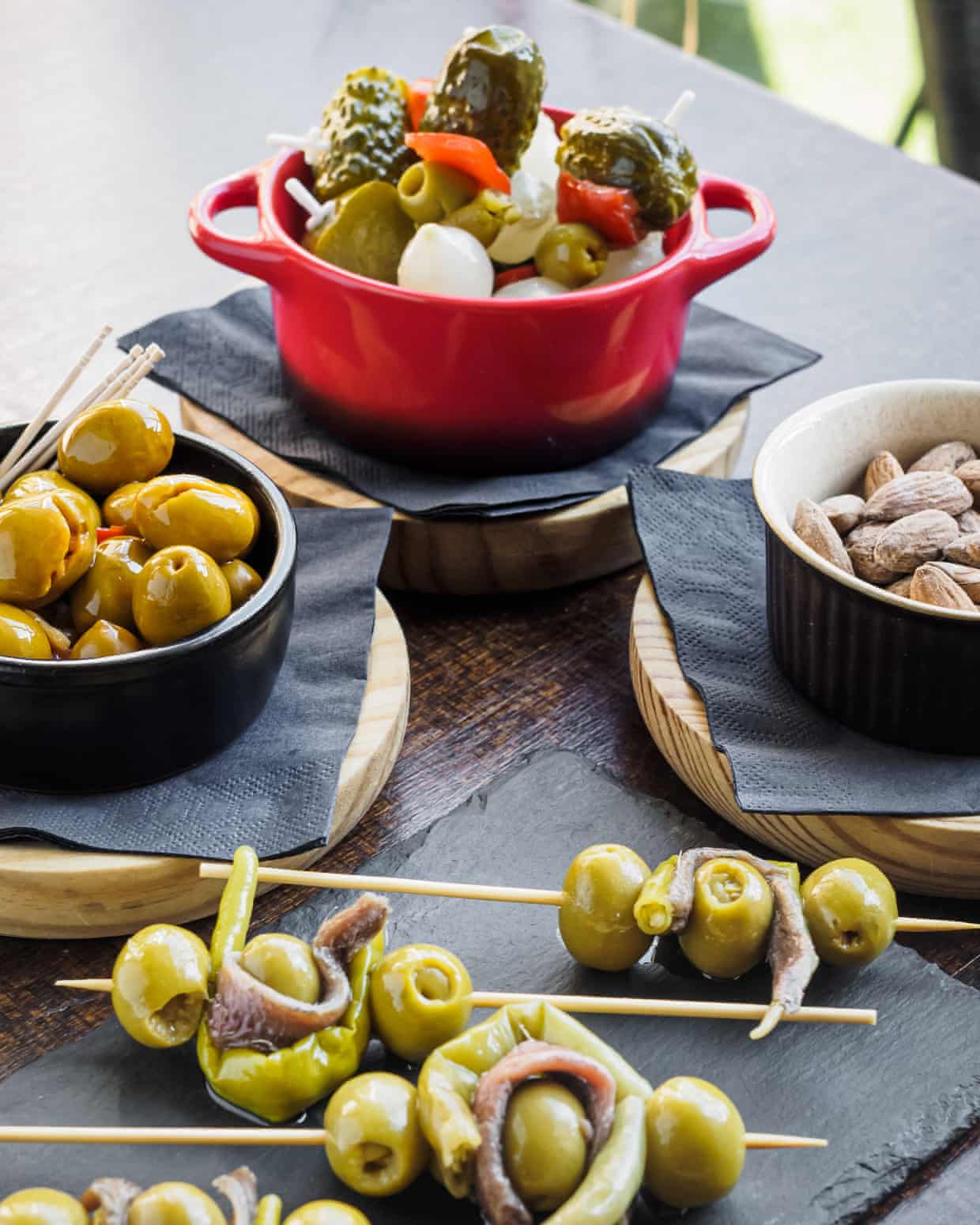
What savoury snacks do your recipe columnists make when they’re trying to stay away from the biscuit tin?Jess, by email The pull of the biscuit tin is all too familiar to Guardian baker Benjamina Ebuehi, who, unsurprisingly, is often found in full “sweet mode”. To counterbalance the intake of cake, she tends to look for “something salty, spiced and crisp”, and, if time is on her side, that usually means homemade tortilla chips. “Chop corn tortillas into triangles, brush with olive oil and seasonings – flaky salt, za’atar, dukkah, garlic granules, or everything bagel seasoning, which is elite.” Bake until nice and crisp, then dunk into hummus. Her fellow Guardian regular Georgina Hayden is also rarely found without a tub of that creamy chickpea dip, whether it’s homemade or shop-bought: “I usually drizzle chilli crisp oil over the top of my hummus, then scoop it up with crudites [celery, carrot, cucumber, say]

Gold and silver slide in ‘metals meltdown’; UK factory growth hits 17-month high – business live

Plunge in price of gold and silver rattles global stock markets

‘Marketplace for predators’: Meta faces jury trial over child exploitation claims

Viral AI personal assistant seen as step change – but experts warn of risks

Alcaraz makes strong case for being the best young male player tennis has seen | Tumaini Carayol

The Joy of Six: incredible Winter Olympics moments