Collapse of US-Iran talks heightens fears of prolonged energy shock
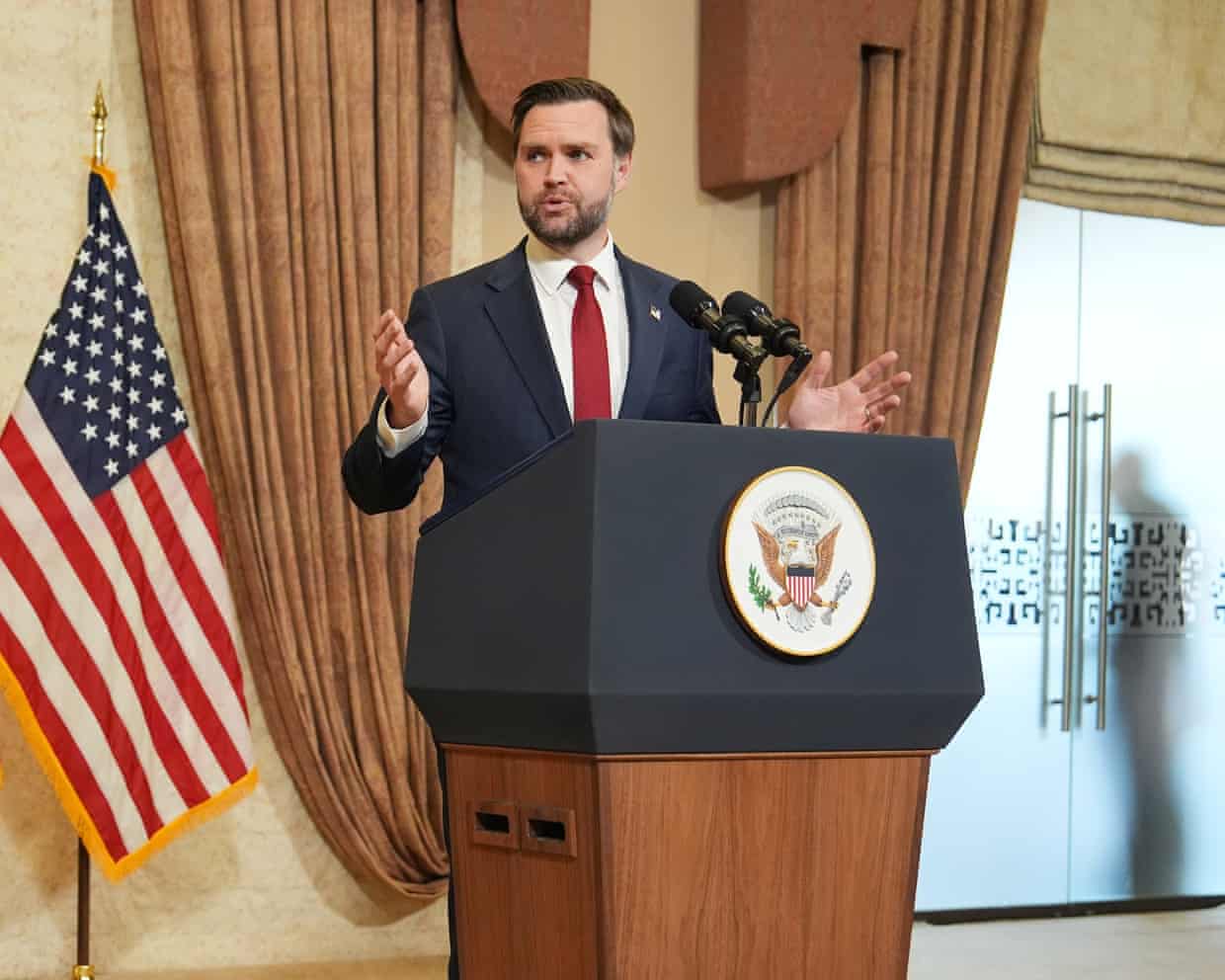
The failure of the US and Iran to reach a peace deal after marathon negotiations has put markets on alert for further oil and gas price rises.With large numbers of oil tankers remaining stuck in the Gulf, the US vice-president, JD Vance, blamed the collapse of the talks on Tehran’s refusal to abandon its nuclear weapons programme, while Iranian sources hit back at “excessive” demands from Washington.Vance, who left Islamabad on Sunday morning after 21 hours of talks with Iranian officials in the Pakistani capital, said his team had been very clear on its red lines as hopes faded of a quick end to the war that began on 28 February with US and Israeli airstrikes on Tehran.A weekend market in US crude oil operated by the broker IG indicated that the oil price was going to rise when trading begins on Sunday night, UK time, to about $98 a barrel, from about $96.50 on Friday night before the peace talks in Pakistan.
Tony Sycamore, market analyst at IG Australia, said: “Unless a sudden U-turn emerges, energy markets are set for a rocky open when regular trading resumes tomorrow morning.”Analysts at JPMorgan Chase expect oil prices to stay high in the second quarter, above $100 a barrel, before easing in the second half of the year.Oil prices fluctuated wildly last week and fell below $100 a barrel on Wednesday after a two-week ceasefire was announced.They ended the week lower, with Brent crude at $94.26 a barrel, compared with a peak of $119.
45 during the war and about $72 a barrel before the conflict began.Donald Trump said on Sunday that the lack of a deal meant US ships would blockade the strait of Hormuz, which has been effectively closed by Iran, and whose reopening was part of the truce agreed on Wednesday.The Iranian deputy parliament speaker, Haji Babaei, has been quoted by the Mehr news agency as saying that the shipping passage is “completely” under Iranian control, adding that tolls must be paid in the country’s currency, rials.In a lengthy post on Truth Social, the US president said the US was going to start “BLOCKADING any and all Ships trying to enter, or leave, the Strait of Hormuz”.Donald Trump said the US navy was going to start “destroying the mines the Iranians laid in the straits”, warning that any Iranian who fires at the US or at “peaceful vessels will be blown to hell”.
Governments have grown concerned at the long-term impact of rising inflation following the jump in oil and gas prices since the start of the war,Central banks have indicated that previous expectations of cuts in interest rates would need to be re-examined, with financial markets pricing in interest rate increases instead,Ireland has suffered social unrest as protesters took to the streets of Dublin last week and throughout the weekend about the rising cost of living,Mohamed El-Erian, an adviser to the German insurer Allianz and a former president of Queens’ College, University of Cambridge, said uncertainty would continue to dominate assessments of the financial impact from the war,“While both parties stressed that a quick agreement was too much to hope for given the issues involved, neither readily indicated the next step – something the whole world will be focused on, especially as Israel’s attacks on Lebanon continued throughout the weekend,” he said.
El-Erian added: “Absent a swift resumption of negotiations, the immediate reaction of financial markets when they open for the trading week will be to push oil prices higher and borrowing costs higher.“The extent of the sell-off in the stock market, where investors have been consistently more optimistic than in other asset classes, will depend on whether they see a viable path to further diplomacy.“For the UK, all this translates into another hit to the cost of living and less flexibility for both fiscal and monetary policy responses.”The week had started with Trump’s apocalyptic threat to Iran that “a whole civilisation will die tonight, never to be brought back again” by bombing the country’s power stations and bridges.But he pulled back from the brink on Wednesday after a two-week truce was hastily agreed with Tehran, brokered by Pakistan.
Global stock markets rebounded after the temporary ceasefire was announced.By the end of the week, the S&P 500, a measure of top US companies, was close to its level before the US-Israeli attacks on Iran began, and flat on the year.Saudi Arabia attempted to head off a possible increase in oil prices by announcing that its east-west oil pipeline and other facilities had been restored following attacks by Iran on infrastructure across the Gulf.Citing an energy ministry statement, the official Saudi Press Agency reported that the attacks had led to a “loss of approximately 700,000 barrels per day of pumping capacity through the east-west pipeline” and work was under way to restore full production capacity at the kingdom’s Khurais oilfield.During the talks in Islamabad, three supertankers fully laden with oil passed through the strait of Hormuz on Saturday, shipping data showed, most likely headed to China.
These were the first vessels to exit the Gulf since the ceasefire deal.Wei Yao, an economist at Société Générale, said: “Even if the ceasefire frays, the more likely near-term outcome, in our view, is messy non-compliance and low-level retaliation near-term, rather than an immediate return to full-blown escalation.For the global economy, this means lasting disruptions, as oil and LNG [liquefied natural gas] flows would normalise only slowly.”The war’s impact on the global economy will dominate the International Monetary Fund and World Bank’s spring meetings in Washington, which start on Monday.The IMF’s managing director, Kristalina Georgieva, has indicated that the fund will present three scenarios this week, all of which predict lower economic growth and higher inflation.
The IMF is also expected to highlight the impact on vulnerable economies.

GSK reports promising early results in ovarian and womb cancer drug trial
GSK has revealed positive results for a treatment for gynaecological cancers as its chief executive, Luke Miels, seeks to speed up drug development at the group.The company said that in an early-stage trial Mocertatug Rezetecan, known as Mo-Rez, shrank or eliminated tumours in 62% of patients with ovarian cancer where chemotherapy had failed, and in 67% of those with endometrial cancer.Based in London, GSK has recently gained plaudits for its work on tackling superbugs, becoming one of just three big pharma companies globally that continue to invest in anti-microbial research.However, commercially GSK has been eclipsed in recent years by its bigger British rival AstraZeneca, which last year outstripped GSK’s near-£33bn turnover by more than £10bn and whose market value is more than twice as high.GSK acquired the Mo-Rez cancer treatment, an antibody-drug conjugate (ADC), from China’s Hansoh Pharma in late 2023, and has trialled it in 224 patients around the world, including the UK, over the past year
Collapse of US-Iran talks heightens fears of prolonged energy shock
The failure of the US and Iran to reach a peace deal after marathon negotiations has put markets on alert for further oil and gas price rises.With large numbers of oil tankers remaining stuck in the Gulf, the US vice-president, JD Vance, blamed the collapse of the talks on Tehran’s refusal to abandon its nuclear weapons programme, while Iranian sources hit back at “excessive” demands from Washington.Vance, who left Islamabad on Sunday morning after 21 hours of talks with Iranian officials in the Pakistani capital, said his team had been very clear on its red lines as hopes faded of a quick end to the war that began on 28 February with US and Israeli airstrikes on Tehran.A weekend market in US crude oil operated by the broker IG indicated that the oil price was going to rise when trading begins on Sunday night, UK time, to about $98 a barrel, from about $96.50 on Friday night before the peace talks in Pakistan
AI companies know they have an image problem. Will funding policy papers and thinktanks dig them out?
OpenAI made a surprise announcement this week – not an update to ChatGPT or another multibillion-dollar datacenter – but a policy paper that called for a reimagining of the social contract based around “a slate of people-first ideas”. It’s the latest move in an aggressive effort by the major AI players to reshape the narrative around their industry, as polls show public disapproval of AI increasing.OpenAI’s 13-page paper, titled Industrial Policy for the Intelligence Age, follows its surprise acquisition of tech-friendly podcast TBPN and its announcement of plans to open a Washington DC office that will feature a dedicated space called the OpenAI workshop for non-profits and policymakers to learn about and discuss the company’s technology.OpenAI’s rival Anthropic has meanwhile announced its own thinktank, the Anthropic Institute, which similarly proclaimed an intention to explore how the growth of AI would disrupt society.As disruptions from AI become more tangible and calls for greater scrutiny of big tech companies grows louder, the industry appears to be both recognizing the widespread discontent and looking for ways to reframe the debate
‘Too powerful for the public’: Inside Anthropic’s bid to win the AI publicity war
This week, the AI company Anthropic said it had created an AI model so powerful that, out of a sense of overwhelming responsibility, it was not going to release it to the public.The US treasury secretary, Scott Bessent, summoned the heads of major banks for a chat about the model, Mythos. The Reform UK MP Danny Kruger wrote a letter to the government urging it to “engage with AI firm Anthropic whose new frontier model Claude Mythos could present catastrophic cybersecurity risks to the UK”. X went wild.Others were more sceptical, including the noted AI critic Gary Marcus, who said: “Dario [Amodei] has far more technical chops than Sam [Altman], but seems to have graduated from the same school of hype and exaggeration,” referring to the CEOs of Anthropic and its rival, OpenAI

Is Gout Gout faster than Usain Bolt? Australian sprinter sets sights on Jamaican great’s 200m record
Having cracked the 20-second barrier with a sizzling run over 200m – and in the process fulled comparisons with the great Usain Bolt – the question now is, how fast can Gout Gout go?“How long’s a piece of string?” said Gout’s coach and mentor, Di Sheppard, after he clocked 19.67sec at the Australian championships in Sydney on Sunday.The time smashed his own national record of 20.02sec and was good enough for him to become the first Australian to record a legal time under the magical 20-second barrier.Aidan Murphy quickly became the second, just a step behind with another supremely impressive run in the same race, but Gout grabbed the headlines as he bettered Bolt’s best when the Jamaican sprint great was the same age
Rory McIlroy targets even loftier goals after winning back-to-back Masters titles
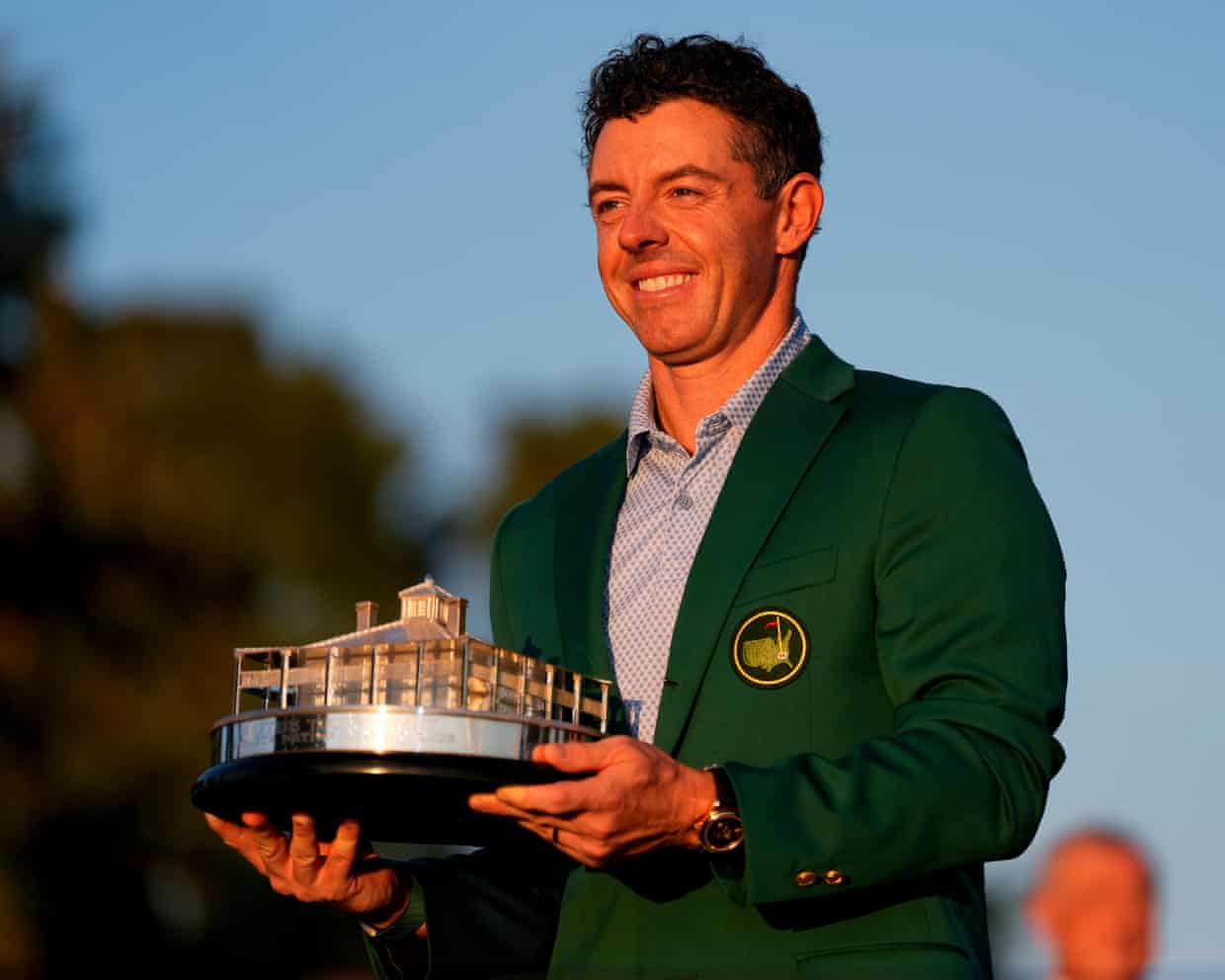
Rory McIlroy has warned the rest of elite golf he will set further, lofty goals in his sport after a successful defence of the Masters.McIlroy prevailed at Augusta National by a shot over Scottie Scheffler, meaning the Northern Irishman becomes just the fourth golfer in history to win the tournament back-to-back. While McIlroy will cherish his win, he has no plans to rest on his laurels.“I just won my sixth major and I feel like I’m in a really good spot with my game and my body,” McIlroy said. “I don’t want to put a number on it, I don’t want to say a stop on the journey, but it’s just a part of the journey

From You, Me & Tuscany to Euphoria: your complete entertainment guide to the week ahead

‘I got everything I dreamed of – when I had no ability to handle it’: Lena Dunham on toxic fame, broken friendships and her ‘lost decade’
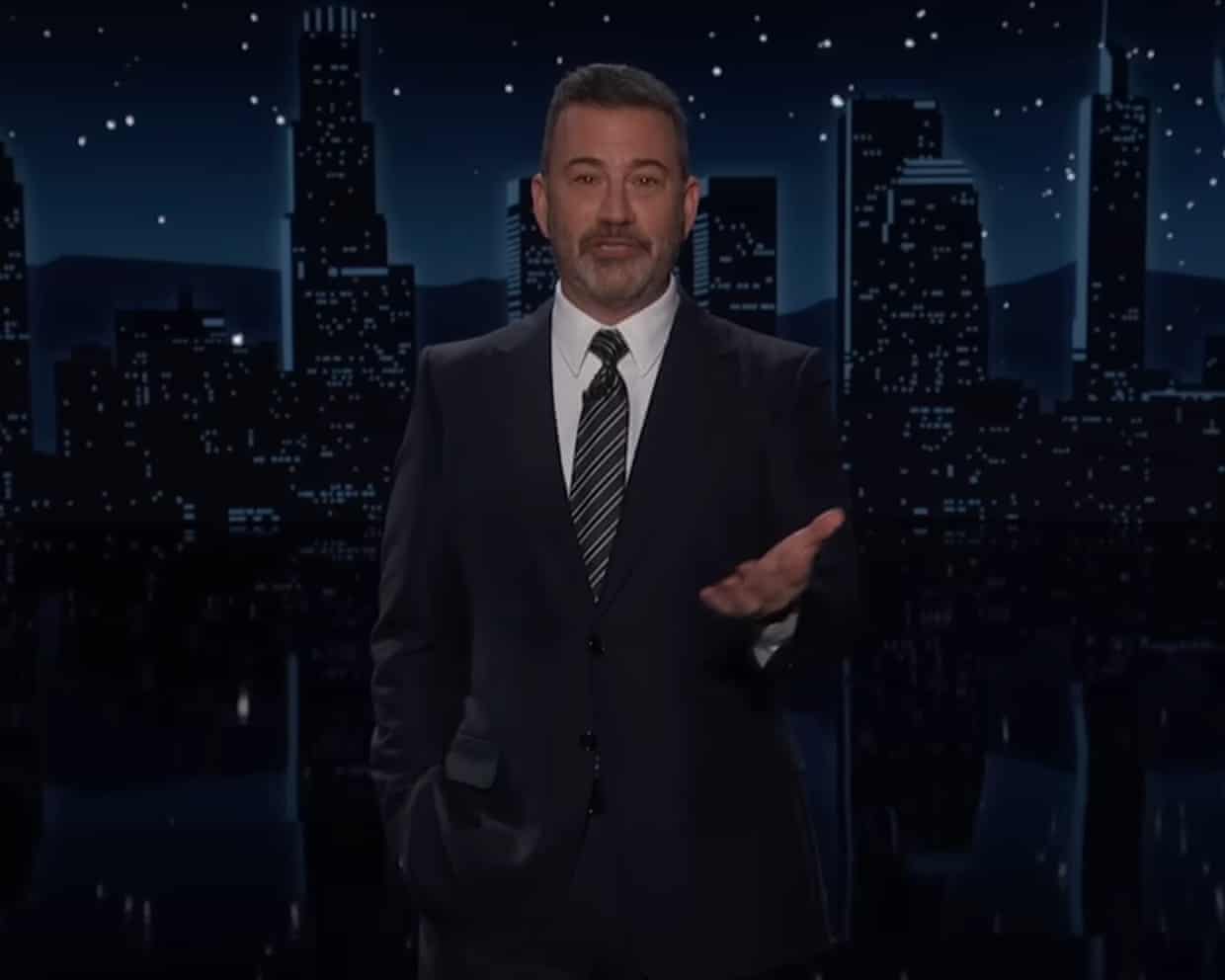
Kimmel on Trump: ‘He talks about war like he’s bragging about women with Billy Bush’
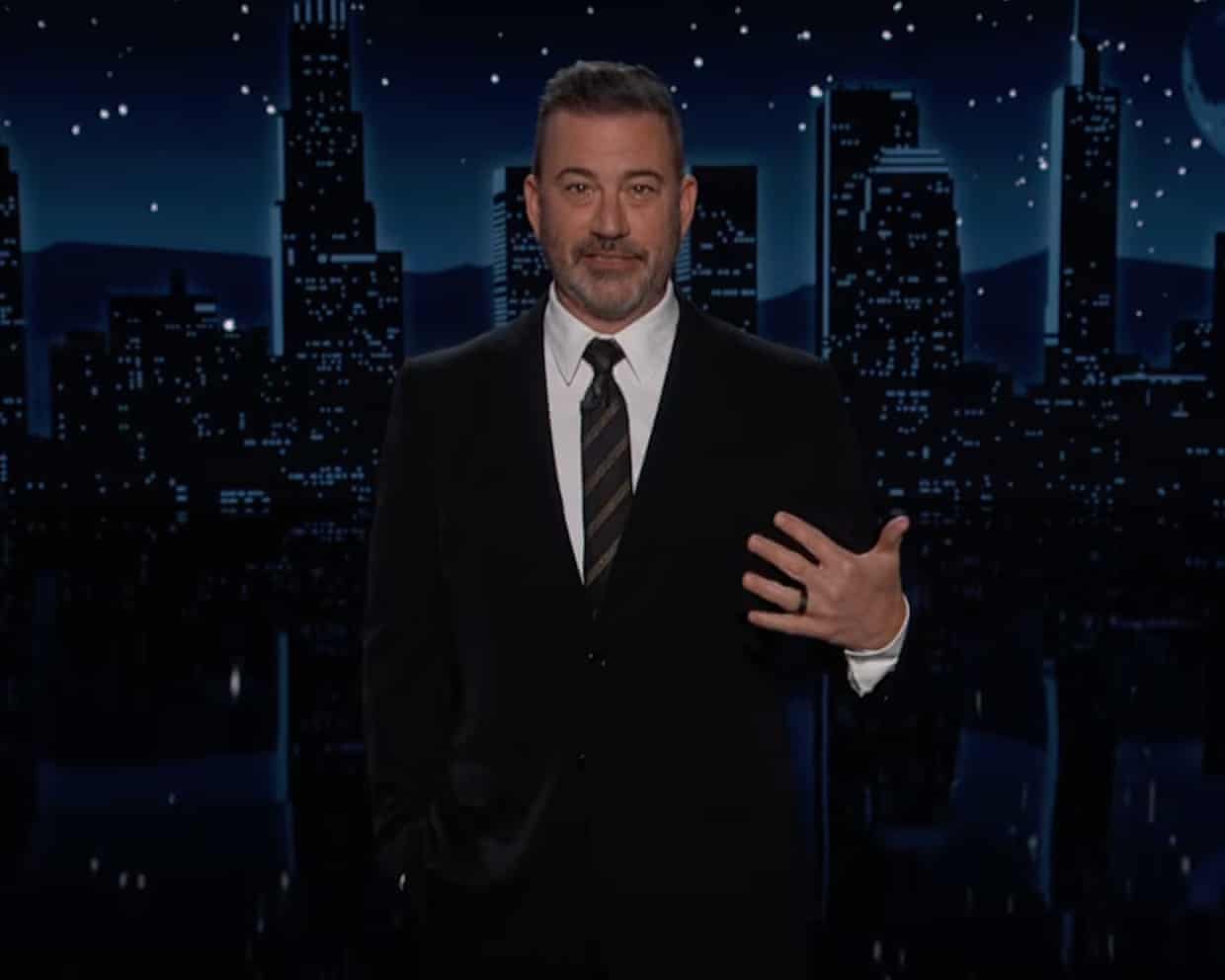
Jimmy Kimmel on US ceasefire negotiators: ‘We’d be better off with Alvin and the Chipmunks’

Jimmy Kimmel on Trump’s Iran threats: ‘The most dangerous episode of the Celebrity Apprentice yet’

Eminem’s 8 Mile helped me survive abuse – and opened my eyes to a world outside of orthodox Judaism