AI companies know they have an image problem. Will funding policy papers and thinktanks dig them out?
OpenAI made a surprise announcement this week – not an update to ChatGPT or another multibillion-dollar datacenter – but a policy paper that called for a reimagining of the social contract based around “a slate of people-first ideas”.It’s the latest move in an aggressive effort by the major AI players to reshape the narrative around their industry, as polls show public disapproval of AI increasing.OpenAI’s 13-page paper, titled Industrial Policy for the Intelligence Age, follows its surprise acquisition of tech-friendly podcast TBPN and its announcement of plans to open a Washington DC office that will feature a dedicated space called the OpenAI workshop for non-profits and policymakers to learn about and discuss the company’s technology.OpenAI’s rival Anthropic has meanwhile announced its own thinktank, the Anthropic Institute, which similarly proclaimed an intention to explore how the growth of AI would disrupt society.As disruptions from AI become more tangible and calls for greater scrutiny of big tech companies grows louder, the industry appears to be both recognizing the widespread discontent and looking for ways to reframe the debate.
Sam Altman, OpenAI’s CEO, talked about the public perception problems facing AI firms at investment firm BlackRock’s conference in Washington DC last month: “You can see a bunch of potential headwinds,AI is not very popular in the US right now,Datacenters are getting blamed for electricity price hikes, almost every company that does layoffs is blaming AI whether or not it really is about AI,” he said,Still, the company’s marketing push is not only about burnishing its image,In developing thinktanks and research institutes, while at the same time spending millions on lobbying efforts, some experts also see AI firms attempting to undercut independent efforts to regulate the industry.
“The OpenAI paper has a lot of the sounds of wanting more regulatory oversight,” said Sarah Myers West, co-executive director at the non-profit AI Now Institute, which advocates for more public accountability over the AI industry.“But then when you look under the hood, they have lobbied very successfully for an administration that has taken a very aggressive deregulatory stance toward AI.”OpenAI and Anthropic did not respond to a request for comment.OpenAI’s paper marks a shift in tone that appears to reflect worries within the company around how its technology is being publicly received.Rather than talk about how workers can adapt to the new technology to avoid falling out of the labor market, the document talks about “building a resilient society” and asks policymakers to create guardrails on safe AI.
The policy ideas include headline-generating proposals such as a four-day work week and the creation of a “public wealth fund” that would return profits directly to citizens – a spin on the tech industry hobbyhorse of universal basic income.The paper stresses the proposals shouldn’t be considered as firm answers on how to address AI’s impact on society, but rather “a starting point for a broader conversation about how to ensure that AI benefits everyone”.“Unless policy keeps pace with technological change, the institutions and safety nets needed to navigate this transition could fall behind,” the paper states.“Ensuring that AI expands access, agency, and opportunity is a central challenge as we move towards superintelligence.”Critics of the paper characterize the arguments more of a public relations ploy than an actual policy document.
And they argue, at its crux, it shifts responsibility away from the company and towards the public and lawmakers,Much of the paper describes OpenAI’s vision of an AI-dominated world as something of a foregone conclusion,While presenting lofty goals for government and society, OpenAI is framing its technology as an inevitable force to be contended with rather than a product that can be regulated both internally and through legislation, experts argue,“What they’ve done very cannily here is sort of outline a set of social welfare goals while abdicating any responsibility or any meaningful commitment of resources toward those goals,” Myers West said,In fact, critics argue, while the company is advocating for lawmakers and the public to take up responsibility, it is lobbying hard behind closed doors for more lax regulations and try to block state regulation that rein them in.
“If we wait around for Congress to act, then these companies will just be able to grow unregulated,” said Caitriona Fitzgerald, deputy director of the Electronic Privacy Information Center,“Which is, of course, what they want,”OpenAI spent nearly $3m on lobbying in 2025,The company’s president, Greg Brockman, co-founded a pro-AI Super Pac that raised more than $125m last year,The Pac has already run ads in New York against congressional candidate Alex Bores, who is in favor of AI regulation.
The company is backing a bill in Illinois that would shield AI firms from liability in cases where an AI model causes serious societal harms such as creating a chemical weapon or causing mass death, Wired reported last week.Lack of awareness at the state government level around the still-nascent technology has provided the AI industry an opening to influence how regulation may look, according to Fitzgerald.“They’re taking advantage, essentially, of the fact that these folks have short sessions and no staff, to convince them that any regulation of AI will stifle innovation,” Fitzgerald said.OpenAI is not alone in its lobbying effort.Rival Anthropic has poured more than $3m into its own lobbying efforts and backed a different Super Pac, one with a different set of goals more welcoming of regulation.
Despite Anthropic’s recent fight with the Department of Defense over red lines on military use of its models, the AI industry also remains closely aligned overall with Donald Trump’s White House, and the administration continues to act in its interest,The Trump administration has attempted to kill state level regulation of AI in multiple ways, adopting the industry’s argument that a patchwork of laws would hamper the technology and stifle economic growth,Trump signed a legally contested executive order last year that attempts to block states from imposing limits on AI,In recent months, the White House pressured a Republican Utah state senator not to propose a bill that calls for transparency and child protection regulations on AI,The building out of thinktanks, public relations pushes and increases in lobbying all come as the AI industry grapples with a pervasive image problem in its home country and is already becoming a focus of political campaigns during upcoming midterm elections.
Polls have shown a deep and growing distrust among the public towards AI, not just in regards to its potential effects on labor but also as a societal force.A Pew Research Center survey released last September found that only 16% of Americans believe that AI will help people think more creatively, while only 5% of Americans believe it will help people better form meaningful relationships with one another.An NBC News poll last month additionally found that only 26% of voters had a favorable opinion of AI and that the technology’s net negative rating was 2 percentage points below US Immigration and Customs Enforcement (ICE).The exact reasons why people feel so negatively toward AI – whether it was the industry’s initial sales pitch that its technology could destroy the world, economic anxieties around job displacement or longstanding antipathy toward big tech – are harder to pin down.What is clear is that the AI industry has begun to look at the fledgling movement of datacenter opposition, AI-restricting bill proposals and public distaste with growing concern.
The industry in recent years has staffed up to make its case to lawmakers, and the public.Corporate-owned labs have pulled in formerly independent academics and researchers.In the last few years, Myers West said these labs have also moved away from publishing in peer-reviewed journals toward in-house publications and greater control.Even though respected researchers have left academia and non-profits to work at these companies, the dynamic creates broader questions about the incentives and corporate ownership of their research.“I don’t think that you could say that they’re in any way meaningfully independent,” Myers West said.

Record number of homes in Great Britain turn to green energy as fuel prices soar
British households are turning to green home energy upgrades in record numbers to try to keep bills down as the Iran crisis sends global oil and gas prices soaring, data from leading energy suppliers suggests.Figures show demand for solar panels, electric vehicles and heat pumps in Great Britain has leapt since the war began on 28 February, as households brace for a sharp increase in monthly payments when the next energy price cap takes effect in the summer.Energy bills are expected to increase by 18% from July – to the equivalent of £1,929 for the typical annual dual-fuel tariff – after Europe’s benchmark gas price rose by about 50%.Octopus Energy, the biggest GB energy supplier, shared figures with the Guardian showing its heat pump orders had more than doubled in March compared with February, while sales of solar power systems were up almost 80% and new leases of electric vehicles rose by more than 85%.The same trend was noted by the sector’s second biggest player, British Gas, which has recorded a 250% increase in solar panel installation inquiries since 28 February

‘Abhorrent’: the inside story of the Polymarket gamblers betting millions on war
“Horekunden” was rapidly losing patience.His frustration was with the Institute for the Study of War, a US thinktank which produces a daily map of the frontline in Ukraine.For Horekunden, and other anonymous gamblers, the map was a “disjointed, incoherent mess … like the painting of a five-year-old”. Therefore it was no use to them in their aim: to settle a bet on the online prediction market Polymarket.The map they were unhappy with depicted the city of Kostyantynivka, which Ukrainian troops have been holding for five months amid shelling and swarms of drones
Federal workers struggle to find roles a year after Trump cuts: ‘I’ve applied to over 250 jobs’
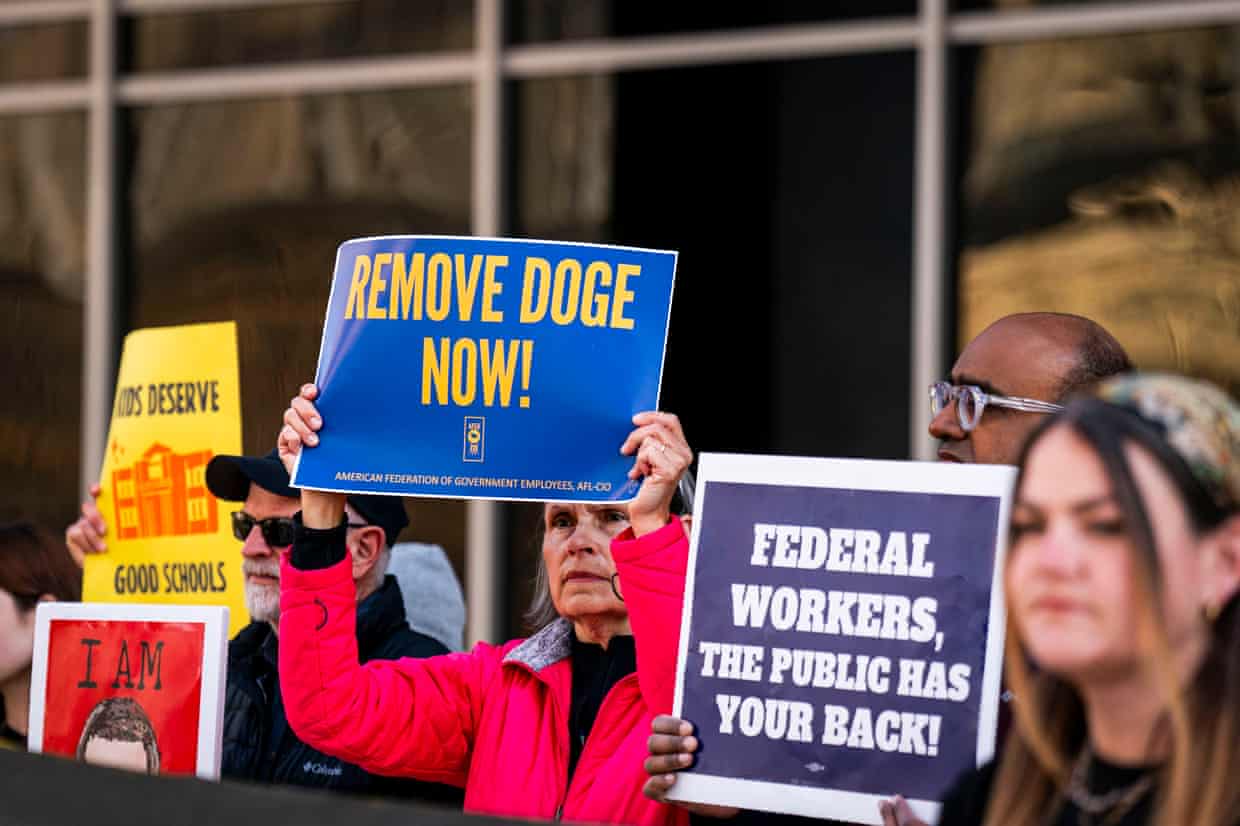
Maggie was faced with a tough choice in February 2025: quit her job at the US office of personnel management or be unceremoniously fired.Though she was a few months pregnant at the time, Maggie was offered one of the buyouts that were offered to tens of thousands of federal government employees by the office of personnel management.“I couldn’t be without health insurance through the delivering of my baby,” said Maggie, who requested to omit her last name for fear of professional repercussions. “I was going to have six to seven months of paid parental leave, because I’d been on my job for five years and I accrued time.”She took a buyout offer in May 2025 and, like many federal employees who took buyouts, and was placed on administrative leave until September 2025
McDonald’s CEO blames mother’s etiquette training for awkward burger bite in video
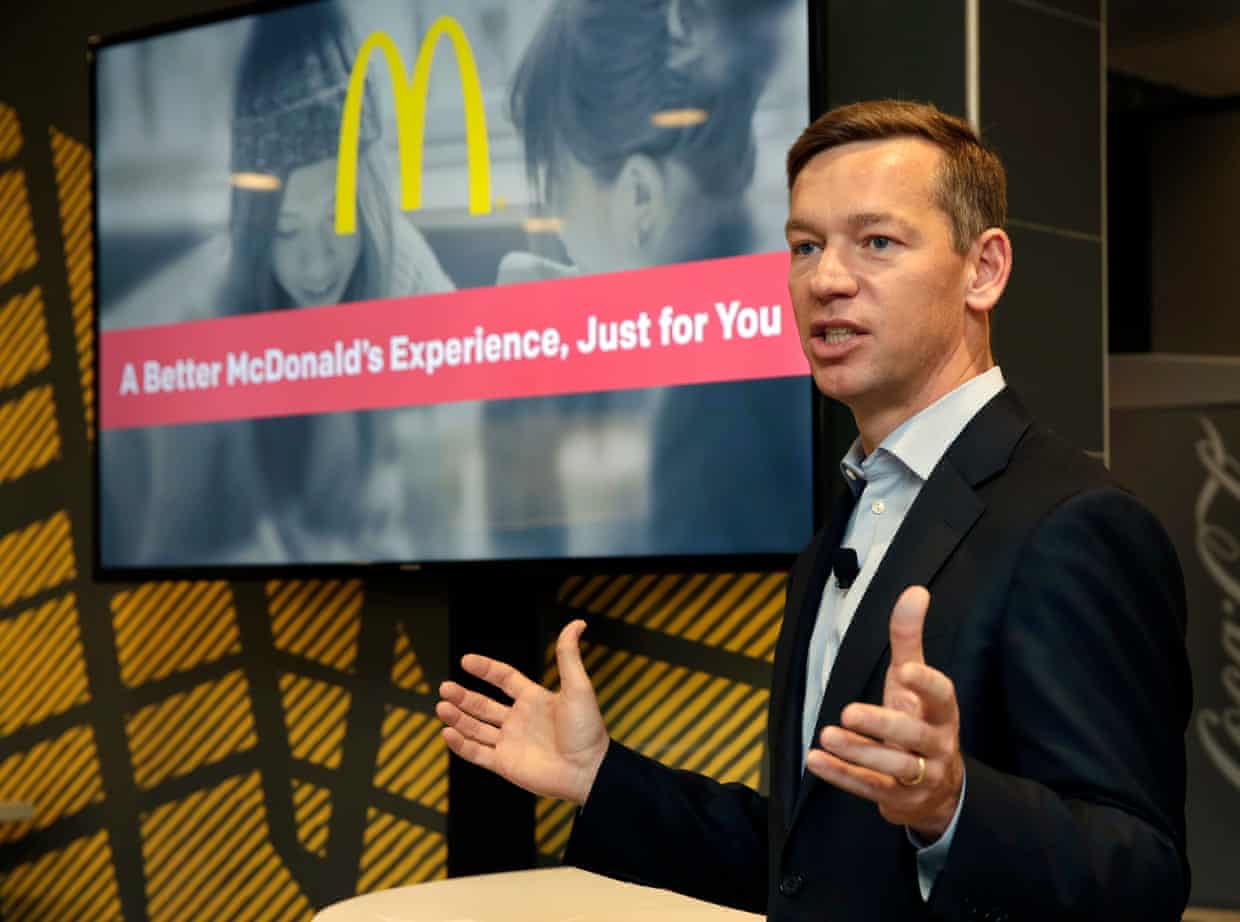
The chief executive officer of McDonald’s recently blamed etiquette guidance from his mother for a February on-camera taste test that made him a target for ridicule – and summarily recorded another video of him eating one of the fast-food giant’s offerings in a manner potential consumers found awkward.Chris Kempczinski suggested to the Wall Street Journal (WSJ) earlier in April that he was simply heeding maternal advice to never talk with his mouth full when he took the humorously small bite at the center of a viral video which depicted him discussing and sampling the new Big Arch burger from McDonald’s.“I blame it all on my mom because she told me, ‘Don’t talk with your mouth full,’” Kempczinski remarked to Tim Higgin, a WSJ columnist, in an interview captured on video. “And I think, probably in that case, I should have just said, ‘You know what? To hell with it. I’m gonna go talk with my mouth full
Crispin Odey drops £79m libel claim against FT over sexual misconduct allegations
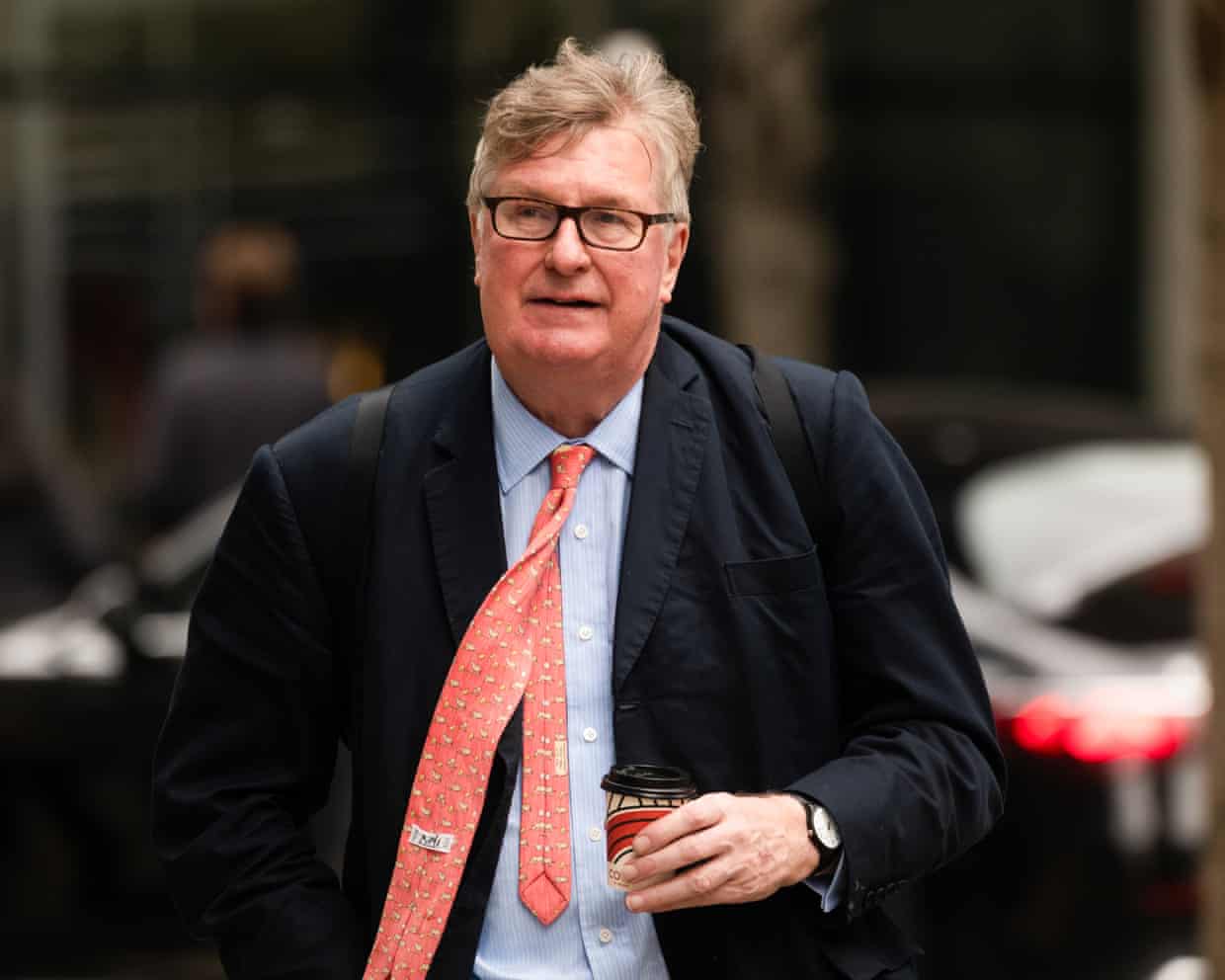
Crispin Odey, the former hedge fund manager, has dropped his £79m libel claim against the Financial Times over its reporting of sexual misconduct allegations against him, his lawyers have said.In 2023, the FT published several articles from 20 women alleging sexual assault and harassment against Odey, covering a period of five decades. He has previously denied the allegations against him.On Friday, lawyers for the former hedge fund tycoon, 67, said he had been “forced to accept” that the newspaper was “likely to succeed in establishing” its public interest defence.A letter said: “Having just endured the stress and strain of a three-week trial in the Upper Tribunal, he does not wish to pursue another lengthy trial at considerable cost, only to fail on the issue of public interest, even if he was successful, as he believes he would be, in demonstrating that he is not the violent predator he was presented as being in the articles

Starbucks’s retail arm gets £13.7m tax credit even as sales increase
Starbucks’s UK retail arm received a £13.7m corporation tax credit last year, even as its sales increased 6% and it added more than 90 stores.The credit, which can be used to offset future tax bills, comes after losses widened to £41.3m in the 12 months to the end of September – almost matching the £40m it paid in royalty and licence fees to its parent company.Starbucks said price increases, new loyalty schemes and the introduction of “freshly baked in-store food” had helped to increase sales to £556

Votes for populist parties in May elections will put NHS at risk, Streeting says
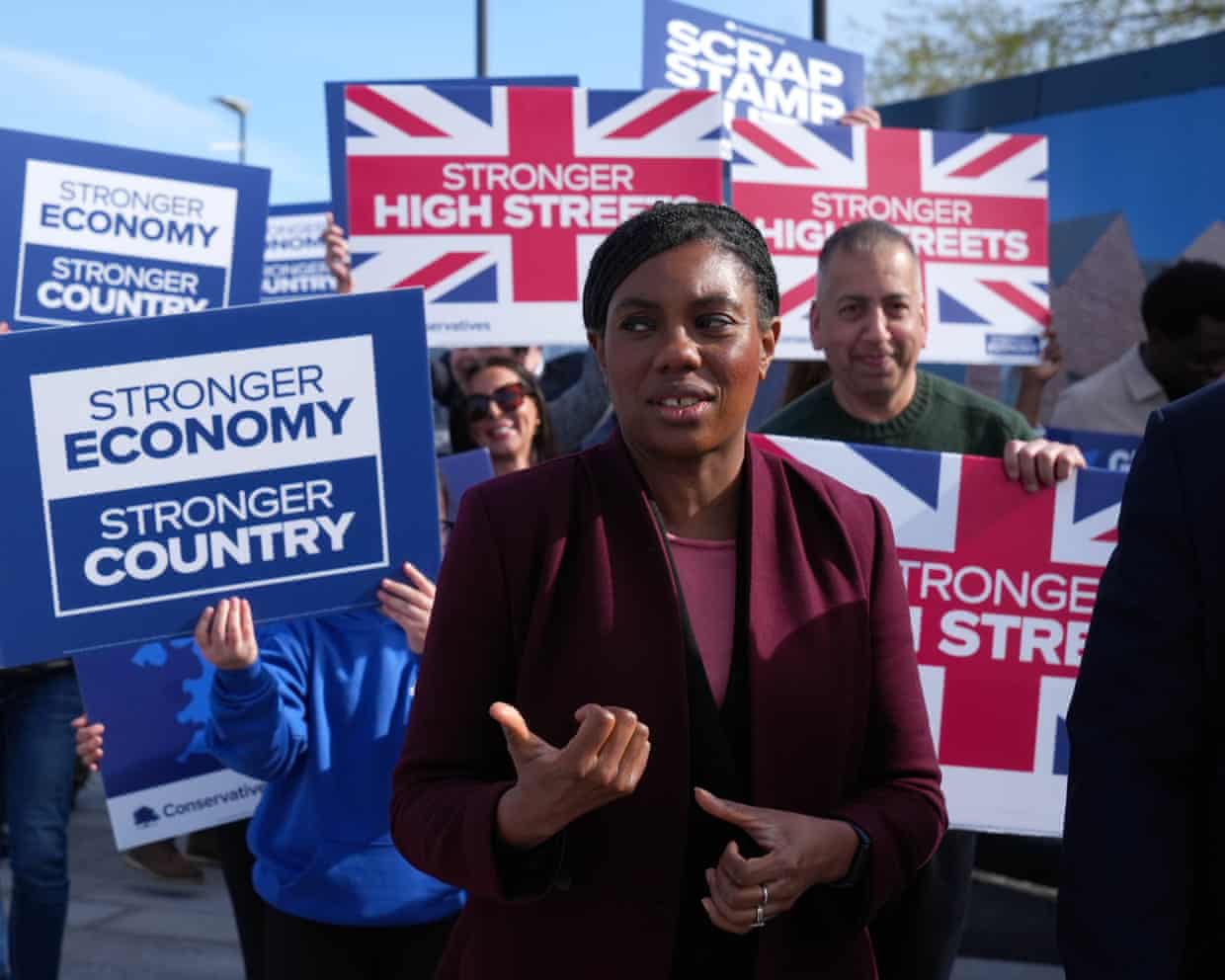
Tories would reinstate two-child benefit cap to fund defence, says Badenoch

UK starts crackdown on EU citizens’ post-Brexit rights

Reform UK local election candidate was twice disciplined by Tories over ‘racist comments’

Starmer implies he didn’t tell Trump he was ‘fed up’ about his impact on rising UK energy bills – as it happened

Not just about Gaza: the Muslim voters turning from Labour to the Greens