‘Too powerful for the public’: Inside Anthropic’s bid to win the AI publicity war
This week, the AI company Anthropic said it had created an AI model so powerful that, out of a sense of overwhelming responsibility, it was not going to release it to the public,The US treasury secretary, Scott Bessent, summoned the heads of major banks for a chat about the model, Mythos,The Reform UK MP Danny Kruger wrote a letter to the government urging it to “engage with AI firm Anthropic whose new frontier model Claude Mythos could present catastrophic cybersecurity risks to the UK”,X went wild,Others were more sceptical, including the noted AI critic Gary Marcus, who said: “Dario [Amodei] has far more technical chops than Sam [Altman], but seems to have graduated from the same school of hype and exaggeration,” referring to the CEOs of Anthropic and its rival, OpenAI.
It is unclear if Anthropic has built the machine god.What is more apparent is that the San Francisco startup widely seen as the “responsible” AI company is brilliant at marketing.In the past months, Anthropic has enjoyed a 10,000-word profile in the New Yorker, two pieces in the Wall Street Journal, and the front cover of Time magazine, on which Amodei’s face was emblazoned, movie-poster style, above the Pentagon and the US defense secretary, Pete Hegseth.Amodei and Anthropic’s co-founder, Jack Clark, appeared on two separate New York Times podcasts in February, chewing over questions such as whether their machine was conscious, and if it might soon “rip through the economy”.The company’s “resident philosopher” has spoken to the WSJ about whether Claude – a commercial product being used to trade cryptocurrency and designate missile targets – has a “sense of self”.
This has all come amid a dustup between Anthropic and the US department of defence in which Anthropic, despite creating the AI tool used by the Pentagon to strike Iran, has managed to come out looking far better than OpenAI, which offered to help the US military do the same thing but with – maybe – fewer guardrails,Its media lead, Danielle Ghiglieri, has notched the wins on LinkedIn,“I’m endlessly proud to work at Anthropic,” she said of the company’s Time cover, tagging the journalists involved in a post about the “mad dash” to get the story over the line,Watching a CBS 60 Minutes segment featuring Amodei “was one of those pinch-me moments,” she said,“What made it meaningful wasn’t just the platform.
It was seeing the story we wanted to tell actually come through.”Of the New Yorker profile, by the journalist Gideon Lewis-Kraus, she wrote: “I would be lying if I said I wasn’t nervous for our first meeting in person … working with someone of Gideon’s calibre means being pushed to articulate ideas you’re still forming, and being OK with that discomfort.”(“I bet that’s what they all say about you,” said my editor.)Other tech PRs have taken notice.“They are clearly having a moment right now but companies building technology that will change the world deserve equal scrutiny,” said one.
“They accidentally leaked their own source code last week, then this week they claim stewardship over cyber threats with a new powerful model that only they control.Any other big tech firm would be ridiculed.”Anthropic did accidentally release part of Claude’s internal source code at the beginning of April.“No sensitive customer data or credentials were involved or exposed,” it said.What does this all mean about Anthropic’s undoubtedly powerful Mythos?The model’s capacities were not “substantiated,” said Dr Heidy Khlaaf, the chief AI scientist at the AI Now Institute.
“Releasing a marketing post with purposely vague language that obscures evidence … brings into question if they are trying to garner further investment without scrutiny.”“Mythos is a real development and Anthropic was right to treat it seriously,” said Jameison O’Reilly, an expert in offensive cybersecurity.But, he said, some of Anthropic’s claims, such as that it found thousands of “zero-day vulnerabilities” in major operating systems, were not that significant to real-world cybersecurity considerations.A zero-day vulnerability is a flaw in software or hardware unknown to its developers.“We have spent over 10 years gaining authorised access to hundreds of organisations – banks, governments, critical infrastructure, global enterprises,” said O’Reilly.
“In those 10 years, across hundreds of engagements, the number of times we needed a zero-day vulnerability to achieve our objective was vanishingly small.”Other reasons may have contributed to Anthropic’s decision not to release Mythos.The company has limited resources, and appears to be struggling to offer enough computing capacity to allow all its subscribers to use its models.It has introduced usage caps on the wildly popular Claude.Recently, it said users would have to purchase extra capacity on top of their subscriptions in order to run third-party tools, such as OpenClaw.
At this point, it may simply not have the infrastructure to support the release of a hyped-up new creation.Like OpenAI, Anthropic is in a race to raise billions of dollars and capture a market – still ill-defined – of people who might lean on its chatbots as friends, romantic partners or deeply personalised assistants, and of companies that might use them to replace human employees.But differences in these products are marginal and impressionistic, mostly down to hard-to-quantify attributes such as “sense of self” and “soul” – or rather, what passes for these in an AI agent.The battle is for hearts and minds.“Mythos is a strategic announcement to show that they’re open for business,” said Khlaaf, saying Anthropic’s release limitation prevented independent experts from evaluating the company’s claims.
She suggested we may be “seeing the very same bait and switch playbook that was used by OpenAI, where safety is a PR tool to gain public trust before profits are prioritised” and: “Anthropic publicity has managed to better obscure this switch than its rivals,”
Task for the week: limit the fallout from biggest oil shock in decades | Richard Partington
The world’s finance ministers and central bank governors gather in Washington this week for the half-yearly meetings of the International Monetary Fund and the World Bank, with the global economy in a perilous spot.Not since the foundation of the Bretton Woods institutions late in the second world war have global conflicts triggered this much economic turbulence. The volatile 1970s come close. But the US-Israeli war on Iran, coming so soon after the Covid pandemic and Russia’s invasion of Ukraine, take the prize.Even if a durable peace deal in the Middle East can be reached, there will still be permanent economic scars

Low-tax Texas opens London office to lure jobs and investment
The US state of Texas is putting UK businesses in its crosshairs with the launch this month of a dedicated London office to lure jobs and investment to the low-tax Lone Star State.Texas recently secured approval for the new site, adding to a growing list of international offices from which it can try to draw corporate heavyweights across its borders.It is the latest sign that Texas lobbyists, led by the office of the state’s Republican governor, Greg Abbott, are widening their economic ambitions beyond American borders, having already had success luring jobs and investment from rival US states including California, Delaware and New York.Lobbyists working in the London office are likely to court UK bosses with incentives including new, fast-track business courts and multimillion dollar subsidies. Texas charges neither corporation nor income tax
AI companies know they have an image problem. Will funding policy papers and thinktanks dig them out?
OpenAI made a surprise announcement this week – not an update to ChatGPT or another multibillion-dollar datacenter – but a policy paper that called for a reimagining of the social contract based around “a slate of people-first ideas”. It’s the latest move in an aggressive effort by the major AI players to reshape the narrative around their industry, as polls show public disapproval of AI increasing.OpenAI’s 13-page paper, titled Industrial Policy for the Intelligence Age, follows its surprise acquisition of tech-friendly podcast TBPN and its announcement of plans to open a Washington DC office that will feature a dedicated space called the OpenAI workshop for non-profits and policymakers to learn about and discuss the company’s technology.OpenAI’s rival Anthropic has meanwhile announced its own thinktank, the Anthropic Institute, which similarly proclaimed an intention to explore how the growth of AI would disrupt society.As disruptions from AI become more tangible and calls for greater scrutiny of big tech companies grows louder, the industry appears to be both recognizing the widespread discontent and looking for ways to reframe the debate
‘Too powerful for the public’: Inside Anthropic’s bid to win the AI publicity war
This week, the AI company Anthropic said it had created an AI model so powerful that, out of a sense of overwhelming responsibility, it was not going to release it to the public.The US treasury secretary, Scott Bessent, summoned the heads of major banks for a chat about the model, Mythos. The Reform UK MP Danny Kruger wrote a letter to the government urging it to “engage with AI firm Anthropic whose new frontier model Claude Mythos could present catastrophic cybersecurity risks to the UK”. X went wild.Others were more sceptical, including the noted AI critic Gary Marcus, who said: “Dario [Amodei] has far more technical chops than Sam [Altman], but seems to have graduated from the same school of hype and exaggeration,” referring to the CEOs of Anthropic and its rival, OpenAI

Craig Overton completes game to remember to finish off Essex – as it happened
Somerset notched up 21 points at Chelmsford, thrashing Essex by 10 wickets. Craig Overton, in his vast Somerset sweater, added a couple of batters and a catch to his century on Saturday, a stand-in captaincy performance to remember. Essex inched a lead of just 47 and Archie Vaughan, Somerset’s second injury substitute, made a bid for a permanent spot by punching the majority of the runs himself, twice plonking Simon Harmer over midwicket for six.A zinger of a catch by Matthew Potts sealed an innings victory for Durham at Bristol. Gloucestershire spent the day bailing out the bath with a teaspoon, but sank after tea
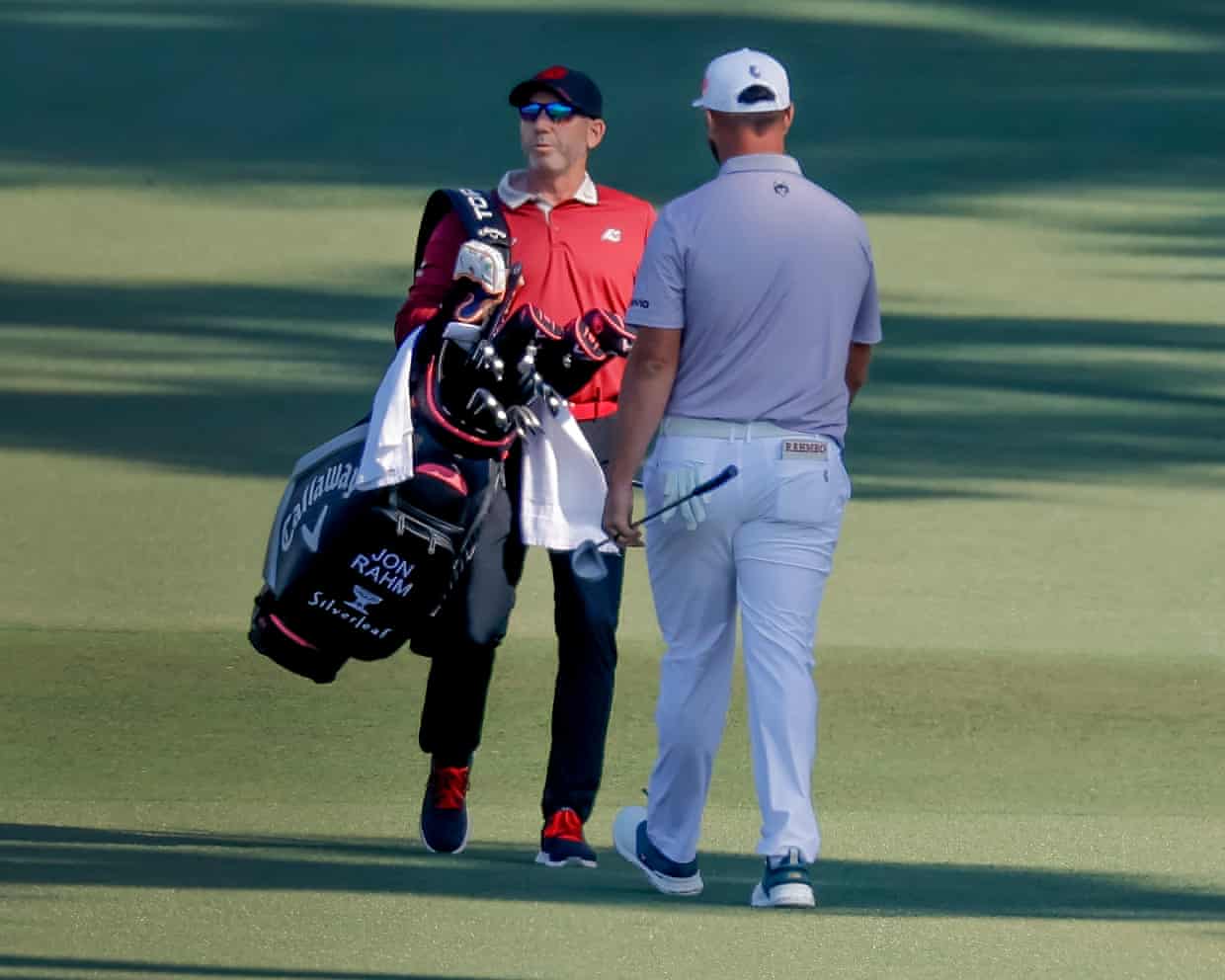
Sergio García warned after breaking club in Masters meltdown before carrying Jon Rahm’s bag
A winner on day four of the Masters was not even part of the remaining field. Robert MacIntyre, somewhere, surely raised a smile.The Scot was the recipient of widespread criticism on Thursday after offering a single-fingered salute to Augusta National when en route to a nine at the 15th. A range of expletives and a whack of the sacred turf also featured in his first round. MacIntyre’s passionate approach to his profession is admirable but this was all over the top

Record number of homes in Great Britain turn to green energy as fuel prices soar
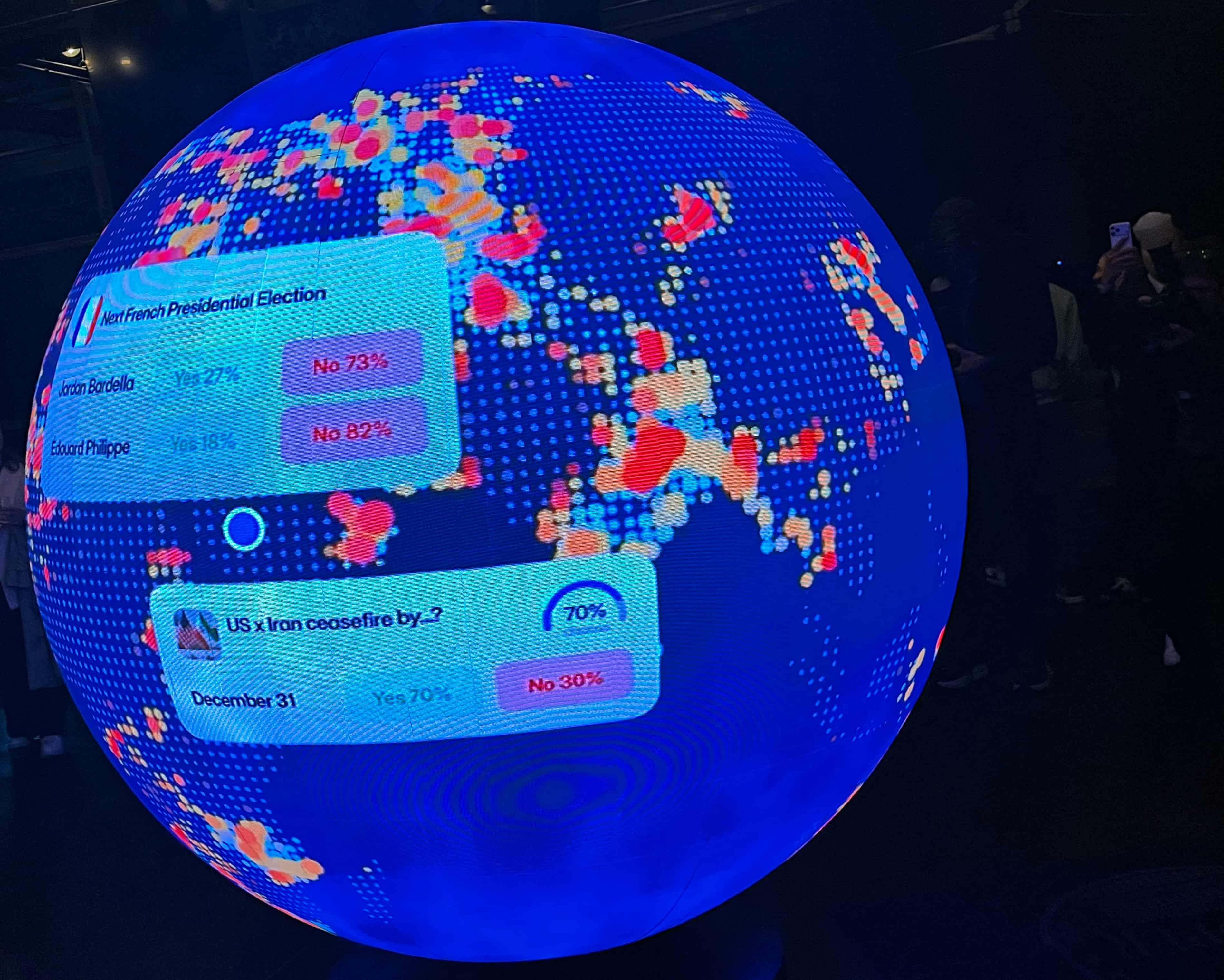
‘Abhorrent’: the inside story of the Polymarket gamblers betting millions on war
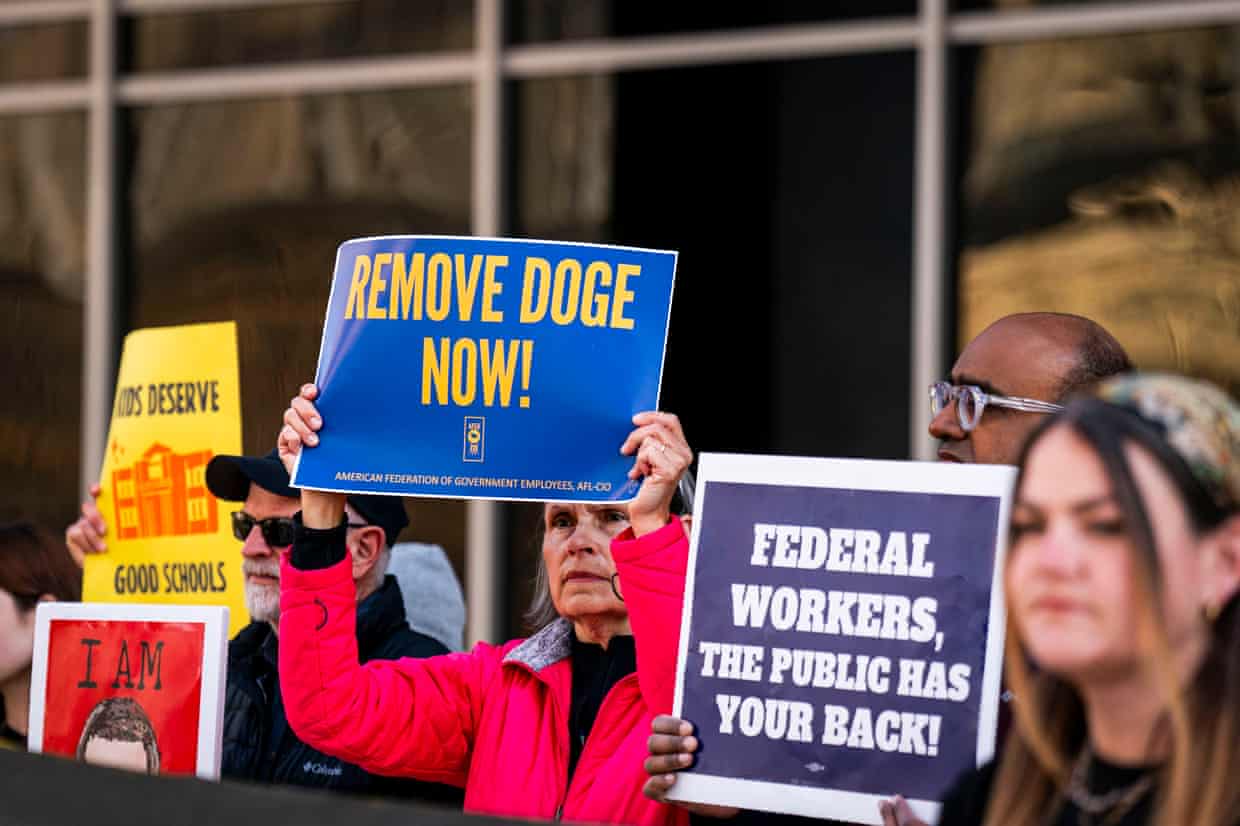
Federal workers struggle to find roles a year after Trump cuts: ‘I’ve applied to over 250 jobs’
McDonald’s CEO blames mother’s etiquette training for awkward burger bite in video
Crispin Odey drops £79m libel claim against FT over sexual misconduct allegations
Starbucks’s retail arm gets £13.7m tax credit even as sales increase