Welcome to Y’all Street: bullish Dallas aims to steal New York’s financial crown

As the warm sun rises over the Dallas skyline, SUVs and pickup trucks whiz past an unassuming construction site that is helping cement the city’s Texas-sized financial ambitions,Nestled between towers claimed by Bank of America and JP Morgan, Goldman Sachs has cordoned off 800,000 sq ft for a new Dallas campus able to host more than 5,000 staff,But the $700m (£530m) project is more than a regional expansion plan by one of America’s largest banks,It is another win for the lobbyists behind Dallas’s “Y’all Street” – the Texan city’s aggressive push to steal New York’s financial crown,The Dallas-Fort Worth metro area, once a fly-in, fly-out stopover for bankers, has seen its financial sector workforce boom over the past decade, surging 40% to 386,000 staff.
Banks and investment houses – already keen to sidle up to Texas’s fossil-fuel industry and growing tech and AI sectors – have been lured by multimillion-dollar subsidies and new fast-track business courts, as well as Texas’s complete lack of corporation and income tax.In the past 12 months alone, a 10-year property tax break and $2.7m worth of grants helped convinced the Canadian lender Scotiabank to relocate from North Carolina, bringing 1,000 jobs to the state.Meanwhile, the Nasdaq and the NYSE, keen to score potential listings, both launched branches of their stock exchanges in Dallas.That followed news of a homegrown Texas stock exchange (TXSE), launching later this year, that has tried to undercut its rivals with looser listing rules likely to appeal to right-leaning executives.
That includes an explicit absence of diversity requirements, once used by Nasdaq to bring more women and minorities into American boardrooms.Now, the more liberal Big Apple is in TXSE’s crosshairs, with a recently launched TV ad showing a Texas longhorn shattering Wall Street’s famous bull statue.“Welcome to the real bull market,” the TXSE declares.Marketing efforts aside, how serious is Dallas about stealing finance jobs from New York? “We’re very serious about it,” says Dallas’s mayor, Eric Johnson, “and we think the way the country, politically, seems to be shaping up, we’re really standing out as a place that embraces business.”His team are specifically targeting firms allegedly put off by left-leaning policies by the likes of Zohran Mamdani, New York’s social democratic mayor.
Johnson said Mamdani’s plans, which include government-subsidized childcare and groceries, as well as a possible 9.5% increase on property taxes, would harm corporations that he said were crucial employers.“Those are the types of policy differences that are getting people to look at places like Dallas, where we’re doing the exact opposite,” Johnson said.And Dallas’s pitches are intensifying, with Johnson sending a 10-person delegation to New York this month to meet and lure Wall Street executives southward.“My office, certainly, is in touch with folks across the country about relocating their corporate headquarters here, or expanding operations.
And we don’t plan to stop any time soon.”Even London, typically worried about losing business to New York, may have a new rival.“We travel internationally and we talk to international companies,” said Mike Rosa, a senior vice-president of business lobby group the Dallas Regional Chambers.“The idea of an international bank … completely moving their headquarters to Dallas, that happens.The idea of establishing Dallas as a hub for that bank so it can be more successful, that’s very real,” he said.
“And we’ve got the makeup, we’ve the ingredients to continue to push and grow our international footprint,”Part of the pitch is being closer to big business clients and major tech firms, that have been increasingly shifting their centre of gravity to the Lone Star state,Over the course of the 2020s, Texas surpassed California and became host to the largest number of NYSE-listed and Fortune 500 company headquarters of any American state,That includes Oracle, which moved from Silicon Valley to Austin in 2020, and three of Elon Musk’s ventures – Tesla, X and SpaceX – all of which moved from California in recent years,ExxonMobil is the most recent win, with the oil company announcing last month it would shift its base to Texas from New Jersey.
Dallas-Fort Worth’s population has also boomed, growing at the fastest rate among the United States’ 385 metro areas since 2010, to 8.5 million people.“The big story has been people moving from other parts of the United States,” said Cullum Clark, an economist at the George W Bush Presidential Centre at Dallas’s South Methodist University (SMU).It comes as New York, LA, Chicago and San Francisco experienced net outflows.Some of that has been political self-selection, Clark said, noting there was “suggestive data” showing conservative-leaning people are fleeing liberal-leaning states.
Politics aside, businesses are now finding it easier to recruit staff.The head of Goldman Sachs’s Dallas office, Aasem Khalil, still remembers getting a call from now-chief executive David Solomon in 2016, asking him to move his career and family to a then-900-person office in Dallas.Khalil, a lifelong New Yorker who had known Dallas as a temporary stopover for meetings, said “it was a head-scratcher”.But Dallas proved well-connected, becoming a convenient launch pad to serve businesses in Latin America, while a series of non-stop flights to locales as diverse as Fargo, North Dakota, and Seoul helped ferry executives to meetings around the world.Meanwhile, growing demand for bankers eventually meant SMU and the University of Texas started churning out business and finance grads fit for hire at firms like Goldman.
Ultimately, “not everyone wants to be in New York”, Khalil said, adding it can be a “hard place to live”, even for wealthy bankers,“For a lot of people, Dallas is more their cup of tea,”But while the boom of high-paid jobs is welcomed across the political spectrum, it is not clear whether the flood of wealthy bankers stands to lift all boats,And some experts are warning that Y’all Street may be putting pressure on poorer families, particularly when it comes to rental prices,“Growth is a good problem to have,” Clark said.
“But that said, nothing comes without side-effects.”“A growing population – and particularly a growing population of highly compensated people – does impose strains and it puts new stresses on the system,” Clark explained.“And somebody winds up the net loser through those changes, unless those people are adequately provided for.”A surge in rental prices over the past 15 years has disproportionately hurt lower-income families, for whom rent is now eating up more than half their wages.“That is a extreme hardship and we’ve had a great many people experiencing that.
And that is not just the poorest of the poor; that is several hundred thousand people who are very housing-cost-burdened,” Clark said.Figures collected by Dallas research group Child Poverty Action Lab (CPAL) show that while the number of households earning more than $100,000 in the city of Dallas jumped by 87,000 in the decade to 2023, those earning less than $35,000 fell by 61,000.Some of that may be explained by wage growth, but it is more likely that low-income workers are being pushed out of city limits and into more remote suburbs.With limited public transport, traffic congestion and commuting times are rising.That has forced some workers to take lower-paying jobs closer to where they can afford to live, putting further pressure on household finances.
“For people who are already living on the financial edge, [the population boom] creates more competition for housing, for resources, and so the salaries that they were making just don’t go as far as they used to,” Ann Baddour, director of the Fair Financial Services Project at advocacy group Texas Appleseed, said,That is bearing out in financial statistics, including an 81% surge in debt-collection claims in Dallas between 2022 and 2025,“That’s always a leading indicator because people will take out debt to try to sustain their life and then at some point it all falls apart,” Baddour said,The city has also been grappling with chronic homelessness, which has involved clearing camps from visible areas including the former central business district downtown,The non-profit group Housing Forward insisted that Dallas had committed to not just move people from “block to block”, and had connected 22,939 people to housing since 2021.
While it remains a visible problem, including in the downtown core, the group said homeless numbers had been falling for four consecutive years.Still, Dallas, and its Y’all Street lobbyists, are racing to keep up with growth that they helped spur.“If you believe you’re gonna be in a high growth environment, you’d better have a plan around housing and be ready to absorb it,” Clark said.“I don’t think, actually, that the city of Dallas has that at present, so therefore, we’re underprepared.”Dallas is now trying to rapidly tackle the problem.
Last year, it slashed parking requirements for new developments and rewrote building regulations to make it easier to push through smaller-scale developments for multi-family buildings.But even Dallas’s wealthy bankers are facing fierce competition at the top end of the housing market.Linda McMahon, a former JP Morgan banker, and head of the Dallas Economic Development Corporation, recalls one private equity boss who recently made a generous private offer for a home in Dallas’s well-to-do Highland Park, before tearing it down to start from scratch.“He probably spent twice as much, but that’s not unheard of,” McMahon said.“For people from California, the prices here are so much less, that they can come in and do that.
So the high-end real estate market is pretty competitive.”Campaigners like Baddour are now warning that, without targeted support, inequality across Dallas, and its sprawling Forth Worth metro area, is likely to grow.“There has to be a deliberate choice, and deliberate effort, to ensure that this doesn’t just reinforce some of the dynamics that have created a little bit of a two-tiered economy: those who have access to money, to markets, to resources, and those who don’t,” Baddour said.“There here has to be a deliberate effort to bridge that gap.”

US inflation soars in March as war on Iran drives economy into uncertainty
US inflation soared in March amid the US-Israel war with Iran, with prices up 0.9% compared with last month and 3.3% over the year, according to new data released on Friday.The spike in the consumer price index (CPI), which measures the price of a basket of goods and services, is the largest in nearly two years and the first official measure of how the conflict has affected US consumer prices, particularly as Iran blocked the strait of Hormuz, through which a fifth of the world’s oil and gas would typically pass.The index for energy rose 10
Welcome to Y’all Street: bullish Dallas aims to steal New York’s financial crown
As the warm sun rises over the Dallas skyline, SUVs and pickup trucks whiz past an unassuming construction site that is helping cement the city’s Texas-sized financial ambitions.Nestled between towers claimed by Bank of America and JP Morgan, Goldman Sachs has cordoned off 800,000 sq ft for a new Dallas campus able to host more than 5,000 staff. But the $700m (£530m) project is more than a regional expansion plan by one of America’s largest banks. It is another win for the lobbyists behind Dallas’s “Y’all Street” – the Texan city’s aggressive push to steal New York’s financial crown.The Dallas-Fort Worth metro area, once a fly-in, fly-out stopover for bankers, has seen its financial sector workforce boom over the past decade, surging 40% to 386,000 staff
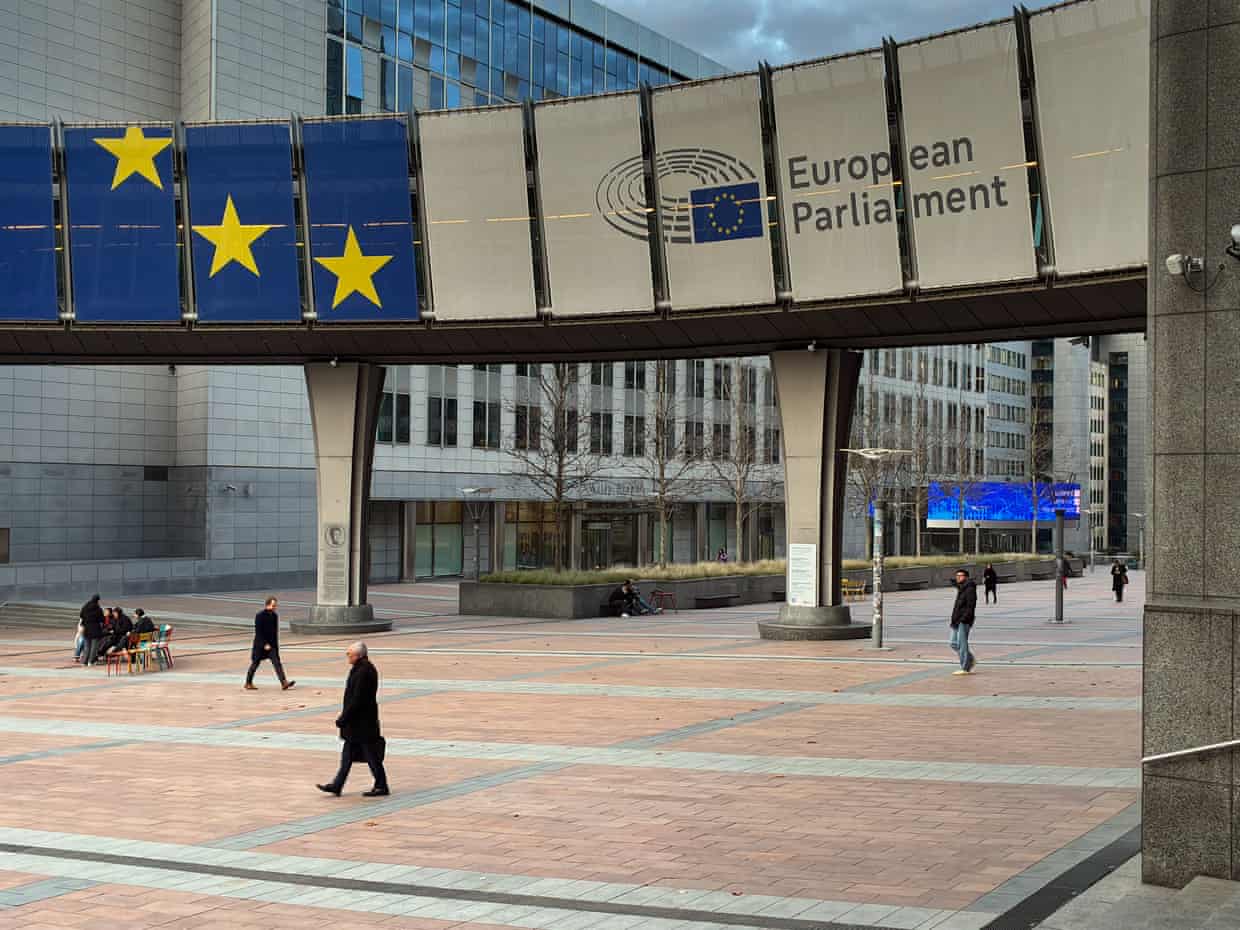
‘Irresponsible failure’: Google, Meta, Snap and Microsoft slam EU over child sexual abuse law lapse
The European parliament has blocked the extension of a law that permits big tech firms to scan for child sexual exploitation on their platforms, creating a legal gap that child safety experts say will lead to crimes going undetected.The law, which was a carve-out of the EU Privacy Act, was put in place in 2021 as a temporary measure allowing companies to use automated detection technologies to scan messages for harms, including child sexual abuse material (CSAM), grooming and sextortion. However, it expired on 3 April, and the EU parliament decided not to vote to extend it, amid privacy concerns from some lawmakers.The regulatory gap has created uncertainty for big tech companies, because while scanning for harms on their platforms is now illegal, they still remain liable to remove any illegal content hosted on their platforms under a different law, the Digital Services Act. Google, Meta, Snap and Microsoft said they would continue to voluntarily scan their platforms for CSAM, in a joint statement posted on a Google blog

Elon Musk’s xAI sues Colorado over new rules for artificial intelligence
Elon Musk’s artificial intelligence company, xAI, has filed a lawsuit against the state of Colorado over a new AI law set to take effect in June.The suit seeks to block the state from enforcing the law, which would impose new requirements on AI systems to protect state residents from “algorithmic discrimination” in sectors such as education, employment, healthcare, housing and financial services.Colorado was the first state to pass a comprehensive bill to regulate AI.The company claims the law infringes on its first amendment free-speech protections and would force xAI to “promote the state’s ideological views on various matters, racial justice in particular”, according to the Financial Times, which first reported the lawsuit. “Its provisions prohibit developers of AI systems from producing speech that the state of Colorado dislikes

Grand National preview: Jagwar to deny Irish battalions in Aintree spectacular
It is more than a decade since a Grand National winner was trained in an English stable, as Lucinda Russell, successful twice since 2017 from her yard in County Kinross, is the only trainer to break the Irish stranglehold since Oliver Sherwood’s success with Many Clouds in 2015. The home side put up a much-improved performance at last month’s Cheltenham festival, however, and Jagwar (4.00), one of two major contenders from Oliver Greenall and Josh Guerriero’s stable 50 miles the track, could extend the English revival in the biggest race of the season on Saturday.Jagwar will head to Aintree with all of the attributes you could want to see in a modern-day National winner. He has youth on his side at seven years of age, and remains open to improvement with just eight starts over fences on his record to date

Two-horse trainer hopes to keep Grand National fairytale tradition alive
Connor King needs a little persuading that his attempt to win Saturday’s Grand National with Oscars Brother has the potential to be one of the most remarkable tales in the 187-year history of the world’s most famous and storied steeplechase. “It’s probably hard [to see] when you’re in the situation,” the trainer said this week. “When you’re looking in from the outside, it might be easier.”The Grand National, it’s true, amplifies everything: triumph, despair, drama. Even by the standards of what has always been a race apart, however, King’s journey to Liverpool from his tiny stable in County Tipperary skirts the border between implausible and absurd

Alarm in health service over Palantir staff being given NHS email accounts

Scientists develop AI tool to spot heart failure risk five years before it strikes
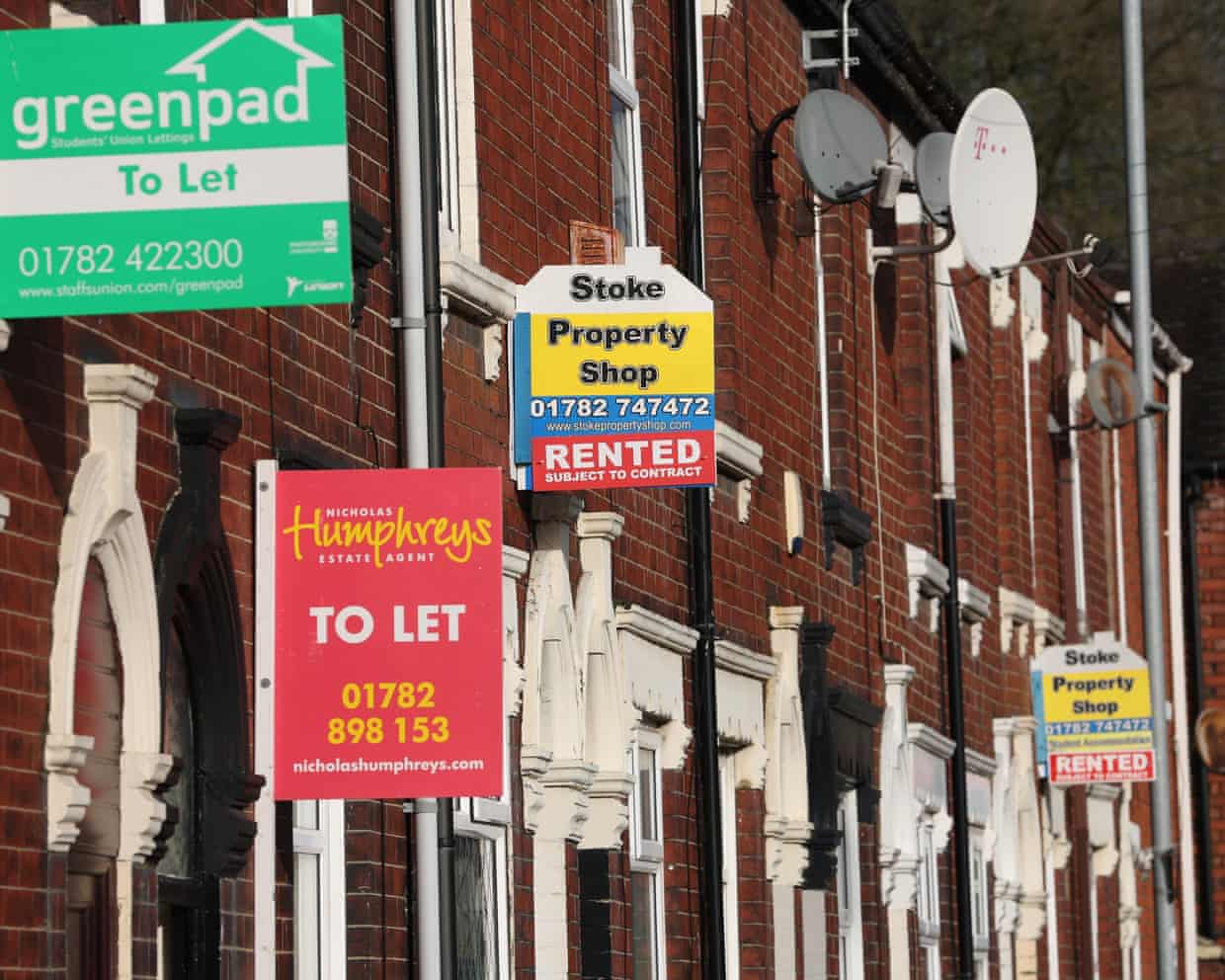
Landlords evicting tenants before law to prevent practice comes into force in England

‘People are so judgmental’: the growing cohort of over-55s facing homelessness

World held hostage by reliance on fossil fuels, Christiana Figueres warns – and climate health impacts are ‘mother of all injustices’
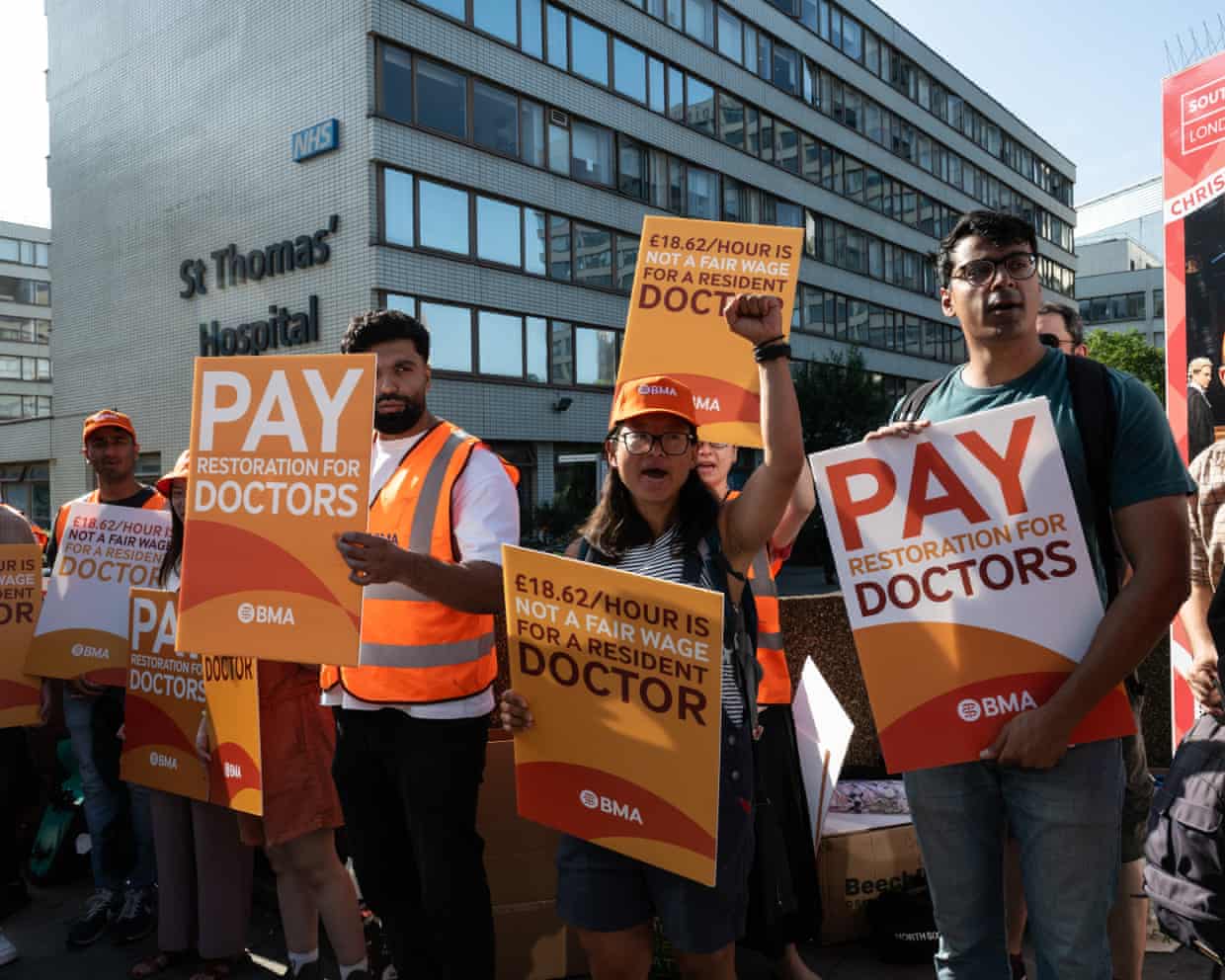
Resident doctors’ strike has torpedoed pay rises and training posts, says Wes Streeting