Resident doctors’ strike has torpedoed pay rises and training posts, says Wes Streeting
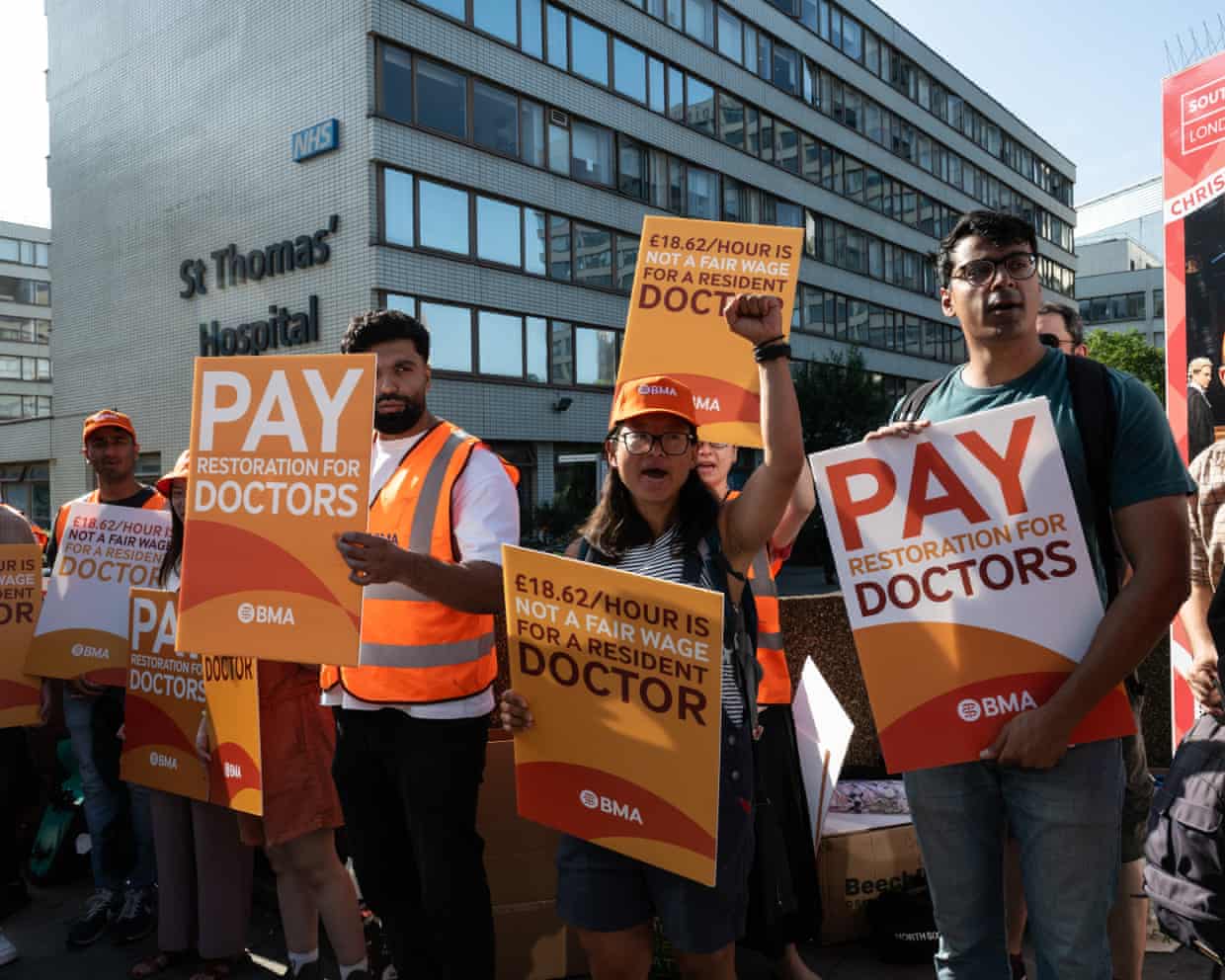
Wes Streeting has accused resident doctors of “torpedoing” their own pay rises and training jobs by walking out on strike again, as tens of thousands of doctors began a six-day stoppage in England,The health secretary said there was a “legitimacy” to concerns over jobs and wages but that the British Medical Association had scuppered any chance of a breakthrough when it rejected what he said was a serious offer from the government to transform medics’ conditions,Resident doctors began their longest strike yet at 7am on Tuesday after talks to end the long-running dispute collapsed,Walking out for a fourth year in a row, this is the 15th time they have staged industrial action since March 2023 in their campaign for “full pay restoration”,NHS officials told the Guardian the strike would cost the health service an estimated £300m, lead to appointments being cancelled, and would force patients to wait longer for tests, treatment and surgery.
Health leaders have pleaded with patients not to be put off seeking care they need this week.With this upcoming round of strikes, costs to the NHS are estimated to go above £3bn since 2023, with Tuesday seeing the 60th day of industrial action by resident doctors in the past three years, according to analysis by the Times and Telegraph.The Guardian put this estimate to the NHS which said that while it did not provide formal figures, it did not object to the £3bn estimate.Talks on Tuesday and Wednesday last week failed to reach a compromise that would have led to the BMA suspending or cancelling the strike.The union and ministers remain far apart on a number of key issues, including pay.
Speaking to the Guardian before the walkout, Streeting said the BMA had not only killed off chances of securing better pay and more jobs for medics, but now threatened to derail progress made by the NHS on waiting times.“After months of detailed negotiations, collaboration and compromise, we put forward a deal would have delivered an average pay rise this year of 4.9%, a pay boost of at least 6.2% for the lowest-paid doctors, and an overall pay increase of 35.2% on average compared with four years ago.
”The government had also listened to concerns about career progression and training bottlenecks and “responded with a serious plan”, Streeting said,“We rushed through emergency legislation to prioritise UK graduates for training places, reducing competition from four to one to less than two to one,This deal would have gone further by introducing up to 4,500 additional specialty training posts over three years, including 1,000 this April, alongside support such as reimbursing mandatory exam fees that can cost thousands,“Instead of accepting this offer, the BMA rejected it outright and announced immediate strike action,Not only does this torpedo the pay rises and training posts available to resident doctors, but it also puts at risk the recovery of the NHS.
”The BMA has been seeking a 26% pay rise, spread over several years.It declared its six-day strike in response to what it said was the government having “shifted the goalposts” after weeks of productive negotiations.The Guardian reported that the sudden breakdown of the talks was prompted by a row over when resident doctors would receive £700m of extra “progression pay”, which Streeting had agreed to give them to help meet their pay demands.The health secretary said it should be given over the next three years but the BMA was seeking the full amount in the new NHS operational year, which started last Wednesday.Speaking on Monday, the BMA resident doctors committee chair, Dr Jack Fletcher, said he was serious about ending the dispute and he blamed the government for the talks breaking down.
“My colleagues and I have spent months in the negotiating room, and a deal was taking shape, yet at the last minute the government quietly watered it down, reducing the money on the table, then stretching what was left over too many years to make it worthwhile,” he said,“These strikes were entirely avoidable,We offered the government several opportunities to undo their last-minute goalpost shift and they refused,”Fletcher said it was even harder to understand why the government had pulled the plug on an offer to create 1,000 extra places in specialist medical training this year,Streeting said in a letter to the BMA last week that he had withdrawn his offer to create the extra places as that had been conditional on the BMA accepting the government’s most recent offer, which it rejected the week before.
Speaking to the Guardian ahead of the strike on Tuesday, the health secretary said: “Having rejected the deal, the BMA now complain that the proposed training places are not materialising.They can’t reject the deal and claim the benefits.”The strike is due to end at 7am next Monday.Patients have been urged to attend planned appointments unless they have been contacted to reschedule, and those with life-threatening emergencies should still call 999 or attend A&E.
Ex-Waitrose worker needs our support | Brief letters
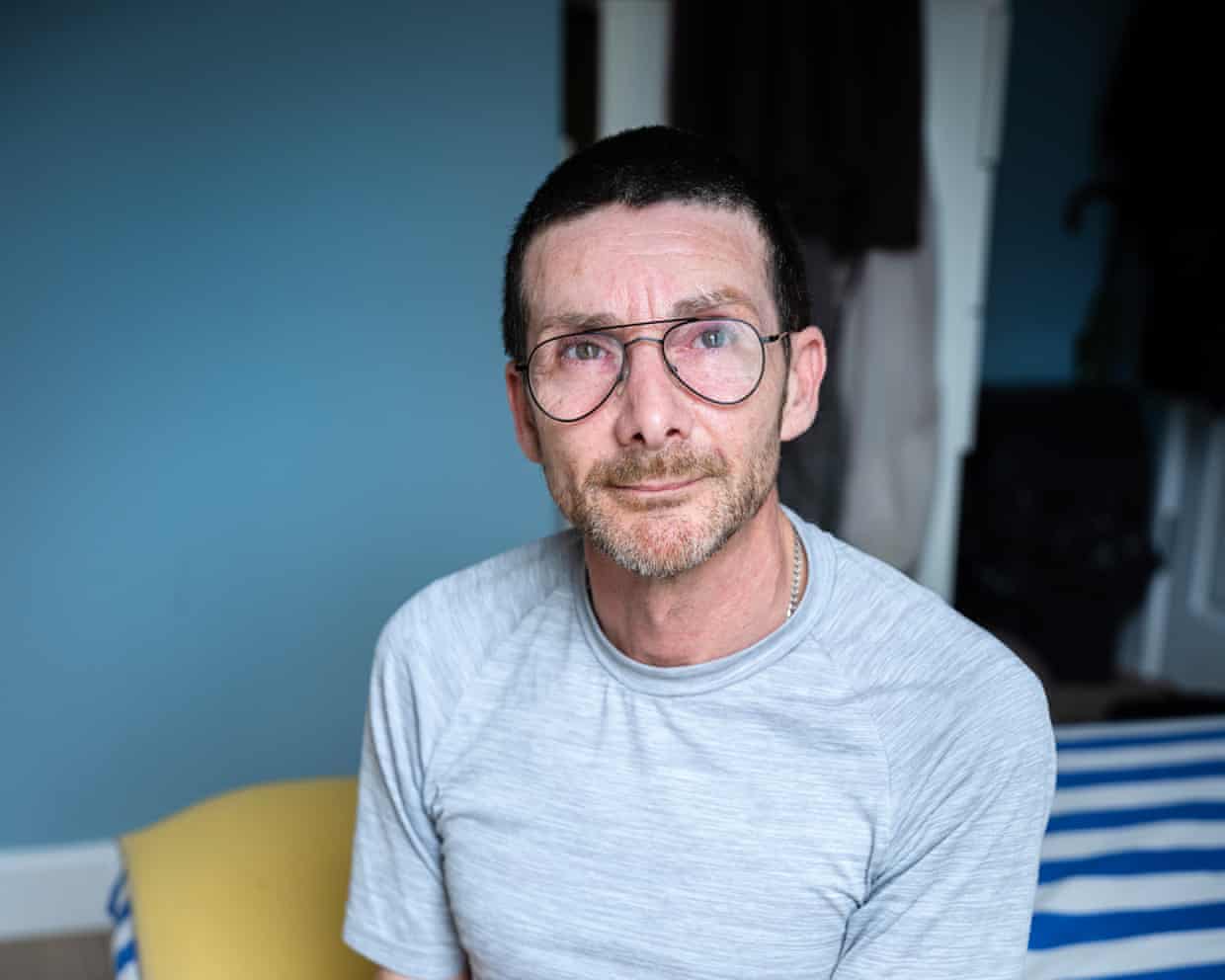
Perhaps the boss of Waitrose should leave his ivory tower and spend an extended period on the shop floor to experience the life of a shop worker and see the shoplifting epidemic that is happening day in and day out. He may then reach boiling point one day and react out of character. Perhaps a “Don’t-shop Wednesday” at Waitrose, in support of Walker Smith (Waitrose employee sacked after stopping shoplifter from taking Easter eggs, 5 April), might have some effect and reach top executives.Roy WilsonHarrow, London The heartwarming column on how Beau the labrador saved his master’s life after he suffered cardiac arrest on a beach (The pet I’ll never forget, 6 April) reminded me of when we got our new collie. Arriving home, my husband went on ahead to open the house door and didn’t see that I had tripped and landed face down on our lane
Oil and gas crisis from Iran war worse than 1973, 1979 and 2022 together, says IEA
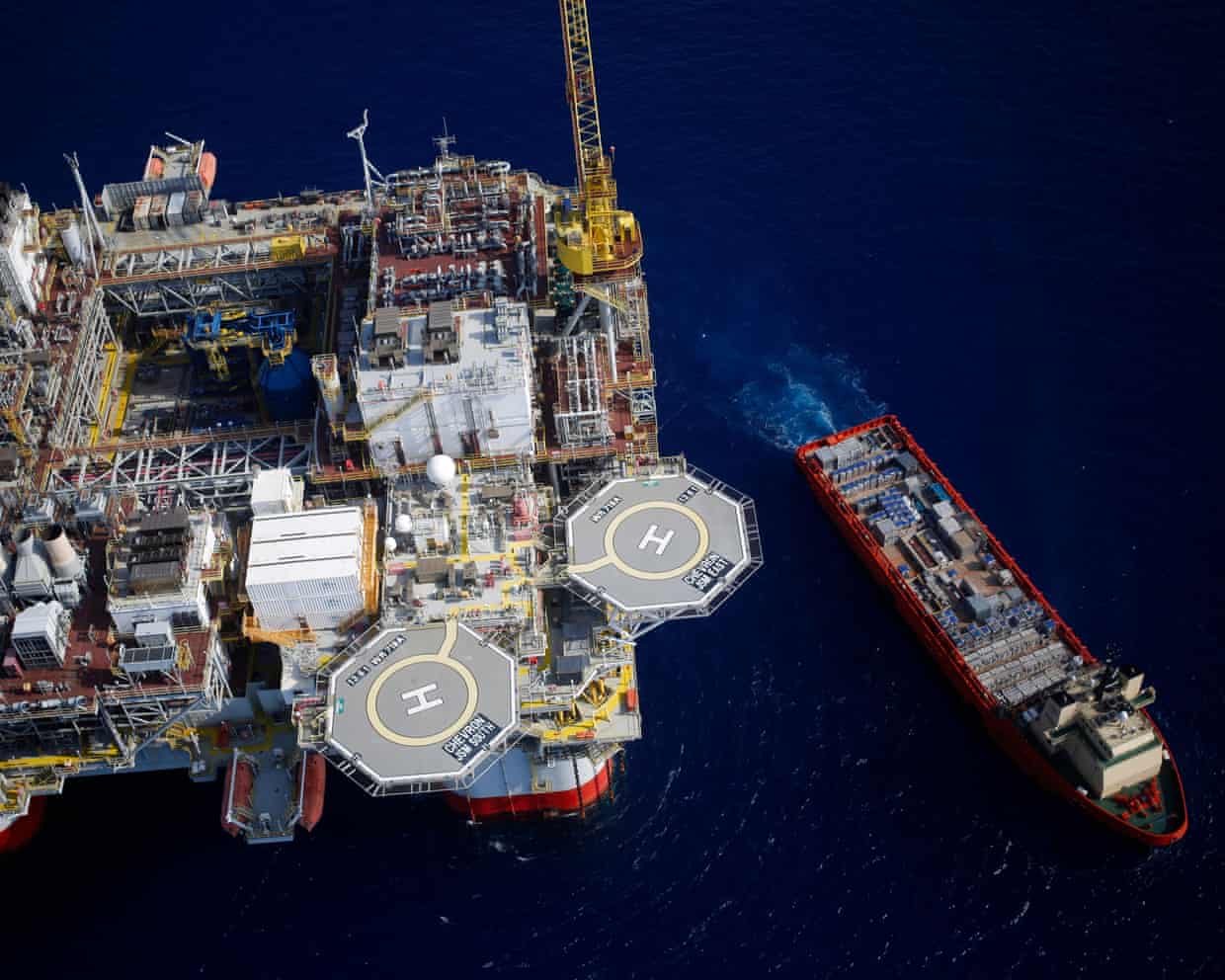
The oil and gas crisis triggered by the blockade of the strait of Hormuz is “more serious than the ones in 1973, 1979 and 2022 together”, the head of the International Energy Agency (IEA) has said.Speaking as Donald Trump’s deadline for Iran to reopen the waterway approached, Fatih Birol told Le Figaro newspaper that the impact of the Middle East conflict on the oil market was larger than the combined force of the twin shocks of the 1970s and the fallout from Russia’s invasion of Ukraine.The IEA executive director also warned that the countries most at risk were developing nations, which would suffer from higher oil and gas prices, higher food prices and a general acceleration of inflation, while European countries, Japan and Australia would also feel an impact.Oil prices seesawed around the $110 (£83) a barrel mark on Tuesday, rising above that level after Trump warned that a “whole civilization will die tonight” unless Iran made a deal, before later easing to just below.Investors are growing increasingly anxious as Trump escalates his threats against Iran, demanding that it reopen the strait of Hormuz as part of any deal to stop the war

The life-changing magic of wearing smartglasses | Letters
I read with sympathy the concerns of Elle Hunt in relation to privacy issues around Meta smartglasses (I wore Meta’s smartglasses for a month – and it left me feeling like a creep, 1 April). Clearly there needs to be ongoing development of technology and protocols that protect the public from ill-intentioned users. As the chief executive of a charity supporting people with a visual impairment, however, I would like to emphasise the point touched upon in your article: how transformative this technology is already proving for blind people.We are seeing significant numbers of our visually impaired staff and clients using Meta glasses in conjunction with their mobile phones to improve their ability to perform ordinary functions that most of us take for granted. A visual impairment can be disempowering and isolating

Tell us: do you use AI chatbots to make decisions for you?
AI chatbots like ChatGPT, Gemini and Claude are now a part of everyday life.More and more people are using them to help make decisions in their lives, like sending text messages, deciding what to cook, or navigating relationships.We want to hear about your experiences of using chatbots. Are you addicted to them? And what type of decisions are you using them for?You can tell us your experiences of using chatbots using this form.Please include as much detail as possible
Bryson DeChambeau making his own golf clubs in quest for Masters title
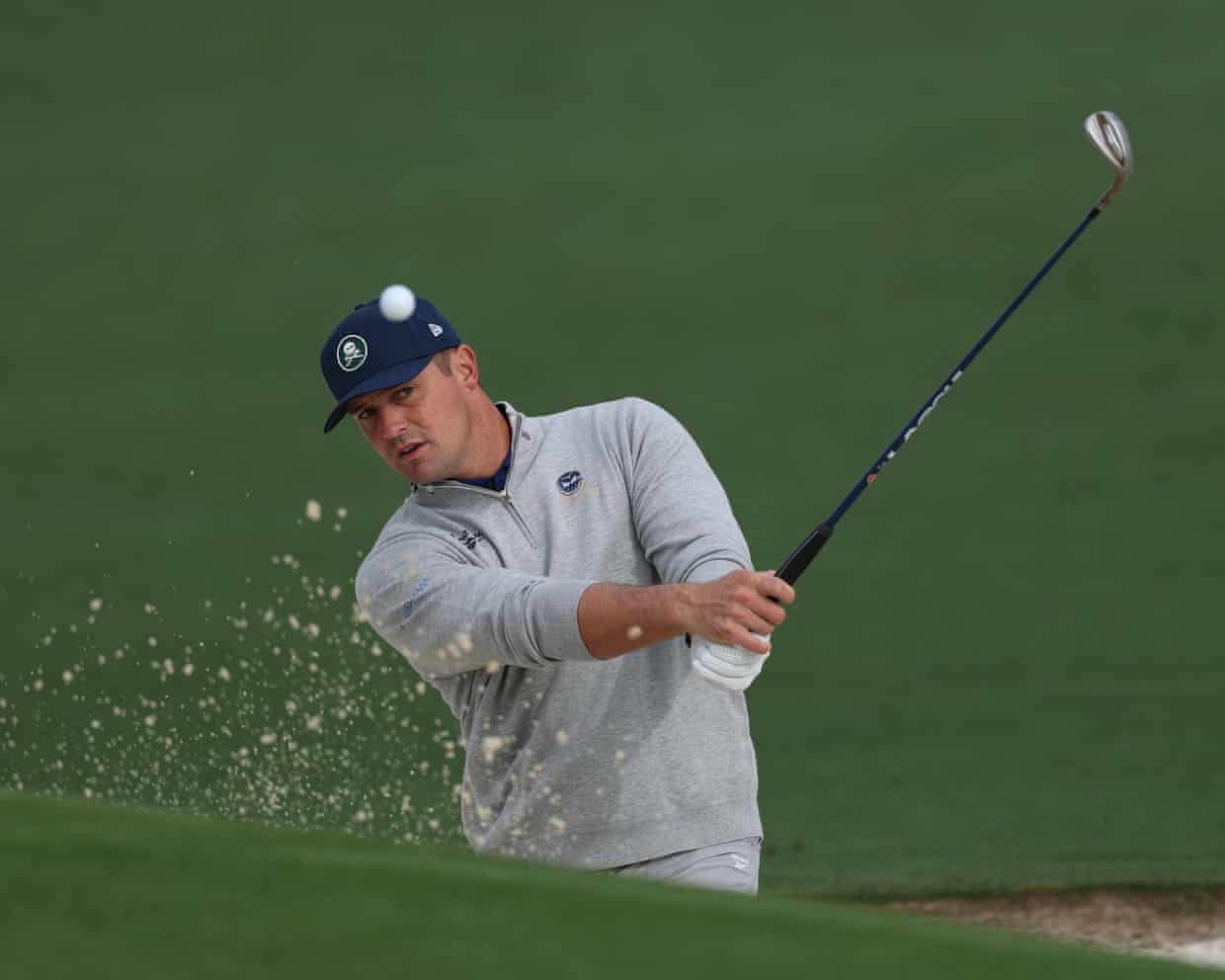
Bryson DeChambeau has revealed the latest strand to his career: golf club manufacturing. The two-time major winner used pre-tournament media duties at the Masters to explain he is making his own clubs, in what marks a stark departure from elite golfers working in tandem with equipment companies.“I think it’s the willingness to always try to improve,” DeChambeau said. “There’s this nature that I have about myself where innovation is a habit of mine and I really find and take pride in that ability to learn, even through failure, even through making a bad decision or a good decision.“South Africa [at the recent LIV event] I was trying wedges
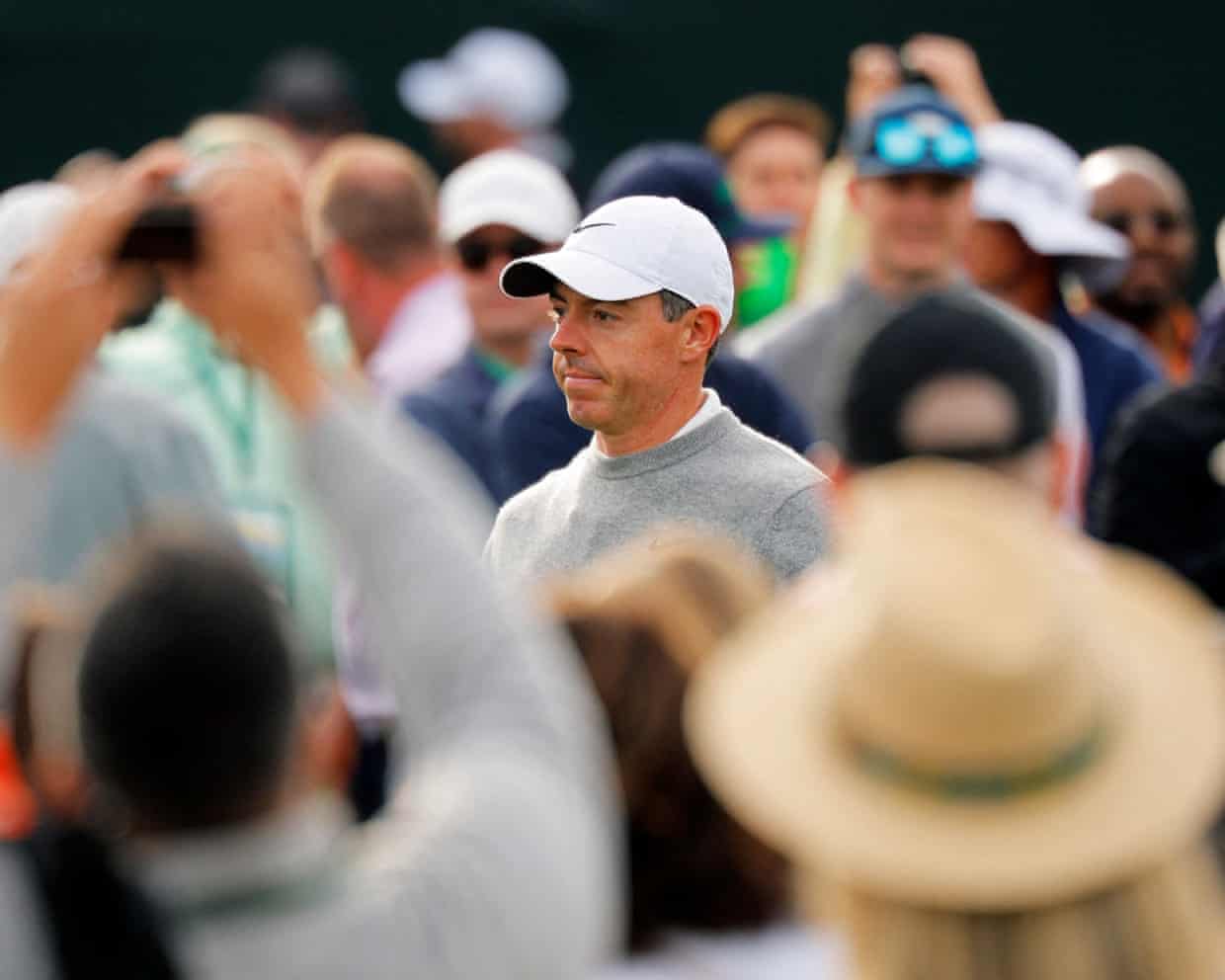
Rory McIlroy returns to scene of Masters glory with ‘big weight off my shoulders’ | Andy Bull
On the Tuesday of last year’s Masters, Rory McIlroy dined with Justin Rose in the clubhouse at Augusta. He arrived right around the time that all the guests at Scottie Scheffler’s champions dinner were having cocktails on the balcony. “I was pulling up Magnolia Lane,” McIlroy says. “And I’m like, well, do I go and park way over at the parking lot? Because I’m not going to park in the champions parking lot.’”Not when there’s Jack Nicklaus, Tiger Woods and everyone else looking down

Universal Music, home to Taylor Swift and Drake, receives €55bn takeover offer

Oil back above $110 in volatile markets as Trump deadline looms for Iran to reopen strait – as it happened
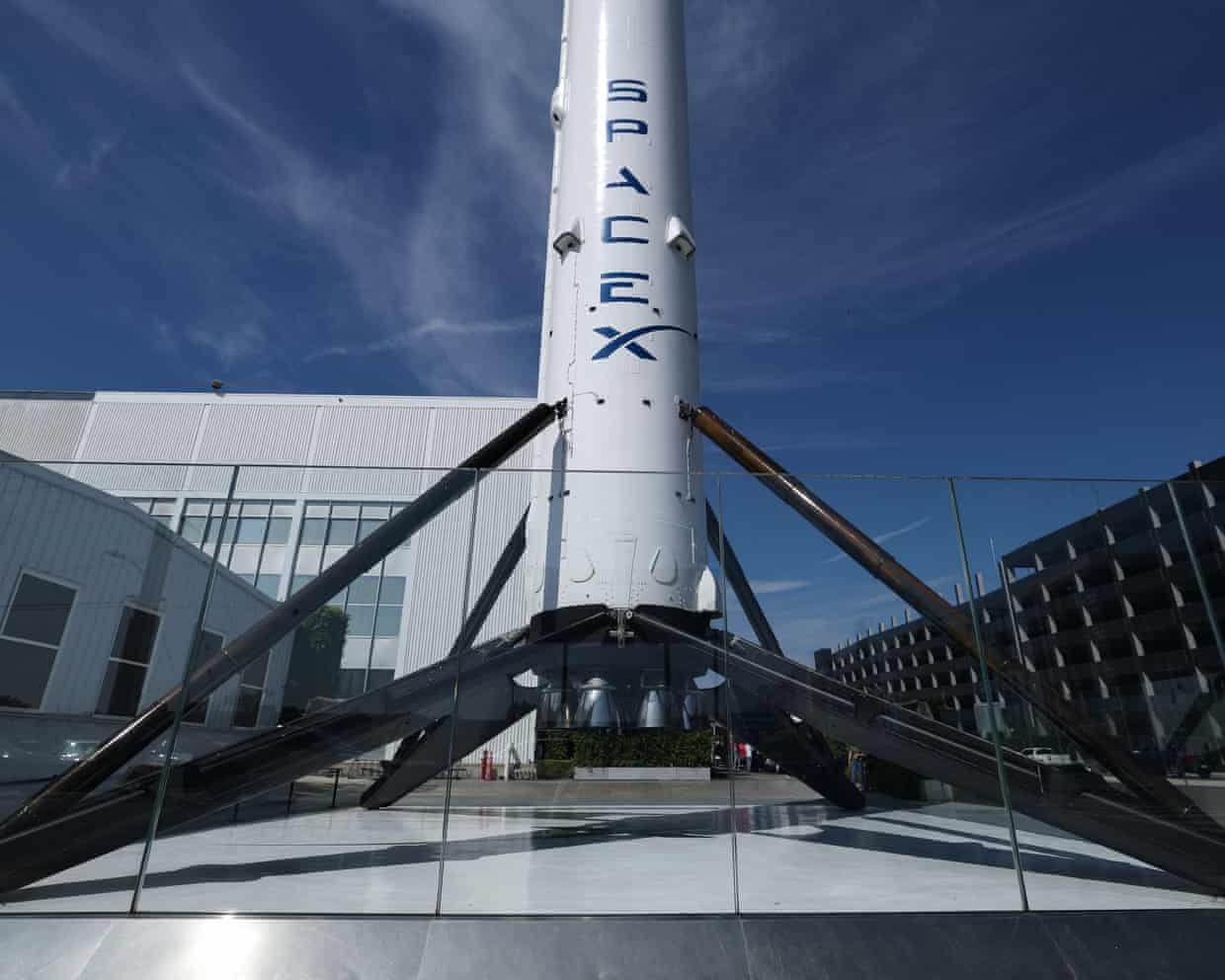
An AI company with an arsenal of spacecraft: what exactly is SpaceX?

Porn, dog poo and social media snaps: the ‘taskers’ scraping the internet for Meta-owned AI firm
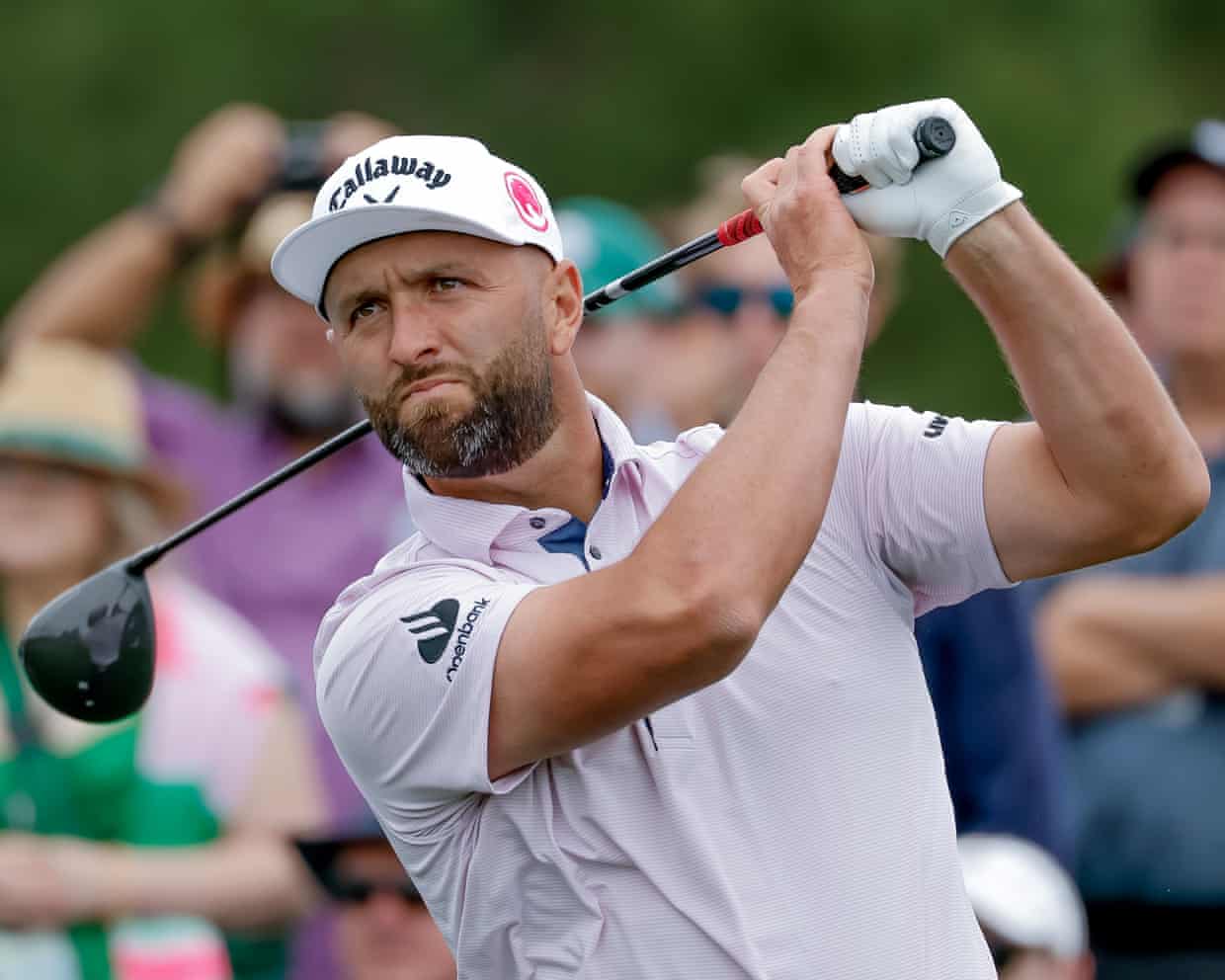
Jon Rahm adamant he will play for Europe at next year’s Ryder Cup

‘We’ll start a creche’: how the World Surf League is becoming family friendly for parents on tour | Kieran Pender