‘People are so judgmental’: the growing cohort of over-55s facing homelessness
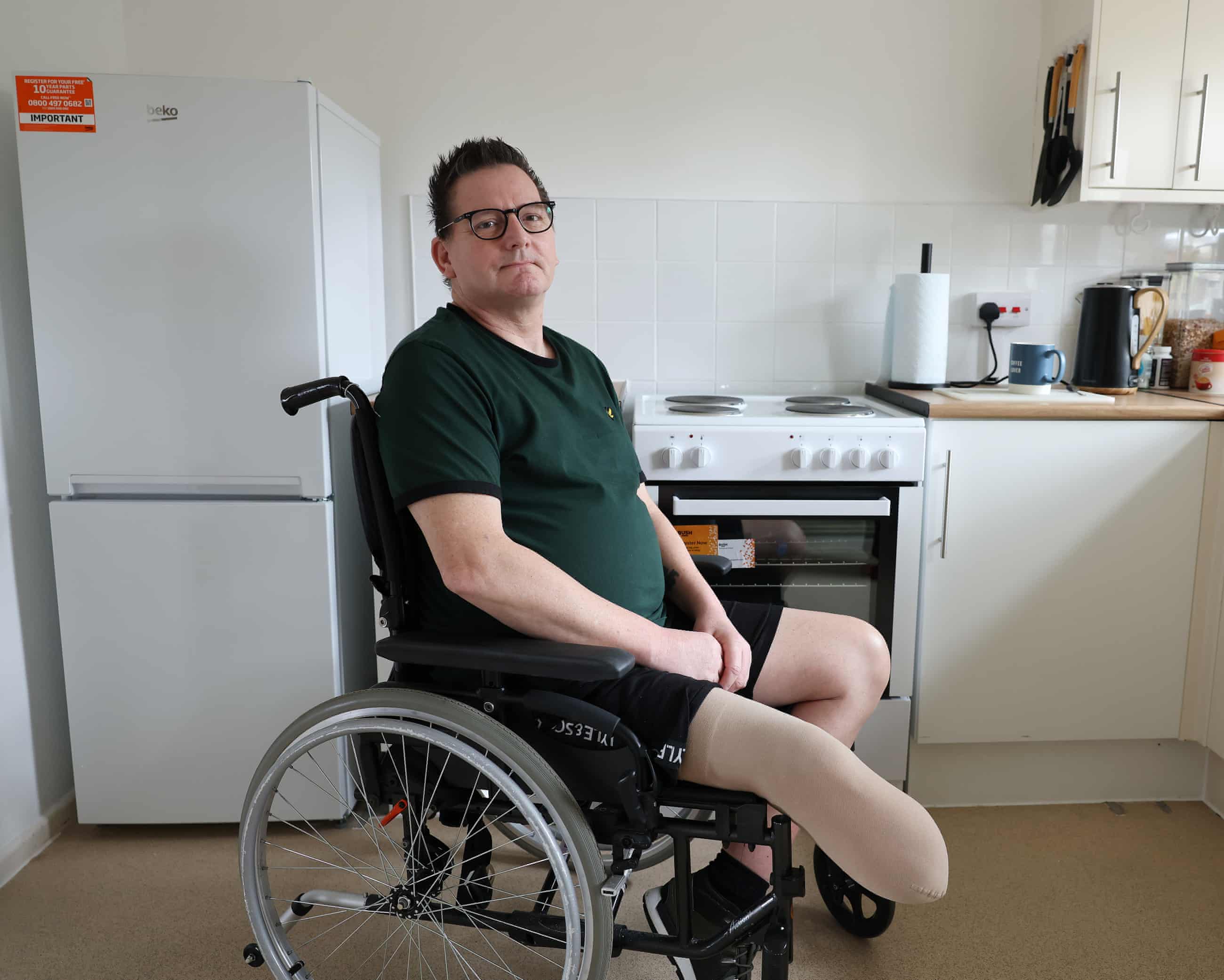
Richard Hewett, who was forced to sleep in his car when his relationship broke down, is one of many in the UK hit by rising costs and a lack of social housingWhen Richard Hewett’s relationship broke down, he was forced to leave his partner’s council house – but found his disability benefits didn’t stretch far enough to get him his own flat in his Essex home town.He resorted to the next best option: sleeping in his car.It wasn’t what he had expected, aged 59.At 6ft 2in, he squeezed into a Ford Focus and struggled to sleep.When he broke his ankle, he couldn’t look after it properly, contracted sepsis and had his leg amputated.
But what stings the most is the feeling of shame.He was no longer able to take care of his appearance, which he had always taken pride in.He went to the toilet in a park daily, where passersby would ask: “Can’t you go somewhere else?”“It was horrendous,” he said.“People are so terribly judgmental … It really had quite an effect on my mental health.”Hewett is one of a rapidly rising number of people in older age groups facing homelessness as housing benefit levels fall behind rents, with recent figures from the Office for National Statistics showing that 15,690 households headed by over-65s are at risk of homelessness, a rise of 79% in the last five years.
Hewett thinks “life is getting harder” for older people, especially those who are dependent on state support and who didn’t benefit from buying council homes but are instead now suffering from the dearth those sell-offs left behind.“Life has become so much more costly,” he said, adding that austerity and benefits freezes hadn’t helped.“They were bad enough before then,” he said.Sarah Elliott, the chief executive of Shelter, said that as the population aged and rents soared, the charity was increasingly hearing from older people “who have been wrenched from the tight-knit communities they have lived in for decades and shunted into dismal temporary accommodation”.“Pensioners should be enjoying their hard-earned retirement, not facing the threat of homelessness,” she said.
“To make sure people have dignity and stability in their old age, we must limit in-tenancy rent hikes and, ultimately, build a new generation of social rent homes.”Several homelessness charities told the Guardian that rising numbers of people aged over 55 were seeking their help.Chain (Combined Homelessness and Information Network), which records information on rough sleeping, reported an increase in people in this age bracket sleeping rough in London from 450 at the beginning of 2024 to 713 at the end of 2025.Alexander Brown, the director of Soup Kitchen London, has seen “a clear increase” in the number of over-65s over the last two years, with this group now about 20% of the 200 people the charity helps each morning.They cite the rising cost of food and utilities, along with poor physical health and isolation, as factors.
The Greater Change charity, which has supported Hewett with a grant, said that over the last four years the median age among the people it supports had increased by more than eight years.Its chief executive, Jonathan Tan, first observed this in 2024 when the proportion of over-55s it helped doubled to 12%, from 6% in 2023.It has remained above 10% since.He said older clients were rarely pushed into homelessness by a single event.Instead, “loss, ill health, financial pressure and systemic gaps” pushed people into crisis, compounded by rising living costs, the loss of employment later in life and limited opportunities to re-enter the workforce, he said.
Navigating benefits and pensions through complex online systems could be overwhelming for many older people, he added, with support often arriving too late when they were already in crisis.“We do think it will get worse … temporary accommodation is already under severe pressure and there is very little flexibility in the system,” he said.Jess Harris, who researches homelessness at King’s College London, said there were two main cohorts of older homeless people: those at “the sharp end of need” who have experienced multiple adverse events – often addiction, mental illness and childhood trauma – who have lived on and off the streets for decades, and those more recently pushed into temporary homelessness.The problem is compounded by an under-researched “social care gap”, which perpetuates homelessness by failing to prevent and manage complex health problems, with older people living in hostels receiving health and social care “in establishments that really weren’t designed for these populations”, she said.Morgan Vine, the director of policy at Independent Age, said the rise in older homelessness was “linked to the growing number of older people who find themselves living in the private rented sector”, with one-third of older private renters in poverty after housing costs.
Although average UK rent has risen by 10.5% since April 2024, housing benefit has been frozen since 2024, which she urged the government to address.This was the experience for Sarah*, in her mid-60s.She ended up sofa surfing with friends and family after a relationship breakdown, and – like Hewett – learned that her benefits would not cover monthly rent or a deposit.She found herself in a double bind when her benefits were stopped due to the lack of a fixed address.
“I wouldn’t recommend it to anybody, because you’d be sleeping on sofas and things like that.You’ve got to keep on moving around every three nights,” she said.“I think it’s difficult for older people now, especially if they don’t have friends and family to help them.They can’t afford much with prices going up … The government should help older people more to find a place to stay.”A Ministry of Housing, Communities & Local Government spokesperson said: “No one deserves to experience homelessness.
That is why we are taking action to prevent homelessness and investing £3,6bn in homelessness and rough sleeping services,“We’re also tackling the root cause of homelessness by building 1,5m new homes and investing £39bn in social and affordable housing,Our Renters’ Rights Act will also empower private tenants to challenge excessive rent hikes and give tenants the added security that they deserve.
”*Name has been changed

Oil prices plunge 15% to below $100, stocks surge and dollar slumps after Trump announces US-Iran ceasefire – as it happened
Markets have been cheered by news of the two-week ceasefire between the US, Israel and Iran. However, this excludes Lebanon, where Israel has carried out its biggest wave of air strikes today since the war there began on 2 March.Iran has agreed to reopen the strait of Hormuz, where around 1,000 ships have been trapped. A senior Iranian official told Reuters Tehran could open the key shipping route on Thursday or Friday ahead of peace talks in Islamabad.Brent crude, the international oil benchmark, has tumbled 15
John Lewis boss’s pay rises to £1.2m as retailer cuts 3,300 jobs
The boss of the group that owns John Lewis and Waitrose was handed a 21% increase in basic pay last year to £1.2m while the retailer cut 3,300 jobs.Jason Tarry, who became chair of the John Lewis Partnership (JLP) in September 2024, saw his annual salary increase by a fifth to £1.2m in the year to January, from £990,000.He also received a £22,700 annual bonus – equivalent to 2% of his pay – and other benefits, taking his total pay package to almost £1

Close Brothers shares surge after UK bank says it can ‘comfortably absorb’ cost of car finance compensation
Close Brothers shares surged on Wednesday after the UK bank declared it could “comfortably absorb” its slice of a £9.1bn compensation bill over the motor finance scandal, hours after one of its rivals announced it was selling its UK operations over looming costs.The specialist lender said it expected the final terms of the Financial Conduct Authority’s (FCA) compensation scheme to cost roughly £320m, a sum that was “broadly similar” to previous estimates and the £294m put aside to date.Close Brothers said the extra £26m could be “comfortably absorbed by existing capital resources, leaving the group well positioned to continue delivering its strategy”. The news sent its shares up by 17% by early afternoon on Wednesday

Maritime and port workers: how is the Middle East conflict affecting you?
The conflict in the Middle East continues to disrupt shipping across the region, including in the Strait of Hormuz, one of the world’s busiest maritime routes.The US and Iran have agreed to a provisional two-week ceasefire, which includes a temporary reopening of the strait. But maritime traffic through the narrow channel linking the Persian Gulf with the Gulf of Oman remains affected, with vessels still facing delays, diversions and heightened security risks as the situation evolves.Ports and shipping companies are continuing to operate amid uncertainty, while cruise ships carrying thousands of tourists have faced disruption across the region.We would like to hear from maritime workers, port staff and shipping crews about how the situation is affecting your work
‘We can’t increase prices any more’: UK hospitality firms hit by cost triple blow
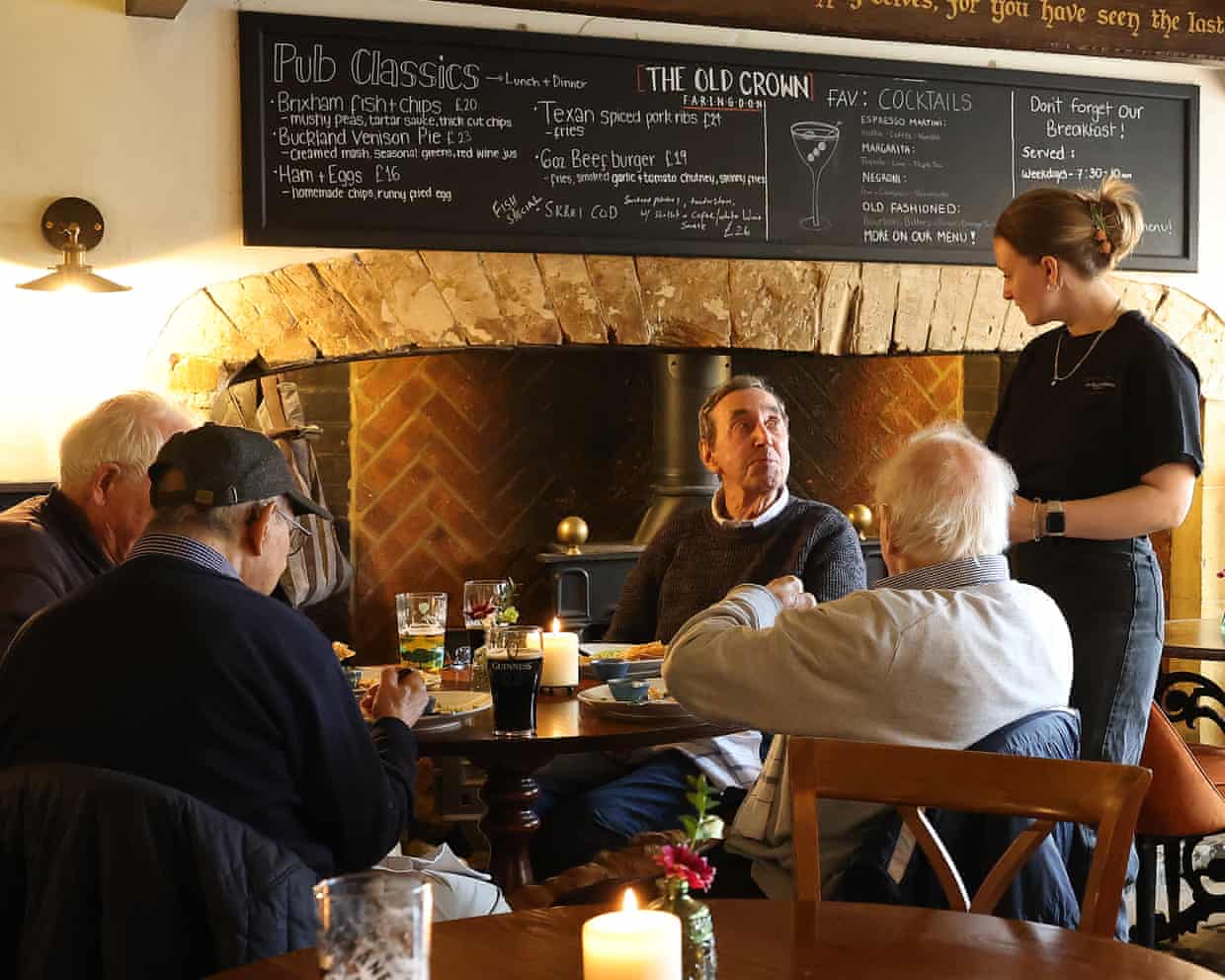
Nick Evans is staring in vain at columns of numbers, trying to make them add up to a profit. He is a co-owner of the Old Crown Coaching Inn in Faringdon, Oxfordshire, a pub and hotel whose rich history is etched into its crooked wooden beams and cosy snugs.Oliver Cromwell stayed here in 1645. A room believed to have been used by the notoriously severe “hanging judge” Lord Jeffreys to condemn rebels now stages happier encounters: it is the honeymoon suite.As a former City trader, Evans is no stranger to profit

UK house prices fall in March amid uncertain impact of Middle East conflict
UK house prices fell in March, as the housing market lost momentum amid uncertainty over the conflict in the Middle East and the impact on the economy and interest rates.Figures from Halifax, which is part of Lloyds – Britain’s biggest mortgage lender – showed property prices dipped by 0.5% in March compared with a month earlier. As a result, the average price of a home slipped back below £300,000, to £299,677, after first crossing the milestone in January.The pace of annual property price growth also eased to 0

From The Drama to Malcolm in the Middle: your complete entertainment guide to the week ahead

Colbert on Trump’s Iran speech: old news ‘delivered by a narcotized turtle’

Post your questions for DJ Shadow

Stephen Colbert on Trump attending birthright citizenship hearing: ‘That’s mob-boss-level intimidation’

Colbert on Trump’s shifting tone on Iran: ‘It’s a military strategy known as starting a 1,000-piece jigsaw puzzle’

Jon Stewart on Trump: less war leader, more ‘grandpa who’s lost his filter’