Trump heads to China to spread the gospel of American tech
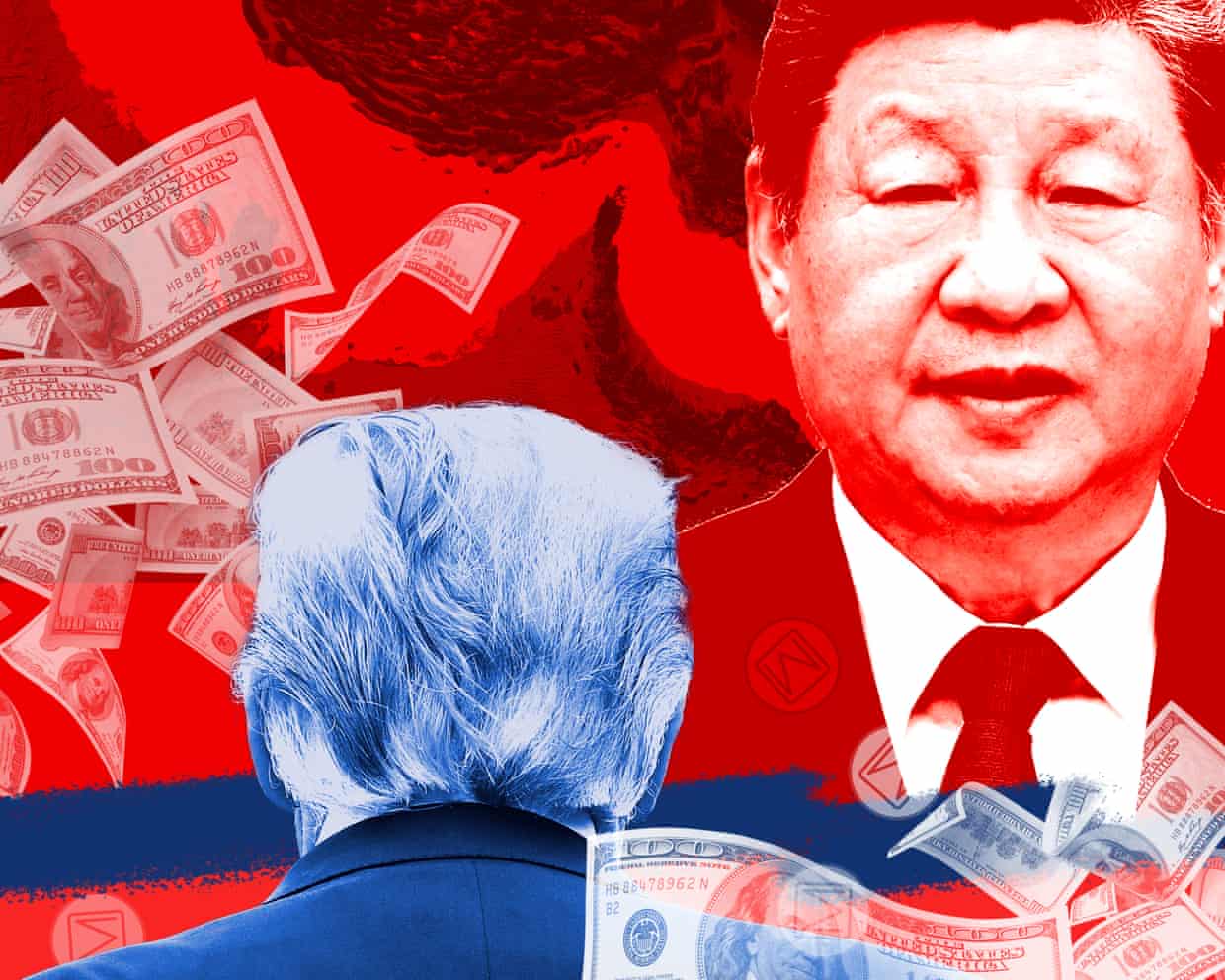
Hello, and welcome to TechScape.I’m your host, Blake Montgomery, US tech editor at the Guardian.Donald Trump is headed to China this week.If his guest list is any clue, he wants to discuss technology with Xi Jinping, though perhaps after the war in Iran.On Monday, news broke that outgoing Apple CEO, Tim Cook, as well as SpaceX and Tesla’s CEO, Elon Musk, would join Trump.
Other guests from the tech sphere include Dina Powell McCormick, Meta’s recently appointed president; Sanjay Mehrotra, CEO of computer memory maker Micron; Chuck Robbins, CEO of longtime telecom giant Cisco; and Cristiano Amon, CEO of semiconductor maker Qualcomm, according to a White House official,Jensen Huang, Nvidia’s CEO, who is close to Trump but criticized the US’s limitations on chip sales to China in an April interview, saying that he didn’t want a “loser mentality” to cost the US its edge in AI, will not be joining the president,A major deal on semiconductors seems less likely without the world’s most important chipmaker, though an announcement from Micron seems possible,In Tim Cook, Trump likely also wants to bring a friendly, familiar face to high-stakes negotiations,Apple’s iPhone 17 has proved enormously successful in China, boosting the company’s quarterly earnings to their highest point ever.
Apple still manufactures the majority of its products in China, though it has moved a significant percentage of those operations to India and Vietnam.In Apple’s announcement of Cook’s retirement, the company highlighted his diplomatic skills and said his responsibilities would include dealing with leaders around the world, so visits like this may become a mainstay of his schedule in the future.Whether Trump’s trip will foster a flurry of tech deals, as his Middle East visit did in May 2025, will have to be seen.But while Trump trots out the US’s best and brightest businessmen, products of his hands-free policy for fostering technological innovation, his administration is taking cues from China’s more stringent approach to AI.China’s laws require AI companies to submit their models to Beijing for review on both security and political sensitivity grounds.
The stringent policies prohibit not only threats to national security but also the generation of content that Beijing finds objectionable, a lengthy list.In the same vein, the White House is getting more involved in the work of frontier labs in the US.Trump is mulling an executive order that would require AI companies to submit their newest models for White House review.The administration has already announced deals with a growing number of major players in the field for national security reviews of their latest releases, including Google DeepMind, Microsoft and xAI last week.The reviews will be conducted by the Center for AI Standards and Innovation (CAISI), part of the US Department of Commerce.
The Pentagon’s standoff with Anthropic continues in court over the startup’s qualms about military usage and the bureau’s designation of the company as a supply chain risk.Vice-President JD Vance has requested that Anthropic not expand access to its powerful cybersecurity-focused model Mythos beyond its initial list of partners, according to the Wall Street Journal.Meta sues Ofcom over fines regime for breaches of Online Safety ActNew Mexico proposes $3.7bn fine for Meta and sweeping changes to its social platformsWhat I saw at the Musk-OpenAI trial: petty billionaires, protests and a stern judge | Technology | The GuardianShivon Zilis, mother of four of Elon Musk’s children, testifies in OpenAI trialOpenAI president’s ‘deeply personal’ diary becomes focus in Musk’s case against Altman | Technology | The GuardianIn the past week, two developments highlighted how artificial intelligence could take a wrecking ball to the digital walls that keep us all safe online.Researchers in Berkeley, California, observed an AI model replicating itself, and Google researchers rang multiple alarm bells over cyberattacks augmented by AI.
Researchers at a major cybersecurity company warned that both are happening at once in autonomous, AI-enabled hacking.New research finds recent AI systems can independently copy themselves on to other computers.My colleague Aisha Down reports:Palisade research, a Berkeley-based organisation, tested several AI models in a controlled environment of networked computers.It gave the models a prompt to find and exploit vulnerabilities, and to use these to copy themselves from one computer to another.The models were able to do this, but not on every attempt.
“We’re rapidly approaching the point where no one would be able to shut down a rogue AI, because it would be able to self-exfiltrate its weights and copy itself to thousands of computers around the world,” said Jeffrey Ladish, the director of Palisade.Jack Clark, a co-founder of Anthropic, likewise told Axios this week, “My prediction is by the end of 2028, it’s more likely than not that we have an AI system where you would be able to say to it: ‘Make a better version of yourself.’ And it just goes off and does that completely autonomously.” Or, perhaps, the agent might decide to make things worse: Late last month, a rogue agent deleted a startup’s entire production database, an early warning sign of what can go wrong with an autonomous AI.Taking his projection one step further, Clark asked in the research agenda for Anthropic’s new thinktank, “How effectively can we use AI to govern AI systems?” Whether you find this hypothetical reasonable or frightening depends on what qualities you recognize in AI – animal, elemental or personal.
Chimp colonies govern themselves well enough without devastating the jungles around them, but we wouldn’t politely ask a fire to keep itself contained,A colony of humans could follow either path,Google researchers likewise sounded the alarm last week, not over autonomy but a rapidly rising number of threats to the world’s cybersecurity,In just three months, AI-powered hacking has gone from a nascent problem to an industrial-scale threat, according to a new report from Google,It finds that criminal groups, as well as state-linked actors from China, North Korea and Russia, appear to be widely using commercial models – including Gemini, Claude and tools from OpenAI – to refine and scale up attacks.
“There’s a misconception that the AI vulnerability race is imminent.The reality is that it’s already begun,” said John Hultquist, the group’s chief analyst.In a blog post, the cybersecurity giant Palo Alto Networks said that the dual threats of rogue autonomy and superhuman insight into cybersecurity have already combined.The company was granted early access to Claude Mythos and OpenAI’s GPT-5.5-Cyber and has tested them for several months.
Its conclusions: the threat of widespread, automated hacking is arriving, and more quickly than expected.The security-focused AI models performed better in three weeks as human testers did in six months.“This is more than faster code generation, it is a shift from AI as an assistant to AI as an autonomous agent capable of discovering and chaining flaws at a scale that most defenders aren’t prepared for.These capabilities will not stay confined to controlled environments for long,” the post reads.The company’s researchers initially predicted that malicious actors would not get their hands on Claude Mythos for six months.
They now believe “that timeline has accelerated significantly”.In a cruel twist, the proliferation of AI is one reason for the widening vulnerabilities, as employees at more and more companies write their own code to create AI agents, according to the company.I knew my writing students were using AI.Their confessions led to a powerful teaching moment | AI (artificial intelligence) | The GuardianForget the AI job apocalypse.AI’s real threat is worker control and surveillance | AI (artificial intelligence) | The GuardianTrump Media and Technology Group lost $406m in first three months of 2026Google developers significantly misstate carbon emissions of proposed UK datacentresTikTok’s algorithm favored Republican content in 2024 US elections, study finds

Nvidia’s Jensen Huang joins other US bosses on Trump trip to China
The billionaire chief executive of the chipmaker Nvidia, Jensen Huang, has joined Donald Trump’s China delegation after a reported last-minute invitation, highlighting the US’s AI and tech ambitions.Huang will join a roster of US bosses including the Tesla chief executive and X owner, Elon Musk, the Apple chief executive, Tim Cook, and Goldman Sachs’s David Solomon at Trump’s 36-hour meeting with the Chinese president, Xi Jinping.The high-stakes summit is the first overseas trip for Trump since the US and Israel launched attacks on Iran in late February. The summit is expected to cover topics including that conflict, tariffs and China’s relationship with Taiwan.Huang was not on the initial list of business delegates, according to reports
How to use spent tea leaves to smoke Chinese-style duck – recipe
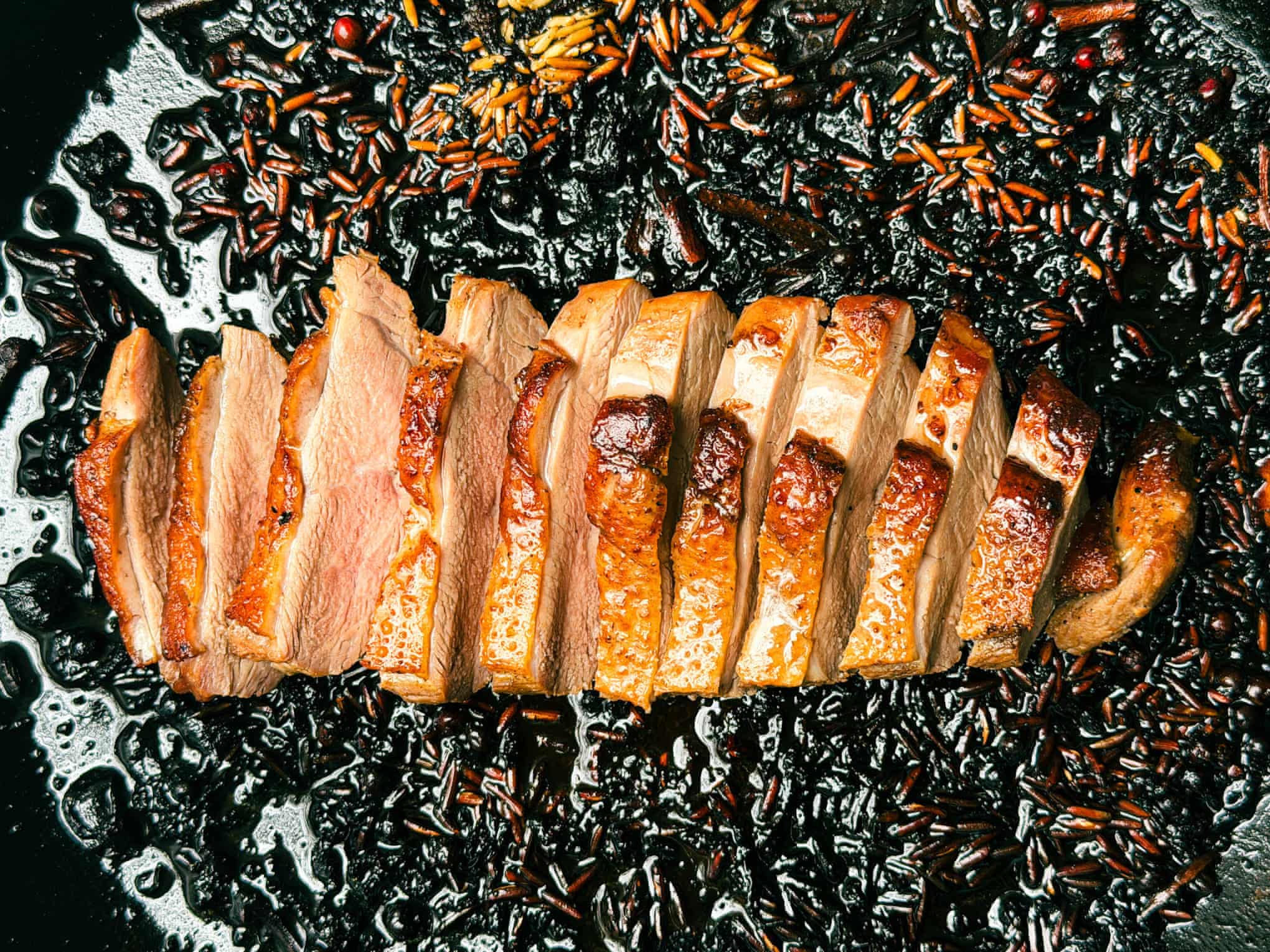
A masterclass in smoking duck breasts the Sichuan way, but with used teabagsWhen I worked at River Cottage HQ, we used to smoke duck, rabbit and fish in a smoker made out of an old bread bin. It always felt like an exciting and alchemical way to cook, yielding incredible results, and it’s so simple, not least because food has been smoked since we first learned to cook over fire. Today’s recipe is my simple take on Chinese zhangcha duck, River Cottage-style and with a zero-waste twist by using spent teabags as the perfect fuel.It was always fun cooking at River Cottage: in between cooking lunch for our guests, we’d do cooking demos and sometimes cooked to camera (I have a cameo at the end of this video of Gill Meller making smoked duck that was filmed more than 20 years ago!)Zhangcha duck is traditionally smoked with camphor leaves and green or black tea, and while you can find camphor in some Asian supermarkets and online, tea alone does the job very well, too. Even still-wet spent teabags will work perfectly, imparting their incredible aroma into the meat
Weight gain as adult increases cancer risk by up to five times, research shows
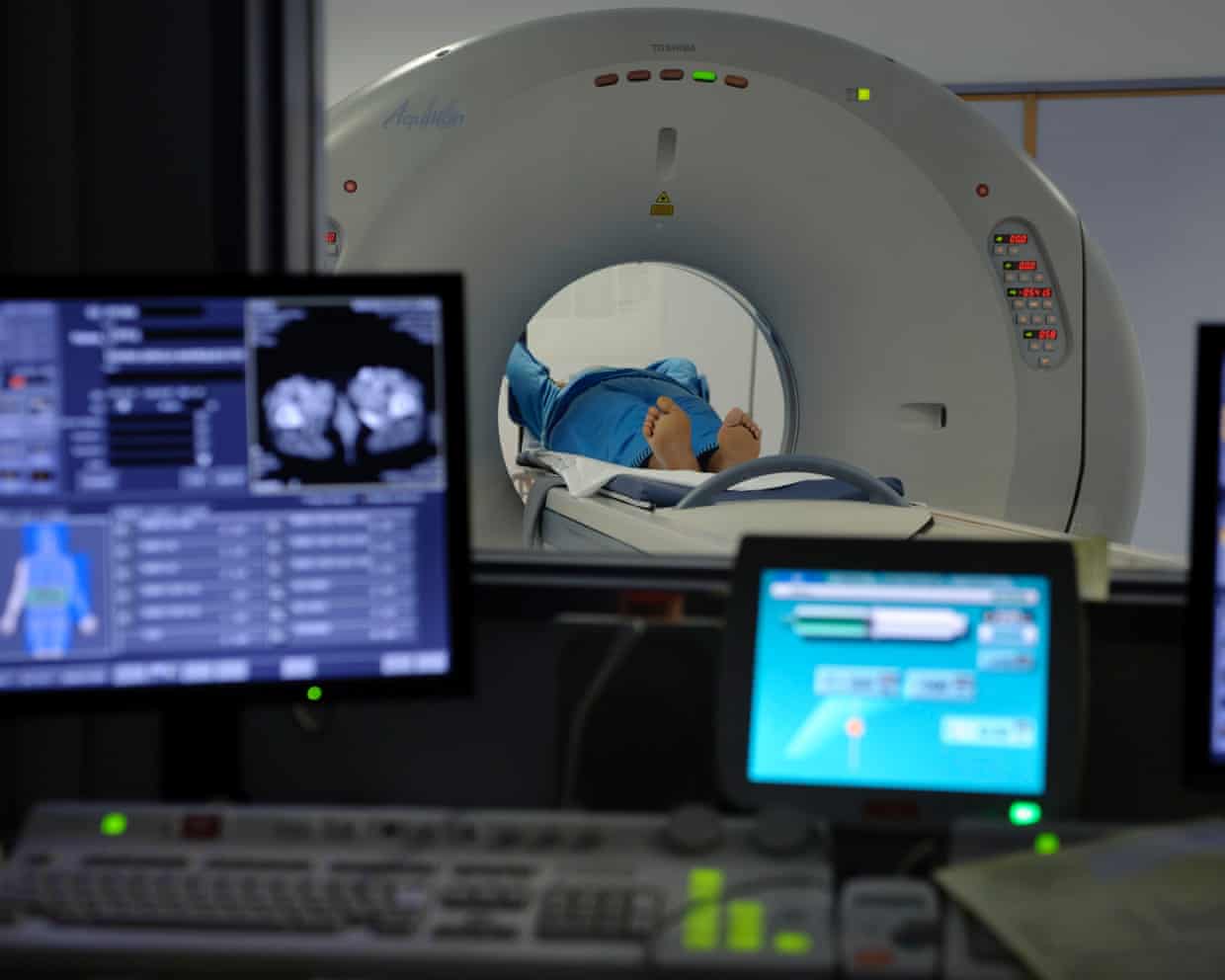
Gaining weight as an adult increases the risk of cancer by up to five times, according to research involving more than 600,000 patients.Obesity can cause 13 different cancers and is thought to be linked to another eight. But less is known about the impact on cancer risk of the amount of weight put on – and when in life it is gained.To find out, researchers at Lund University in Sweden analysed weight and cancer incidence data from more than 600,000 men and women and found there was no safe age to get heavier.The study, presented at the European Congress on Obesity in Istanbul, measured the weight of more than 250,000 men and just under 380,000 women an average of four times between the ages of 17 and 60

Sarah Taylor named England men’s fielding coach while Gay, Rew and Baker are called up
On a day when England named three uncapped players in their Test squad, brought Ollie Robinson out of cold storage and officially confirmed a new selector had joined the set-up, perhaps the most significant news was the identity of their fielding coach.Sarah Taylor, the former England wicketkeeper, will be in charge of the fielding drills during the three-Test series against New Zealand that begins at Lord’s on 4 June – the first female coach to work in the men’s senior setup.The fact that Rob Key, the England men’s team director, almost mentioned it in passing was fitting for a coach who has quietly risen through the ranks. Taylor, 36, has held a number of roles in the men’s game since hanging up her gloves five years ago, including spells with Sussex men and Manchester Originals in the Hundred.This latest post is just for the New Zealand series initially but may continue through the summer

Wes Streeting prepares to launch leadership challenge against Keir Starmer
Wes Streeting is preparing to launch a leadership challenge against Keir Starmer on Thursday if the health secretary can secure the support of enough MPs to trigger a contest.Streeting’s move to force a race has sparked a frantic scramble on the left of Labour to find a candidate to oppose him, with Ed Miliband and Angela Rayner both possible contenders.The health secretary, who is considered to be on the Blairite right of the party, has been organising an attempt to oust the prime minister for days since Labour’s disastrous election results, despite his friends insisting he did not want to make the first move.Andy Burnham, the Greater Manchester mayor, is the favoured replacement for Starmer by many on the soft left, but does not yet have a seat despite trying to persuade several MPs to stand down for him. His latest hopes are said to be Afzal Khan or Jeff Smith, both Manchester MPs

Coconut dal, cheesy pickle toasties, carrot halva cakes: Ravinder Bhogal’s tastes of home – recipes
Public institutions, from hospitals to museums, are the most international communities, both in the workforce and in those who visit. It’s something that became obvious to us when we were cooking our globally inspired meals for frontline workers at Kings College Hospital, London, during the pandemic. The menu at Café Jikoni, our new restaurant at the V&A East museum, speaks to the depth and breadth of east London’s diverse community, with dishes that cross borders, celebrate pluralism and taste like home – wherever that may be. After all, the best hospitality is all about making your guests feel at home.This dal wanders from India into Thailand; we make a curry paste from scratch at Café Jikoni, but using a good-quality one, such as Maeploy, is a smart shortcut

‘Hold the line’: Burnham tells allies in parliament he still has options to return

EU proposes end to ‘five tabs, three apps and a prayer’ for cross-border train bookings
What is the king’s speech and what is the state opening of parliament?

Online safety campaigners reveal Starmer frustrations after Phillips exit

Are working-class voters lost to Labour for good? | Letters

Labour MPs channel Tory psychodrama as Starmer keeps hiding in plain sight | John Crace