Google AI Overviews cite YouTube more than any medical site for health queries, study suggests

Google’s search feature AI Overviews cites YouTube more than any medical website when answering queries about health conditions, according to research that raises fresh questions about a tool seen by 2 billion people each month.The company has said its AI summaries, which appear at the top of search results and use generative AI to answer questions from users, are “reliable” and cite reputable medical sources such as the Centers for Disease Control and Prevention and the Mayo Clinic.However, a study that analysed responses to more than 50,000 health queries, captured using Google searches from Berlin, found the top cited source was YouTube.The video-sharing platform is the world’s second most visited website, after Google itself, and is owned by Google.Researchers at SE Ranking, a search engine optimisation platform, found YouTube made up 4.
43% of all AI Overview citations.No hospital network, government health portal, medical association or academic institution came close to that number, they said.“This matters because YouTube is not a medical publisher,” the researchers wrote.“It is a general-purpose video platform.Anyone can upload content there (eg board-certified physicians, hospital channels, but also wellness influencers, life coaches, and creators with no medical training at all).
”Google told the Guardian that AI Overviews was designed to surface high-quality content from reputable sources, regardless of format, and a variety of credible health authorities and licensed medical professionals created content on YouTube,The study’s findings could not be extrapolated to other regions as it was conducted using German-language queries in Germany, it said,The research comes after a Guardian investigation found people were being put at risk of harm by false and misleading health information in Google AI Overviews responses,In one case that experts said was “dangerous” and “alarming”, Google provided bogus information about crucial liver function tests that could have left people with serious liver disease wrongly thinking they were healthy,The company later removed AI Overviews for some but not all medical searches.
The SE Ranking study analysed 50,807 healthcare-related prompts and keywords to see which sources AI Overviews relied on when generating answers,They chose Germany because its healthcare system is strictly regulated by a mix of German and EU directives, standards and safety regulations,“If AI systems rely heavily on non-medical or non-authoritative sources even in such an environment, it suggests the issue may extend beyond any single country,” they wrote,AI Overviews surfaced on more than 82% of health searches, the researchers said,When they looked at which sources AI Overviews relied on most often for health-related answers, one result stood out immediately, they said.
The single most cited domain was YouTube with 20,621 citations out of a total of 465,823.The next most cited source was NDR.de, with 14,158 citations (3.04%).The German public broadcaster produces health-related content alongside news, documentaries and entertainment.
In third place was a medical reference site, Msdmanuals.com with 9,711 citations (2.08%).The fourth most cited source was Germany’s largest consumer health portal, Netdoktor.de, with 7,519 citations (1.
61%).The fifth most cited source was a career platform for doctors, Praktischarzt.de, with 7,145 citations (1.53%).The researchers acknowledged limitations to their study.
It was conducted as a one-time snapshot in December 2025, using German-language queries that reflected how users in Germany typically search for health information.Results could vary over time, by region, and by the phrasing of questions.However, even with those caveats, the findings still prompted alarm.Hannah van Kolfschooten, a researcher specialising in AI, health and law at the University of Basel who was not involved with the research, said: “This study provides empirical evidence that the risks posed by AI Overviews for health are structural, not anecdotal.It becomes difficult for Google to argue that misleading or harmful health outputs are rare cases.
“Instead, the findings show that these risks are embedded in the way AI Overviews are designed.In particular, the heavy reliance on YouTube rather than on public health authorities or medical institutions suggests that visibility and popularity, rather than medical reliability, is the central driver for health knowledge.”A Google spokesperson said: “The implication that AI Overviews provide unreliable information is refuted by the report’s own data, which shows that the most cited domains in AI Overviews are reputable websites.And from what we’ve seen in the published findings, AI Overviews cite expert YouTube content from hospitals and clinics.”Google said the study showed that of the 25 most cited YouTube videos, 96% were from medical channels.
However, the researchers cautioned that these videos represented fewer than 1% of all the YouTube links cited by AI Overviews on health,“Most of them (24 out of 25) come from medical-related channels like hospitals, clinics and health organisations,” the researchers wrote,“On top of that, 21 of the 25 videos clearly note that the content was created by a licensed or trusted source,“So at first glance it looks pretty reassuring,But it’s important to remember that these 25 videos are just a tiny slice (less than 1% of all YouTube links AI Overviews actually cite).
With the rest of the videos, the situation could be very different,”The best public interest journalism relies on first-hand accounts from people in the know,If you have something to share on this subject, you can contact us confidentially using the following methods,Secure Messaging in the Guardian appThe Guardian app has a tool to send tips about stories,Messages are end to end encrypted and concealed within the routine activity that every Guardian mobile app performs.
This prevents an observer from knowing that you are communicating with us at all, let alone what is being said.If you don't already have the Guardian app, download it (iOS/Android) and go to the menu.Select ‘Secure Messaging’.SecureDrop, instant messengers, email, telephone and postIf you can safely use the Tor network without being observed or monitored, you can send messages and documents to the Guardian via our SecureDrop platform.Finally, our guide at theguardian.
com/tips lists several ways to contact us securely, and discusses the pros and cons of each.
AI systems could use Met Office and National Archives data under UK plans
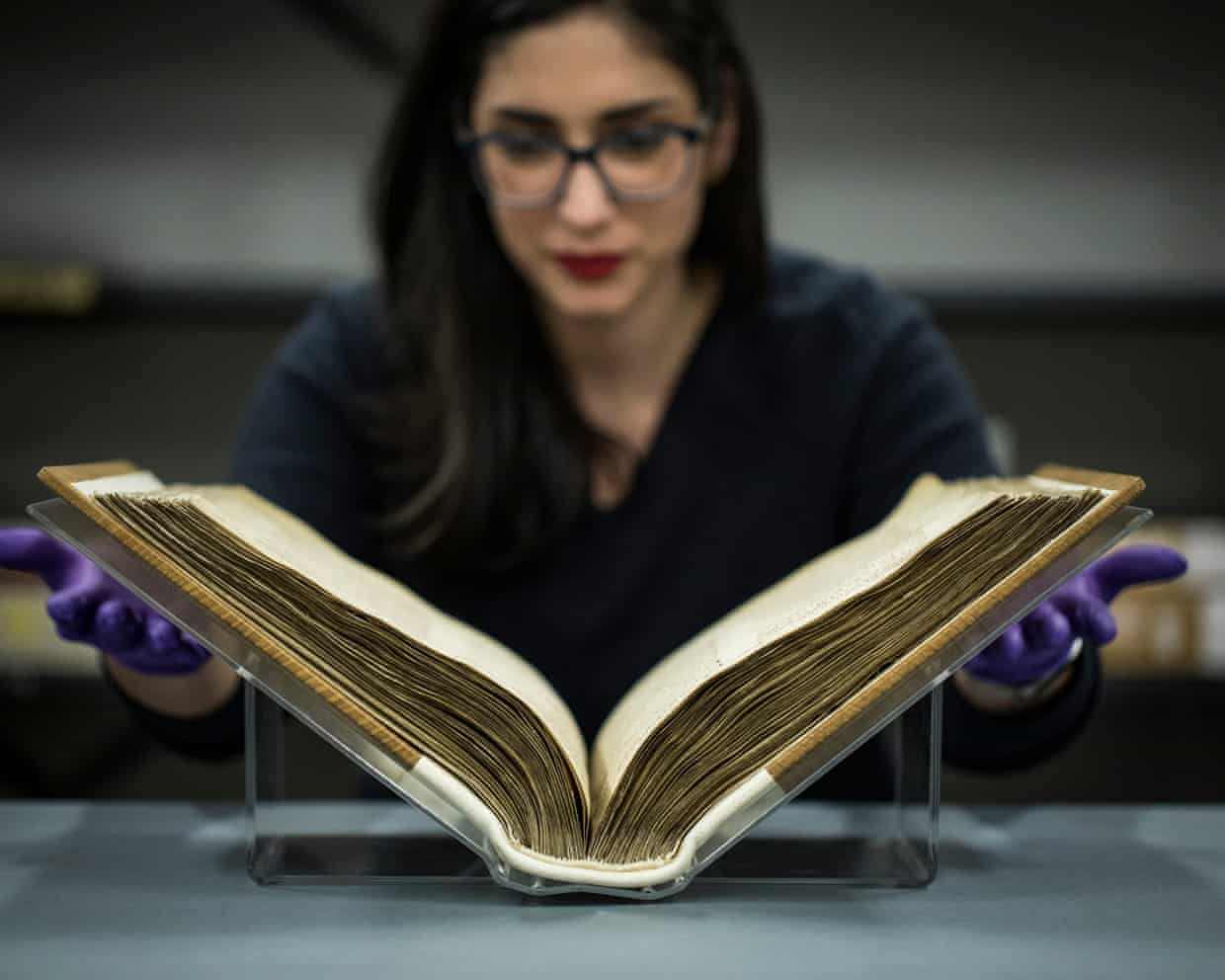
Met Office data and legal documents from the National Archives could be used by artificial intelligence systems as the UK government pushes ahead with plans to employ nationally owned material in AI tools.The government is providing funds for researchers to test how Met Office content could be used by the technology, such as in helping agencies and councils know when to buy more road grit. Another project will explore whether legal data from the National Archives – the UK’s repository for official documents – could help medium- and small-sized businesses with legal support.The government has also announced plans to license content from national institutions such as the National History Museum and the National Library of Scotland for AI development.Ian Murray, the minister for digital government and data, said the National Archives plan was “what smart use of the public sector” looked like

Sam Altman’s make-or-break year: can the OpenAI CEO cash in his bet on the future?
Sam Altman has claimed over the years that the advancement of AI could solve climate change, cure cancer, create a benevolent superintelligence beyond human comprehension, provide a tutor for every student, take over nearly half of the tasks in the economy and create what he calls “universal extreme wealth”.In order to bring about his utopian future, Altman is demanding enormous resources from the present. As CEO of OpenAI, the world’s most valuable privately owned company, he has in recent months announced plans for $1tn of investment into datacenters and struck multibillion-dollar deals with several chipmakers. If completed, the datacenters are expected to use more power than entire European nations. OpenAI is pushing an aggressive expansion – encroaching on industries like e-commerce, healthcare and entertainment – while increasingly integrating its products into government, universities, and the US military and making a play to turn ChatGPT into the new default homepage for millions
AI needs to augment rather than replace humans or the workplace is doomed | Heather Stewart
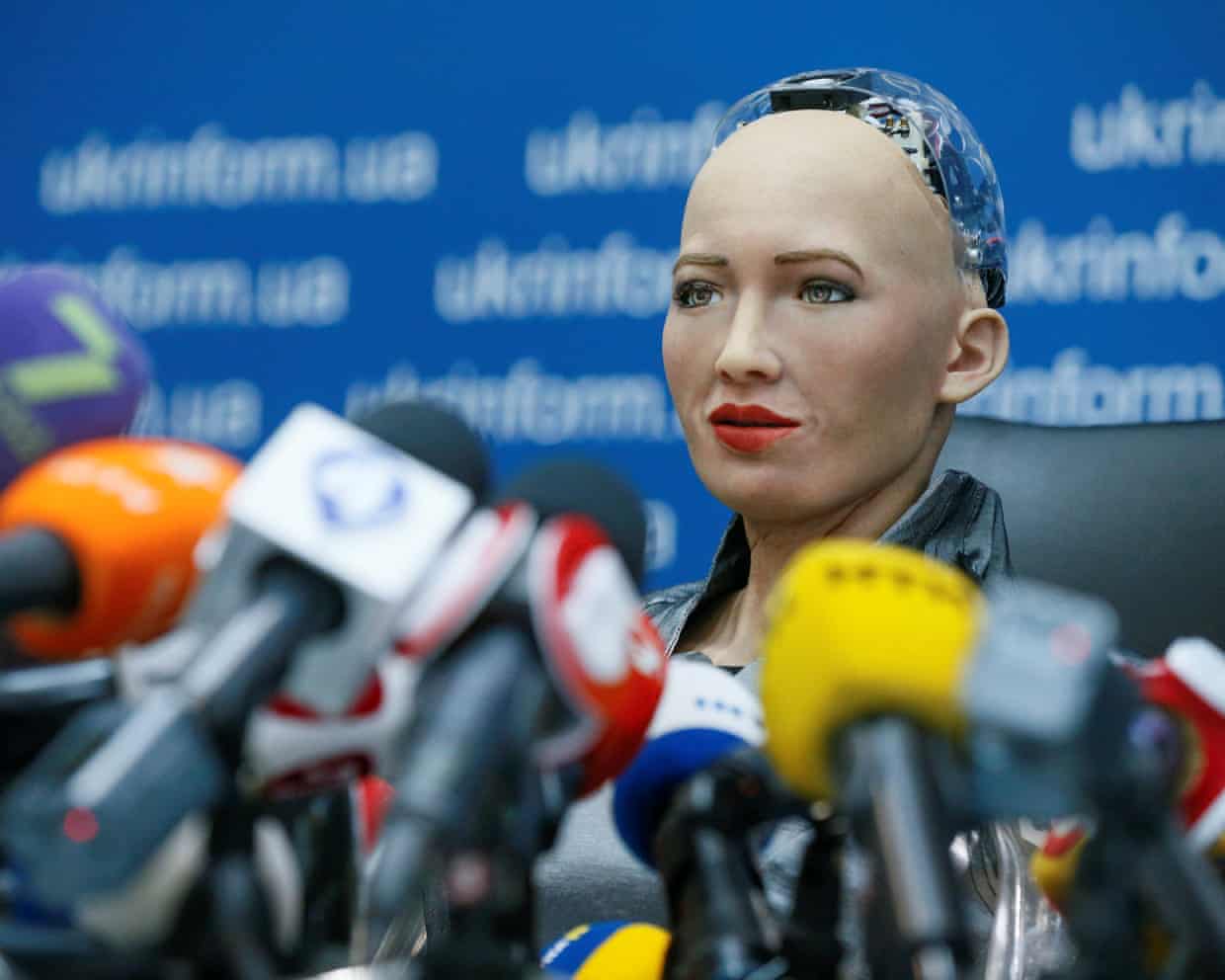
“Who wouldn’t want a robot to watch over your kids?” Elon Musk asked Davos delegates last week, as he looked forward with enthusiasm to a world with “more robots than people”.Not me, thanks: children need the human connection – the love – that gives life meaning.As he works towards launching SpaceX on to the stock market, in perhaps the biggest ever such share sale, the world’s richest man has every incentive to talk big.Yet as Musk waxed eccentrically about this robotic utopia, it was a reminder that major decisions about the direction of technological progress are being taken by a small number of very powerful men – and they are mainly men.In the cosy onstage chat, the World Economic Forum’s interim co-chair, Larry Fink, failed to ask Musk about whichever tweak of internal plumbing allowed his Grok chatbot to produce and broadcast what a New York Times investigation estimated was 1
Google AI Overviews cite YouTube more than any medical site for health queries, study suggests
Google’s search feature AI Overviews cites YouTube more than any medical website when answering queries about health conditions, according to research that raises fresh questions about a tool seen by 2 billion people each month.The company has said its AI summaries, which appear at the top of search results and use generative AI to answer questions from users, are “reliable” and cite reputable medical sources such as the Centers for Disease Control and Prevention and the Mayo Clinic.However, a study that analysed responses to more than 50,000 health queries, captured using Google searches from Berlin, found the top cited source was YouTube. The video-sharing platform is the world’s second most visited website, after Google itself, and is owned by Google.Researchers at SE Ranking, a search engine optimisation platform, found YouTube made up 4

How the ‘confident authority’ of Google AI Overviews is putting public health at risk
Do I have the flu or Covid? Why do I wake up feeling tired? What is causing the pain in my chest? For more than two decades, typing medical questions into the world’s most popular search engine has served up a list of links to websites with the answers. Google those health queries today and the response will likely be written by artificial intelligence.Sundar Pichai, Google’s chief executive, first set out the company’s plans to enmesh AI into its search engine at its annual conference in Mountain View, California, in May 2024. Starting that month, he said, US users would see a new feature, AI Overviews, which would provide information summaries above traditional search results. The change marked the biggest shake-up of Google’s core product in a quarter of a century

Latest ChatGPT model uses Elon Musk’s Grokipedia as source, tests reveal
The latest model of ChatGPT has begun to cite Elon Musk’s Grokipedia as a source on a wide range of queries, including on Iranian conglomerates and Holocaust deniers, raising concerns about misinformation on the platform.In tests done by the Guardian, GPT-5.2 cited Grokipedia nine times in response to more than a dozen different questions. These included queries on political structures in Iran, such as salaries of the Basij paramilitary force and the ownership of the Mostazafan Foundation, and questions on the biography of Sir Richard Evans, a British historian and expert witness against Holocaust denier David Irving in his libel trial.Grokipedia, launched in October, is an AI-generated online encyclopedia that aims to compete with Wikipedia, and which has been criticised for propagating rightwing narratives on topics including gay marriage and the 6 January insurrection in the US

RFU targets transport revamp and undercover police to sway Twickenham residents over concert plan

Australian Open 2026: Shelton beats Ruud, Swiatek swats aside Inglis, Sinner defeats Darderi – as it happened

Inglis to splash out on new toaster ‘and maybe the kettle’ after Swiatek ends Melbourne run

Sam Darnold: after five teams and plenty of mockery, ‘Ginger Cuz’ reaches the Super Bowl

Bangladesh boycott brings a sad reality to T20 World Cup countdown | Taha Hashim

Spotless Pegula ends Keys’ Australian Open reign with serve of apple pie and cheese