AI systems could use Met Office and National Archives data under UK plans
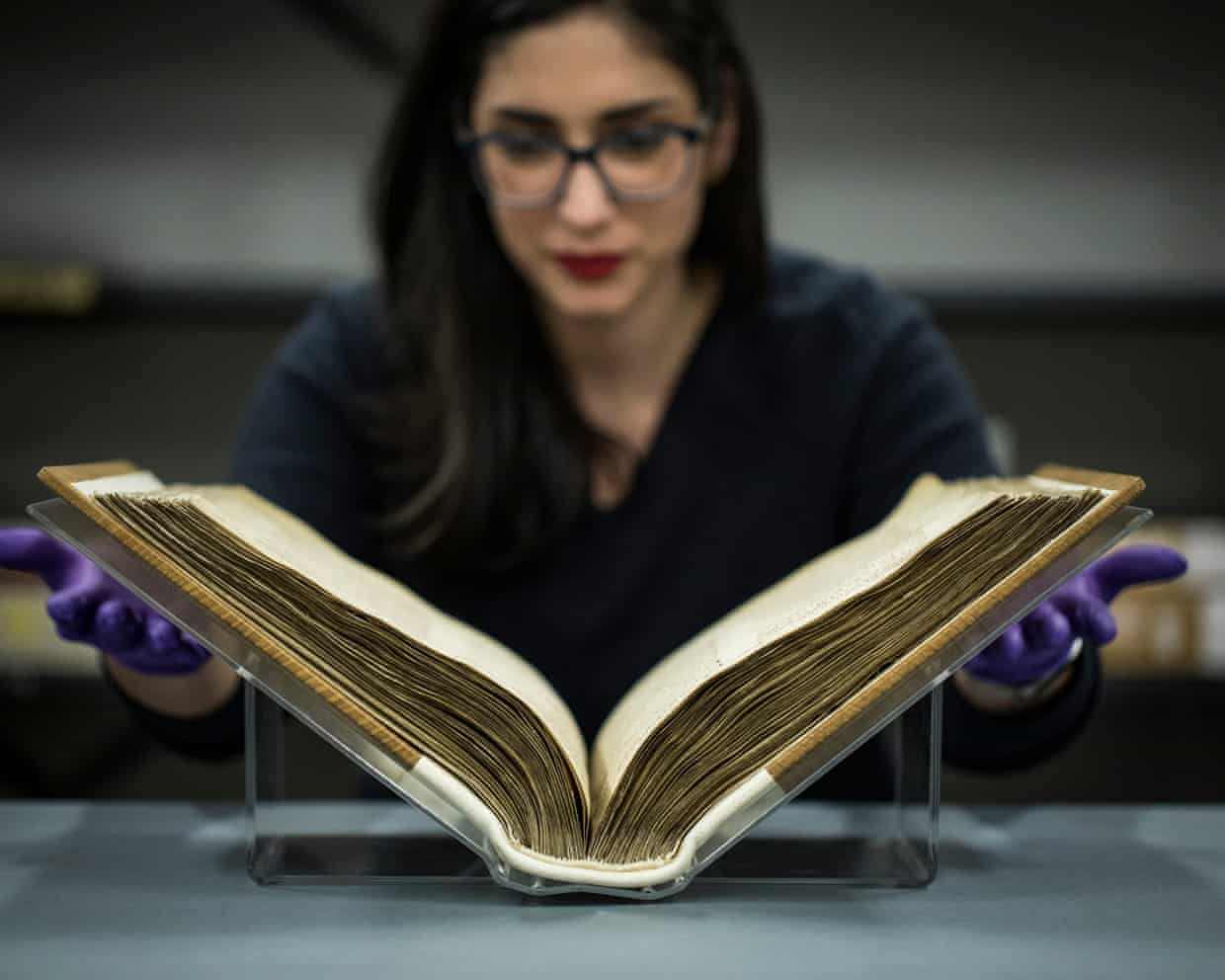
Met Office data and legal documents from the National Archives could be used by artificial intelligence systems as the UK government pushes ahead with plans to employ nationally owned material in AI tools,The government is providing funds for researchers to test how Met Office content could be used by the technology, such as in helping agencies and councils know when to buy more road grit,Another project will explore whether legal data from the National Archives – the UK’s repository for official documents – could help medium- and small-sized businesses with legal support,The government has also announced plans to license content from national institutions such as the National History Museum and the National Library of Scotland for AI development,Ian Murray, the minister for digital government and data, said the National Archives plan was “what smart use of the public sector” looked like.
“Whether you’re a cafe owner trying to understand employment law or a shopkeeper navigating health and safety requirements, time spent wrestling with legal jargon is time spent away from customers,” he said,“By exploring how authoritative legal data from the National Archives could be made AI-ready, we could help small businesses get quick, reliable answers to common questions – freeing up evenings and weekends and giving them more confidence to invest and grow,”Data is a key component of AI models, the underlying technology for tools such as ChatGPT, and has become a battleground between the UK’s creative industries and the government over proposals to change copyright law,Ministers have been criticised for proposing that AI companies should be allowed to use copyright-protected work without first seeking artists’ permission, unless the artists indicates that they wish to “opt out”,The technology secretary, Liz Kendall, said this month the government was seeking a “reset” on these plans via an official review due to be published in March.
However, the government has made clear that nationally owned data could also be used as part of its policy to drive AI deployment and development.The government’s AI action plan, which was launched last year, proposed creating a national data library that would offer state-controlled data to researchers and companies.Keir Starmer indicated that the vast trove of health data controlled by the NHS would be a candidate for this library, although the government has also stressed that privacy, ethics and data protection will be among the issues weighed when assembling these datasets.The action plan also proposed creating a cultural data library that would be a “commercial proposition”, meaning the government could expect to make money from the “copyright-cleared” data.This could hold data from institutions such as the BBC, the British Library, the Natural History Museum and the National Archives.
The government will push ahead with those plans on Monday with details of data will be offered under its “creative content exchange”.The exchange, which was launched in June, will be a marketplace to “sell, buy, license and enable access to digitised cultural and creative assets” so they can be “licensed at scale”.Under a pilot scheme, researchers will explore how to offer data from institutions including Imperial War Museums; the National Library of Scotland; the Natural History Museum; the National Archives; the University of Oxford; the Royal Botanic Gardens, Kew; the Science Museum Group and the Victoria and Albert Museum.The government said the scheme would explore how their digitised content could be used by consumers, technology companies and AI developers, “while respecting the rights of creators and copyright owners”, with a pilot platform due to be launched in the summer.The best public interest journalism relies on first-hand accounts from people in the know.
If you have something to share on this subject, you can contact us confidentially using the following methods.Secure Messaging in the Guardian appThe Guardian app has a tool to send tips about stories.Messages are end to end encrypted and concealed within the routine activity that every Guardian mobile app performs.This prevents an observer from knowing that you are communicating with us at all, let alone what is being said.If you don't already have the Guardian app, download it (iOS/Android) and go to the menu.
Select ‘Secure Messaging’.SecureDrop, instant messengers, email, telephone and postIf you can safely use the Tor network without being observed or monitored, you can send messages and documents to the Guardian via our SecureDrop platform.Finally, our guide at theguardian.com/tips lists several ways to contact us securely, and discusses the pros and cons of each.

Ryanair says it could use Starlink in future despite Elon Musk feud
Ryanair would be open to using Elon Musk’s Starlink wifi on its planes in the future, its finance chief has suggested, amid a feud between the boss of the Irish airline and the world’s richest person.The airline would look at “whoever is the best, when the tech and price is right” for in-flight wifi, the Ryanair chief financial officer, Neil Sorahan, said.Sorahan was speaking after an online spat between Ryanair boss Michael O’Leary and Musk, after O’Leary was asked whether he would follow Lufthansa and British Airways in installing Starlink satellite internet technology on his fleet of 650 aircraft.The chief executive rejected the idea, saying that adding antennas to the jets would result in a “2% fuel drag”, adding an extra $200-250m to its $5bn (£3.66bn) annual kerosene bill

‘A southern economy in the north’: how Warrington has adapted to change
As the demolition excavator crashes its metal jaws through Warrington’s former Unilever soap factory, Carl Oates says the town is good at handling change. Once contractors have finished, his company plans to open a datacentre, reinventing a site from the first Industrial Revolution for the next.“As one industry closes, Warrington has been quite good at opening new ones – and we hope datacentres is one of those new spaces.”A director of a local property firm, Dante Group, he knows the blue corrugated-metal factory looming over Bank Quay station is a well-known local landmark on the Cheshire skyline. Alongside wire, beer and gin, soap helped to power Warrington’s industrial development
UK maker of AI avatars nearly doubles valuation to $4bn after funding round
A British AI startup that makes realistic video avatars has almost doubled its valuation to $4bn (£3bn), in a boost for the UK technology sector.Synthesia was valued at $2.1bn last year and moved into new offices in central London, marking the moment with a ceremony attended by the Sadiq Khan, the city’s mayor, and Peter Kyle, then technology secretary.On Monday, it announced its latest funding round, led by an existing investor, Google Ventures, had raised $200m and valued the British company at $4bn. Google Ventures is the search firm’s venture capital arm

AI is hitting UK harder than other big economies, study finds
The UK is losing more jobs than it is creating because of artificial intelligence and is being hit harder than rival large economies, new research suggests.British companies reported that AI had resulted in net job losses over the past 12 months, down 8% – the highest rate among other leading economies including the US, Japan, Germany and Australia, according to a study by the investment bank Morgan Stanley.The research, which was shared with Bloomberg, surveyed companies using AI for at least a year across five industries: consumer staples and retail, real estate, transport, healthcare equipment and cars.It found that British businesses reported an average 11.5% increase in productivity aided by AI

How Alex de Minaur can beat Carlos Alcaraz in Australian Open quarter-final
Alex de Minaur went into his quarter-final with Jannik Sinner at the 2025 Australian Open hopeful that he could make life difficult for the defending champion. Not only did that not happen, but the manner of his one-sided defeat left him wondering if he really had the game to trouble the top players.Fast forward a year and the Australian again finds himself in the last eight, again facing one of the sport’s superstars, this time Carlos Alcaraz. As with Sinner, the head to head doesn’t make pretty reading for De Minaur, with Alcaraz leading 5-0. This, though, is their first grand slam meeting and there is a growing feeling that things can be different

Courtside fashion at the Australian Open: ‘People are definitely dressing up more’
If the races is a nightclub, the tennis is a long lunch with spectators in silk dresses, sneakers and tailored shortsSomething is happening sartorially at the Australian Open. In addition to the on-and-off-court partnerships with some of the world’s most recognisable fashion brands – Rolex, Louis Vuitton and Polo Ralph Lauren – Melbourne Park visitors are dressing up.The men are in tailored knee length shorts, leather loafers and softly textured button-downs. The women are in pretty mid-to-ankle length dresses and sneakers or flat sandals. While the crowd’s look at the country’s biggest sporting event (the organisers expect it to inject more than $600m into the economy) is undeniably preppy – plenty of jumpers are tied around shoulders and T-shirts are tucked into high waisted trousers – the energy is decidedly more inclusive than a cordoned off country-club

My cultural awakening: A Queen song helped me break free from communist Cuba
From Saipan to Take That: your complete entertainment guide to the week ahead
Tell us your UK town of culture nomination

‘The Village of the Damned was shot here – then George Harrison bought a house’: our UK town of culture nominations

R&B star Jill Scott: ‘I like mystery – I love Sade but I don’t know what she had for breakfast’

Letter: Colin Ford obituary